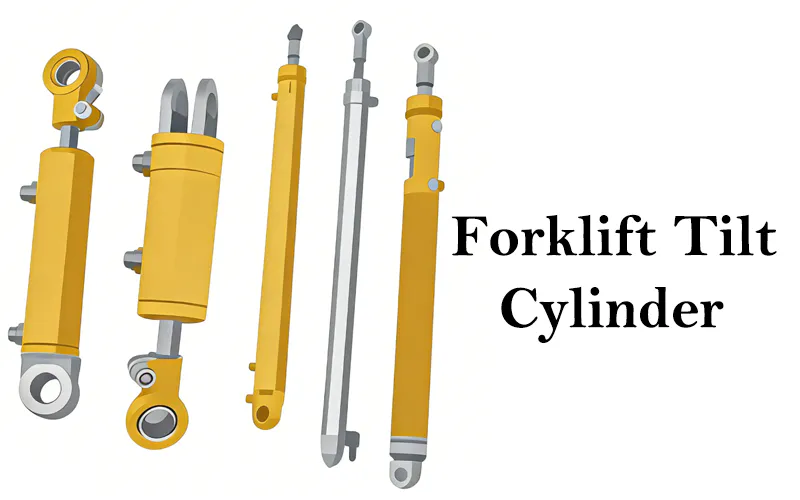
Pharma & Chemical Industry | GMP Compliance Guide
How to Specify a Forklift Tilt Cylinder for GMP-Compliant Pharmaceutical Manufacturing Facilities
A practical specification guide for procurement engineers, maintenance managers, and facility compliance teams selecting hydraulic forklift tilt cylinder components for regulated pharmaceutical and chemical environments in Colombia and across Latin America.
Why the Forklift Tilt Cylinder Matters in Pharmaceutical and Chemical Facilities
In any GMP-regulated pharmaceutical manufacturing facility or chemical production plant, the selection of forklift components is rarely treated with the same rigor applied to production equipment. Yet the फोर्कलिफ्ट झुकाव सिलेंडर — the hydraulic actuator that controls the angular orientation of the mast and load arms — is in direct contact with the warehouse environment and operates in spaces where contamination from oil leaks, particulate shedding, or material incompatibility can trigger batch failures, regulatory findings, and expensive downtime.
Colombia’s pharmaceutical industry has grown rapidly over the past decade. INVIMA (Instituto Nacional de Vigilancia de Medicamentos y Alimentos), the national health surveillance authority, enforces BPM (Buenas Prácticas de Manufactura) — the Colombian adaptation of GMP — with increasing rigor, including inspection protocols that extend to warehouse equipment operating in classified or controlled environments. A फोर्कलिफ्ट झुकाव सिलेंडर that leaks hydraulic fluid near a packing line or cold-storage cleanroom is not just a maintenance problem; it is a regulatory compliance event.
This guide walks through every specification dimension a Colombian facilities engineer, procurement manager, or maintenance coordinator should evaluate when selecting a फोर्कलिफ्ट झुकाव सिलेंडर for GMP-compliant pharmaceutical or chemical industry settings. The discussion covers manufacturing structure, material systems, seal technology, regulatory frameworks applicable in Colombia and internationally, and the key differences between a standard industrial फोर्कलिफ्ट झुकाव सिलेंडर and one suitable for regulated environments.
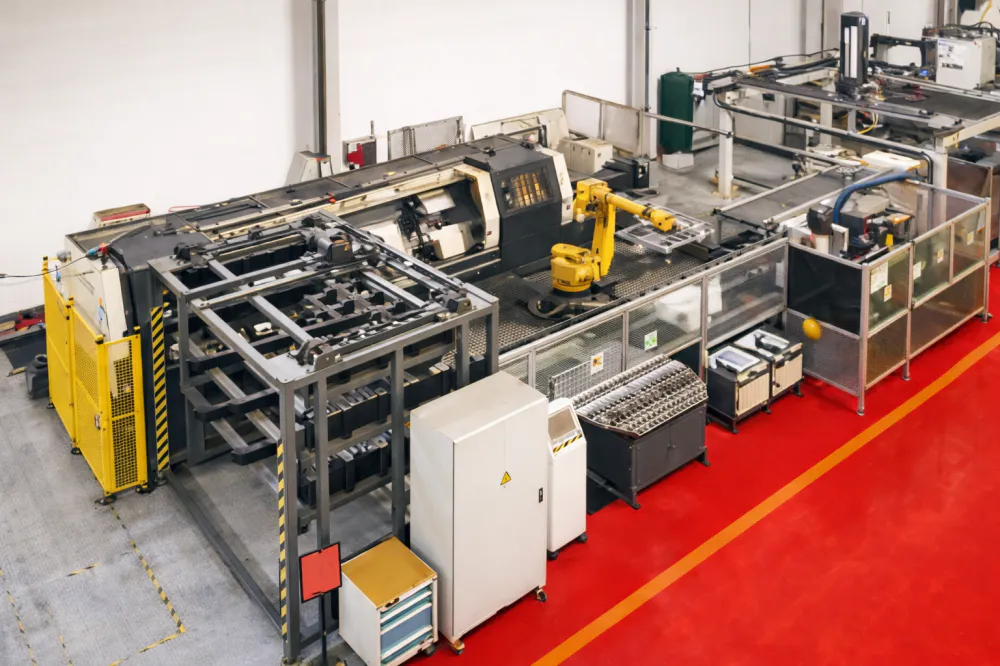
1. Manufacturing Structure of the Forklift Tilt Cylinder
The mechanical architecture of a फोर्कलिफ्ट झुकाव सिलेंडर used in pharmaceutical and chemical environments must go beyond what is acceptable in a standard warehouse. Understanding how the forklift tilt cylinder is built is the starting point for any GMP compliance evaluation, because structural design decisions made at manufacture determine the cylinder’s contamination risk, cleanability, and long-term seal integrity in controlled conditions.
Cylinder Barrel and Bore
The forklift tilt cylinder barrel is typically produced from cold-drawn seamless steel tube, bored and honed to Ra ≤ 0.4 µm inner surface finish. For pharmaceutical environments, the exterior surface should be free of recesses that trap dust, debris, or cleaning solution residue. Cylindrical outer profiles without threaded external fittings are preferred — any hydraulic port connections should exit from the end caps rather than the barrel wall, reducing crevice contamination points.
Piston Rod and Chrome Plating
The exposed piston rod is the component most likely to shed contaminants into the environment through abrasion, corrosion, or wiper failure. Pharmaceutical-grade specifications for a फोर्कलिफ्ट झुकाव सिलेंडर call for hard chrome plating to a minimum 30 µm depth, polished to Ra ≤ 0.2 µm surface finish. This reduces both seal wear and the risk of microscopic chrome particle shedding that can be drawn into the फोर्कलिफ्ट झुकाव सिलेंडर seal zone by inhalation or product contact in open packaging areas.
Wiper and Rod Seal System
The rod seal and wiper assembly at the gland end of the फोर्कलिफ्ट झुकाव सिलेंडर — often overlooked during spec reviews — is the most contamination-critical zone. A dual-lip wiper ring physically scrapes particulate matter from the rod before it reaches the primary seal. In pharmaceutical warehouse environments — where floor-level particulate includes tablet dust, powder residue, and cleaning agent aerosols — the wiper selection directly determines how long the primary rod seal maintains zero-leakage integrity under cyclic rod movement.
End Cap and Mounting Interface
End caps on pharmaceutical-service फोर्कलिफ्ट झुकाव सिलेंडर units should be machined to close dimensional tolerances without sharp thread burrs or rough cast surfaces that accumulate soil over time. Mounting trunnion faces and clevis eyes should be ground smooth to prevent corrosion initiation at stress-concentration points. The mounting interface geometry must match the forklift mast manufacturer’s specification precisely — dimensional deviation forces misalignment loads into the rod seal that accelerate wear far faster than standard duty cycles.
2. Material System — Matching Materials to GMP Environment Requirements
Every component in a फोर्कलिफ्ट झुकाव सिलेंडर operating in pharma environments that contacts either the hydraulic fluid or the external environment must be evaluated for its chemical compatibility with the substances present in pharmaceutical and chemical production spaces. A standard warehouse-grade फोर्कलिफ्ट झुकाव सिलेंडर may use seal compounds or lubricants that are entirely unacceptable where the cylinder operates in proximity to pharmaceutical ingredients, biologics, or aggressive chemical agents. The table below summarizes the principal material choices for each cylinder component and their suitability for GMP contexts.
| Component | Standard Industrial Material | GMP Pharmaceutical Recommendation | Reason |
|---|---|---|---|
| Barrel | St52 cold-drawn steel | St52 + exterior epoxy-polyurethane coating | Prevents corrosion from chemical cleaning agents used in GMP facilities |
| पिस्टन रॉड | 45# steel, hard chrome ≥ 20 µm | 42CrMo4 alloy steel, hard chrome ≥ 30 µm, Ra ≤ 0.2 µm | Higher tensile base metal; thicker chrome extends seal life and reduces shedding risk |
| Primary Rod Seal | NBR (Nitrile Rubber) | FKM (Viton) or PTFE-lip compound seal | NBR degrades in contact with many cleaning alcohols and aldehyde disinfectants used in pharma |
| Wiper Ring | पोलीयूरीथेन | PTFE double-lip wiper | PTFE inert to virtually all pharmaceutical cleaning and sanitizing chemistries |
| Piston Seal | NBR O-ring + backup ring | FKM O-ring + PTFE guide ring | Maintains internal sealing integrity under full hydraulic pressure across extended temperature range |
| External Coating | Alkyd enamel, single-layer | Two-component epoxy primer + polyurethane topcoat | Resists repeated exposure to disinfectant solutions including quaternary ammonium and IPA |
| Hydraulic Fluid | ISO VG 46 mineral oil | Food-grade H1 hydraulic fluid (NSF/ANSI 61) | Required if incidental product contact is possible; eliminates contamination risk from micro-leaks |
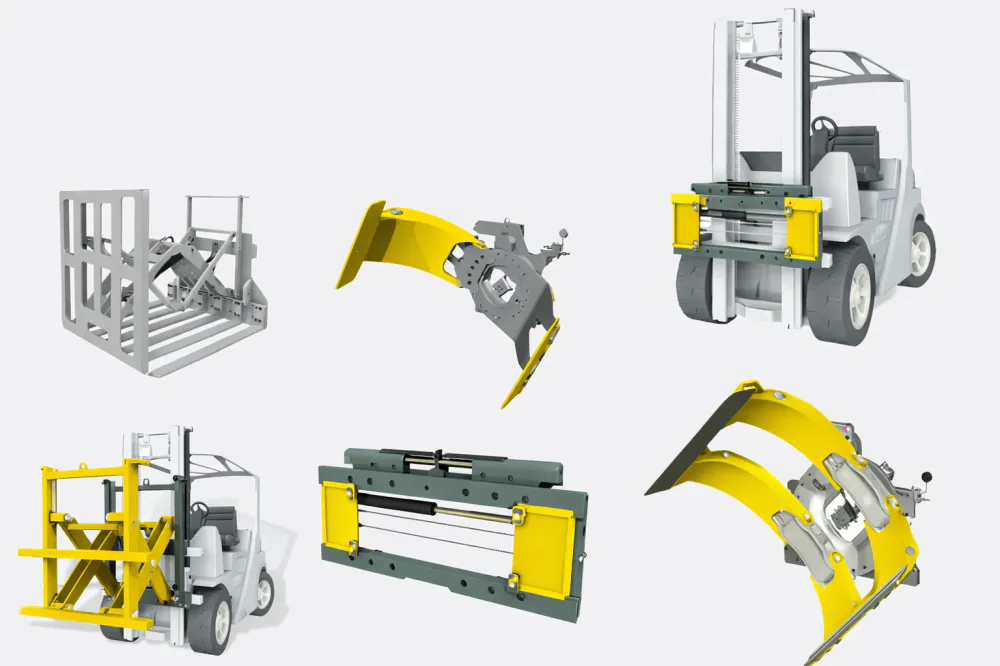
3. Seal Technology — The Defining Factor for Zero-Leak GMP Operations
No component in the फोर्कलिफ्ट झुकाव सिलेंडर assembly receives more attention from GMP compliance teams than the seal system. A standard industrial warehouse can tolerate minor hydraulic weeping at the rod seal of its forklift tilt cylinder — a floor absorbent pad addresses it during the next scheduled maintenance. A pharmaceutical manufacturing facility cannot accept this. Any hydraulic fluid present on the floor of a production or packaging zone constitutes a contamination incident that must be documented, investigated, and corrected under the INVIMA BPM framework, potentially triggering product quarantine or recall activities if the fluid source cannot be conclusively isolated from product contact zones.
The फोर्कलिफ्ट झुकाव सिलेंडर seal kit used in pharmaceutical applications should therefore specify FKM (Viton) primary rod seals as the minimum acceptable standard, with PTFE-lip wiper rings at the rod entry point. The फोर्कलिफ्ट टिल्ट सिलेंडर सील किट should include a complete assembly of primary seal, backup ring, wiper ring, guide ring, and O-ring for the end cap bore — allowing field replacement by a qualified maintenance technician without specialized tooling that could introduce contamination from an inadequate work environment. The seal kit must be stored in its original packaging until the point of installation, as FKM and PTFE compounds can absorb volatile organic compounds from unpackaged storage environments.
Many Colombian pharmaceutical facilities operating under INVIMA oversight have begun requiring that every फोर्कलिफ्ट झुकाव सिलेंडर and its accompanying फोर्कलिफ्ट टिल्ट सिलेंडर सील किट have begun specifying फोर्कलिफ्ट झुकाव सिलेंडर seal kit documentation requirements as part of their supplier qualification process. This means the cylinder manufacturer must provide the seal compound designation (NBR, FKM, PTFE), the Shore A hardness of elastomeric components, and a material compatibility declaration confirming the seal compounds are chemically compatible with the facility’s approved hydraulic fluid specification and cleaning agent list. This level of documentation is standard in European and North American GMP contexts and is increasingly expected in Colombian pharmaceutical procurement as INVIMA’s inspection methodology continues to align with WHO and EU GMP standards.
4. Recommended Forklift Tilt Cylinder Models for GMP Pharmaceutical Environments
The following two फोर्कलिफ्ट झुकाव सिलेंडर models represent the primary options for pharmaceutical and chemical facility applications based on their dimensional compatibility with standard industrial forklifts, working pressure ratings, and material system adaptability to GMP seal specifications.
EP-HCY-1 फोर्कलिफ्ट टिल्ट सिलेंडर

The EP-HCY-1 is a full-length फोर्कलिफ्ट झुकाव सिलेंडर designed for standard 2.5-3.5 tonne capacity counterbalance forklifts widely used in Colombian pharmaceutical distribution warehouses and manufacturing facilities. The cylinder’s stroke of 1,500 mm provides the full mast tilt range from forward 6° to backward 12° typical of most industrial forklift specifications, allowing operators to manage pallet tilt and load stability — a key safety criterion for this फोर्कलिफ्ट झुकाव सिलेंडर type in pharmaceutical dock environments.
| पैरामीटर | कीमत |
|---|---|
| आघात | 1,500 mm |
| कार्य का दबाव | 18.1 एमपीए |
| Maximum Pressure | 27.15 एमपीए |
| स्थापना दूरी | 1,658 mm |
| वज़न | 33 किलोग्राम |
ईपी-एचसीवाई-3 फोर्कलिफ्ट टिल्ट सिलेंडर

The EP-HCY-3 is a compact, lower-profile फोर्कलिफ्ट झुकाव सिलेंडर well suited to narrower-aisle pharmaceutical warehouse operations and cleanroom adjacent storage zones where a smaller forklift footprint reduces the risk of incidental contact with classified area boundaries. Its dual-stage stroke configuration of 96.5 × 2 mm provides controlled, graduated tilt movement that chemical industry operators find preferable when handling corrosive containers where load stability during tilt is critical to spill prevention. The EP-HCY-3 फोर्कलिफ्ट झुकाव सिलेंडर installation distance of 585.7 mm is also compatible with compact chassis models.
| पैरामीटर | कीमत |
|---|---|
| आघात | 96.5 × 2 mm |
| कार्य का दबाव | 16 एमपीए |
| Maximum Pressure | 24 एमपीए |
| स्थापना दूरी | 585.7 मिमी |
| वज़न | 16.5 किलोग्राम |
5. Regulatory Framework — Colombia, Latin America, and International Standards
Specifying a फोर्कलिफ्ट झुकाव सिलेंडर for a GMP pharmaceutical environment is not simply a procurement decision — it falls within the scope of several overlapping regulatory frameworks that govern equipment used in or adjacent to pharmaceutical manufacturing and storage areas. The following frameworks are directly relevant to Colombian pharmaceutical operators selecting a फोर्कलिफ्ट झुकाव सिलेंडर and their equipment suppliers.
Colombia — INVIMA BPM (Resolución 1160 de 2016)
INVIMA’s BPM framework requires that equipment operating in pharmaceutical manufacturing and distribution facilities be designed, maintained, and operated so as not to compromise product quality. Warehouse equipment including forklifts and their hydraulic components — including the फोर्कलिफ्ट झुकाव सिलेंडर — must be documented in the facility’s equipment inventory and maintenance log. Hydraulic leak incidents must be reported in the deviation system and investigated for potential product impact. The quality management system must document the specification criteria for critical equipment components.
WHO GMP Guidelines — Technical Report Series No. 986
WHO GMP guidelines are the international reference standard adopted by INVIMA and used by Colombian pharmaceutical exporters accessing regulated markets in the United States, European Union, and Mercosur countries. The guidelines address equipment surfaces that may contact product or product-contact materials, requiring that such equipment be designed to prevent contamination. A फोर्कलिफ्ट झुकाव सिलेंडर in a pharma facility’s controlled warehouse is within scope of equipment hygiene requirements when its potential for fluid release into the product environment cannot be conclusively ruled out.
EU GMP Eudralex Volume 4 — Chapter 3 (Premises and Equipment)
European GMP requirements under Eudralex Volume 4 Chapter 3 specify that premises and equipment must be designed and maintained to minimize contamination risk. Colombian manufacturers exporting to the EU under bilateral pharmaceutical cooperation agreements must align their facility operations with EU GMP requirements, which means the contamination risk posed by warehouse equipment like a फोर्कलिफ्ट झुकाव सिलेंडर falls under Chapter 3 scope. The EU GMP approach emphasizes written procedures for equipment maintenance and cleaning that address hydraulic component integrity.
US FDA 21 CFR Part 211 — Current Good Manufacturing Practice
For Colombian pharmaceutical manufacturers supplying the US market, 21 CFR Part 211 applies. Section 211.67 specifically addresses equipment cleaning and maintenance, requiring that equipment be maintained in a clean and orderly manner and that written maintenance records be kept. The हाइड्रोलिक फोर्कलिफ्ट टिल्ट सिलेंडर in a facility subject to FDA inspection should be listed in the equipment maintenance schedule with documented inspection criteria for seal condition and leakage, as failure to maintain this documentation has been cited in FDA warning letters.
ISO 4413 — Hydraulic Fluid Power Safety Requirements
ISO 4413 provides safety requirements for hydraulic fluid power systems, including those used in forklift tilt cylinder circuits. The standard addresses hydraulic fluid selection, system pressure ratings, hose and fitting maintenance, and the documentation requirements for hydraulic system modifications. Any फोर्कलिफ्ट हाइड्रोलिक सिलेंडर — including the फोर्कलिफ्ट झुकाव सिलेंडर — replaced in a pharma facility must verify that the replacement cylinder’s working pressure rating matches the forklift’s hydraulic system operating pressure to prevent overpressure events that accelerate seal failure and increase leak risk.
Colombia — Resolución 2400 de 1979 (SURA / MinTrabajo)
Colombian workplace safety regulations under Resolución 2400 de 1979 require that powered industrial trucks — including counterbalance forklifts — be maintained in safe operating condition, with periodic inspection of hydraulic systems. The फोर्कलिफ्ट झुकाव सिलेंडर as a primary structural and hydraulic component falls within the scope of these mandatory inspections. Facility maintenance records must document cylinder inspection dates, seal condition assessments, and any corrective maintenance performed, consistent with the occupational safety requirements enforced by the Colombian Ministry of Labor.
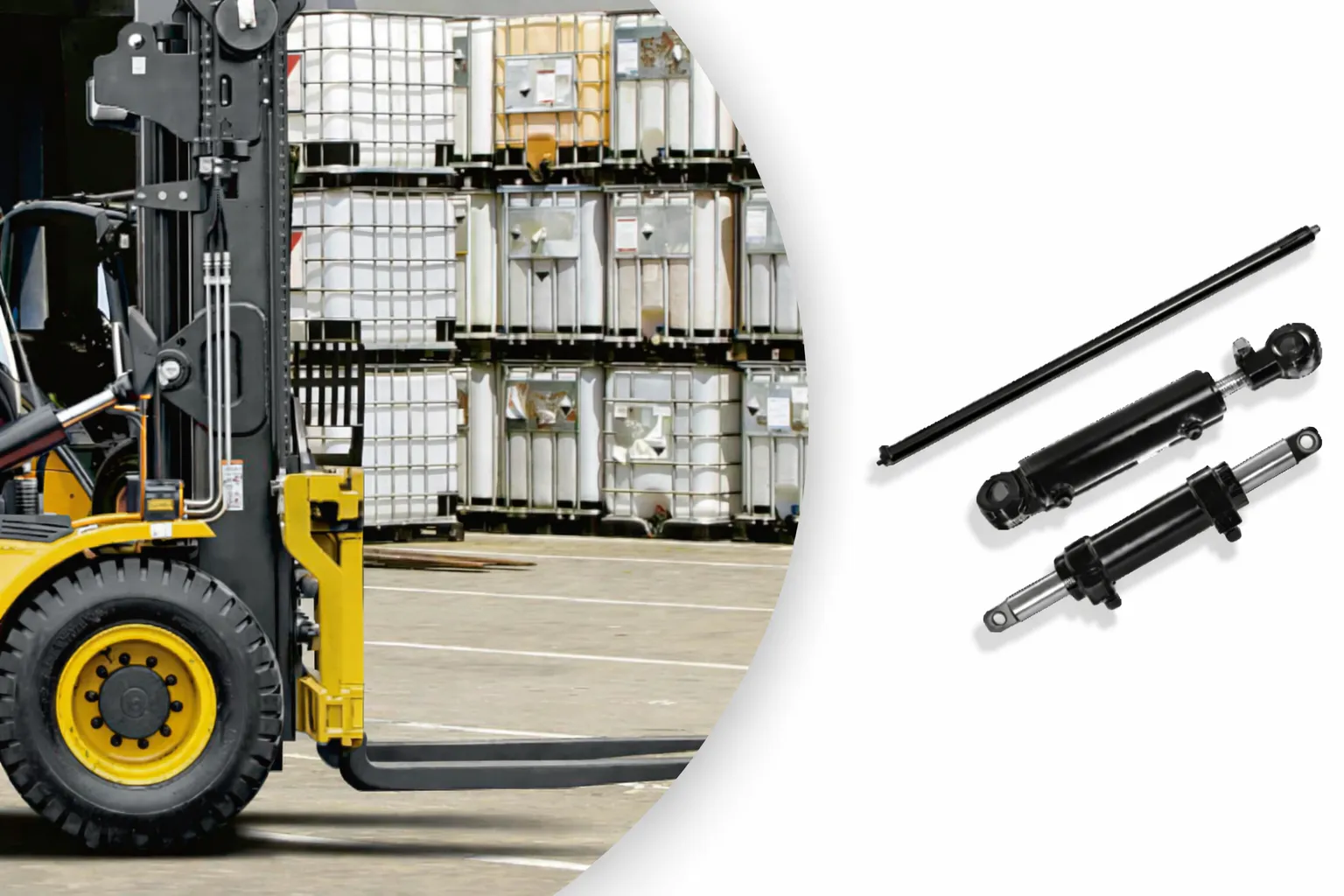
6. Forklift Tilt Cylinder Specification Checklist for Pharmaceutical Facilities
When raising a purchase requisition for a फोर्कलिफ्ट झुकाव सिलेंडर intended for use in a GMP pharmaceutical or chemical facility in Colombia, the following checklist should be completed by the engineering or maintenance team before a supplier is approached. Incomplete specifications at the inquiry stage are the primary cause of incorrect cylinder supply — and incorrect cylinders cause both mechanical problems and compliance exposures that exceed the cost of the cylinder many times over.
Dimensional Parameters
Record the cylinder stroke, installation distance (pin centre to pin centre when fully retracted), bore diameter, rod diameter, and the mounting interface dimensions (clevis eye bore diameter, clevis fork width, trunnion diameter if applicable). The आयाम फोर्कलिफ्ट टिल्ट सिलेंडर units require must match the original OEM specification exactly — do not assume the replacement cylinder dimensions will be compatible unless directly confirmed against the forklift manufacturer’s service manual.
Pressure and Load Rating
Confirm the forklift hydraulic system’s working pressure and the maximum relief pressure from the forklift service documentation. The replacement फोर्कलिफ्ट झुकाव सिलेंडर must always be rated at or above the system working pressure with an appropriate safety margin. Never assume a replacement फोर्कलिफ्ट झुकाव सिलेंडर is rated to the original specification — always request the cylinder’s rated working pressure and burst pressure from the supplier in writing.
Seal Compound Specification
Specify the required seal compound by material designation (NBR, FKM, PTFE) rather than by trade name alone. Request the Shore A hardness for elastomeric seals, the PTFE composition for lip seals, and a material compatibility declaration confirming compatibility with the hydraulic fluid in the forklift and the cleaning agents used in the facility. A complete फोर्कलिफ्ट टिल्ट सिलेंडर सील किट — matched to the specific फोर्कलिफ्ट झुकाव सिलेंडर bore and rod size — with the specified compounds should be provided with each फोर्कलिफ्ट झुकाव सिलेंडर for future field maintenance.
Surface Treatment and Coating
Specify the required chrome plating thickness on the rod, the barrel external coating type, and any specific corrosion-resistance requirements based on the cleaning chemicals used in the facility. Colombian pharmaceutical facilities that use aggressive alkaline or acid cleaning programs on warehouse floors need cylinders with coatings validated against those specific chemistries, not standard industrial paint that may chalk or blister under repeated solvent exposure.
Documentation Requirements
List all documents required at delivery: dimensional inspection report, material certificate for the cylinder barrel and rod steel, seal compound designation sheet, hydraulic pressure test record, and any applicable certifications. For INVIMA BPM compliance, GMP pharmaceutical facilities should keep these फोर्कलिफ्ट झुकाव सिलेंडर documents in the equipment technical file for the specific forklift unit on which the फोर्कलिफ्ट झुकाव सिलेंडर is installed, and retain them for the duration required by the local quality system.
Forklift Brand and Model Compatibility
Identify the forklift make, model, and serial number range for which the replacement फोर्कलिफ्ट झुकाव सिलेंडर is intended. Different forklift brands use different mounting geometries, port locations, and hydraulic connection sizes. Providing complete forklift identification at inquiry prevents the most common specification error: receiving a cylinder with the correct stroke but incorrect mounting geometry that requires field modification to install — a modification that voids the cylinder warranty and potentially compromises structural integrity.
7. Forklift Tilt Cylinder Drift — Why Pharmaceutical Facilities Cannot Tolerate It
Forklift tilt cylinder drift is the gradual, uncontrolled retraction of the tilt cylinder under load when the hydraulic control valve is in the neutral position — is a condition that most industrial warehouses monitor but often tolerate to some degree between scheduled maintenance intervals. In a pharmaceutical facility, this condition is categorically unacceptable. A forklift with measurable tilt cylinder drift while carrying palletized pharmaceutical materials creates an uncontrolled load movement risk that contradicts the GMP principle that all product handling operations must be performed under controlled conditions.
Drift in a फोर्कलिफ्ट झुकाव सिलेंडर assembly typically originates from one of three failure modes: worn or extruded piston seal allowing internal bypass between the rod and cap end chambers; worn check valve or control valve spool in the hydraulic circuit that permits oil to migrate back to the tank; or a cracked or porous cylinder barrel allowing external leakage that reduces the trapped oil volume in the cap-end chamber. All three failure modes are detectable through a standard drift test in which the forklift mast is tilted to the backward position under rated load and the angular change is measured over a five-minute hold period.
Colombian pharmaceutical facilities establishing or updating their preventive maintenance programs should include a formal फोर्कलिफ्ट झुकाव सिलेंडर drift test in the forklift inspection protocol, with acceptance criteria derived from the forklift OEM specification or — where the OEM does not specify — from ISO 6292, which provides test methods for hydraulic cylinder drift measurement. Any फोर्कलिफ्ट झुकाव सिलेंडर that fails the drift acceptance criterion should be removed from service immediately pending inspection and फोर्कलिफ्ट टिल्ट सिलेंडर सील प्रतिस्थापन or complete cylinder फोर्कलिफ्ट टिल्ट सिलेंडर प्रतिस्थापन.
8. Installation, Maintenance, and Forklift Tilt Cylinder Seal Replacement in GMP Environments
Installing a replacement फोर्कलिफ्ट झुकाव सिलेंडर in a pharmaceutical facility is a maintenance activity that must be performed under the facility’s change control procedure if the replacement constitutes a modification to the equipment specification — for example, when the replacement cylinder uses a different seal compound than the original. Even a like-for-like replacement should be documented in the equipment maintenance log with the cylinder serial number, installation date, seal compound designation, and the technician’s identification.
Practical guidance for Colombian pharmaceutical teams conducting फोर्कलिफ्ट हाइड्रोलिक सिलेंडर की मरम्मत or seal replacement in-house: always perform cylinder work away from product areas, using a designated maintenance bay with a drip tray to contain any residual hydraulic fluid. The disassembled फोर्कलिफ्ट झुकाव सिलेंडर components — particularly the used seals and wiper rings — should be treated as contaminated waste and disposed of through the facility’s regulated waste stream rather than the general waste system. New seals from the फोर्कलिफ्ट टिल्ट सिलेंडर सील किट should only be removed from their protective packaging immediately before installation and should never be stored on the technician’s workbench in open air where they could absorb volatile compounds.
After each फोर्कलिफ्ट झुकाव सिलेंडर installation, the unit should be cycled through ten full-stroke tilt cycles before returning the forklift to service, with the maintenance technician visually checking for any seepage at the rod seal and cap-end connections after each cycle. The post-installation inspection finding — pass or fail — should be recorded. A फोर्कलिफ्ट झुकाव सिलेंडर that shows any seepage after ten cycles should not be returned to service; instead, it should be re-inspected and resealed or replaced. This conservative approach is fully consistent with the INVIMA BPM framework and aligns with the expectations of WHO and EU GMP inspectors who may review equipment maintenance records during facility audits.
9. Compatible Products — Complete Hydraulic System Supply
ए फोर्कलिफ्ट झुकाव सिलेंडर operates within a complete forklift hydraulic system. Sourcing matched फोर्कलिफ्ट झुकाव सिलेंडर components from an integrated supply chain eliminates compatibility uncertainty and simplifies maintenance documentation for pharmaceutical facility equipment files.
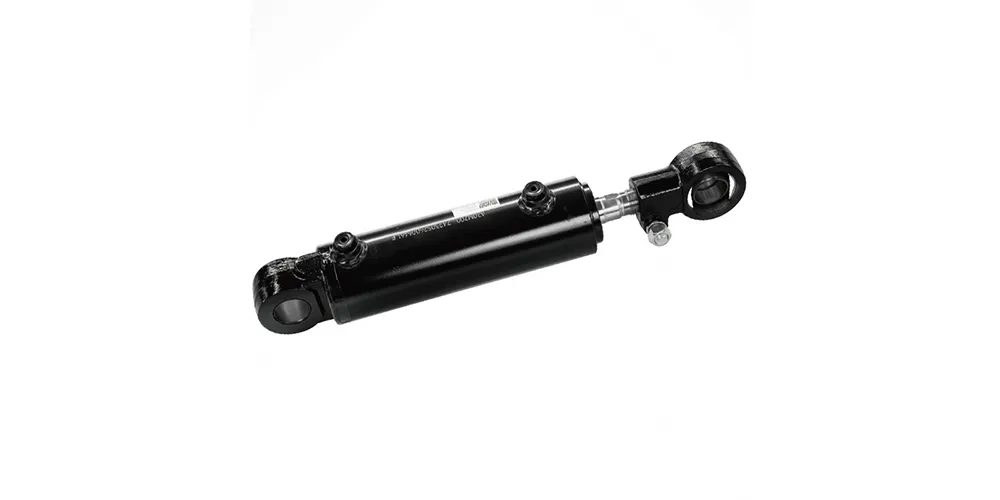
झुकाव सिलेंडर
हमारा झुकाव सिलेंडर series covers the full range of mast tilt actuation applications across different forklift classes and configurations. Matched seal chemistry, chrome specification, and pressure class compatibility across the cylinder range allows pharmaceutical facility maintenance teams to source the फोर्कलिफ्ट झुकाव सिलेंडर and associated tilt actuators from a single vendor, streamlining documentation, supplier qualification, and parts logistics across fleet maintenance programs.
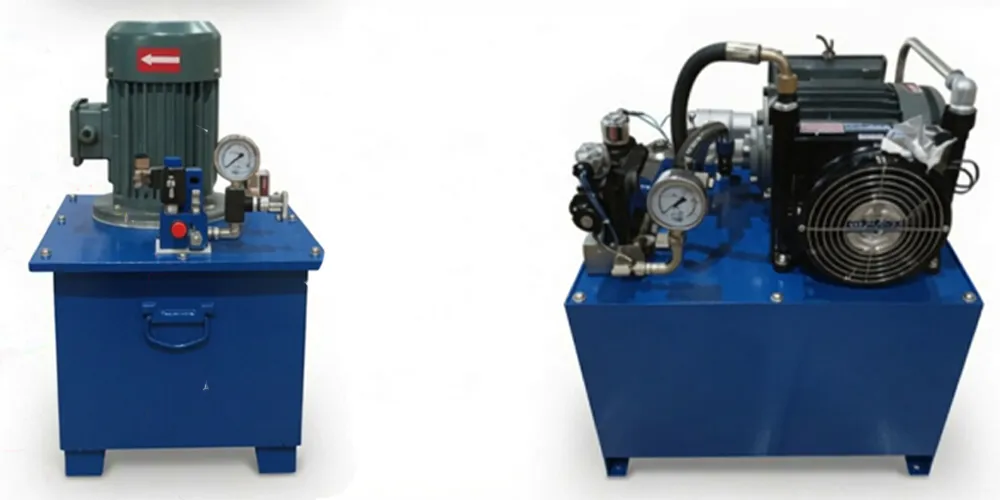
हाइड्रोलिक पंप स्टेशन श्रृंखला
A matched hydraulic pump station provides the controlled flow rate and system pressure required to operate the फोर्कलिफ्ट झुकाव सिलेंडर and forklift lift cylinder within their rated parameters. For pharmaceutical facility operations where the tilt cylinder and pump unit are both approaching service life limits, a matched station and cylinder replacement package eliminates separate hydraulic compatibility calculations and reduces the commissioning time on the rebuilt forklift — returning the vehicle to GMP-compliant service faster.
9. हमारे बारे में
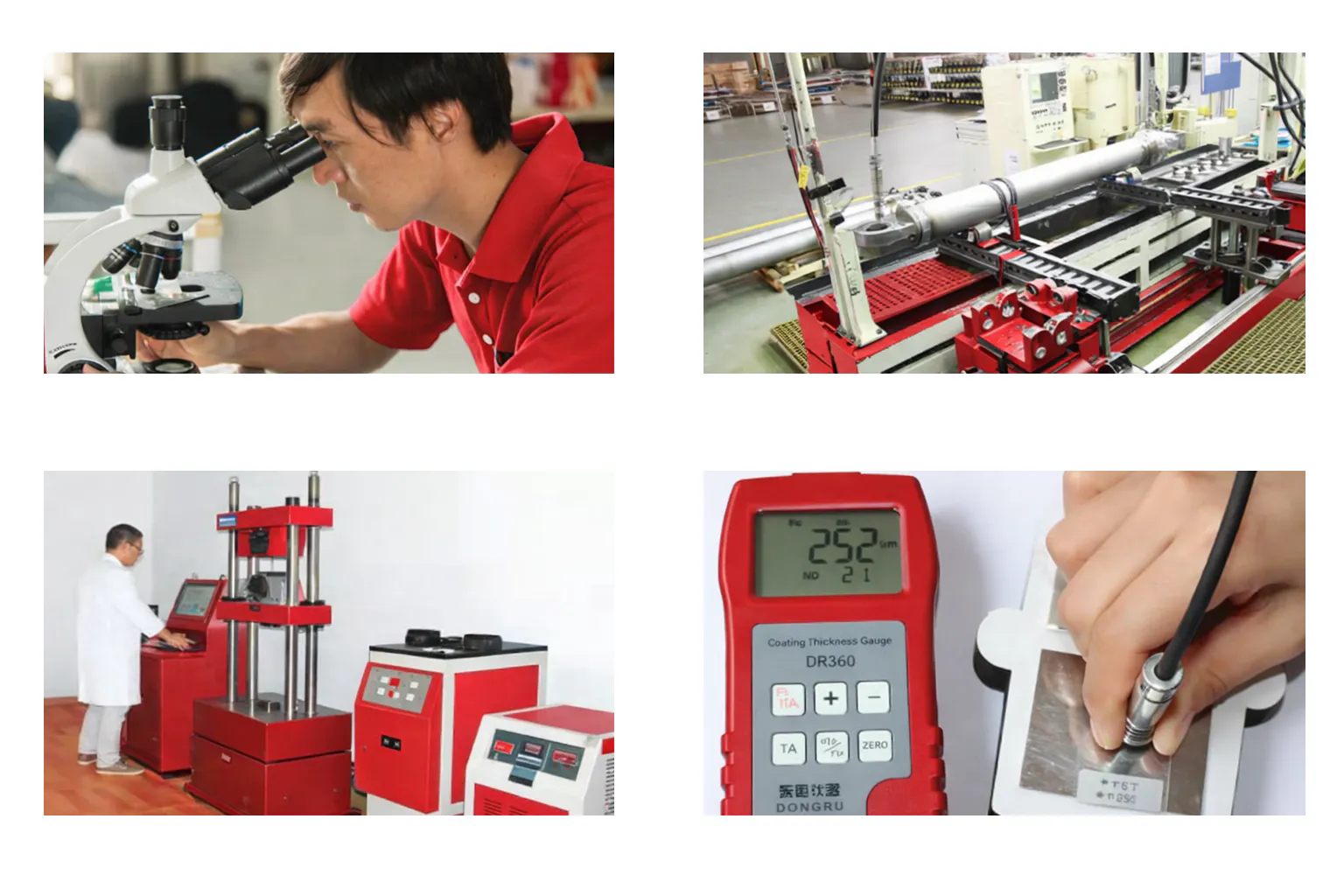
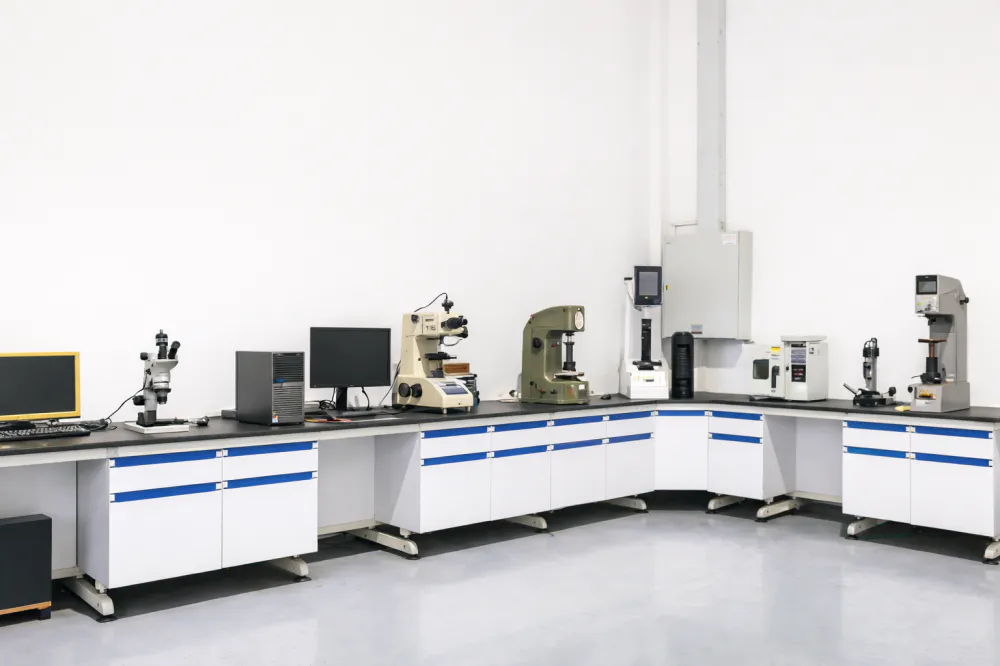
We are a specialist hydraulic cylinder manufacturer with extensive experience supplying फोर्कलिफ्ट झुकाव सिलेंडर products across industrial, pharmaceutical, and chemical industry applications in Latin America and global markets. Our production capability for the फोर्कलिफ्ट झुकाव सिलेंडर spans complete cylinder design from the barrel and rod to the seal system, with access to FKM, PTFE, and NBR seal compound options that match the diverse material compatibility requirements of GMP-regulated facility environments. Our quality management system is ISO 9001:2015 certified, and we maintain material traceability documentation suitable for inclusion in pharmaceutical equipment technical files under INVIMA BPM and WHO GMP frameworks. We supply pharmaceutical facility maintenance teams, forklift service companies, and industrial distributors across Colombia and the broader Andean region with both standard catalogue फोर्कलिफ्ट झुकाव सिलेंडर models and custom-specification cylinders for unusual application requirements.
कार्यशाला

अक्सर पूछे जाने वाले प्रश्नों
Q1. What is a tilt cylinder on a forklift and why does it matter specifically for pharmaceutical warehouse operations in Colombia?
Q2. How do I know which forklift tilt cylinder is compatible with my specific forklift model operating in a GMP pharmaceutical facility in Bogotá?
Q3. What seal compounds should I specify for a forklift tilt cylinder operating in a pharmaceutical facility that uses IPA and quaternary ammonium cleaning agents?
Q4. What is the difference between a lift cylinder and a tilt cylinder on a forklift, and which one requires more attention in pharmaceutical GMP environments?
Q5. How do I get a quote for a forklift tilt cylinder with FKM seals and a GMP documentation package for our facility audit in Medellín?
Q6. What does forklift tilt cylinder drift mean and how often should pharmaceutical facilities in Colombia test for it?
Q7. Which INVIMA requirements specifically apply to forklift hydraulic cylinder maintenance in Colombian pharmaceutical manufacturing warehouses?
Q8. What are the different types of forklift cylinders and which type should a chemical industry facility in Cali specify for corrosive material handling?
Q9. Where can I find a reliable supplier of small forklift tilt cylinders for narrow-aisle pharmaceutical warehouse operations in Colombia?
संपादक: पीएक्सवाई