Retail & FMCG | Warehouse Throughput Guide
How Forklift Tilt Cylinder Response Speed Affects Throughput in High-Volume Supermarket Replenishment Operations
A technical guide for retail logistics managers and warehouse operators in Colombia and across Latin America — covering hydraulic response engineering, cylinder construction, material systems, and the direct link between tilt actuator performance and replenishment cycle times in FMCG distribution environments.
The Hidden Variable in Supermarket Replenishment Speed
Walk through the receiving dock of any large-format supermarket in Bogotá at 3 a.m. and you are watching a logistical race. Trucks arrive on tight delivery windows, pallets move from dock to aisle in sequences choreographed down to the minute, and every forklift cycle — lift, tilt, travel, deposit — must execute without hesitation. In this environment, the components that most directly affect cycle time are not always the ones operators focus on. The electric motor, the pallet racking layout, the warehouse management system — all get attention. The tilt cylinder rarely does.
Yet the hydraulic forklift tilt cylinder is the actuator that controls every single mast angle adjustment the operator makes during a replenishment run. Setting the forks back for safe pallet transport, leveling them for accurate rack placement, tilting forward to engage a floor-level pallet — each of these movements passes through the tilt cylinder. When that cylinder responds sluggishly, when oil viscosity builds up at low ambient temperatures in a refrigerated distribution centre, or when an ageing forklift tilt cylinder seal kit allows internal bypass to slow response, the operator compensates by waiting. Those waiting seconds compound across hundreds of cycles per shift.
This guide examines what governs the tilt cylinder response speed — from bore geometry and seal friction to oil temperature and hydraulic circuit design — and explains why selecting and maintaining the right cylinder is a throughput decision, not merely a maintenance one.
1. What Is a Tilt Cylinder Forklift System and How Does Response Speed Work?
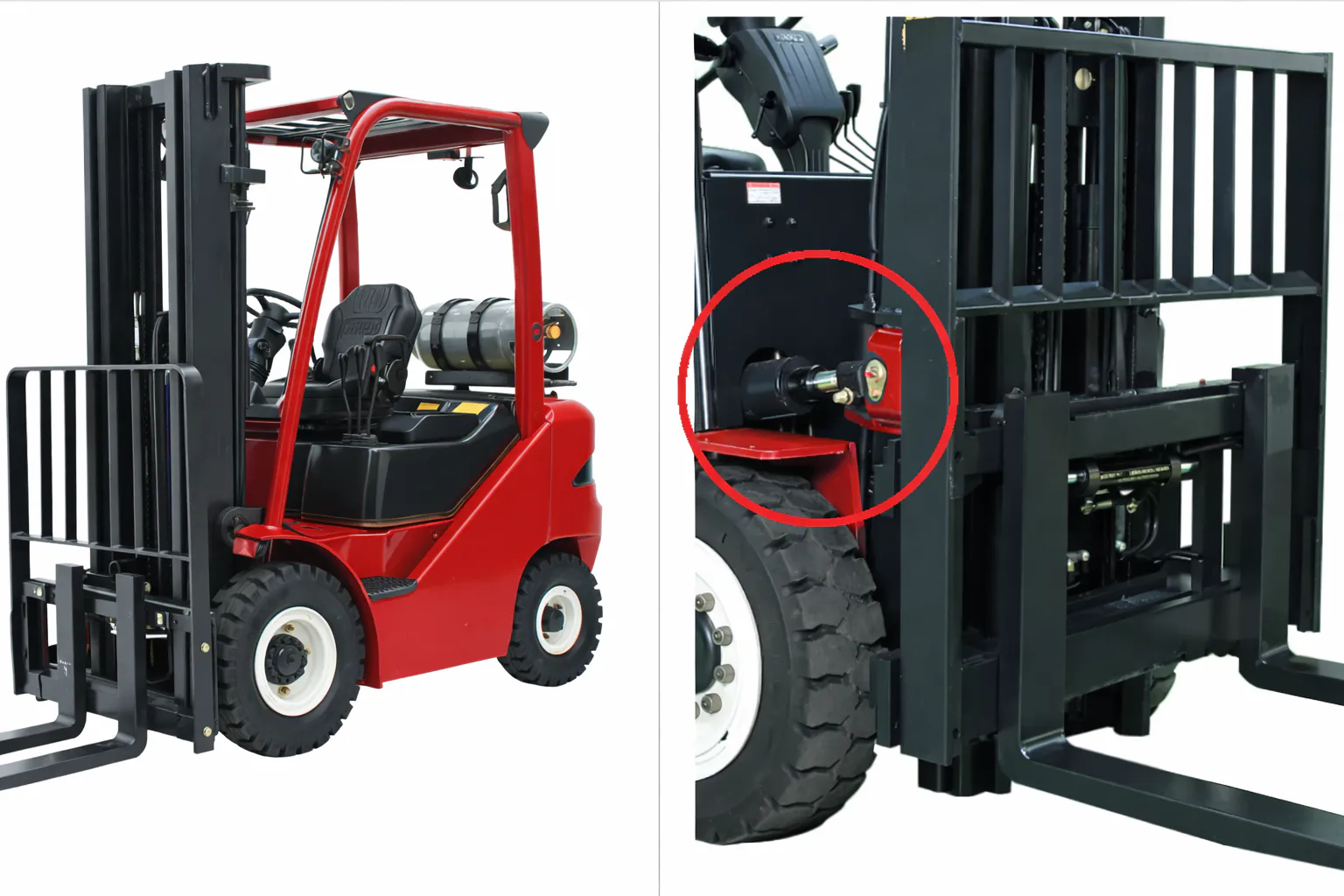
A forklift tilt cylinder is a double-acting hydraulic actuator mounted between the chassis and the mast assembly of a counterbalance or reach forklift. When the operator moves the tilt control lever, pressurised hydraulic oil flows from the pump, through the directional control valve, and into one end of the forklift tilt cylinder — either the cap end to extend the rod and tilt the mast forward, or the rod end to retract and tilt the mast backward. The speed of this motion — the hydraulic response speed — is governed by the flow rate delivered to the cylinder and the effective area on which that flow acts.
In the context of high-volume supermarket replenishment, response speed has a practical definition: the elapsed time between the moment the operator initiates the tilt command and the moment the mast reaches the target angle. For a retailer moving 400 pallets per shift across multiple forklift operators, even a 0.8-second improvement in average tilt response time translates to more than five minutes of recovered productive time per shift per machine — time that directly reduces the replenishment window and lowers the risk of a late-night truck missing its return window.
The variables that govern tilt response speed include hydraulic pump flow capacity, control valve spool characteristics, cylinder bore diameter, rod seal friction, oil viscosity at operating temperature, and the mechanical state of the cylinder components. This is not a single-component performance question — it is a system question with the cylinder at its centre.
The lift cylinder provides vertical fork elevation, raising and lowering the load. It works primarily in one direction under load — the weight of the pallet bears directly on this component every cycle. The tilt cylinder, by contrast, controls the angular position of the mast and operates briefly at the start and end of each handling movement to set and reset the tilt angle. While the lift cylinder works harder per cycle in terms of load-bearing stress, the tilt cylinder executes more frequent angular transitions per pallet move, making its response speed proportionally more influential on total cycle time in high-throughput retail replenishment.
Forklifts typically carry three cylinder types: the forklift mast cylinder (also called the lift or hoist cylinder, which is responsible for vertical fork travel through free-lift and full-lift stages), the tilt cylinder (which controls mast angle via a double-acting push-pull mechanism between the chassis and mast lower cross-member), and auxiliary or attachment cylinders (which operate side-shifters, fork positioners, or rotator attachments). In supermarket distribution, where speed and precise rack placement both matter, the tilt cylinder and the lift cylinder must both be in optimal condition for throughput targets to be consistently achieved.
2. Manufacturing Structure of a Forklift Tilt Cylinder
The internal architecture of a tilt cylinder directly determines both its response characteristics and its service durability in the intensive duty cycles of FMCG distribution. Understanding which component governs which behaviour allows fleet managers and maintenance engineers to diagnose response issues accurately rather than replacing entire assemblies when a targeted intervention would suffice.
The barrel is a seamless cold-drawn steel tube, precision-honed on the bore surface to a roughness of Ra 0.4 µm or better. The bore diameter determines the pressure area — in most standard counterbalance forklifts, tilt cylinder bore diameters run from 50 mm to 90 mm depending on rated lift capacity and mast design. A larger bore delivers more force at the same operating pressure but requires proportionally higher flow to achieve the same extension speed. Bore geometry therefore directly sets the trade-off between force capability and response velocity at a given pump flow rating.
The piston rod is manufactured from C45 carbon steel, heat-treated to an appropriate hardness and ground to a precise cylindrical tolerance before hard-chrome plating. The rod extends from the barrel during forward tilt and retracts during back tilt. Rod surface quality has a direct effect on seal friction — a worn, pitted, or corroded rod surface increases the breakout force required to initiate piston motion, which manifests as a hesitation at the start of the tilt stroke. In a replenishment operation with 400-plus pallet cycles per shift, this delay per cycle accumulates to a measurable throughput deficit within a single working week.
The piston divides the cylinder into cap-end and rod-end chambers. Its sealing package — typically a set of NBR or polyurethane primary seals with PTFE guide rings — prevents internal bypass between chambers. When internal leakage occurs due to worn piston seals, a portion of the pump flow crosses from the pressurised chamber to the return side without performing useful work. This is one of the most common causes of slow tilt response in an otherwise well-maintained hydraulic system. Proactive seal kit replacement restores full volumetric efficiency and recovers the original response speed.
The gland assembly at the rod-end of the barrel houses the wiper seal, the primary rod seal, and the back-up anti-extrusion ring. The wiper seal removes surface-adhered contamination from the rod as it retracts — this is the first barrier against ingress of warehouse dust, cardboard fibres, and temperature-induced condensation moisture that would otherwise attack the primary seal. In FMCG distribution centres where cardboard dust is a constant atmospheric presence, wiper seal inspection should be incorporated into every 500-hour preventive maintenance interval rather than waiting for the standard 1,000-hour interval used in lighter-duty environments.
The cap-end and rod-end closures are welded or threaded to the barrel and carry the hydraulic port fittings that connect to the high-pressure hoses from the control valve block. Port diameter and fitting type affect local pressure drop at the cylinder inlet — an undersized or damaged fitting introduces a restriction that limits the maximum flow to the cylinder at any given pump pressure setting. In fast-cycle supermarket replenishment, where operators depend on rapid, predictable tilt response, verifying port fitting condition during forklift hydraulic cylinder repair is as important as inspecting the seals themselves.
The forklift tilt cylinder is anchored at both ends via clevis-and-pin connections — one to a lug on the chassis cross-member and one to the mast lower structure. Pin wear in these clevises can introduce mechanical play that makes tilt angle control imprecise. Even a few millimetres of pin-to-bore clearance translates to a visible mast oscillation when the cylinder changes direction, which operators instinctively correct by slowing the tilt command. This micro-compensation is invisible in a single cycle but creates a measurable cumulative delay in high-throughput operations where tight rack tolerance is needed for every pallet placement.
3. Material System — How Construction Materials Affect Cycle Time
The material specification of each cylinder component determines how long that component maintains its designed performance before degradation begins to affect response speed. In a supermarket distribution context where forklifts may operate 16–20 hours per day across two or three shifts, material durability directly translates to the length of the maintenance-free interval and the predictability of throughput performance between service events.
| Component | Standard Material | Performance Factor | Effect on Response Speed | FMCG Duty Rating |
|---|---|---|---|---|
| Barrel | EN 10305-4 seamless steel | Bore roundness and surface finish | Maintains low seal friction → consistent response latency | ★★★★★ |
| Batang Piston | C45 steel + hard chrome | Surface hardness and chrome adhesion | Chrome pitting increases seal friction → adds hesitation delay | ★★★★☆ |
| Piston Seals | NBR or PUR with PTFE rings | Internal volumetric efficiency | Worn seals allow bypass → reduces effective flow at cylinder | ★★★★★ |
| Wiper Seal | Polyurethane (PUR) | Contamination exclusion | Failed wiper allows abrasive ingress → accelerates rod damage | ★★★★☆ |
| End Caps | Carbon steel, welded or threaded | Port flow area integrity | Corrosion at ports reduces effective flow area | ★★★☆☆ |
| Pivot Pins | Case-hardened steel | Mechanical play at mount points | Excessive clearance introduces angular hesitation and operator compensation | ★★★☆☆ |
The five-star rating reflects each component’s relative influence on tilt response speed in high-cycle FMCG duty. Piston seals and the barrel bore condition are the two factors most directly affected, making them the priority inspection items in a throughput-focused maintenance programme.
4. Quantifying the Throughput Impact of Tilt Response Delay
Abstract discussions of cylinder response latency are useful to engineers but less convincing to operations managers who need to justify maintenance investment to logistics directors. The following model illustrates the throughput arithmetic for a typical large-format supermarket distribution centre handling overnight replenishment. The numbers use conservative assumptions so that the real-world impact is likely understated rather than inflated.
| Parameter | Optimal Cylinder | Degraded Cylinder | Difference |
|---|---|---|---|
| Tilt response per command (seconds) | 0.9 s | 1.7 s | +0.8 s |
| Tilt commands per pallet cycle (avg.) | 3 | 3 | — |
| Lost time per pallet cycle (seconds) | — | — | 2.4 s |
| Pallets moved per 8-hour shift | 350 | 350 | — |
| Total delay per shift (minutes) | — | — | 14 min |
| Pallets not moved due to lost time (est.) | — | — | 18–22 |
| Fleet of 4 machines, daily impact (pallets) | — | — | 72–88 |
This arithmetic becomes operationally significant when a supermarket distribution centre in Bogotá or Medellín is trying to achieve a 100% shelf fill rate before morning opening. Seventy to eighty pallets not repositioned per night directly translates to empty shelf sections, lost sales, and the labour cost of a second replenishment run during trading hours — at the least favourable cost-per-pallet rate. The forklift tilt cylinder is not a big-budget component. The consequences of neglecting it can be.
5. Recommended Products for High-Throughput Supermarket Replenishment
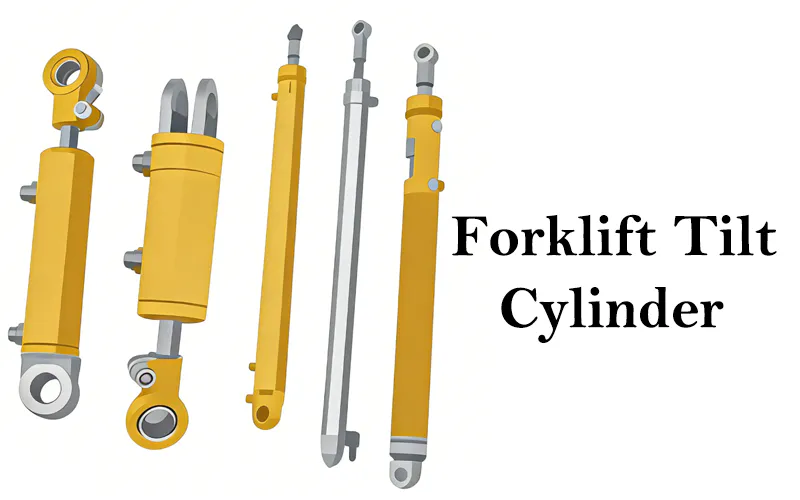
The following forklift tilt cylinder units from our product range are appropriate for the duty cycles and pressure ratings typical of counterbalance forklifts used in large-format supermarket and FMCG distribution environments. Both are double-acting cylinders designed for precise mast tilt control across high-cycle workloads.


6. Hydraulic System Factors Beyond the Cylinder — What Else Governs Response Time
The tilt actuator is at the end of the hydraulic chain — but it performs only as fast as the system feeding it allows. A new or well-serviced cylinder matched to an undersized pump, a restricted control valve, or degraded hydraulic oil will not deliver the throughput improvement implied by the specification alone. Retail logistics managers evaluating tilt response issues must look at the whole hydraulic circuit diagram, not just the actuator.
Oil viscosity falls with rising temperature and increases as temperature drops. In refrigerated distribution centres in Colombia — particularly those operating at 2–4°C for fresh produce storage — hydraulic oil viscosity at the start of a cold morning shift can be two to three times higher than at the system’s normal operating temperature. High viscosity increases flow resistance and reduces the effective flow rate that reaches the forklift tilt cylinder in a given valve-open time. Specifying a hydraulic oil with a Viscosity Index (VI) above 140 — rather than the standard 100–110 VI mineral oil — significantly reduces viscosity-related response degradation in cold environments.
The directional control valve routes oil to one end of the tilt cylinder or the other based on lever position. If the spool is worn, sticky from contamination, or incorrectly centred due to spring fatigue, the flow delivery to the cylinder becomes inconsistent — the tilt response varies from cycle to cycle rather than being predictable. This inconsistency is particularly disruptive in a supermarket replenishment context where operators have developed ingrained timing habits for each tilt command. An unpredictable valve makes every placement a re-evaluation, slowing throughput even when the forklift hydraulic lift cylinder and tilt cylinder are themselves in good condition.
ISO 4406 cleanliness code target for a forklift hydraulic system in high-cycle service should be 16/14/11 or better. Contamination above this level accelerates wear in both the control valve and the cylinder seals simultaneously — a compounding effect where two components degrade in parallel. In FMCG distribution centres where pallets of food products bring cardboard dust, shrink-wrap fragments, and moisture into the environment, maintaining a closed hydraulic reservoir cap and specifying a return-line filter with a 10-micron nominal rating is basic practice. Hydraulic fluid replacement intervals should be halved in dusty FMCG warehouse environments compared to the manufacturer’s standard schedule.
A worn gear or vane pump delivers less flow per revolution than a new unit, effectively reducing the speed ceiling of every hydraulic function — lift, lower, and tilt. When operators report that lift speed has also decreased alongside tilt response, the pump is a more likely root cause than either cylinder individually. Pump flow capacity testing should be incorporated into the annual hydraulic system inspection for any high-cycle forklift operating in a supermarket replenishment environment. Pump wear that reduces flow by 15% translates to a response speed reduction of approximately the same proportion across all actuated functions.
7. Preventive Maintenance Schedule for Throughput-Focused Forklift Fleets
In FMCG distribution environments where the forklift tilt cylinder operates at high cycle frequency — potentially 1,200 to 1,500 tilt commands per 8-hour shift across pick, transport, and rack-placement operations — the standard OEM maintenance intervals developed for light-to-medium industrial duty are insufficient. The following schedule is designed for Colombian supermarket and FMCG distribution operations running two shifts per day, six to seven days per week.
| Interval | Tindakan | Parameter Checked | Action if Fault Found |
|---|---|---|---|
| Daily (pre-shift) | Visual inspection | Oil staining at gland, rod chrome condition, clevis pin play | Log defect; schedule for service before next shift if leakage noted |
| Weekly | Drift test | Mast drift under 80% rated load held for 5 minutes | Drift > 50 mm / 5 min: inspect and replace forklift tilt cylinder seal kit |
| 500 hours | Wiper and rod seal inspection | Wiper seal lip condition, rod surface chrome quality | Replace wiper seal; address rod chrome damage before it progresses to primary seal |
| 1,000 hours | Full seal replacement | Complete forklift tilt cylinder seal kit — piston seals, rod seals, wiper, backup rings | Proactive replacement regardless of apparent condition; restores volumetric efficiency |
| Annual | Full hydraulic system service | Pump flow, fluid analysis, valve spool condition, hose condition | Address pump wear, fluid replacement, valve reconditioning as required |
| As required | Cylinder replacement | Barrel bore scoring beyond honing recovery, rod chrome delamination, structural damage | Full forklift tilt cylinder replacement with matched specification unit |
Colombian operators under the Decreto 1072 de 2015 SG-SST framework must maintain a documented preventive maintenance programme for all powered industrial trucks. This schedule satisfies that requirement while being calibrated to FMCG throughput performance objectives rather than the minimum regulatory standard. It is intended to be used as both a maintenance checklist and a supporting document during SG-SST system audits, providing a structured record of planned and completed hydraulic system inspection activities for each machine in the fleet.
8. Regulatory Framework — Colombia, Latin America, and International Standards
Forklift hydraulic systems are regulated across multiple legal frameworks in Colombia and internationally. For FMCG operators whose facilities are subject to food safety audits, occupational safety inspections, and increasingly environmental compliance reviews, understanding these frameworks protects both the business and its workforce.
| Region | Standar / Peraturan | Relevance to Tilt Cylinder Maintenance |
|---|---|---|
| Colombia | Decreto 1072 de 2015 (SG-SST) | Requires documented PM programme for all powered industrial trucks; hydraulic leak and cylinder drift are classified as reportable defects under Article 2.2.4.6.24. |
| Colombia | Resolución 2400 de 1979 | General industrial hygiene provisions covering hydraulic fluid spill prevention; forklift hydraulic cylinder repair and seal replacement procedures must prevent floor contamination. |
| Colombia | NTC 3915 (ICONTEC) | National standard for hydraulic cylinder testing and inspection in industrial applications; applicable as reference standard for tilt cylinder acceptance criteria. |
| Latin America | ABNT NBR 15673 (Brazil) / IRAM 8055 (Argentina) | Annual hydraulic cylinder drift testing is a required element of forklift inspection under both frameworks; relevant for Colombian operators with cross-border MERCOSUR supply chain exposure. |
| European Union | Direktif Mesin Uni Eropa 2006/42/EC | CE-marked forklifts sold in Colombia by European OEMs must carry hydraulic systems designed to prevent uncontrolled mast movement — directly referencing tilt cylinder drift performance. |
| USA / International | OSHA 29 CFR 1910.178 / ANSI B56.1 | Hydraulic leakage from any cylinder constitutes a condition requiring immediate removal from service; applies to equipment imported from USA-market manufacturers or sold to US export partners. |
| International | ISO 3691-1:2011 | International counterbalance forklift safety standard; defines hydraulic stability testing protocols that include tilt cylinder performance under rated load conditions. |
| Food Safety | FSSC 22000 / ISO 22000 | FMCG distribution facilities certified under food safety management systems must demonstrate that material handling equipment does not present a contamination risk; hydraulic oil leakage from the forklift mast cylinder or tilt cylinder must be documented and addressed under the facility HACCP plan. |
9. Understanding Forklift Tilt Cylinder Drift and Its Throughput Consequences
Tilt cylinder drift is the slow, unassisted movement of the mast from its set position while the operator holds a loaded pallet stationary with controls in neutral. In a quiet warehouse, this is often visible as the pallet edge gradually moving away from the rack face over 30 to 60 seconds without any control input. The root cause is internal leakage past the piston seal — hydraulic oil bypasses from the pressurised chamber to the return side through gaps opened by worn or chemically degraded seals.
Drift has two throughput effects in practice. The direct effect is the time the operator spends waiting to confirm the pallet is still correctly positioned before releasing the forks — a 5 to 10 second hesitation per placement that is absent on a cylinder with zero drift. The indirect effect is operator confidence: experienced replenishment operators learn to work at the speed limit of their equipment, and when tilt drift makes placement unpredictable, they slow their overall pace to maintain accuracy. This pace reduction persists even during movements where drift is not the active constraint.
The solution to tilt drift is almost always straightforward: replace the piston seal component of the cylinder seal kit. In the vast majority of cases, the barrel bore and piston rod remain serviceable — it is the elastomeric seal that has reached the end of its effective life. Catching this early via a weekly drift test allows the repair to be scheduled during a non-peak maintenance window rather than requiring an emergency replacement mid-shift. It also provides the opportunity to document the defect in the preventive maintenance log before any regulatory inspection visit, demonstrating proactive hydraulic system management in line with Colombian SG-SST requirements under Decreto 1072 de 2015.
10. Related Products — Complete Hydraulic Drive System
Throughput performance depends on the entire hydraulic system, not the cylinder alone. The following complementary product families complete the drive system and are available for one-stop procurement with matched specifications and compatible pressure ratings.
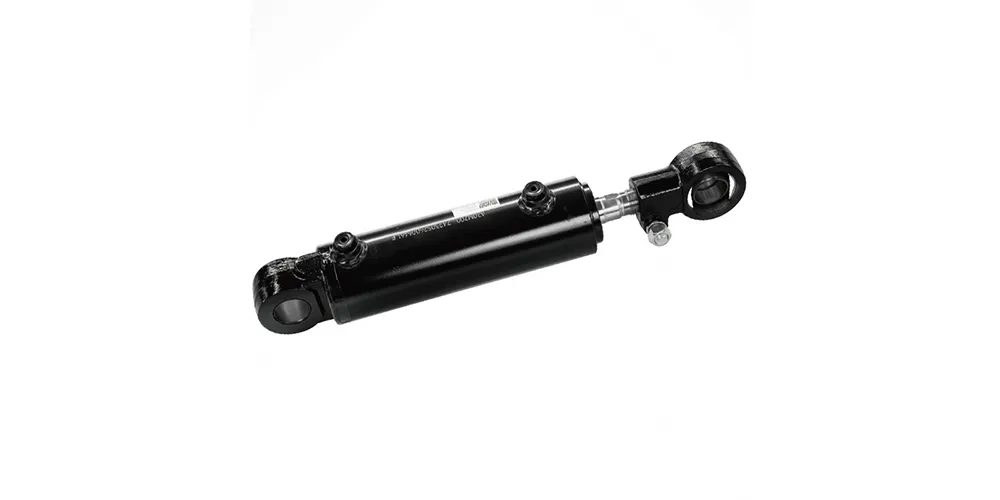
Seri Silinder Miring
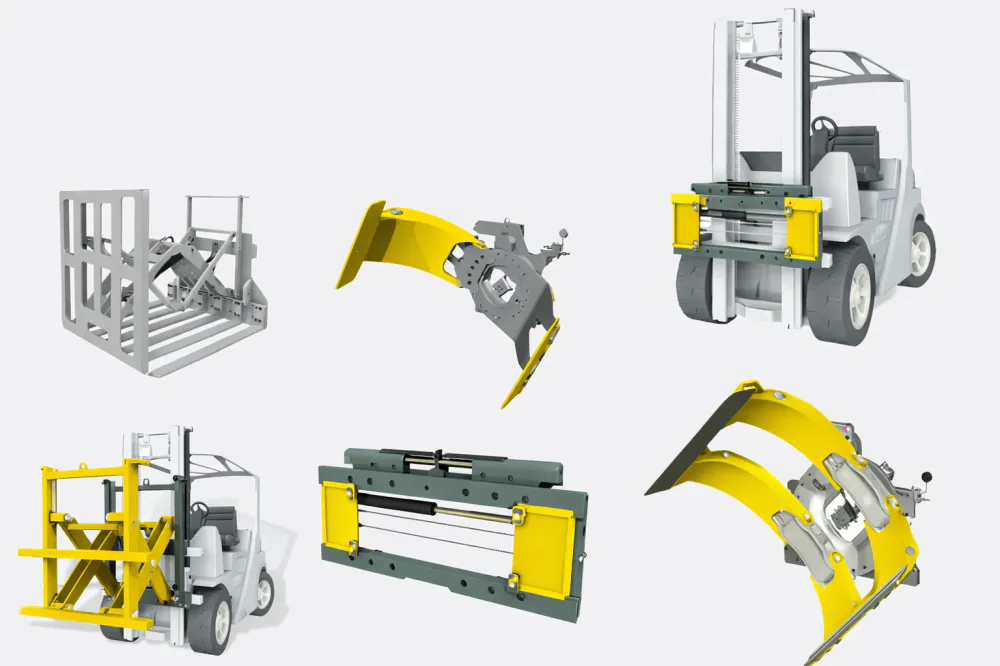
The broader Tilt Cylinder product range covers attachment-specific tilt cylinder configurations for side-shifters, rotators, and fork positioners commonly used in supermarket distribution alongside standard counterbalance forklifts. These units share the same hydraulic port standards and pressure ratings as the EP-HCY cylinder range, enabling consistent fluid specification and forklift tilt cylinder seal kit interchangeability across a mixed-attachment fleet. For Colombian FMCG operators managing diverse fleets across multiple distribution sites, sourcing from a single compatible family reduces spare parts inventory complexity and training requirements for maintenance technicians.
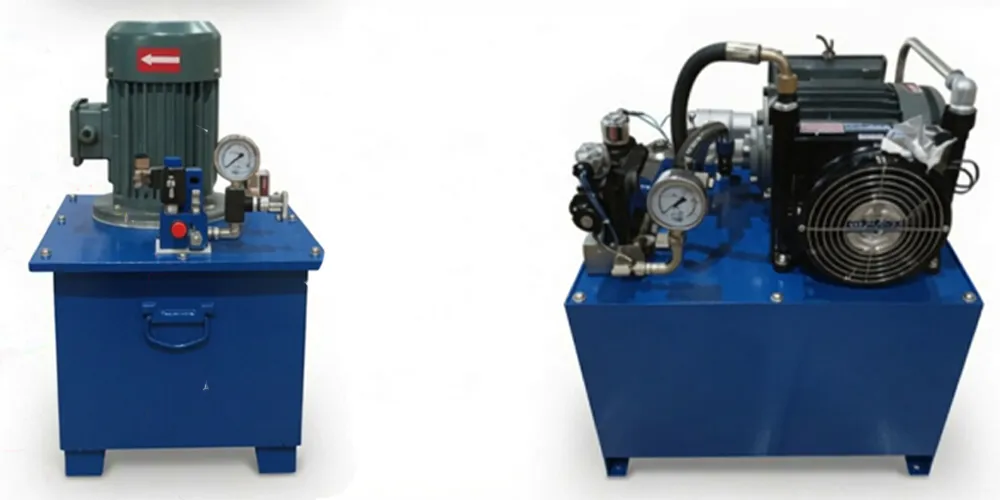
Seri Stasiun Pompa Hidrolik
A correctly specified hydraulic pump station is the upstream foundation of responsive tilt cylinder performance. Pump stations from the same product family as the EP-HCY cylinders are matched for flow rate, pressure setting, and reservoir volume to ensure that the tilt cylinder receives full rated flow at the operating pressure for which the cylinder seals and components are specified. For FMCG distribution operations running high cycle rates, pump stations with integrated filtration and thermal management features maintain hydraulic oil at the optimal viscosity band across shift duration, preventing the cold-start response degradation that otherwise affects the first hour of a refrigerated warehouse shift. One-stop procurement from a single system supplier eliminates inter-component pressure mismatch risks and simplifies forklift hydraulic cylinder repair documentation.
11. About Us
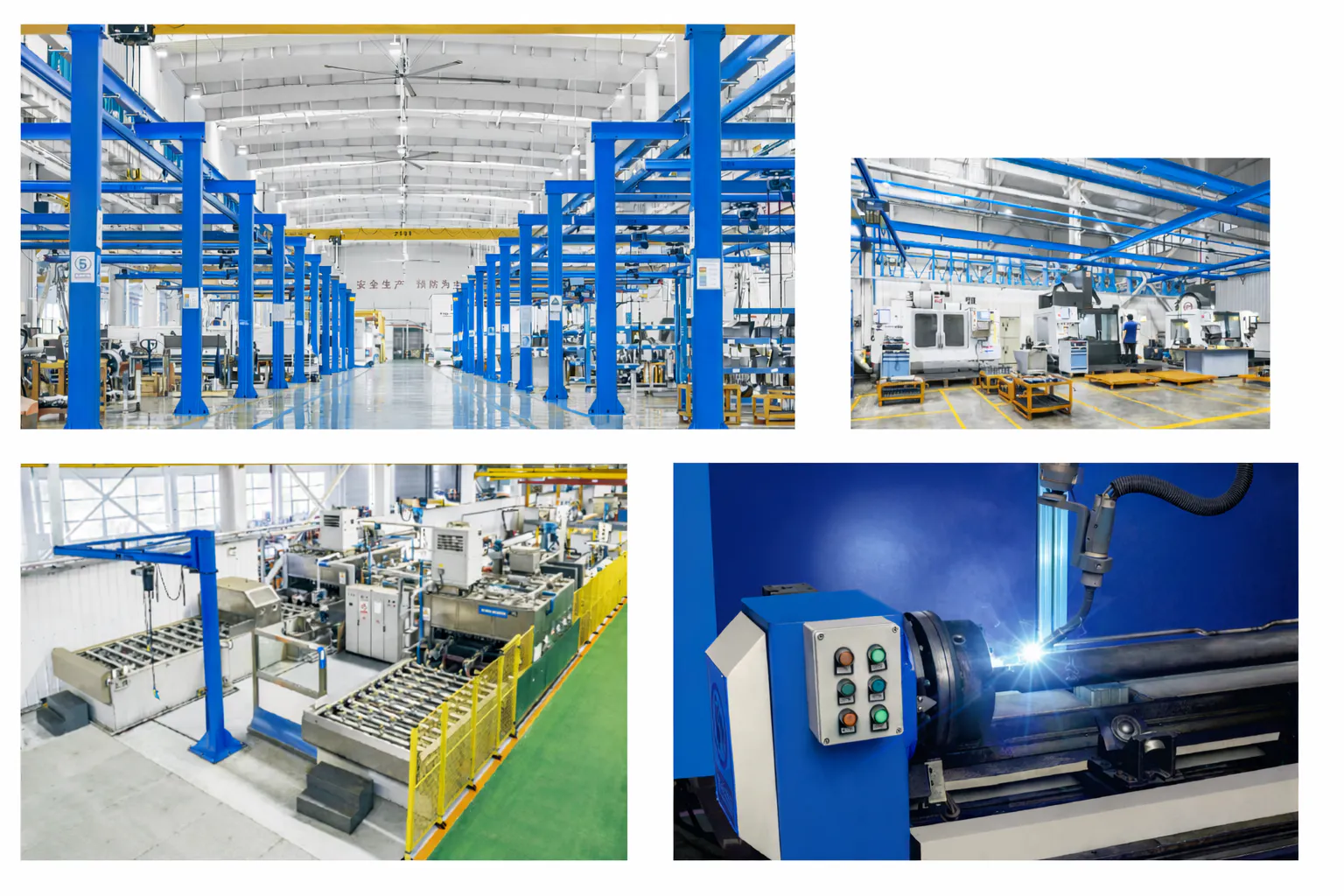
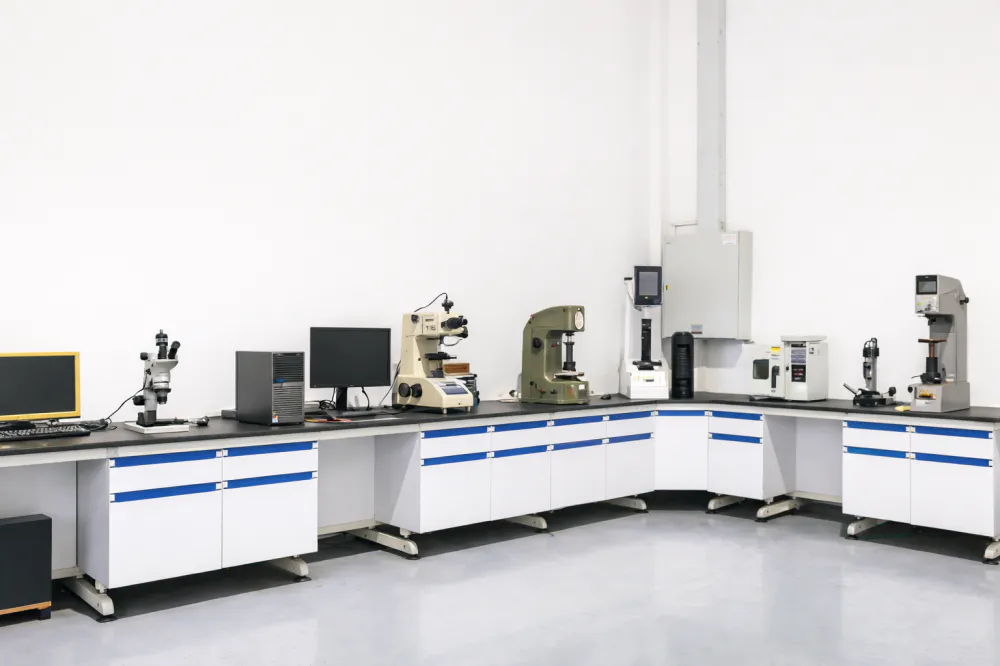
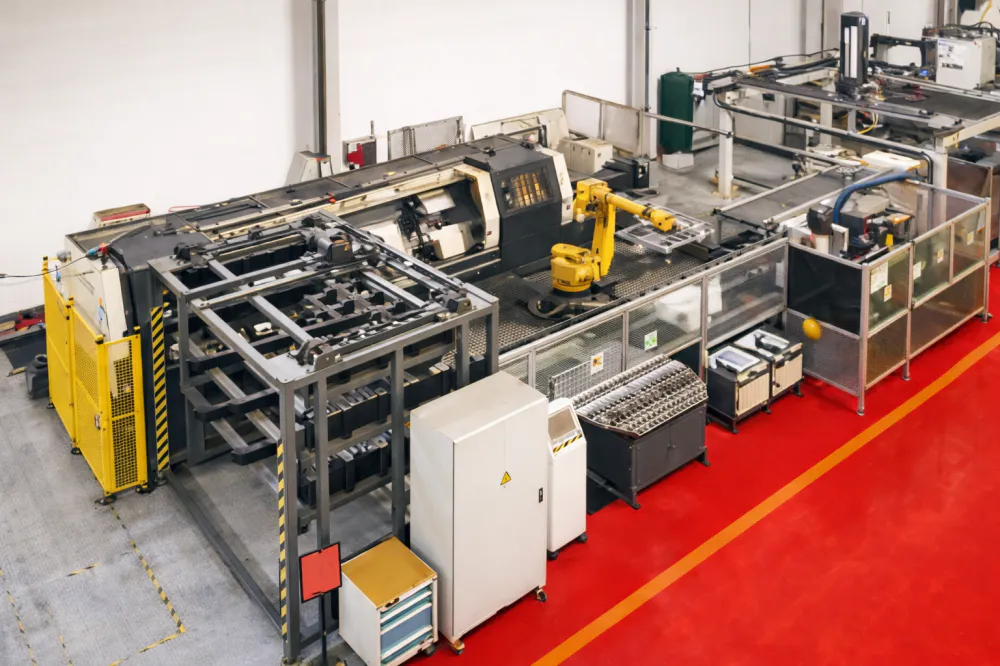
We are a specialist manufacturer of hydraulic tilt cylinders, lift cylinders, and complementary hydraulic components for material handling applications across global industrial, retail, and FMCG markets. Our production facilities operate fully automatic tilt cylinder assembly lines and semi-automatic lift cylinder assembly lines, supported by CNC machining centres, robot welding systems, and automated dimensional inspection equipment. Each unit in the EP-HCY and EP-HCYA ranges is pressure-tested, dimensionally verified, and surface-quality checked before leaving the facility. Custom configurations — including non-standard stroke lengths, alternative bore diameters, and modified installation dimensions — are available to match specific forklift platform requirements. We supply B2B customers in Colombia, across Latin America, and globally with full export documentation, material certificates, and test records to support procurement qualification and maintenance compliance under local regulatory frameworks including Colombia’s Decreto 1072 SG-SST requirements.
Bengkel

Pertanyaan yang Sering Diajukan
Q1. How does a slow forklift tilt cylinder response time affect overnight supermarket replenishment throughput in Bogota distribution centres?
Each 0.8-second increase in tilt response time adds approximately 2.4 seconds to a typical three-tilt pallet handling cycle. Across 350 pallets per shift and a fleet of four machines in a Bogotá supermarket distribution centre, that compounds to roughly 72 to 88 pallets not processed per night compared to a fleet with fully serviceable cylinders. This translates directly to empty shelf sections at store opening, second replenishment runs during trading hours, and elevated per-pallet labour cost. Maintaining hydraulic tilt cylinder response is therefore a throughput and revenue protection measure, not simply a maintenance compliance item.
Q2. What is a tilt cylinder on a forklift and why is it critical for precise pallet placement on high-density retail racking systems?
The forklift tilt cylinder is the double-acting hydraulic actuator that controls the forward and backward angle of the mast assembly relative to the chassis. In high-density retail racking where upright clearances are tight, the ability to precisely set the mast to level before placing a pallet onto a beam face is the difference between a clean placement and a misaligned pallet that risks beam damage or product toppling. A tilt cylinder with worn seals introduces an element of positional uncertainty that forces operators to slow their approach pace — the opposite of what high-throughput replenishment demands.
Q3. Which forklift tilt cylinder seal kit should I specify for a high-cycle FMCG replenishment forklift operating two shifts per day in Medellin?
For two-shift FMCG replenishment duty in Medellín, a forklift tilt cylinder seal kit with polyurethane (PUR) rod wipers, NBR or PUR primary rod seals, and PTFE-loaded composite piston guide rings provides the best balance of seal longevity and friction performance for mineral hydraulic oil systems. The proactive replacement interval should be 1,000 operating hours rather than the standard 2,000-hour cycle, given the elevated duty rate. The kit specification should include all elastomeric elements — primary rod seal, wiper, piston seal, and back-up anti-extrusion ring — to restore full volumetric efficiency at each service event.
Q4. What causes forklift tilt cylinder drift and how do I fix it quickly to avoid disrupting a supermarket replenishment night shift?
Tilt cylinder drift is almost always caused by internal bypass across worn piston seals. The piston seal no longer fully blocks hydraulic flow between the cap-end and rod-end chambers, allowing the load-side pressure to equalise slowly and the mast to drift from its set position. The fix is replacing the piston seal element of the forklift tilt cylinder seal kit — typically a two to three hour job that can be completed in a standard maintenance shift. If the barrel bore shows scoring or the piston rod is pitted, a more comprehensive forklift tilt cylinder repair or full replacement will be needed, but in most cases the cylinder body remains serviceable and only the seals require attention.
Q5. Where can FMCG warehouse operators in Colombia find a reliable supplier of hydraulic forklift tilt cylinder parts with short lead times?
The most reliable sourcing approach for Colombian FMCG operators is to identify a manufacturer that holds standard EP-HCY or equivalent cylinder seal kits in stock and can confirm the specific seal dimensions and material specification for your forklift model and cylinder configuration. Verify that the supplier can provide product certifications, dimensional inspection records, and pressure test certificates — documentation that supports both procurement approval under internal quality systems and regulatory compliance under Colombia’s Decreto 1072 SG-SST maintenance record requirements. Having a consignment of spare seal kits at site eliminates the lead-time risk of an unplanned mid-shift cylinder failure.
Q6. How often should a forklift tilt cylinder seal replacement be scheduled for forklifts in a high-volume supermarket distribution centre?
For forklifts in high-volume supermarket distribution centres running two shifts per day, the recommended forklift tilt cylinder seal replacement interval is every 1,000 operating hours — approximately every 6 to 8 months at typical supermarket duty rates. This is half the standard 2,000-hour interval used in lighter-duty industrial environments and reflects the higher cycle frequency of retail replenishment duty. The weekly drift test provides early warning if deterioration is progressing faster than the scheduled interval suggests, allowing the replacement to be brought forward to the nearest planned maintenance window rather than responding to an in-service failure.
Q7. What are the dimensions of a forklift tilt cylinder suitable for a 2-tonne counterbalance forklift used in supermarket back-of-house replenishment in Barranquilla?
For a 2-tonne counterbalance forklift used in Barranquilla supermarket replenishment, the EP-HCY-2 forklift tilt cylinder with a stroke of 156 mm and an installation distance of 453 mm is a representative specification. Bore diameter for this capacity class typically falls in the 55–65 mm range depending on the mast manufacturer’s pressure specification. Always confirm the dimensions against the forklift manufacturer’s replacement specification or measure the installed unit’s stroke, installation distance, and clevis bore dimensions before ordering — dimensions vary between forklift brands and mast types even within the same capacity class.
Editor: PXY