Construction & Civil Engineering | Industrial Assembly Line Equipment
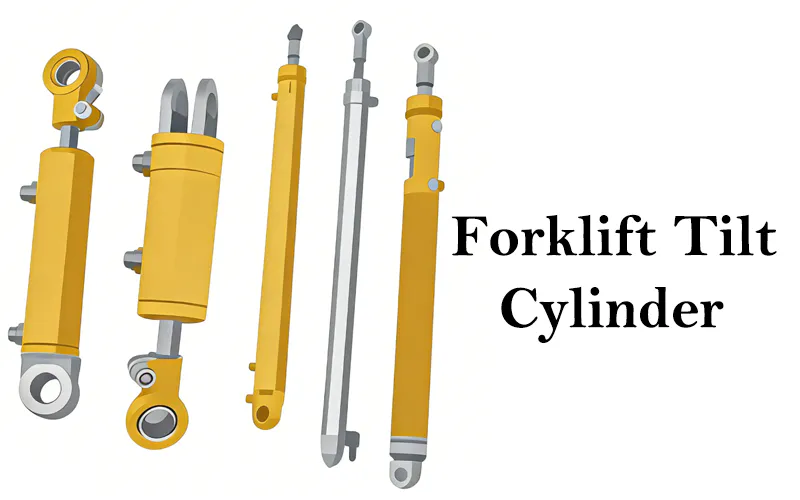
Why Automotive Plants in Germany Specify DIN-Standard Forklift Tilt Cylinders for Assembly Line Forklifts
A technical reference for procurement engineers, plant maintenance teams, and equipment specifiers on why DIN dimensional standards govern forklift tilt cylinder selection inside German automotive manufacturing facilities, and what this standardisation means for buyers in Colombia and other markets sourcing equivalent equipment.
DIN Standardisation Guide
Automotive Assembly Line Equipment
1. Why German Automotive Plants Treat Forklift Tilt Cylinder Specification as a Standards Question
German automotive manufacturing facilities operate some of the most procedurally rigorous equipment procurement systems in industrial manufacturing, and the forklift tilt cylinder fitted to an assembly line forklift is no exception to this discipline. Where a general warehouse operation might select a forklift tilt cylinder primarily on price and immediate availability, a German automotive plant’s maintenance engineering department typically begins the forklift tilt cylinder specification process with a dimensional standard — most often a DIN reference — and works outward from there to confirm pressure rating, mounting geometry, and seal material compatibility with the plant’s existing hydraulic fluid programme. This standards-first approach to forklift tilt cylinder selection reflects the operational reality of an assembly line environment, where a forklift performing repetitive component delivery cycles between feeder lines and final assembly stations cannot tolerate the downtime associated with a non-standard replacement part that does not interchange cleanly with the original installation.
The practical consequence of this approach is that German automotive procurement teams treat forklift tilt cylinder dimensional conformity as a baseline qualifying criterion rather than a secondary preference. A forklift tilt cylinder supplier seeking to be considered for assembly line forklift fleets at a German automotive plant must demonstrate that bore diameter, rod diameter, stroke length, and mounting distance conform to recognised DIN dimensional series before pressure rating or material specification is even discussed. For equipment buyers and maintenance teams in Colombia and other markets evaluating which forklift tilt cylinder to specify for similar high-cycle industrial environments, understanding why German automotive plants apply this discipline — and what DIN conformity actually verifies — provides a useful procurement framework that extends well beyond Germany’s borders.
2. What DIN Dimensional Standards Actually Verify in a Forklift Tilt Cylinder
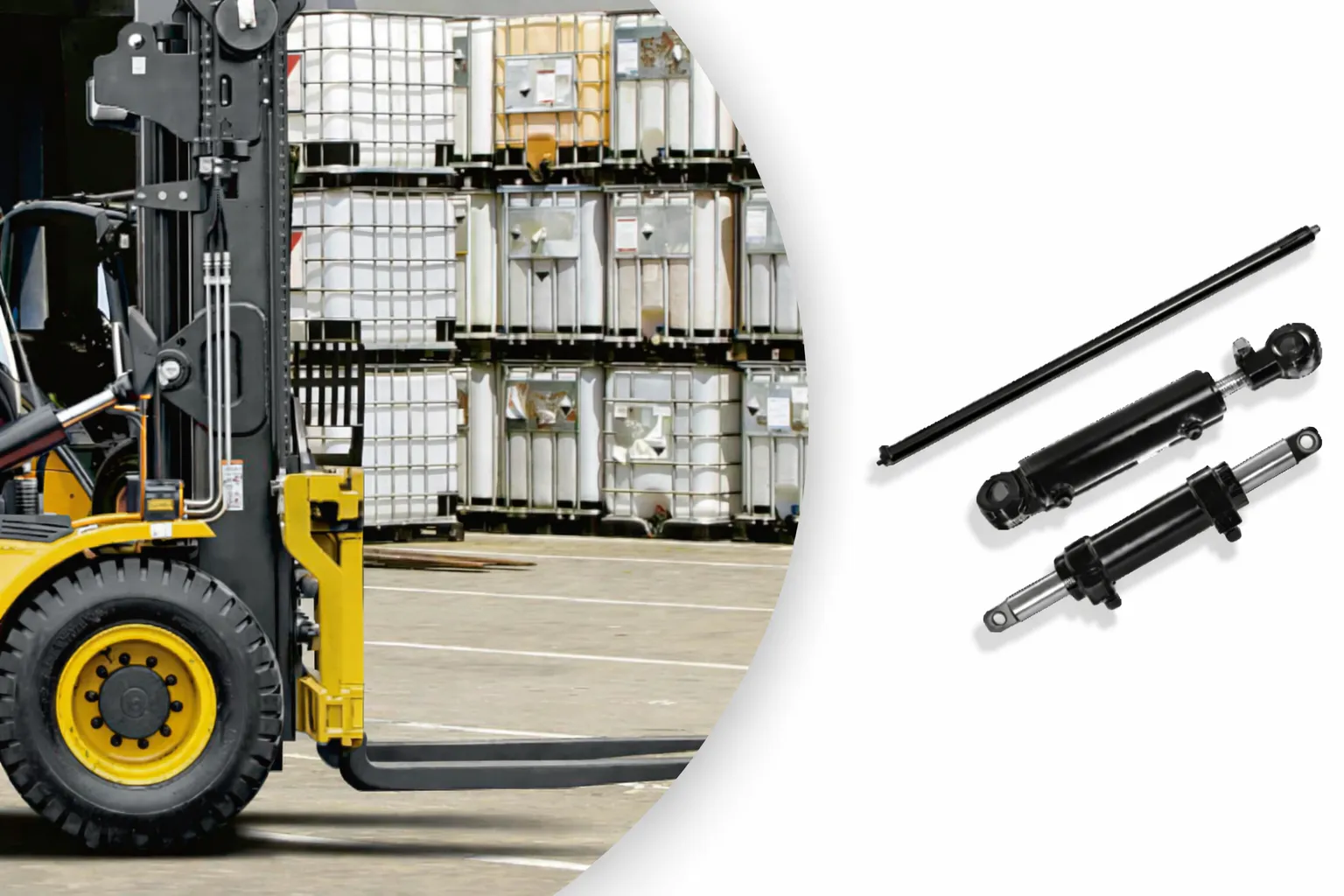
DIN — the Deutsches Institut für Normung — publishes the dimensional reference standards that German industry has relied on for mechanical component interchangeability for more than a century, and hydraulic cylinder mounting dimensions are no exception to this tradition. When a German automotive plant specifies a DIN-conforming forklift tilt cylinder, that decision forklift tilt cylinder, the standard is verifying three things simultaneously: that the bore and rod diameters fall within a recognised series rather than an arbitrary custom dimension, that the mounting hole pattern and pin centre distances match published reference tables, and that the cylinder’s pressure rating aligns with the load class implied by its bore size. This matters enormously on an assembly line, where a maintenance technician replacing a worn forklift tilt cylinder needs confidence that a DIN-conforming part will bolt directly into the existing carriage bracket without field modification, regardless of which manufacturer originally supplied the cylinder.
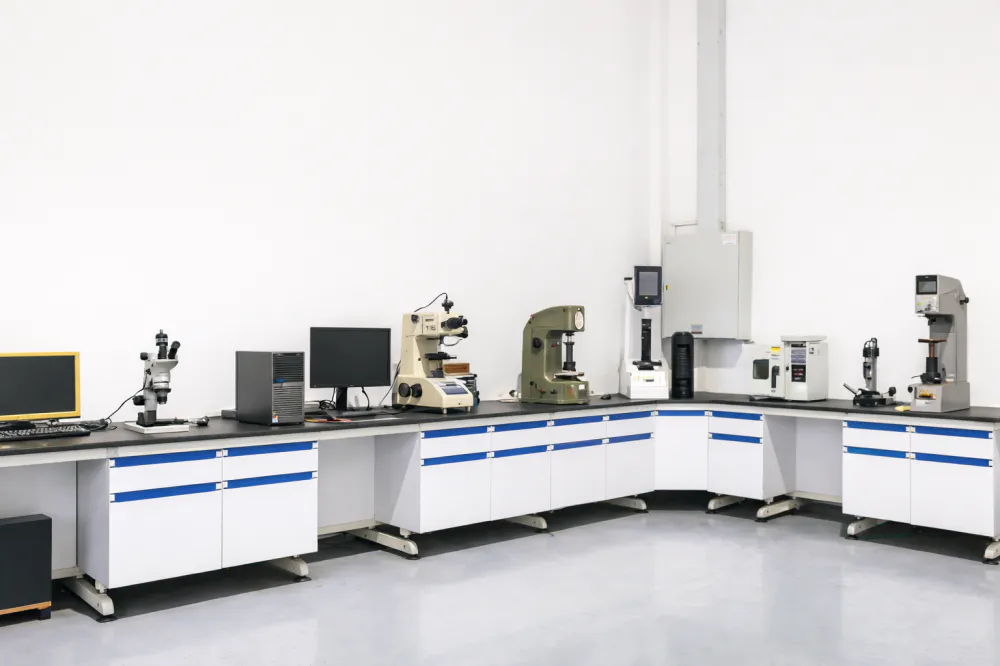
Beyond pure interchangeability, DIN conformity for a forklift tilt cylinder also functions as an implicit quality signal within German industrial procurement culture. A forklift tilt cylinder manufactured to DIN dimensional tolerances has, by necessity, been produced under a manufacturing process disciplined enough to hold those tolerances consistently across a production run — loose machining tolerances and DIN conformity are functionally incompatible. German automotive plant engineers use this forklift tilt cylinder relationship as a practical proxy: specifying DIN dimensions is partly about achieving physical interchangeability and partly about filtering supplier quality before more detailed technical evaluation begins. This two-layer benefit — dimensional certainty plus an implied manufacturing discipline — is why DIN standardisation remains the starting point for forklift tilt cylinder specification across German automotive manufacturing, even as plants increasingly source components internationally rather than exclusively from domestic suppliers.
3. Manufacturing Structure: What an Assembly-Line-Rated Forklift Tilt Cylinder Requires
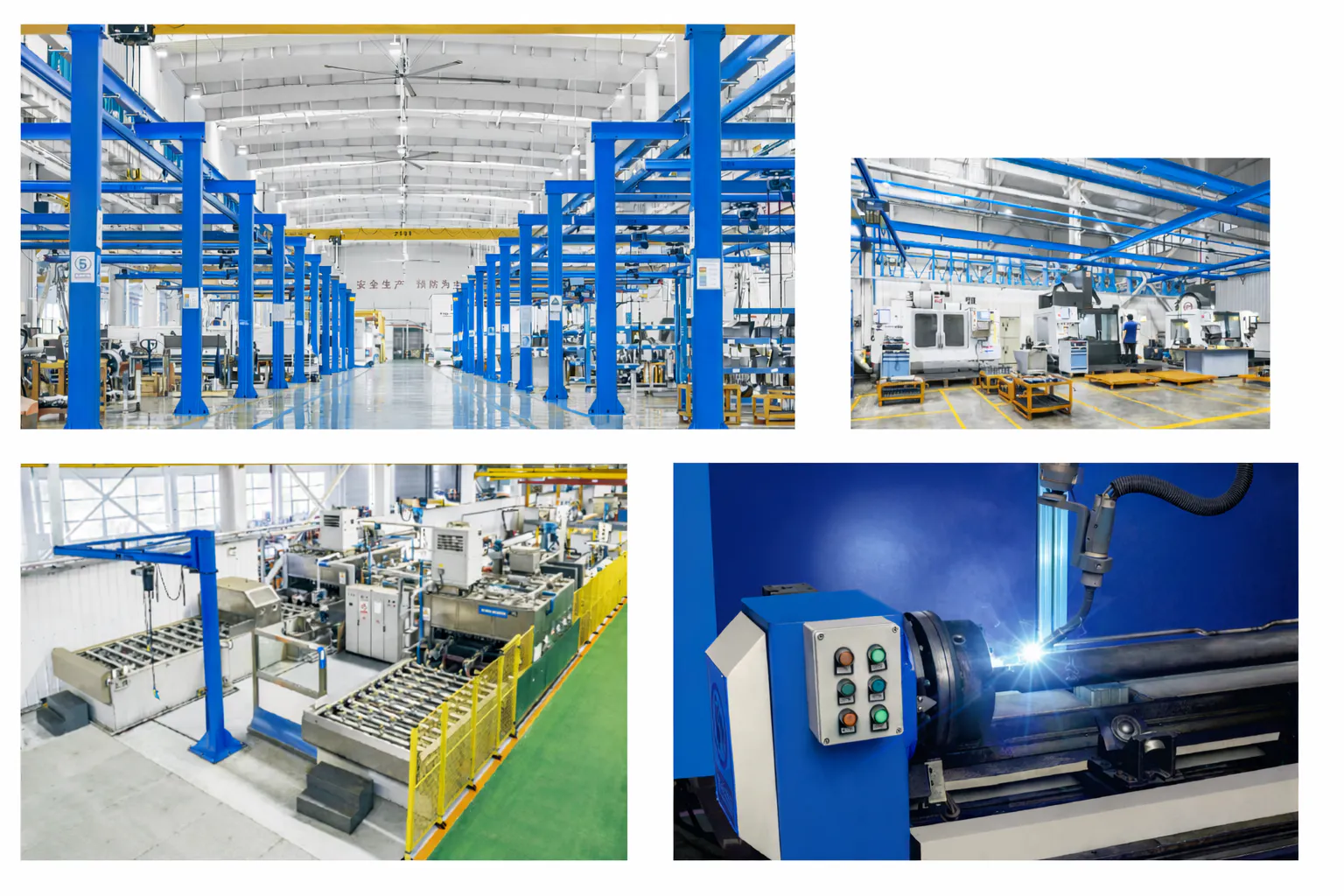
Assembly line forklifts fitted with a forklift tilt cylinder in automotive manufacturing operate under a duty cycle pattern that differs meaningfully from general warehouse handling — short, frequent tilt movements repeated hundreds of times per shift as the forklift collects components from feeder racks and delivers them to fixed assembly stations along the line. This high-frequency, low-amplitude cycling pattern places particular demands on a forklift tilt cylinder’s seal system and rod surface finish, since the wear mechanism at play is closer to repetitive fretting fatigue than to the longer, less frequent strokes typical of yard or container handling. A forklift tilt cylinder manufactured for this environment requires a barrel bore honed to a tighter surface finish specification than a general-purpose unit, reducing the micro-abrasion that accumulates from thousands of short reciprocating cycles per day.
The piston and gland assembly inside a same forklift tilt cylinder destined for this duty cycle is typically fitted with a dual wiper seal arrangement at the rod gland, providing redundant contamination exclusion given that assembly line environments — despite generally cleaner conditions than outdoor construction work — still introduce metal filings, welding spatter residue, and general industrial particulate into the surrounding air. The clevis mounting eyes on this class of forklift tilt cylinder are forged and bushed with a hardened steel or bronze-composite bearing sized to resist the elongation that develops from sustained high-cycle pin loading, since a worn clevis bushing on a forklift tilt cylinder in an assembly line forklift introduces exactly the kind of carriage angle drift that disrupts precision component placement during repetitive pick-and-place cycles.
End cap and gland retention on forklift tilt cylinder units specified for this application generally use a threaded gland nut design rather than a snap-ring arrangement, allowing the plant’s in-house maintenance team to perform a seal replacement without removing the entire forklift tilt cylinder from the carriage — a meaningful consideration when minimising assembly line downtime is the primary maintenance objective. This serviceability detail is frequently as important to a German automotive plant’s procurement decision as the cylinder’s headline pressure rating, since the total cost of ownership calculation for high-cycle equipment weighs maintenance accessibility heavily against raw component price.
4. Material System: Component Specifications for High-Cycle Assembly Line Duty
The material specification for a same forklift tilt cylinder intended for automotive assembly line service reflects the specific wear and fatigue mechanisms associated with high-frequency, short-stroke cycling rather than the abrasion and corrosion priorities that dominate outdoor construction equipment specification. The table below summarises the principal material choices and their relevance to this duty profile.
5. Technical Specification Comparison: DIN-Conforming Forklift Tilt Cylinder Models
The following table compares working pressure, stroke, mounting distance, and weight across forklift tilt cylinder models suited to the bore and pressure classes commonly specified for assembly line forklifts of the size typically found inside automotive manufacturing plants.
For standard-frame assembly line forklifts handling palletised components and bin loads with a forklift tilt cylinder, between feeder lines and assembly stations, compact mounting configurations such as the EP-HCY-2, with its 453mm mounting distance and 156mm stroke, suit the carriage geometry typical of counterbalance forklifts in the 1.5 to 3-tonne capacity range commonly deployed inside German automotive plants. Where a facility operates larger reach trucks or extended-mast equipment for high-rack component storage, longer mounting configurations comparable to the EP-HCY-1 may be relevant, though most pure assembly-line delivery applications favour the compact dimensional class.

6. What Is a Tilt Cylinder Forklift Maintenance Teams Need to Understand Before Specifying Replacements
Before a maintenance engineer at any plant evaluating a forklift tilt cylinder — German or otherwise — can correctly specify a replacement, it helps to be precise about what is a tilt cylinder forklift mast systems actually rely on functionally. The forklift tilt cylinder is the hydraulic actuator that rotates the mast or carriage assembly around a horizontal pivot, adjusting the fork angle forward or backward independently of lift height. This is distinct from the lift cylinder forklift mast systems use to raise and lower the carriage vertically. On an assembly line forklift, both systems work in concert during a typical delivery cycle: the lift cylinder positions the load at the height needed to clear obstacles and align with the receiving rack, while the forklift tilt cylinder maintains the fork angle that keeps the load secure during the short transit distance between feeder line and assembly station.
Understanding what is a tilt on a forklift in practical operational terms means recognising that even a few degrees of uncommanded angle drift becomes operationally significant on a high-precision assembly line, where component bins must be presented at a consistent angle for automated or semi-automated unloading systems further down the process. This operational sensitivity is precisely why German automotive plants apply such rigorous DIN-based specification discipline to forklift tilt cylinder procurement — the cylinder is not merely a generic hydraulic component but a precision positioning device whose dimensional and material specification directly affects line throughput and component handling accuracy.
7. Working Principle: Why High-Cycle Duty Changes Forklift Tilt Cylinder Engineering Priorities
A forklift tilt cylinder operates through the same fundamental hydraulic principle regardless of application — pressurised fluid drives the piston in one direction to tilt the carriage forward, and reversed flow drives it the opposite direction to tilt back — but the engineering priorities shift substantially when the duty cycle changes from occasional long strokes to frequent short strokes. On an assembly line forklift fitted with this type of forklift tilt cylinder, completing a delivery cycle every few minutes across an eight or ten-hour shift, the cylinder may complete several hundred tilt-forward and tilt-back cycles per day, each cycle relatively brief but cumulatively far more frequent than the duty profile of a yard forklift performing intermittent, longer-duration lifts. This frequency profile concentrates wear at the same small bore section repeatedly, rather than distributing it across a longer stroke length, which is the underlying reason assembly-line-rated forklift tilt cylinders require tighter bore surface finish tolerances than general-purpose units of comparable bore diameter.
Double-acting operation, standard across the forklift tilt cylinder models referenced in this guide, is essential to this high-frequency application because it allows the control valve to drive the carriage actively in both directions without relying on gravity or spring return for either stroke. On an assembly line where forklift tilt cylinder cycle time directly affects throughput, a single-acting design’s dependence on gravity-assisted return would introduce unpredictable cycle timing — an operationally unacceptable variable on a line calibrated to a fixed takt time. The consistent, hydraulically driven response of a double-acting forklift tilt cylinder in both directions is therefore not simply a performance preference on assembly line equipment but a functional requirement tied directly to production line timing discipline.
Internal load-holding characteristics in a forklift tilt cylinder also matter differently in this application than in general material handling. While an assembly line forklift rarely holds a load at a fixed tilt angle for extended periods the way a construction telehandler might during a precision placement task, the cylinder must still resist any drift during the brief pause at each delivery point while the operator or an automated system removes the component load. Seal quality and piston-to-bore clearance tolerances within the same forklift tilt cylinder directly determine how tightly this momentary position hold is maintained, reinforcing why German automotive plants weight seal specification and manufacturing tolerance so heavily in their procurement evaluation.
8. Application Scenarios Within Automotive Manufacturing and Related Industrial Settings
The DIN-standard specification approach discussed throughout this guide applies across several specific forklift tilt cylinder use cases found inside automotive plants and comparable high-cycle industrial facilities.
Forklifts shuttling component bins and sub-assembly kits from warehouse storage to feeder racks using a forklift tilt cylinder along the main assembly line rely on a forklift tilt cylinder capable of holding consistent fork angle across hundreds of short cycles per shift, directly supporting the line’s fixed takt time and reducing the angle-correction delays that accumulate when cylinder drift forces operators to make manual adjustments.
Press shop and body shop areas of an automotive plant move stamped panels and welded sub-assemblies on dedicated racks, where a hydraulic forklift tilt cylinder must maintain secure fork angle while transporting loads with an irregular centre of gravity, a duty profile that places particular emphasis on cylinder holding force and seal integrity under momentary load shifts.
Trim and final assembly zones, where interior components, seating, and finishing hardware arrive in sequenced kits, depend on assembly line forklifts whose forklift tilt cylinder repeatability supports just-in-sequence delivery accuracy, since a misaligned bin presentation at this stage can directly disrupt the sequencing logic that automotive final assembly lines depend on.
Tier-one component suppliers feeding German automotive plants under just-in-time contracts apply comparable DIN-based forklift tilt cylinder specification standards within their own facilities, since their internal material handling equipment must match the same dimensional and reliability expectations the automotive plant itself enforces across its production ecosystem.
9. Regulatory Framework: Standards Governing Forklift Tilt Cylinders Across Markets
Forklift tilt cylinder specification intersects with both dimensional standards bodies and machinery safety regulation, and the framework differs meaningfully between Germany, the broader European Union, and markets such as Colombia where equivalent equipment is increasingly sourced and operated.
Germany — DIN Standards and EU Machinery Directive Integration
Germany applies DIN dimensional standards alongside the EU Machinery Directive 2006/42/EC, which governs CE marking requirements for forklifts and material handling equipment sold or operated within Germany and the wider European Union. DIN ISO 6020 and DIN ISO 6022 specify mounting dimensions for medium and high-pressure hydraulic cylinders respectively, providing the dimensional reference framework that allows German automotive plants to source forklift tilt cylinder replacements from multiple qualified suppliers without compromising interchangeability. EN 1726-1 sets safety requirements specific to powered industrial trucks including forklifts, with hydraulic system safety additionally governed by EN ISO 4413. German plants typically require supplier documentation confirming DIN dimensional conformity alongside CE compliance records before a forklift tilt cylinder is approved for fleet-wide use.
Colombia — Regulatory Context for Industrial Material Handling Equipment
In Colombia, industrial material handling equipment operating in manufacturing and assembly environments falls under the Sistema General de Riesgos Laborales occupational safety framework, with Resolución 0312 of 2019 establishing minimum workplace safety standards applicable to powered equipment operation. Colombia does not maintain a domestic dimensional standard equivalent to DIN specifically for hydraulic cylinders, and Colombian manufacturing facilities — including automotive parts plants and tier-supplier operations serving export markets — commonly reference ISO or DIN dimensional series directly when specifying a forklift tilt cylinder, particularly where imported forklift fleets from German or other European manufacturers are already in service and replacement parts must match the original equipment dimensional standard.
ISO Standards — International Dimensional Reference
ISO 6020-2 and ISO 6022 provide the international equivalent dimensional framework to the DIN series referenced by German automotive plants, and the two standards are closely aligned, which is part of why DIN-conforming forklift tilt cylinder products typically also satisfy ISO dimensional requirements without modification. ISO 10766 governs seal groove dimensions, ensuring that seal kits sourced independently of the original cylinder manufacturer remain dimensionally compatible — a practical benefit for maintenance teams in Colombia and elsewhere who need to source a forklift tilt cylinder seal kit without being limited to a single supplier’s proprietary parts catalogue.
10. Related Products: System Compatibility for Assembly Line Forklift Hydraulics
Alongside the forklift tilt cylinder range, compatible hydraulic components support a complete one-stop supply approach for assembly line forklift fleets and broader industrial material handling hydraulic systems.
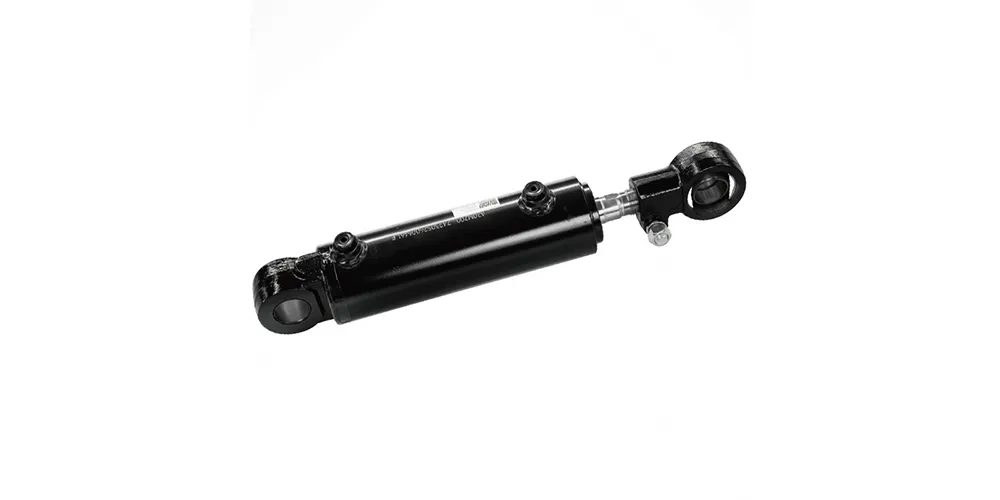
Our broader Silinder Condong range extends beyond forklift-specific applications to cover tilt actuation for additional aerial and material handling equipment, built to the same dimensional and manufacturing discipline described throughout this guide for consistent cross-equipment compatibility.
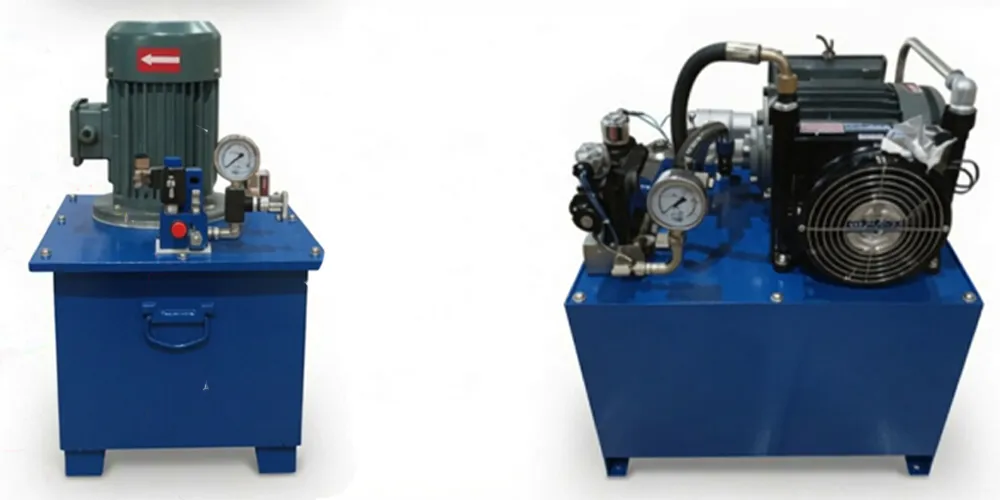
A matched hydraulic pump station series supplies the working pressure and flow rate required by forklift tilt cylinder and lift cylinder forklift circuits operating together on an assembly line forklift, supporting full system compatibility from a single supply source for equipment builders and plant maintenance teams.
Soalan Lazim
Editor: PXY