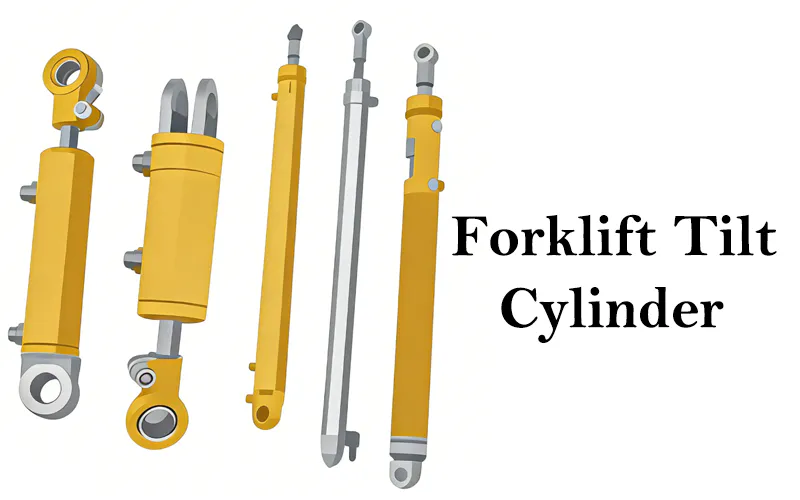
Heavy Equipment Manufacturing | Hydraulic Systems
A technical guide for maintenance engineers, equipment managers, and procurement teams in heavy industry across Colombia and Latin America — covering proportional hydraulic control, tilt cylinder construction, material systems, regulatory compliance, and practical troubleshooting for ramp loading operations.
Loading heavy equipment onto ramps, transport platforms, and dock-level staging areas is one of the most demanding use cases for any forklift hydraulic system. The combination of an inclined surface, a shifting centre of gravity, and a loaded mast creates lateral and longitudinal forces that test every component in the hydraulic circuit — but none more critically than the Gabelstapler-Neigezylinder. When the tilt cylinder delivers proportional, controlled actuation across the full range of mast angles, the operator can maintain load stability even as the machine transitions between flat floor and grade. When it does not — when a worn seal allows drift, when a bent rod causes stick-slip, or when internal bypass erodes fine control — the consequences range from dropped loads to tipped machines. This guide examines the engineering principles behind smooth ramp loading, the design characteristics of high-performance tilt cylinders, and the maintenance practices that keep proportional control intact across thousands of loading cycles in the demanding manufacturing environments of Bogotá, Medellín, Barranquilla, and across the industrial zones of Colombia.
1. Why Ramp Loading Tests the Forklift Tilt Cylinder More Than Any Other Operation
On flat ground, a forklift hydraulic tilt cylinder responds to a single primary demand: rotate the mast forward or backward relative to the vertical axis of the machine. The operator pushes the tilt lever, the proportional control valve routes flow to the cylinder, and the mast moves. The load remains in stable contact with the forks throughout, and gravity acts predictably downward through the forks and the hydraulic circuit.
On a ramp, every assumption changes. The machine is now inclined, which means gravity creates a component force acting along the ramp gradient that tries to slide or tip the load. The forklift mast cylinder must simultaneously resist this tendency to drift while still allowing fine operator inputs to be transmitted smoothly and proportionally to the mast angle. At a 5-degree ramp incline — common at loading docks and container ramps across Colombian industrial facilities — the lateral force component on a 2,000 kg load reaches approximately 170 kg. At 10 degrees, it exceeds 340 kg. This force is absorbed entirely by the hydraulic tilt cylinder through its closed hydraulic circuit when the tilt lever is in neutral.
The technical result is that the Gabelstapler-Neigezylinder on a ramp loading operation must deliver three things simultaneously: hold position under static load without drift (no internal seal leakage), respond smoothly and proportionally to small lever inputs from the operator (no stick-slip from worn or contaminated seals), and operate at elevated cycle frequency without temperature-driven performance loss. These three demands define the quality specification for any hydraulic tilt cylinder deployed in heavy equipment manufacturing ramp loading.
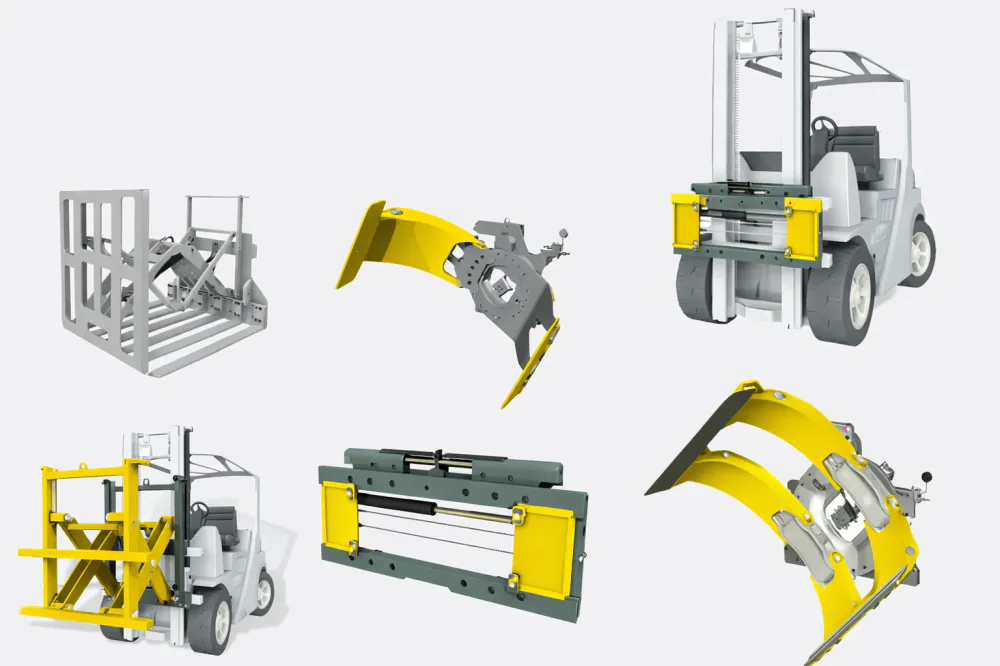
2. Manufacturing Structure of a Proportional Forklift Tilt Cylinder
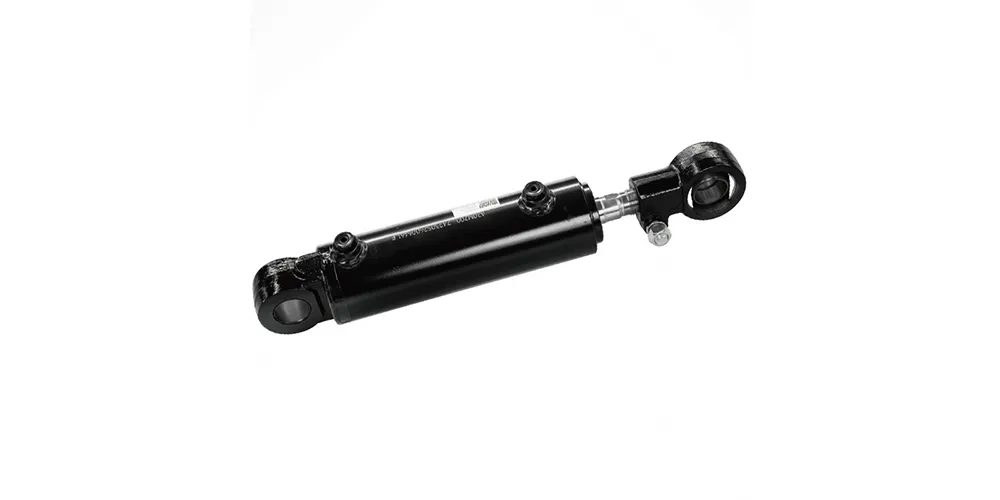
The internal architecture of a proportional tilt cylinder is deceptively simple in its schematic but demanding in its dimensional tolerances. The main structural components are the cylinder barrel, the piston and rod assembly, the front end cap (gland), the rear end cap, and the mounting eyes or pins at each end. What distinguishes a proportional-grade tilt cylinder from a basic utility cylinder is the precision of the clearance gaps maintained between these components throughout the full stroke range and across the operating temperature envelope.
The cylinder barrel is typically manufactured from seamless cold-drawn steel tube, honed to an internal surface roughness of Ra 0.4 micrometres or better. This finish quality is critical because it directly governs the sealing effectiveness of the piston ring against the barrel wall. A rough barrel surface at Ra 1.6 micrometres allows the piston ring to skip over micro-asperities under load, producing the characteristic stick-slip motion that manifests as jerky mast movement during ramp approach. The barrel is precision-honed after heat treatment to achieve both the required surface finish and the geometric accuracy (roundness and cylindricity within 0.02 mm over the full barrel length) that ensures the piston travels in a true axial path without side-loading the seal.
The piston rod is ground and chrome-plated after straightening to a runout tolerance of less than 0.05 mm over the full rod length. Chrome plating thickness is typically 20 to 30 micrometres on a proportional tilt cylinder rod, providing corrosion resistance against the moisture and hydraulic fluid vapour environment inside the cylinder front end. The rod diameter is sized to provide a safety factor against buckling under the maximum compressive load that occurs when the mast is tilted forward with maximum rated fork load — a scenario that directly applies during ramp loading when the mast is tilted forward to engage a load on an inclined surface.
The front gland (rod seal carrier) houses the rod wiper seal, the rod pressure seal, and the bearing bush. The wiper removes contaminants from the rod surface as it retracts, preventing particles from being drawn into the high-pressure seal on the next extension stroke. The bearing bush centres the rod laterally and absorbs the side loads generated by the mast mounting geometry and the inclined load condition. The rear cap provides the port connection and the rear mounting eye, and its weld quality to the barrel directly determines the pressure-rating integrity of the complete assembly.
3. Material System — Steel, Seals, and Surface Treatment
The material choices in a tilt cylinder designed for manufacturing ramp loading determine its load rating, its service life between seal replacements, and its resistance to the specific contaminants present in different industrial environments. The following covers the primary material decisions and their practical implications.
The cylinder barrel is produced from high-strength carbon steel tube (typically ST52-3 or equivalent EN 10083 grade) with a yield strength above 350 MPa. This grade provides adequate resistance to the cyclic pressure loading from the hydraulic system (typically 210 to 250 bar working pressure on a forklift hydraulic tilt cylinder) while remaining weldable at the end cap joints. For heavy-duty ramp loading applications where impact loads from surface irregularities can spike the hydraulic pressure above the rated working pressure, a material with higher yield strength and better impact toughness reduces the risk of barrel deformation.
The piston rod uses a high-strength alloy steel core (Ck45 or 42CrMo4 depending on the diameter and load rating) induction-hardened to 50 to 58 HRC at the surface before chrome plating. The chrome plating provides the smooth, hard surface needed for the pressure seal to function correctly and protects against rust formation from condensation inside the cylinder. For cylinders deployed in high-humidity coastal environments such as Barranquilla or Cartagena in Colombia, hard chrome of minimum 25 micrometre thickness is recommended to provide adequate corrosion protection between maintenance intervals.
The forklift tilt cylinder seal kit is the most maintenance-sensitive element in the assembly. A complete seal set includes the rod wiper (polyurethane PU), the rod pressure seal (NBR or HNBR depending on the hydraulic fluid type), the piston seal (polyurethane or PTFE-backed), and the guide ring or bearing bush (PTFE or filled nylon). The choice between NBR and HNBR for the pressure seal depends on the hydraulic oil type and operating temperature: NBR is adequate for standard mineral oil up to 80 degrees Celsius, while HNBR extends the temperature range to 150 degrees Celsius and provides better resistance to partially synthetic and vegetable-ester hydraulic fluids increasingly specified in environmentally regulated Colombian industrial zones.
The rear end cap and front gland are commonly produced from ductile iron (GGG-40 or equivalent) or high-strength carbon steel. Ductile iron provides a good combination of strength, machinability for the port threads, and resistance to impact loads at the mounting eye. The mounting eyes or trunnion pins are typically produced from EN 10083 alloy steel and case-hardened to resist wear from the pivot bushing motion that occurs with every mast tilt cycle. Proper lubrication of the mounting eye bushings is one of the most consistently overlooked maintenance tasks on forklifts operating in manufacturing ramp loading duty.
| Komponente | Standardmaterial | Key Property | Replacement Indicator |
|---|---|---|---|
| Cylinder barrel | ST52-3 honed steel tube | Ra 0.4 internal finish | Scoring visible on bore |
| Kolbenstange | Ck45 / 42CrMo4 + hard chrome | 50-58 HRC surface | Chrome pitting or rod bend |
| Rod pressure seal | NBR or HNBR | Fluid/temperature compatibility | Visible oil film on rod |
| Rod wiper seal | Polyurethane (PU) | Contaminant exclusion | Dirt accumulation at gland |
| Piston seal | PU or PTFE-backed | Zero internal bypass | Mast drift under load |
| Guide / bearing bush | PTFE or filled nylon | Side-load absorption | Rod lateral play at gland |
| Mounting eye bush | Case-hardened steel or bronze | Pivot wear resistance | Audible clunk at mast tilt |
4. Proportional Control Principles in Hydraulic Tilt Systems
Proportional control of a Gabelstapler-Neigezylinder refers to the ability of the hydraulic system to deliver a mast angular velocity that is directly and consistently proportional to the operator lever input, across the full range of load weights, mast angles, and hydraulic fluid temperatures encountered in ramp loading duty. This is a stricter requirement than simple on/off directional control, where the cylinder either extends or retracts at full system flow without graduated response.
Proportional control is achieved through the interaction of three elements: the metering edge geometry of the directional control valve spool, the counterbalance valve or load-holding valve that prevents uncontrolled descent under load, and the condition of the cylinder seals. The directional control valve spool in a proportional tilt circuit has a precisely profiled metering edge that progressively opens the flow path as the operator lever moves from neutral — delivering small flow (and slow mast movement) at small lever displacement, and full flow (fast movement) at full lever throw. If the spool metering edges are worn or corroded, the flow-versus-lever-displacement relationship becomes nonlinear and the operator loses fine control.
The counterbalance valve or load-holding valve on the tilt circuit prevents the mast from tilting forward under load weight when the operator releases the lever. On ramp loading operations where the machine is inclined and the load is simultaneously applying a forward-tilt moment to the mast, the counterbalance valve setting directly determines how much load-induced creep the mast exhibits. A valve set too loosely allows the mast to drift forward — a dangerous condition during ramp traverse. A valve set too tightly requires higher operator pressure to initiate forward tilt, reducing fine control at the start of lever movement.
The seal condition of the forklift tilt cylinder completes the proportional control system. A worn or degraded piston seal allows internal bypass — hydraulic oil flowing past the piston from the high-pressure side to the low-pressure side without producing rod movement. This bypass manifests as mast drift (also called tilt cylinder drift) under static load and as a dead-band at the start of lever input where the operator pushes the lever but the mast does not move until the internal bypass flow is overwhelmed by incoming pump flow. Even 5 to 10 cubic centimetres per minute of internal bypass is enough to produce visible mast drift in a 3-tonne capacity machine on a ramp.
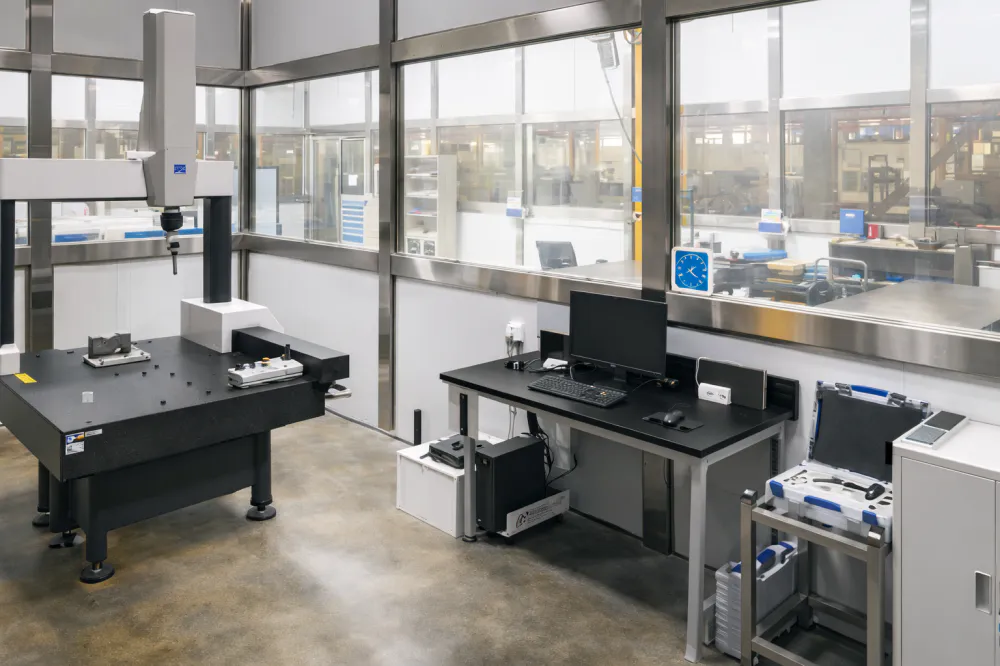
5. Featured Products: EP-HCY Series Forklift Tilt Cylinders for Manufacturing Applications
For heavy equipment manufacturing facilities managing ramp loading operations, selecting the correct tilt cylinder specification as a component selection is important selecting the correct fork rating or mast height. The following products are designed for demanding industrial ramp loading duty and provide the proportional control characteristics described in this guide.

The EP-HCY-1 is a compact hydraulic tilt cylinder designed for counterbalanced forklifts in the 1 to 2.5 tonne capacity range. It features a honed barrel with Ra 0.4 surface finish, a chrome-plated alloy steel piston rod with a minimum chrome thickness of 20 micrometres, and a complete NBR/PU seal kit rated for mineral hydraulic oil up to 80 degrees Celsius. The compact dimensions make it a direct fit for the confined mast cylinder location on smaller counterbalanced forklifts used in component manufacturing and assembly areas where ramp transitions to elevated platforms are frequent. The tilt cylinder replacement procedure on EP-HCY-1 follows the standard two-pin mounting pattern common on most forklift OEM designs, reducing the skill level required for field replacement.

The EP-HCY-2 addresses the mid-range capacity segment (2.5 to 5 tonne forklifts) where ramp loading duty is most common in heavy equipment manufacturing plants. Compared to the EP-HCY-1, the EP-HCY-2 uses a larger bore diameter and a heavier-walled barrel to handle the higher hydraulic force demands of the larger mast weight and load. The piston rod uses 42CrMo4 alloy steel with induction surface hardening and 25-micrometre hard chrome plating. The seal kit uses HNBR for the pressure seal to accommodate higher operating temperatures common on heavily cycled forklifts. This hydraulic tilt cylinder is engineered to maintain less than 5 mm of mast drift per hour under maximum rated load in the mast-forward position — a critical specification for ramp loading operations where the forklift may hold position on a grade for extended periods between loading cycles.
6. Diagnosing and Repairing Forklift Tilt Cylinder Problems
Hydraulic tilt cylinder repair is one of the most straightforward hydraulic maintenance tasks on a forklift, but it requires systematic diagnosis to ensure that the correct fault is identified before any components are replaced. The most commonly misdiagnosed tilt cylinder fault is mast drift attributed to a worn piston seal when the actual cause is a faulty load-holding or counterbalance valve — a much simpler and less expensive fix. The following diagnostic approach applies to any hydraulic forklift tilt cylinder regardless of brand or modell.
Wipe the piston rod clean and observe the rod surface for at least 30 minutes under maximum tilt pressure with the engine idling. A thin oil film appearing uniformly on the rod indicates a failed rod seal — external leakage. If the rod stays dry but the mast drifts under load, the fault is internal bypass through the piston seal. These two faults require different repair approaches: external leakage needs a tilt cylinder seal replacement (rod seal and wiper); internal bypass needs either a piston seal replacement or, if the barrel is scored, a complete cylinder rebuild or replacement.
Before assuming the tilt cylinder is faulty, disconnect the hydraulic hoses from the cylinder ports and cap the hose ends. Apply pressure to the tilt-forward port to extend the cylinder fully, then cap the port. If the cylinder drifts internally (rod retracts with port capped), the fault is confirmed in the cylinder. If the cylinder holds with ports capped but drifts when connected to the circuit, the fault lies in the control valve or the load-holding valve — not the cylinder body. This step eliminates the most common misdiagnosis in forklift hydraulic cylinder repair.
Once the cylinder is removed and disassembled, shine a light into the barrel bore before fitting the new seal kit. Look for circumferential scoring marks (caused by a piece of metallic debris that has been caught between the piston and the barrel), longitudinal grooves from a bent rod, or pitting from corrosion. Any of these conditions will destroy a new seal set within a few hundred cycles and require the barrel to be re-honed or the complete cylinder replaced. Installing a forklift tilt cylinder seal kit into a damaged barrel is the most common cause of premature seal failure after repair.
A tilt cylinder diagram showing the critical dimensions — barrel bore diameter, rod diameter, stroke length, eye-to-eye distance, and port sizes — should be used to verify that the replacement cylinder or seal kit matches the OEM specification. Differences in bore diameter of as little as 0.5 mm between an OEM cylinder and an aftermarket seal kit can cause the seal to underload (leaking immediately) or overload (binding and tearing within the first few cycles). Always verify the forklift tilt cylinder parts specification before ordering seals or replacement cylinders for older machines where the OEM part number may have been superseded.
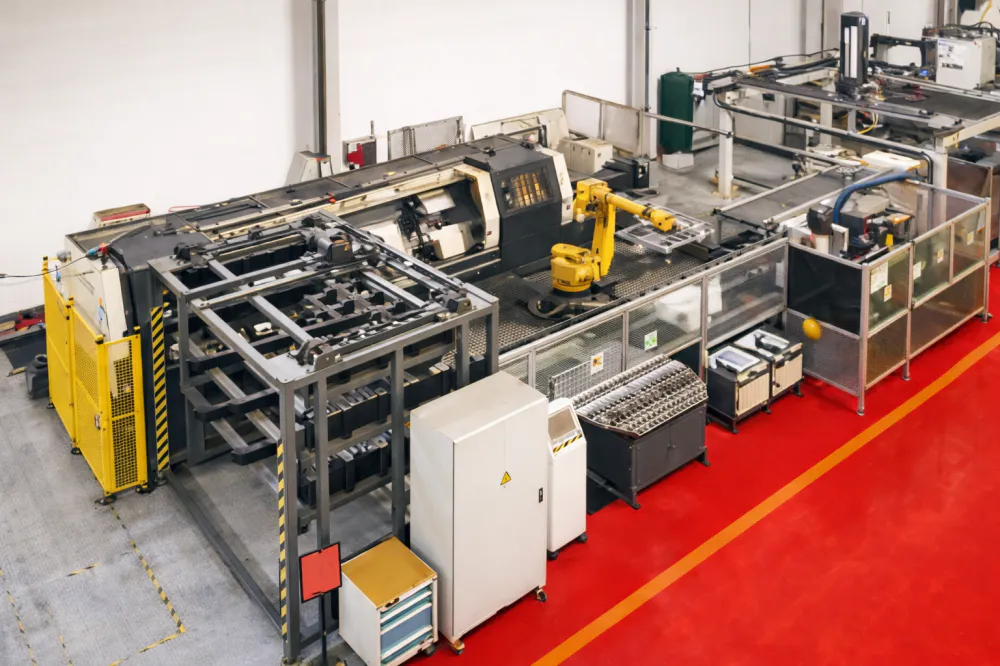
7. Forklift Tilt Cylinder Technical Comparison Table
| Spezifikation | Light Duty (1-2.5T) | Medium Duty (2.5-5T) | Heavy Duty (5-10T) |
|---|---|---|---|
| Arbeitsdruck | Up to 210 bar | 210-250 bar | 250-320 bar |
| Barrel bore diameter | 50-70 mm | 70-90 mm | 90-130 mm |
| Stangendurchmesser | 35-50 mm | 50-65 mm | 65-90 mm |
| Stroke range | 80-150 mm | 120-200 mm | 180-300 mm |
| Rod chrome thickness | Min. 20 micrometres | Min. 25 micrometres | Min. 30 micrometres |
| Seal kit material | NBR / PU | HNBR / PU | HNBR / PTFE |
| Max. drift (no load) | Less than 10 mm/hr | Less than 5 mm/hr | Less than 3 mm/hr |
| Operating temp. range | -20 to +80 degrees C | -20 to +100 degrees C | -30 to +120 degrees C |
| Typical ramp gradient | Up to 5 degrees | Up to 8 degrees | Up to 12 degrees |
| Seal replacement interval | 2,000-3,000 hours | 3,000-5,000 hours | 4,000-6,000 hours |
8. Regulatory Compliance for Forklift Tilt Cylinders in Colombia and Global Markets
Operating a forklift equipped with a hydraulic tilt cylinder in a Colombian industrial facility places the machine owner within a defined framework of safety regulations that govern both the equipment specification and the maintenance standards. Understanding this framework is essential for procurement teams sourcing tilt cylinder replacements and for maintenance managers establishing inspection schedules.
Colombia — Resolución 2400 de 1979 (Ministerio de Trabajo): This foundational occupational safety regulation requires that all industrial equipment capable of generating injury risk be maintained in safe operating condition and inspected at regular intervals. For forklifts, this translates to a requirement for documented hydraulic system inspections that must include the condition of the tilt cylinder, the mast chains, and the lift cylinder. A forklift mast cylinder or tilt cylinder found to be drifting under rated load must be taken out of service until repaired — a requirement that is frequently overlooked in smaller manufacturing plants in Bogotá and Medellín where forklift availability pressure overrides maintenance compliance.
Colombia — Decreto 1072 de 2015 (SG-SST): This decree requires Colombian employers to implement a health and safety management system that covers all equipment hazards including those from lift trucks and their hydraulic systems. The tilt cylinder drift condition is classified as a hydraulic failure risk that must be identified in the employer risk register and addressed through preventive maintenance. Non-compliance with SG-SST documentation requirements can result in fines from the Ministerio de Trabajo and suspension of operations.
OSHA 29 CFR 1910.178 (USA): The US standard for powered industrial trucks requires that forklifts be taken out of service if any condition affecting safety is found — explicitly including hydraulic fluid leaks and abnormal mast drift. This standard is referenced by Colombian multinational manufacturers operating under US parent company safety programs and by export-oriented plants whose safety management systems are audited against international standards.
ISO 3691-1:2011 and ISO 3691-4:2020 (Industrial Trucks — Safety Requirements): These ISO standards define the safety requirements for powered industrial trucks and rough-terrain trucks respectively. ISO 3691-1 addresses the tilt cylinder as a safety-critical component requiring that tilt speed under rated load not exceed specified limits, that tilt angle be limited by mechanical stops, and that the load-holding valve prevent uncontrolled descent. Compliance with ISO 3691-1 is required for CE marking of forklifts sold in the European Union and is increasingly referenced in Colombian industrial procurement tenders.
EN 1459 and EN 16307 (EU — Rough-Terrain Trucks and Industrial Trucks): European standards governing the hydraulic systems on industrial trucks require that all hydraulic cylinders including the tilt cylinder be rated to at least 1.5 times the maximum working pressure and tested at 1.5 times rated pressure before installation. For Colombian manufacturers procuring equipment from European suppliers, requesting the hydraulic cylinder test certificates as part of the equipment handover documentation is recommended as evidence of regulatory compliance.
9. Ramp Loading Best Practices Using Proportional Tilt Control
Even a mechanically perfect Gabelstapler-Neigezylinder will not produce smooth ramp loading if the operator technique or the facility infrastructure is not correctly matched to the hydraulic system characteristics. The following practices are derived from observed ramp loading operations in heavy equipment manufacturing facilities across Colombia and represent the combination of cylinder specification and operational discipline that produces the lowest incident rate.
Approach the ramp with the load held at the minimum safe travel height (150 to 200 mm above the floor) and the mast tilted back to the maximum safe angle before the machine begins to climb. Once on the ramp, use small forward tilt inputs to level the forks as the machine angle changes with the ramp gradient. The proportional tilt cylinder allows the operator to match the mast forward tilt exactly to the ramp gradient, keeping the load platform horizontal throughout the climb.
Heavy ramp loading operations generate more heat in the hydraulic system per cycle than flat-floor operations because the system is working against the ramp gradient on every lift. Monitor the hydraulic oil temperature gauge during extended ramp loading shifts. If the oil temperature exceeds 70 degrees Celsius, the viscosity has dropped enough to increase internal bypass through worn seals and reduce the effectiveness of the counterbalance valve. Allow the machine to idle for 10 to 15 minutes to dissipate heat before continuing high-frequency ramp loading cycles.
Perform a formal mast drift test at every 250-hour service interval on forklifts in ramp loading duty: raise the rated load to 300 mm above the floor, tilt the mast fully forward, stop the engine, and measure the mast position change over 10 minutes. More than 15 mm of change indicates the forklift tilt cylinder seal replacement interval has been reached. Document the test result as required under the SG-SST system, and schedule the cylinder seal kit replacement before the next ramp loading shift.
Ramp surface contamination — oil slicks from hydraulic leaks, water from rain exposure, and metal swarf from manufacturing areas — dramatically increases the lateral load on the tilt cylinder because the machine tends to crab sideways on a wet incline, generating side-loading on the mast and the tilt cylinder that the cylinder was not designed to absorb continuously. Inspect and clean ramp surfaces at the start of each shift as part of the pre-operation checklist required under Resolución 2400.
10. Related Products — Complete Hydraulic System Supply
A high-performance tilt cylinder delivers its best results when it operates within a well-matched hydraulic system. We supply compatible hydraulic components that complement the tilt cylinder product range for complete system sourcing.
Beyond the forklift-specific range, our broader tilt cylinder product line covers telescopic handlers, reach stackers, crane outriggers, and construction equipment tilting functions. The same manufacturing standards — honed barrels, chrome-plated rods, multi-lip seal systems — apply across the full range. Sourcing both the tilt cylinder and the broader tilt cylinder requirements for your facility from a single technically consistent supplier simplifies procurement, reduces vendor qualification effort, and ensures a matched seal kit system across all cylinders in the plant.
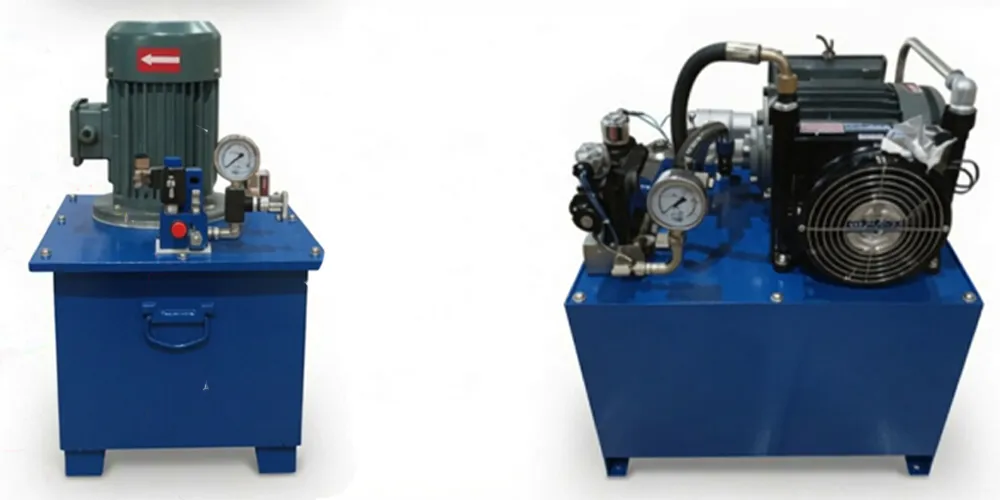
The hydraulic pump station provides the pressurised flow that drives both the lift cylinder and the tilt cylinder on the forklift. A mismatched or undersized pump station is a common root cause of tilt cylinder drift on ramp loading operations because low pump delivery pressure causes the counterbalance valve to operate near its minimum holding pressure, increasing sensitivity to pressure spikes and reducing fine control. Matching the pump station specification to the tilt cylinder operating pressure and cycle frequency ensures that proportional control is maintained throughout the full production shift without hydraulic performance degradation as the system warms up.
11. About Our Manufacturing Facility
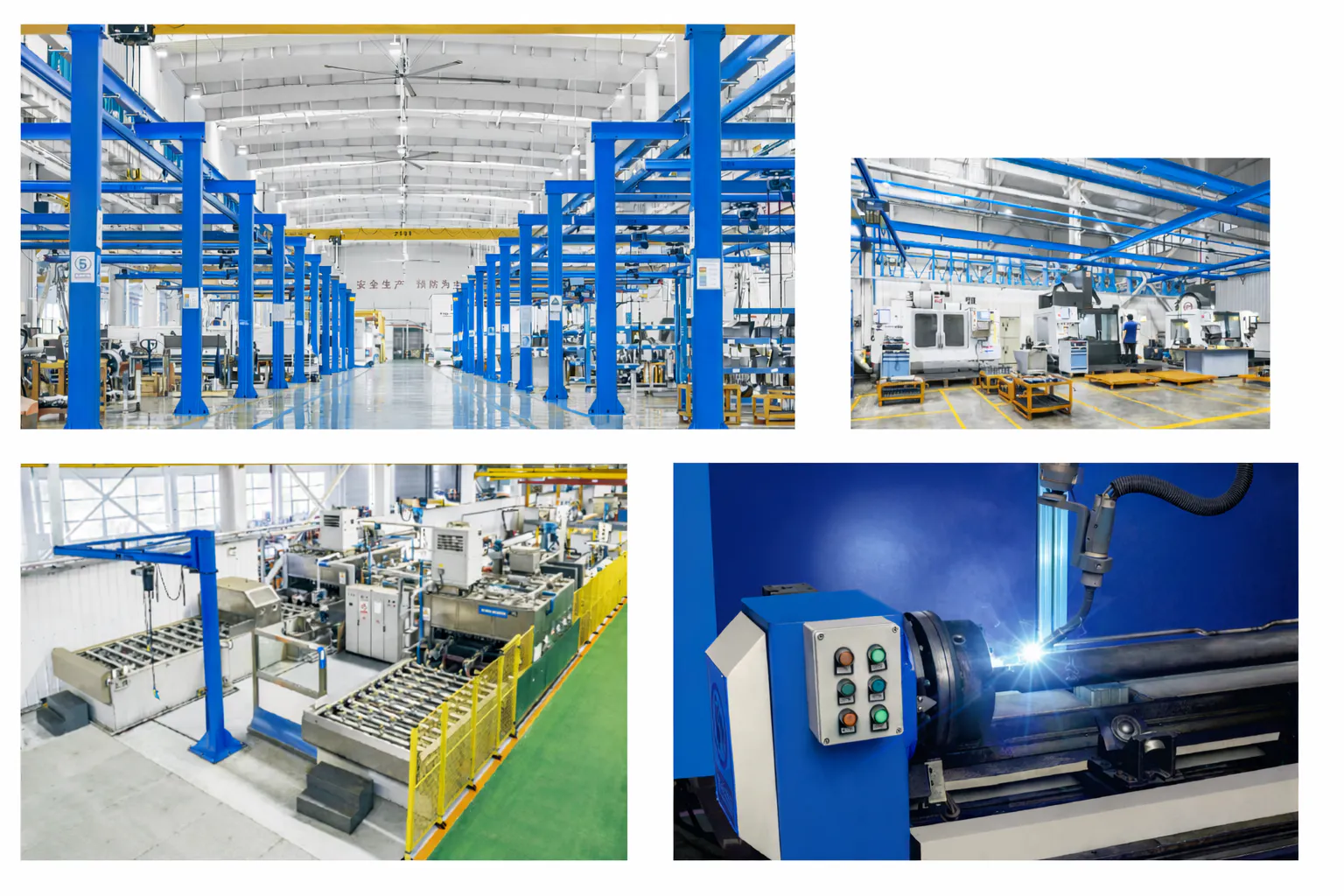
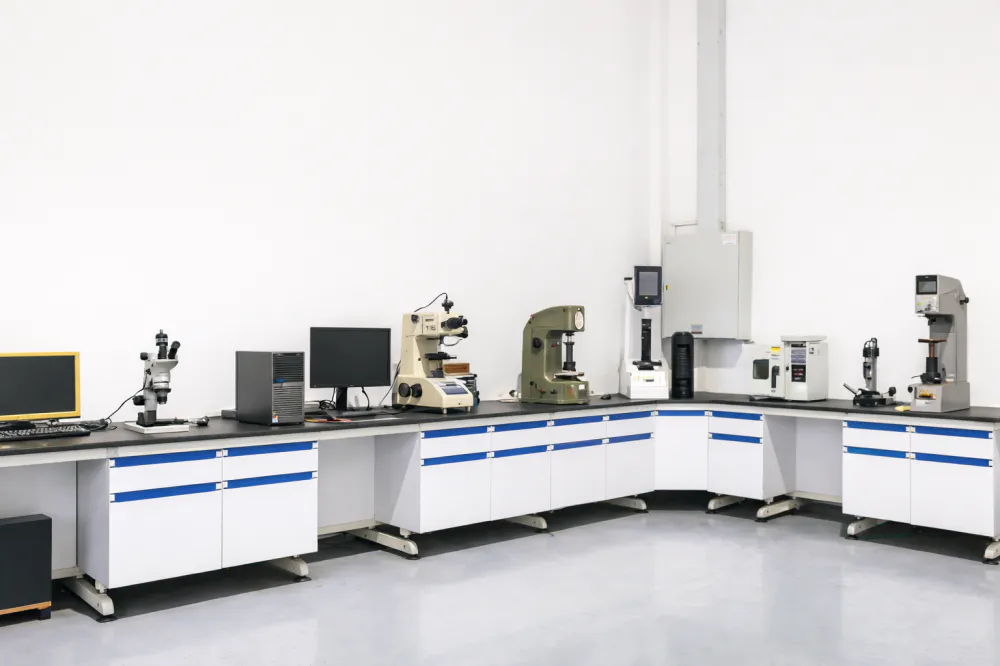
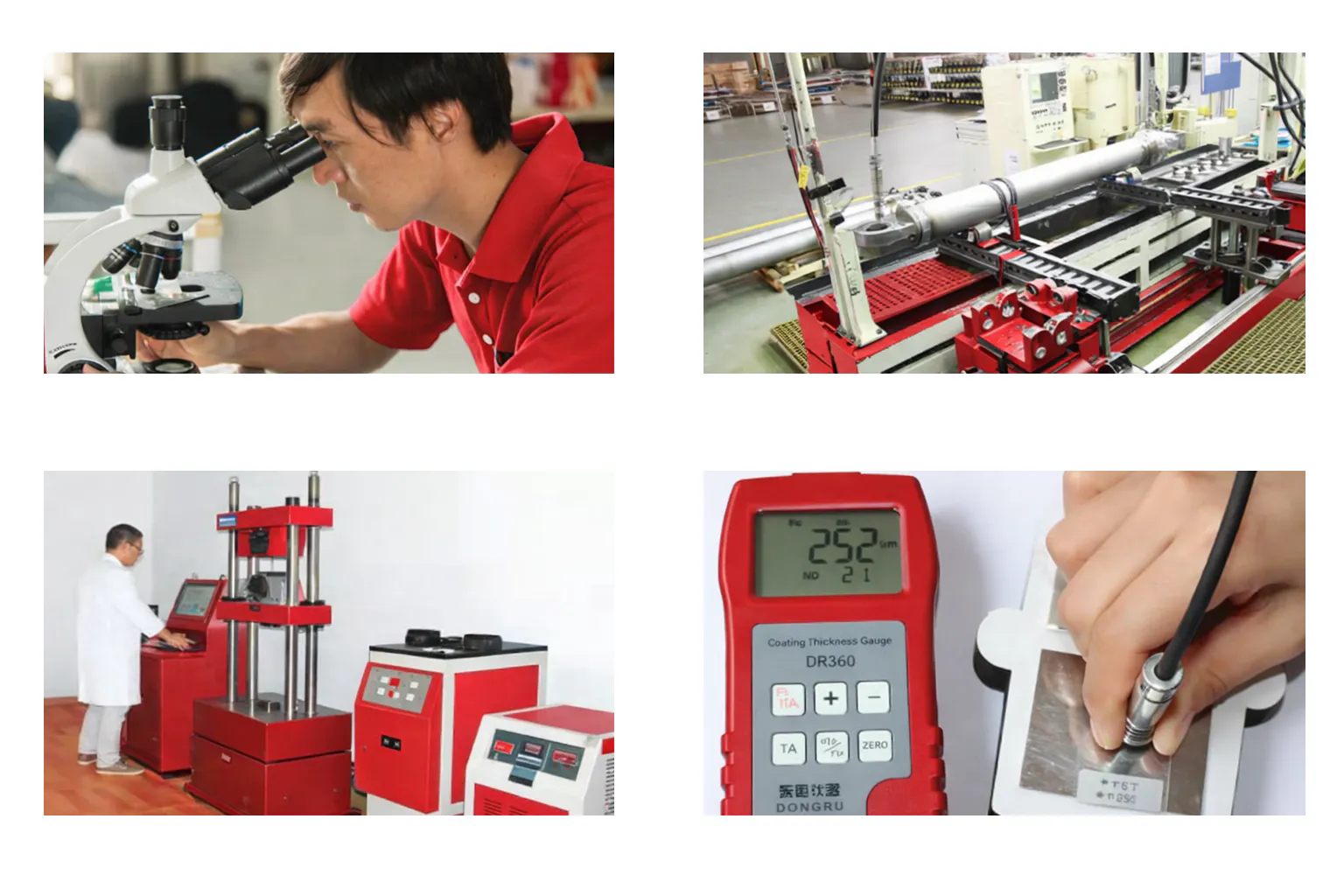
Our hydraulic cylinder manufacturing facility specialises in the production and supply of tilt cylinders, lift cylinder assemblies, and complete hydraulic cylinder seal kits for industrial forklift maintenance teams across Colombia, South America, and global markets. All cylinders are manufactured to ISO quality standards with full dimensional inspection, pressure testing to 1.5 times rated working pressure, and surface treatment verification before dispatch. Technical documentation including forklift hydraulic cylinder diagrams, seal kit specifications, and installation torque data is supplied with every product to support in-house maintenance teams and to satisfy the equipment documentation requirements of Colombian SG-SST safety management systems. Our team provides Spanish-language technical support for procurement and maintenance enquiries from Colombian industrial facilities.
Werkstatt

Häufig gestellte Fragen
Q1. What is the main function of a tilt cylinder in heavy equipment manufacturing ramp loading operations in Colombia?
Q2. How do I know when to order a forklift tilt cylinder seal kit replacement for a machine operating in a Bogotá manufacturing facility?
Q3. What is the difference between a lift cylinder forklift and a tilt cylinder on a forklift and which one fails more often in ramp loading duty?
Q4. Which forklift tilt cylinder parts should be kept as on-site spares in a Colombian manufacturing plant with high-volume ramp loading operations?
Q5. How does a hydraulic forklift tilt cylinder differ from a standard double-acting hydraulic cylinder and what does that mean for seal kit selection?
Q6. What are the safety regulations in Colombia that require forklift tilt cylinder inspection and how often must the inspection be documented?
Q7. What are the different types of forklift cylinders and how do I know which one controls the mast tilt versus the fork height?
Q8. How much does forklift tilt cylinder drift affect productivity and safety in a Colombian automotive parts manufacturing plant?
Herausgeber: PXY