Description du produit
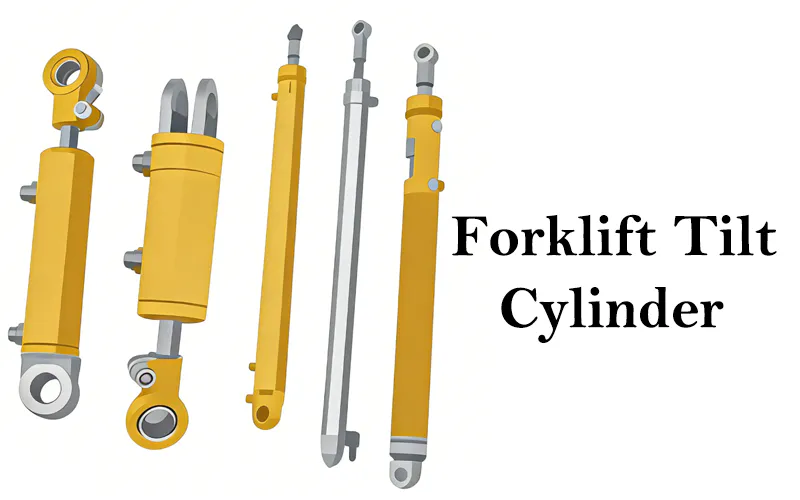
Attractive Price 18MPa 3.4kg hydraulic Tilt Cylinder for Forklift
In forklifts, the tilt cylinder is a hydraulic cylinder responsible for tilting the mast and forks of the forklift. It allows the operator to adjust the angle of the divisions to accommodate different load-handling needs. Here are some key points about the tilt cylinder in a forklift:
Function: The tilt cylinder controls the tilting movement of the mast and forks. It lets the operator tilt the forks CHINAMFG or backward to pick up, transport, and deposit loads. The forklift operator can ensure proper load stability, precise positioning, and safe material handling by adjusting the tilt angle.
Hydraulic Power: The tilt cylinder is powered by hydraulic fluid under pressure. It is connected to the forklift’s hydraulic system, which consists of a hydraulic pump, control valves, hoses, and a reservoir. When the operator activates the tilt control lever, hydraulic fluid is directed to the tilt cylinder, causing it to extend or retract and initiate the tilt movement.
| bore diameter (D) | rod diameter (d) | stroke (S) | Installation distance (L) | working pressure | Interface dimensions (M) | weight |
| Φ60 | Φ30 | 32 | 109 | 18MPa | 2-M14*1.5 | 3.4kg |
(1) Our company can customize non-standard oil cylinders within the range of cylinder diameter D360MM and stroke L6000MM according to customer requirements;
(2) The above product prices are nontax unit prices, excluding packaging and transportation costs required for export
Application
Application of Forklift series Tilt Cylinder
1. Manutention des charges : The primary application of the tilt cylinder is to facilitate the handling of loads. By adjusting the tilt angle of the mast and forks, the tilt cylinder allows the forklift operator to pick up, transport, and deposit loads with precision. It enables the operator to tilt the forks CHINAMFG to engage and lift the load or tilt them backward to stabilize and deposit the load.
2. Load Stabilization: The tilt cylinder plays a crucial role in load stabilization. When lifting and transporting loads, especially those unbalanced or unevenly distributed, the tilt cylinder allows the operator to adjust the tilt angle to prevent load shifting or toppling. This ensures load stability and reduces the risk of accidents or damage to the load and surrounding structures.
3. Accessing and Depositing Loads: The tilt cylinder enables the forklift operator to access and deposit loads in various locations. It allows the forks to tilt CHINAMFG or backward, making it easier to position them under pallets or other load types. Adjusting the tilt angle allows the operator to align the forks with the load and safely deposit it CHINAMFG racks, shelves, or other storage areas.
4. Load Manipulation: The tilt cylinder allows load manipulation and fine control during material handling operations. By incrementally adjusting the tilt angle, the operator can tilt the forks slightly to level the load on uneven surfaces or adjust the load position for better visibility and maneuverability. This enables efficient handling of delicate or fragile loads, optimizing safety and productivity.
5. Pallet Stacking: The tilt cylinder is widely used in pallet stacking applications. It enables the operator to tilt the forks backward to create a slight incline, allowing for easy entry and retrieval of pallets from stacked loads. The tilt cylinder also assists in aligning the divisions with the pallets during stacking, ensuring accurate placement and stability of the stacked pallets.
6. Customized Load Handling: The tilt cylinder in a forklift series can be used for customized load-handling applications. Some forklift models feature additional attachments or accessories, such as side shifters or clamp arms, which can be controlled by the tilt cylinder. This allows forklift operators to adapt the tilt angle and manipulate loads with specialized requirements, such as gripping or rotating materials.
Importance of Forklift Tilt Cylinder
Load Stability: The tilt cylinder allows the operator to adjust the tilt angle of the mast and forks, ensuring load stability during material handling operations. By tilting the forks CHINAMFG or backward, the operator can secure the load and prevent it from shifting or falling off them. This enhances safety and minimizes the risk of accidents or damage to the bag.
Positionnement précis de la charge : The tilt cylinder enables precise load positioning, allowing the operator to align the forks with the load and accurately deposit it CHINAMFG racks, shelves, or other storage areas. Adjusting the tilt angle allows the operator to achieve optimal load placement, which is critical in tight or confined spaces where maneuverability is limited.
Versatility: The tilt cylinder provides versatility in load-handling applications. The forklift can handle various load sizes and shapes by adjusting the tilt angle to accommodate different load requirements. This versatility enhances the adaptability of the forklift in multiple industries and warehouses, where different types of goods and materials must be handled.
Improved Operator Visibility: Adjusting the tilt angle can improve the operator’s visibility during material handling operations. By tilting the forks backward, the operator can have a better line of sight over the load, increasing situational awareness and reducing the risk of accidents caused by limited visibility.
In summary, the tilt cylinder in a forklift is of utmost importance as it ensures load stability, enables precise load positioning, enhances versatility, improves operator visibility and ergonomics, facilitates efficient pallet stacking, and allows customization and attachment compatibility. These factors contribute to safer, more efficient, and more productive material handling operations in warehouses, distribution centers, manufacturing facilities, and other industrial settings.
Our Company
We have a first-class independent R&D platform for assembly. The forklift cylinder production workshop has 4 semi-automatic lifting cylinder assembly lines and 1 fully automatic tilting cylinder assembly line, with a designed annual production capacity of 1 million pieces; the special cylinder workshop is equipped with semi-automatic cleaning and assembly systems of various specifications, with a designed annual production capacity of 200,000 essays. It has famous CNC machining equipment, machining centers, special equipment for high-precision cylinder processing, robot welding machines, automatic cleaning machines, automatic cylinder assembly machines, and automatic paint production lines. We have more than 300 sets of critical equipment running. The optimized allocation and efficient utilization of equipment resources ensure the precision requirements of the products and meet the high standard quality requirements of the products.
|
Forklift cylinder assembly shop |
Other types of cylinder assembly shop |
Welding
Painting & coating
|
Painting & coating line |
Fully automatic water-based |
Testing
To further improve product performance, and establish the leadership position of our hydraulic cylinder in the industry, our company and zjimee jointly established a Comprehensive performance laboratory of hydraulic cylinders, hydraulic valves, and hydraulic pumps; the lab is computer-assisted testing, using electro-hydraulic control technology, the test conditions preset by computer, which improves the test accuracy and system versatility, and the experimental data.
The automatic collection is realized through the application of sensors, and the output data, such as the internal leakage and load efficiency of the cylinder or the valve, are directly processed by the
computer and converted to standard units (ml/min; %). At the same time, to ensure the working safety of the hydraulic system, the state monitoring function is carried out for key performance parameters, such as “oil temperature monitoring, liquid level monitoring, filter device monitoring,” etc. Among them, the hydraulic cylinder test stand can test the performance of “load efficiency” and “internal leakage” by readings. At the same time, it is equipped with a grating ruler measuring instrument, which meets the requirements of all test items of hydraulic cylinder products in the national standard
Our Factory
Emballage et expédition
| Certification : | GS, RoHS, CE, ISO9001 |
|---|---|
| Pression: | moyenne pression |
| Température de fonctionnement : | Température normale |
| Manière d'agir : | Double jeu |
| Méthode de travail : | Rotatif |
| Forme ajustée : | Type réglementé |
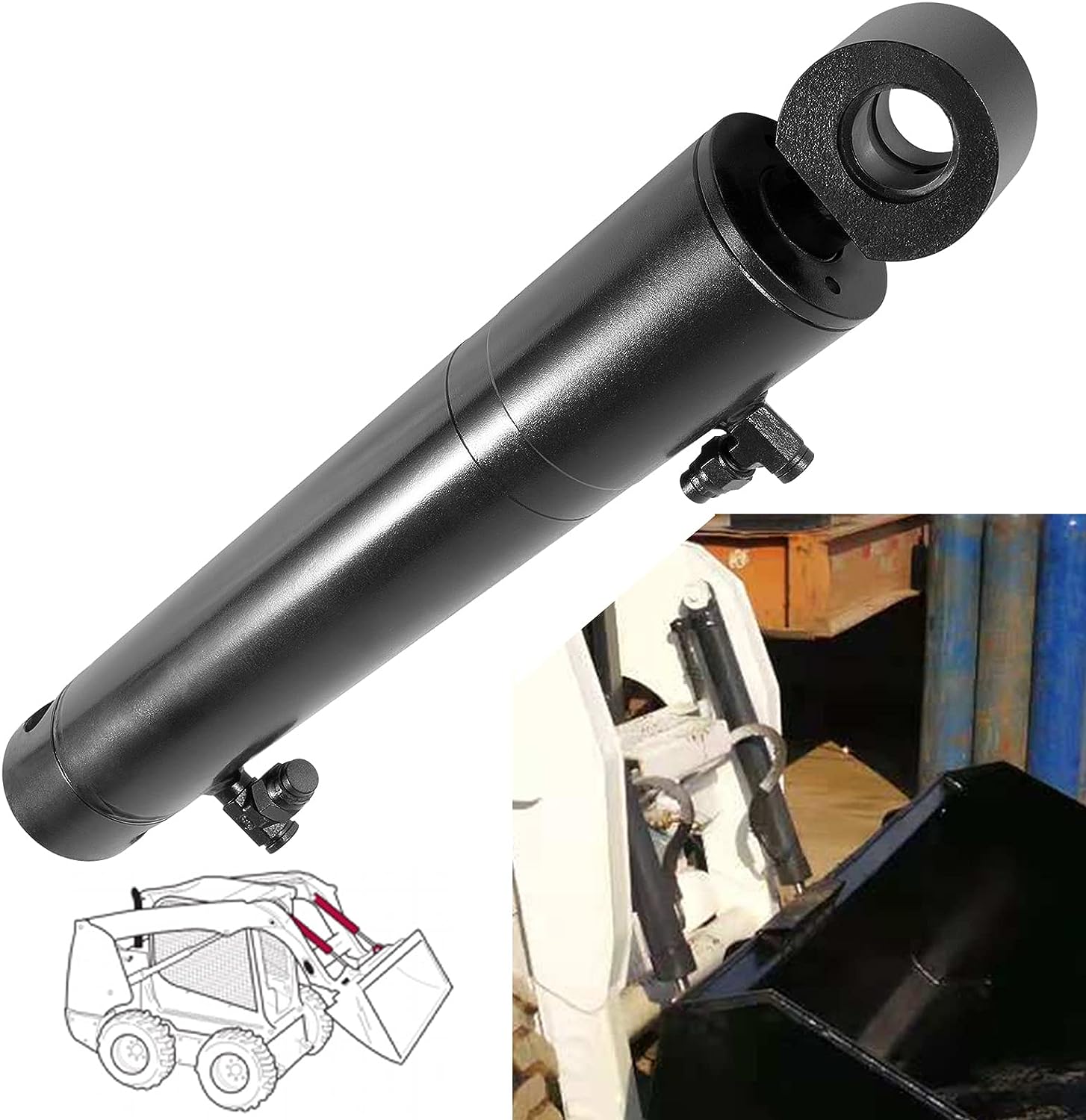
How does a tilt cylinder handle variations in hydraulic pressure and flow rate?
A tilt cylinder is designed to handle variations in hydraulic pressure and flow rate effectively. It incorporates specific features and mechanisms that allow it to operate reliably under different hydraulic conditions. Here’s a detailed explanation:
- Pressure Compensation: Tilt cylinders are equipped with pressure compensation mechanisms to handle variations in hydraulic pressure. These mechanisms ensure that the cylinder can function properly even when the hydraulic system experiences fluctuations in pressure. The pressure compensation feature allows the cylinder to maintain consistent force and performance, regardless of the changes in hydraulic pressure.
- Flow Control: Tilt cylinders are designed to accommodate variations in hydraulic flow rate. They have internal passages and ports that allow the hydraulic fluid to flow into and out of the cylinder. The cylinder’s design ensures that it can handle different flow rates without compromising its functionality. Whether the hydraulic flow rate is high or low, the tilt cylinder can adjust accordingly and provide the necessary force and control for load manipulation.
- Sealing Mechanisms: Tilt cylinders incorporate sealing mechanisms to prevent leakage and maintain hydraulic integrity. These seals are designed to withstand variations in pressure and flow rate, ensuring that the hydraulic fluid remains contained within the cylinder. The seals also help maintain the required pressure within the cylinder, allowing it to operate efficiently and effectively, regardless of the hydraulic conditions.
- Internal Design: The internal design of a tilt cylinder takes into account variations in hydraulic pressure and flow rate. The cylinder’s internal components, such as piston, rod, and cylinder barrel, are engineered to withstand different hydraulic conditions. They are designed to handle the forces exerted by varying pressure and flow rates, ensuring smooth operation and longevity of the cylinder.
- Hydraulic System Compatibility: Tilt cylinders are designed to be compatible with the hydraulic systems of the equipment they are installed in. Manufacturers ensure that the cylinders can handle the expected pressure and flow rate ranges of the hydraulic system. This compatibility allows for seamless integration and optimal performance, even when there are variations in hydraulic conditions.
- Quality Control and Testing: Tilt cylinders undergo rigorous quality control measures and testing during the manufacturing process. These measures ensure that the cylinders can handle variations in hydraulic pressure and flow rate within specified tolerances. Manufacturers test the cylinders under different hydraulic conditions to verify their performance, reliability, and ability to handle variations in pressure and flow.
By incorporating pressure compensation mechanisms, flow control features, sealing mechanisms, robust internal design, hydraulic system compatibility, and thorough quality control, tilt cylinders are capable of handling variations in hydraulic pressure and flow rate. These cylinders provide reliable and consistent performance, regardless of the hydraulic conditions, ensuring smooth and efficient operation in material handling and construction equipment.
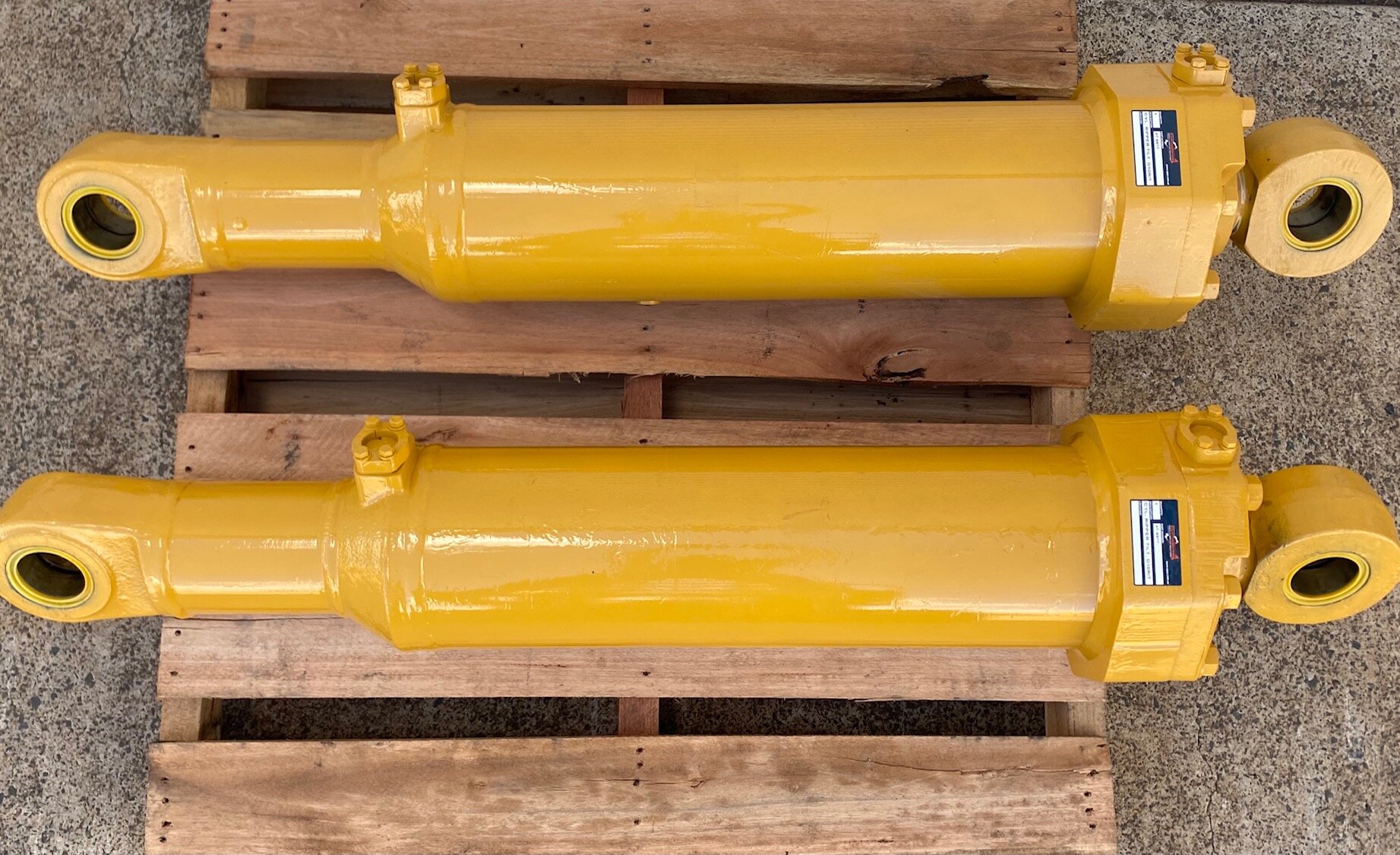
Quels sont les avantages de l'utilisation de vérins d'inclinaison dans les engins lourds ?
L'utilisation de vérins d'inclinaison sur les engins lourds offre plusieurs avantages qui améliorent la productivité, la polyvalence et l'efficacité opérationnelle. Voici les principaux avantages :
- Flexibilité accrue : Les vérins d’inclinaison permettent aux engins lourds d’incliner et d’ajuster l’angle des accessoires ou des outils. Ceci offre une flexibilité accrue dans diverses applications, telles que le nivellement, l’aménagement paysager, la manutention et l’excavation. La possibilité d’incliner les accessoires permet aux opérateurs de contrôler précisément leur position et leur orientation, améliorant ainsi la précision et l’efficacité de l’exécution des tâches.
- Stabilité améliorée : Les vérins d’inclinaison contribuent à une meilleure stabilité et à un meilleur équilibre des engins lourds. En inclinant les accessoires ou les outils en fonction du terrain ou de la charge, les opérateurs bénéficient d’une stabilité accrue pendant leur utilisation. Ceci est particulièrement avantageux sur les terrains accidentés ou difficiles où la stabilité est essentielle pour un travail sûr et efficace.
- Gain d'efficacité : Les vérins d'inclinaison améliorent l'efficacité des opérations d'engins lourds. En permettant aux opérateurs d'ajuster l'angle d'inclinaison sans repositionner l'ensemble de la machine, ils réalisent des économies de temps et d'efforts. Les opérateurs peuvent ainsi modifier rapidement et facilement l'angle des accessoires, optimisant les performances de l'équipement et réduisant le besoin de réglages manuels ou d'équipement supplémentaire.
- Contrôle précis des matériaux : Les vérins d’inclinaison permettent un contrôle précis des matériaux manipulés. Par exemple, lors du chargement ou du déchargement, les opérateurs peuvent incliner le godet ou l’accessoire pour contrôler précisément l’angle de déversement. Ce niveau de contrôle améliore la précision, minimise les pertes et réduit le gaspillage de matériaux, ce qui se traduit par des économies et une efficacité opérationnelle accrue.
- Polyvalence et adaptabilité : Les vérins d’inclinaison améliorent la polyvalence et l’adaptabilité des engins lourds. Grâce à la possibilité de régler l’angle d’inclinaison, ces engins peuvent être utilisés pour une plus large gamme de tâches et d’applications. Les vérins d’inclinaison permettent d’adapter différents accessoires ou outils, élargissant ainsi leurs capacités et les rendant adaptés à diverses exigences professionnelles.
- Confort et sécurité de l'opérateur : Les vérins d'inclinaison contribuent au confort et à la sécurité de l'opérateur. En permettant le réglage de l'angle d'inclinaison, ils favorisent une meilleure posture ergonomique et réduisent la fatigue lors d'une utilisation prolongée. De plus, la possibilité de contrôler l'angle d'inclinaison améliore la sécurité en offrant une meilleure visibilité et un meilleur contrôle de la zone de travail, réduisant ainsi les risques d'accidents et de dommages.
Les avantages des vérins d'inclinaison sur les engins lourds en font des composants essentiels dans des secteurs comme la construction, l'exploitation minière, l'agriculture et la manutention. Ils améliorent les capacités opérationnelles, l'efficacité et la sécurité, contribuant ainsi à une productivité accrue et à une meilleure rentabilité.
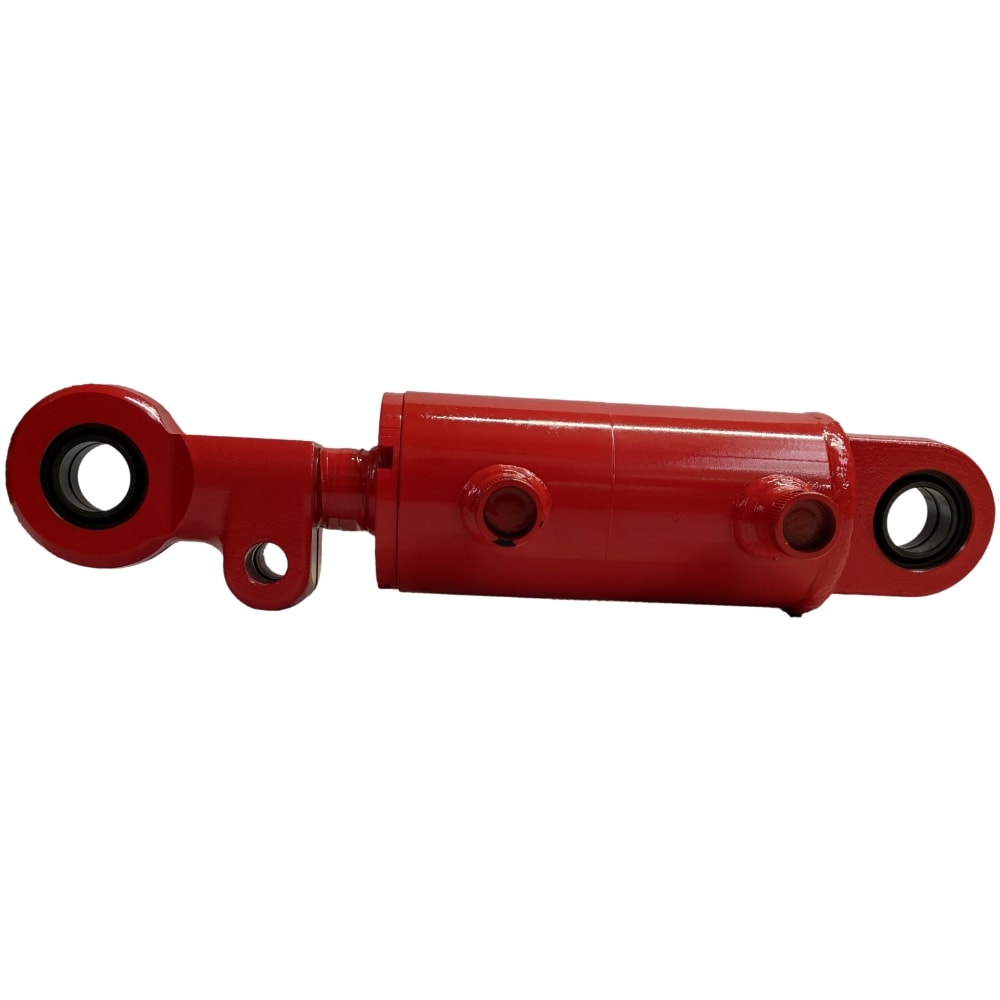
Les vérins d'inclinaison peuvent-ils être utilisés à la fois pour des applications d'inclinaison et de nivellement ?
Oui, les vérins d'inclinaison peuvent être utilisés pour des applications d'inclinaison et de mise à niveau. Ce sont des composants hydrauliques polyvalents conçus pour assurer des mouvements d'inclinaison contrôlés et faciliter les opérations de mise à niveau. Voici une explication détaillée :
Applications d'inclinaison :
Les vérins d'inclinaison sont couramment utilisés pour les applications d'inclinaison dans diverses industries. Ils permettent l'inclinaison ou l'orientation contrôlée de composants fixés à des machines lourdes. Par exemple :
- Dans le domaine des engins de chantier, les vérins d'inclinaison permettent le réglage des godets, des lames ou des accessoires, permettant ainsi un creusement, un nivellement et un terrassement précis des surfaces.
- Dans les engins miniers, les vérins d'inclinaison contrôlent les angles des godets ou des lames, facilitant ainsi la manutention et l'excavation efficaces des matériaux.
- Dans le domaine des équipements agricoles, les vérins d'inclinaison permettent d'incliner des outils tels que des charrues ou des godets, permettant ainsi aux agriculteurs d'ajuster l'angle de travail pour un travail du sol ou une manutention des matériaux optimaux.
- Dans les engins de manutention, les vérins d'inclinaison servent à contrôler l'inclinaison des fourches, des plateformes ou des accessoires, facilitant ainsi le chargement, le déchargement et l'empilage efficaces des marchandises.
Applications de nivellement :
Outre l'inclinaison, les vérins d'inclinaison peuvent également servir au nivellement. Le nivellement consiste à ajuster la position horizontale ou l'alignement d'un équipement afin de garantir des surfaces planes et stables. Les vérins d'inclinaison facilitent les opérations de nivellement en :
- Compensation des irrégularités du terrain : les vérins d’inclinaison permettent de régler l’inclinaison des accessoires d’équipement, compensant ainsi les irrégularités du terrain et maintenant une position horizontale.
- Alignement des composants : Des vérins d'inclinaison peuvent être utilisés pour aligner ou niveler des composants tels que des lames, des godets ou des plateformes, assurant ainsi un nivellement constant et précis sur toute la zone de travail.
- Réglages précis : Les vannes de commande des vérins d’inclinaison permettent un contrôle précis du mouvement d’inclinaison. Les opérateurs peuvent effectuer de petits ajustements pour atteindre le niveau souhaité, garantissant ainsi une mise à niveau précise.
En exploitant les capacités de contrôle et l'amplitude de mouvement des vérins d'inclinaison, les opérateurs peuvent effectuer efficacement des tâches d'inclinaison et de nivellement avec le même composant hydraulique.
En résumé, les vérins d'inclinaison sont polyvalents et peuvent être utilisés pour des applications d'inclinaison et de mise à niveau. Ils permettent une inclinaison contrôlée des composants dans divers secteurs industriels et contribuent également à des opérations de mise à niveau précises. Leur capacité à remplir ces deux fonctions fait des vérins d'inclinaison des composants hydrauliques précieux pour les équipements nécessitant ces opérations.


editor by CX 2023-10-16