Pharma & Chemical Industry Guide
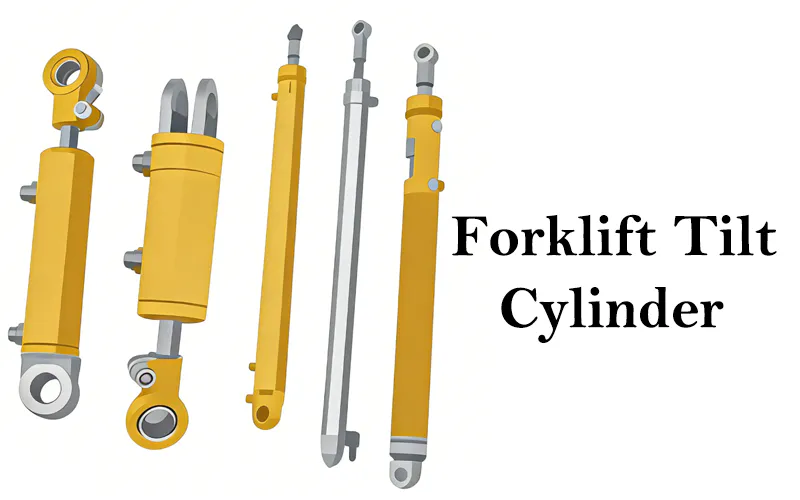
Forklift tilting cylinders are suitable for pharmaceutical warehouse forklifts.
Everything warehouse managers and maintenance engineers in Colombia need to know about selecting, maintaining, and replacing the right cilindro di inclinazione del carrello elevatore for aggressive pharmaceutical and chemical storage environments
Why the Pharma and Chemical Sector Demands Special Attention
Pharmaceutical warehouses and chemical distribution facilities operate under a completely different set of material handling constraints compared to standard logistics warehouses. The combination of aggressive solvents, corrosive cleaning agents used in GMP sanitation cycles, acidic or alkaline bulk chemical storage, and the strict contamination-prevention requirements of regulated environments means that every piece of material handling equipment — including the cilindro di inclinazione del carrello elevatore — must be assessed for chemical compatibility, not just mechanical load capacity.
In Colombia, the pharmaceutical supply chain has grown substantially over the past decade, with major distribution hubs in Bogotá, Medellín, and Cali handling products that range from API raw materials to finished sterile goods. Many of these facilities operate under INVIMA Good Manufacturing Practice requirements and store substances regulated under Colombia’s national chemical hazard framework. A cilindro di inclinazione del carrello elevatore that develops a seal failure inside a GMP cleaning zone — releasing petroleum-based hydraulic fluid onto a warehouse floor designated for pharmaceutical product movement — is not just a maintenance problem; it is a regulatory non-compliance event that can trigger audits, product holds, and facility shutdowns.
This guide covers the construction and material systems that determine chemical resistance in a cilindro di inclinazione del carrello elevatore, how to read a chemical compatibility matrix for seal and barrel materials, what Colombian and international regulations require, and how to select the right cylinder model for specific pharma and chemical environments.
Manufacturing Structure of a Forklift Tilt Cylinder
Understanding what a forklift tilt cylinder is made of — and how it is assembled — is the prerequisite for evaluating its chemical resistance. A standard hydraulic cilindro di inclinazione del carrello elevatore is a double-acting hydraulic cylinder: hydraulic pressure on either side of the piston produces controlled forward or backward extension of the piston rod, tilting the forklift mast to the operator’s commanded angle. The structural anatomy of the assembly breaks down as follows.
IL cylinder barrel is the outer tube containing the hydraulic fluid and piston. It is machined from seamless steel tube or welded steel, honed on its inner bore to a fine surface finish to minimize seal wear. The piston rod is the moving member that extends from the barrel and connects to the mast mounting point. Piston rods are typically hard-chrome plated on their outer surface to provide corrosion resistance and a low-friction running surface for the rod seals. The piston is the internal component that divides the barrel into two pressure chambers; it carries the primary sealing elements that prevent hydraulic oil from crossing between chambers. The end caps — front gland and rear cap — close the barrel ends, with the front gland housing the rod seals, wiper, and dust seal.
In pharmaceutical and chemical environments, the external surfaces of the barrel, gland, and end cap are particularly vulnerable to chemical attack through incidental contact with cleaning agents, spilled reagents, or airborne aerosols. The piston rod hard-chrome surface can be attacked by strong acids. The rod seals are the most chemically sensitive element because they are in constant dynamic contact with both the interior hydraulic fluid and the exterior environment. A seal failure in this zone produces hydraulic fluid external leakage onto the warehouse floor — the scenario facilities engineers in regulated Colombian warehouses must prevent at all costs.
Material System and Chemical Compatibility
The material system of a cilindro di inclinazione del carrello elevatore encompasses both the metallic structural materials and the elastomeric seal compounds. Each has a distinct chemical resistance profile. For pharmaceutical and chemical warehouse applications, the critical question is not whether the cylinder can lift the load — it is whether all materials in the assembly are compatible with the chemicals present in the environment over the expected service interval.
Metallic Materials
The cylinder barrel and gland are typically carbon steel or alloy steel, which provides excellent mechanical strength but limited inherent corrosion resistance. In environments exposed to chlorinated cleaning agents — such as sodium hypochlorite solutions used in pharmaceutical sanitation — bare steel surfaces will corrode unless protected by paint, epoxy coating, or stainless steel upgrade. Piston rods with standard hard chrome plating resist mild acids and neutral cleaners adequately but can be attacked by strong oxidizing acids such as nitric acid, which is used in some pharmaceutical CIP systems. For the most aggressive chemical environments, stainless steel 316L piston rods or nickel-based alloy rods are specified. The trunnion pins and mounting hardware should also be evaluated for galvanic corrosion potential when the cylinder operates in a permanently wet or chemically contaminated environment.
Seal Materials
Seals are the most chemically specific element in the assembly. Standard cilindro di inclinazione del carrello elevatore configurations use NBR (Nitrile Butadiene Rubber) as the default seal material, chosen for its excellent compatibility with petroleum-based hydraulic oils and moderate resistance to aliphatic hydrocarbons. However, NBR has poor resistance to aromatic solvents, ketones, and many cleaning agents used in pharmaceutical manufacturing. For pharma and chemical warehouse service, alternative seal materials must be considered based on the specific chemical exposures present.
| Seal Material | Standard Code | Good Resistance | Poor Resistance | Typical Pharma Use |
|---|---|---|---|---|
| Nitrile Rubber | NBR | Petroleum oils, water, aliphatic hydrocarbons | Ketones, aromatics, strong acids | Standard dry warehouse; no chemical exposure |
| Fluorocarbon Rubber | FKM / Viton | Acids, aromatics, solvents, high temp | Ketones, amines, steam | Solvent storage areas, API warehouses |
| Polyurethane | PU | Oils, abrasion resistance, moderate chemicals | Strong acids, high temp steam | General pharmaceutical warehouse |
| Ethylene Propylene | EPDM | Hot water, steam, ketones, polar solvents | Petroleum oils, mineral oils | Not for use with standard hydraulic oil |
| Perfluoroelastomer | FFKM / Kalrez | Virtually all chemicals, extreme temperatures | Very few exceptions | Sterile and highly regulated zones |
| PTFE (static seals) | PTFE | Nearly universal chemical inertness | Not suitable as primary dynamic rod seal | Back-up rings, static face seals, wipers |
Note: Always verify chemical compatibility with your specific hydraulic fluid formulation and site chemical register before specifying seal material. Temperature, concentration, and exposure duration all affect real-world compatibility.
Chemical Compatibility Reference Table
The following table summarizes the compatibility of key materials in a cilindro di inclinazione del carrello elevatore with chemicals commonly encountered in pharmaceutical and chemical warehouse environments across Colombia. Ratings are general guidance based on standard elastomer chemistry; site-specific testing is always recommended for critical or continuous exposures.
| Chemical / Agent | Carbon Steel Barrel | Chrome Rod | NBR Seal | FKM Seal | PU Seal |
|---|---|---|---|---|---|
| Isopropyl Alcohol (IPA 70%) | B | UN | C | UN | B |
| Sodium Hypochlorite (bleach 5%) | D | B | C | UN | B |
| Acetone | UN | UN | D | D | D |
| Acetic Acid (dilute, 5%) | C | B | B | UN | C |
| Hydrochloric Acid (10%) | D | C | B | UN | D |
| Caustic Soda / NaOH (10%) | C | UN | UN | UN | B |
| Ethanol (96%) | UN | UN | B | UN | B |
| Petroleum-based Hydraulic Oil | UN | UN | UN | UN | UN |
| Hydrogen Peroxide (3–30%) | C | B | C | B | C |
| Toluene / Xylene (aromatics) | UN | UN | D | B | D |
Rating key: UN = Excellent; B = Good (minor effect); C = Fair (limited use); D = Not recommended / significant attack. Ratings are for room temperature at normal exposure concentrations.
Hydraulic Fluid Selection for Pharma Environments
The hydraulic fluid inside the cilindro di inclinazione del carrello elevatore system is itself a potential contamination source in pharmaceutical and food-grade chemical warehouses. A pinhole wiper seal leak or a micro-weep from the rod seal will deposit petroleum oil on the warehouse floor — an unacceptable event in GMP-regulated facilities. Many Colombian pharmaceutical distributors operating under INVIMA audits now require that forklifts operating inside classified zones use food-grade or bio-based hydraulic fluids rated to NSF H1 or H2 standards, which are incidentally non-toxic if small amounts contact products or product packaging.
Fire-resistant hydraulic fluids are another consideration for chemical warehouses storing flammable materials. Phosphate ester fluids provide excellent fire resistance but are aggressive toward most standard NBR and PU seals — they require EPDM or FKM seals throughout the forklift hydraulic circuit, including the cilindro di inclinazione del carrello elevatore seal kit. Polyalkylene glycol (PAG) fluids are water-soluble and environmentally preferable but require confirmation that all cylinder seal materials and coatings are compatible before switching from a mineral oil base. Always flush the hydraulic system completely when changing fluid types to prevent cross-contamination of incompatible formulations.
For most pharmaceutical warehouse forklifts in Colombia, the practical recommendation is to specify a high-quality mineral hydraulic oil meeting ISO VG 46 or VG 68, use FKM seals in the cilindro di inclinazione del carrello elevatore seal kit, and implement sealed drip trays under all hydraulic connection points in zones where floor contamination would trigger a compliance issue. This approach balances chemical resistance, cost, and compliance without requiring a full fleet hydraulic fluid conversion.
Regulatory Framework: Colombia and International Standards
Material handling equipment operating inside pharmaceutical and chemical facilities in Colombia is subject to layered regulatory requirements from national, regional, and international authorities. The following frameworks directly affect how a cilindro di inclinazione del carrello elevatore should be specified, maintained, and documented in these regulated environments.
Colombia’s National Food and Drug Surveillance Institute (INVIMA) enforces GMP requirements for pharmaceutical manufacturing and distribution facilities under Resolution 1160 of 2016 and related technical guides. GMP requirements extend to equipment used inside classified zones, including forklifts. Hydraulic equipment that has the potential to contaminate products through fluid leaks must be assessed, guarded, or excluded from critical areas. Maintenance records for all hydraulic equipment, including cilindro di inclinazione del carrello elevatore seal replacement history, must be kept as part of facility equipment logs. INVIMA inspectors may review these records during GMP audits of pharmaceutical warehouses.
Under Colombia’s Decreto 1072 de 2015 and the Sistema de Gestión de Seguridad y Salud en el Trabajo (SG-SST), employers are required to identify, evaluate, and control workplace chemical hazards. Forklifts operating in chemical storage areas where the cilindro di inclinazione del carrello elevatore could be exposed to hazardous substances must be included in the facility’s chemical hazard register and SG-SST risk assessment. Hydraulic fluid leaks from forklifts operating in chemical zones can create slip hazards and secondary chemical reaction risks — both of which must be addressed in the facility’s SG-SST plan submitted to the Colombian Ministry of Labor.
While not directly binding in Colombia, OSHA’s powered industrial truck standard is widely referenced by multinational companies with Colombian operations and by exporters supplying North American markets. The standard requires that forklifts be maintained in safe operating condition, with particular attention to hydraulic systems. Leaking hydraulic cylinders, including tilt cylinders, must be repaired before the forklift returns to service. Maintenance records demonstrating regular inspection of this hydraulic cylinder, including seal condition and rod coating integrity, support compliance with this standard’s documentation requirements.
Forklifts sold in the European Union must comply with the Machinery Directive, which requires that hydraulic systems — including all cylinders — be designed so that failures do not create unsafe conditions or environmental contamination. Colombian facilities operating EU-manufactured forklifts should be aware that replacement hydraulic cylinders, including the cilindro di inclinazione del carrello elevatore, should maintain the pressure rating and dimensional compliance specified in the original equipment’s CE technical file to preserve the machine’s conformity declaration.
ISO 4413 defines safety requirements for hydraulic fluid power systems used in machinery, including forklifts. Key requirements relevant to this cylinder in pharma and chemical environments include minimum burst pressure ratings (typically 4x working pressure), hose and fitting material compatibility with the fluid type, and the requirement for guarding or containment where hydraulic fluid leakage would pose a hazard. Colombian industrial facilities following ISO standards should ensure replacement cylinders are rated to at least 18.1 MPa working pressure with a 4:1 safety factor to burst, consistent with the specifications of the EP-HCY series hydraulic tilt cylinders.
Chemical warehouses that store flammable solvents may be classified as potentially explosive atmospheres under ATEX (in Europe) or equivalent national standards. While the hydraulic cylinder itself is not electrical, the forklift carrying it must be ATEX-rated for use in the hazardous zone, and hydraulic fluid selection becomes critical: petroleum-based hydraulic oils present an ignition risk if they leak near an ignition source. Fire-resistant hydraulic fluids and upgraded seal materials in the hydraulic tilt cylinder are engineering controls that reduce risk in these environments, even where ATEX is referenced as a guideline rather than a binding Colombian requirement.
Maintenance Protocol for Chemical Environments
UN cilindro di inclinazione del carrello elevatore operating in a pharmaceutical warehouse or chemical storage facility requires a more rigorous maintenance protocol than the same cylinder in a standard dry goods warehouse. The accelerated degradation of seal materials from chemical exposure, combined with the compliance consequences of a hydraulic fluid leak in a regulated environment, justifies shortened inspection intervals and proactive rather than reactive seal replacement. The following maintenance schedule is recommended for Colombian pharmaceutical and chemical facilities where the forklift hydraulic tilt cylinder is regularly exposed to cleaning agents or chemical vapors.
Weekly Inspection
Visually inspect the piston rod surface for oil film weeping at the rod seal exit point. Any visible oil film on the rod, however minor, is an early indicator of wiper or rod seal degradation. Check the rod chrome surface for corrosion spotting, chemical staining, or mechanical scoring. Inspect the barrel exterior paint for blistering or rust bubbling, particularly if the forklift operates in areas where acidic or alkaline cleaning agents are used on floors. Record inspection findings in the facility equipment log.
Monthly Functional Check
Operate the tilt function through its full stroke range under load and note any hesitation, judder, or uncontrolled drift from the mast neutral position. Drift — where the mast slowly changes tilt angle without operator input — indicates internal seal bypass across the piston, a common consequence of chemical seal degradation. Measure rod extension speed in both directions and compare against baseline; a speed change of more than 15% typically indicates internal leakage. Check all external fittings and hose connections at the cylinder ports for micro-weeping.
Quarterly Seal Assessment
In facilities where the forklift operates daily and is regularly wetted by cleaning operations, the kit di guarnizioni per cilindro di inclinazione del carrello elevatore should be assessed for replacement on a quarterly basis regardless of visible symptoms. Remove and inspect the wiper and rod seal from the front gland; compare against the baseline material for swelling, hardening, or surface cracking that indicates chemical attack. Swollen seals indicate solvent absorption; hardened or cracked seals indicate oxidation or thermal degradation from incompatible chemical exposure. Replace the complete seal kit, not individual seals.
Annual Cylinder Overhaul
Once per year, or after any chemical spill event that directly contacted the forklift hydraulic tilt cylinder, perform a complete overhaul. Disassemble the cylinder, flush the bore, inspect the barrel bore for pitting or corrosion, measure rod chrome plating thickness with an eddy-current gauge, and replace the complete seal set with fresh FKM or equivalent chemical-resistant seals. Check trunnion and pin dimensions for wear. Measure tilt cylinder rod straightness — a bent rod from a mechanical contact event will cause accelerated seal wear regardless of seal material quality. Reassemble to manufacturer torque specifications and pressure-test before reinstallation.
Recommended Product: EP-HCY-2 Forklift Tilt Cylinder
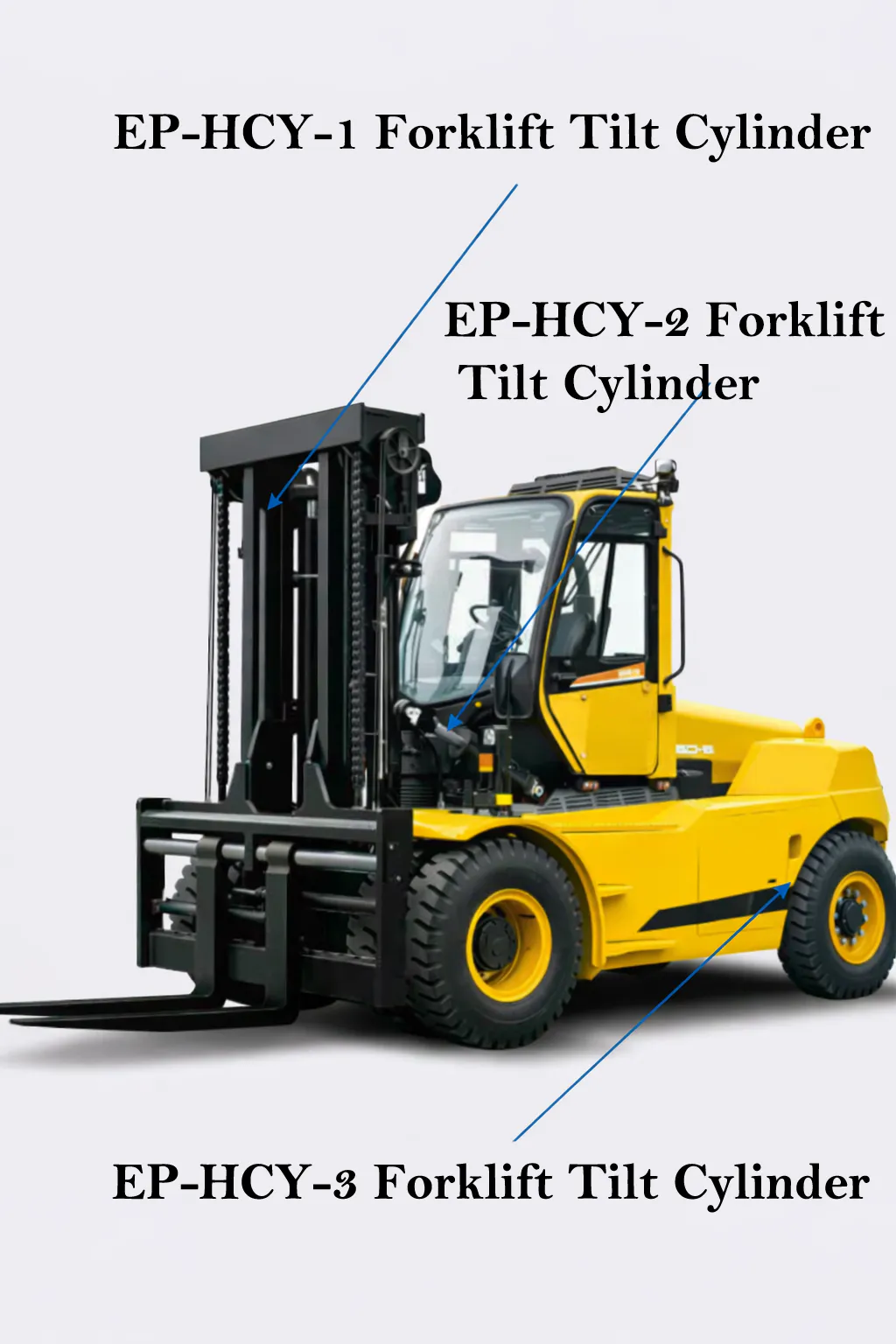
For pharmaceutical warehouse and light chemical distribution environments in Colombia, the EP-HCY-2 is the recommended tilt cylinder for compact to mid-size counterbalance forklifts where precise mast angle control and reliable hydraulic containment are both critical requirements. Its 18.1 MPa working pressure rating and 27 MPa maximum withstand pressure provide the performance headroom needed for safe operation in conditions where load stability is non-negotiable, such as when handling palletized pharmaceutical goods on racking systems inside temperature-controlled storage areas in Bogotá or Medellín.

Cilindro di inclinazione del carrello elevatore EP-HCY-2
| Parameter | Specifiche |
|---|---|
| Pressione di lavoro | 18.1 MPa |
| Max. Withstand Pressure | 27 MPa |
| Colpo | 156 mm |
| Installation Distance | 453 mm |
| Peso | 12 kg |
| Action Type | Double-acting |
| Seal Option | NBR (standard) / FKM (chemical-resistant upgrade) |
| Applicazione | Counterbalance forklift mast tilt control |
Tilt cylinder drift: Causes in Chemical Environments
Forklift tilt cylinder drift — the gradual unintended movement of the mast from its set tilt position — is one of the most commonly reported operational problems in pharmaceutical warehouses where the forklift operates in environments with chemical vapor exposure. In a standard environment, drift usually indicates piston seal internal leakage or a worn load-holding valve. In chemical environments, the picture is more complex, because seal material degradation from chemical exposure can produce drift symptoms that mimic mechanical seal wear but progress much faster and recur even after standard seal replacement if the root cause — chemical incompatibility — is not addressed.
When a piston seal in a forklift hydraulic tilt cylinder swells from solvent absorption, it initially provides a tighter fit and may temporarily reduce drift. As the swollen seal is compressed against the bore wall during each tilt cycle, the over-stressed elastomer loses its elastic recovery capacity, and the seal begins to extrude into the clearance gap between piston and bore. At that point, drift increases rapidly, and the cylinder’s hold pressure drops below the threshold needed to maintain mast position under load. The correct response is not just seal replacement with the same material, but a full review of the operating chemical environment and selection of a seal compound with confirmed resistance to the identified chemicals — typically FKM for the majority of pharmaceutical and chemical storage exposures. Include the kit di guarnizioni per cilindro di inclinazione del carrello elevatore upgrade in the corrective action, not just the individual failed seals.
Prodotti correlati
The tilt cylinder is one component in a complete material handling hydraulic system. Ensuring that all hydraulic components in your pharmaceutical warehouse forklift are rated for the operating environment — not just the tilt cylinder — is essential for achieving full system chemical resistance and compliance.
Serie di cilindri di inclinazione
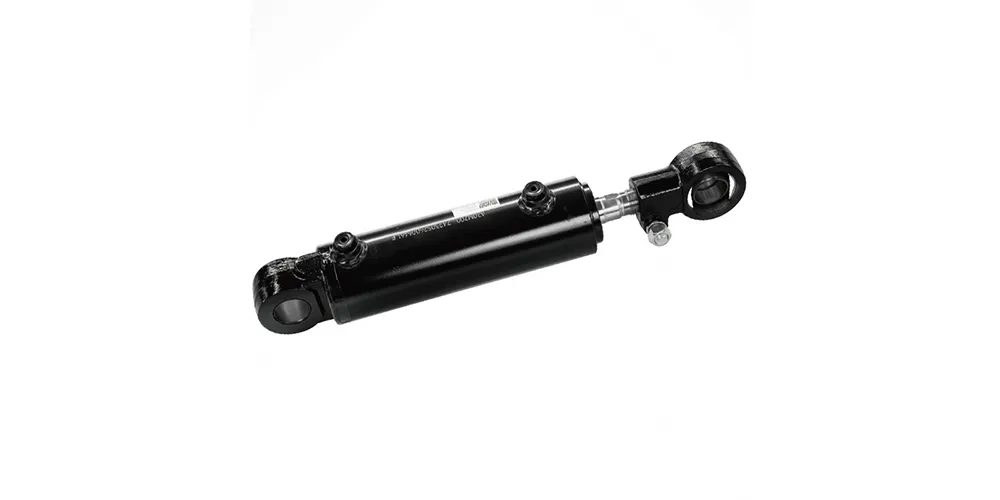
Nostro Cilindro di inclinazione range extends beyond the standard forklift configuration to cover industrial reach trucks, side-loaders, and specialized pharmaceutical warehouse lift equipment. Each series is available with chemical-resistant seal upgrade options for environments where standard NBR compounds are insufficient, making them directly compatible with the chemical resistance requirements documented in this guide.
Serie di stazioni di pompaggio idraulico
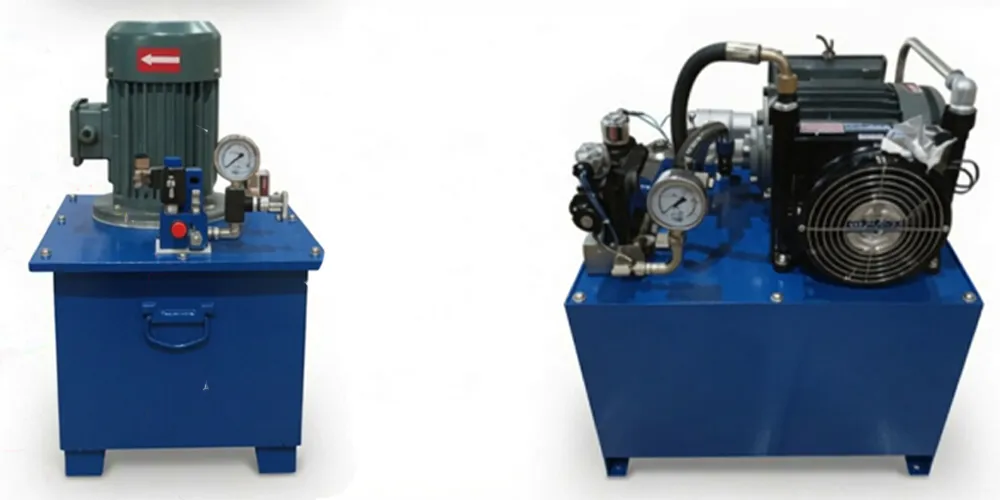
Our hydraulic pump station series provides the compatible power unit for forklift hydraulic systems. When upgrading a forklift to chemical-resistant cylinders and fire-resistant hydraulic fluid for use in a pharmaceutical warehouse, the pump station’s seals, reservoir material, and filter housing compatibility must also be verified. Sourcing from a single supplier ensures that every element of the hydraulic circuit — from pump to tilt cylinder — is engineered for system-level chemical compatibility.
Chi siamo
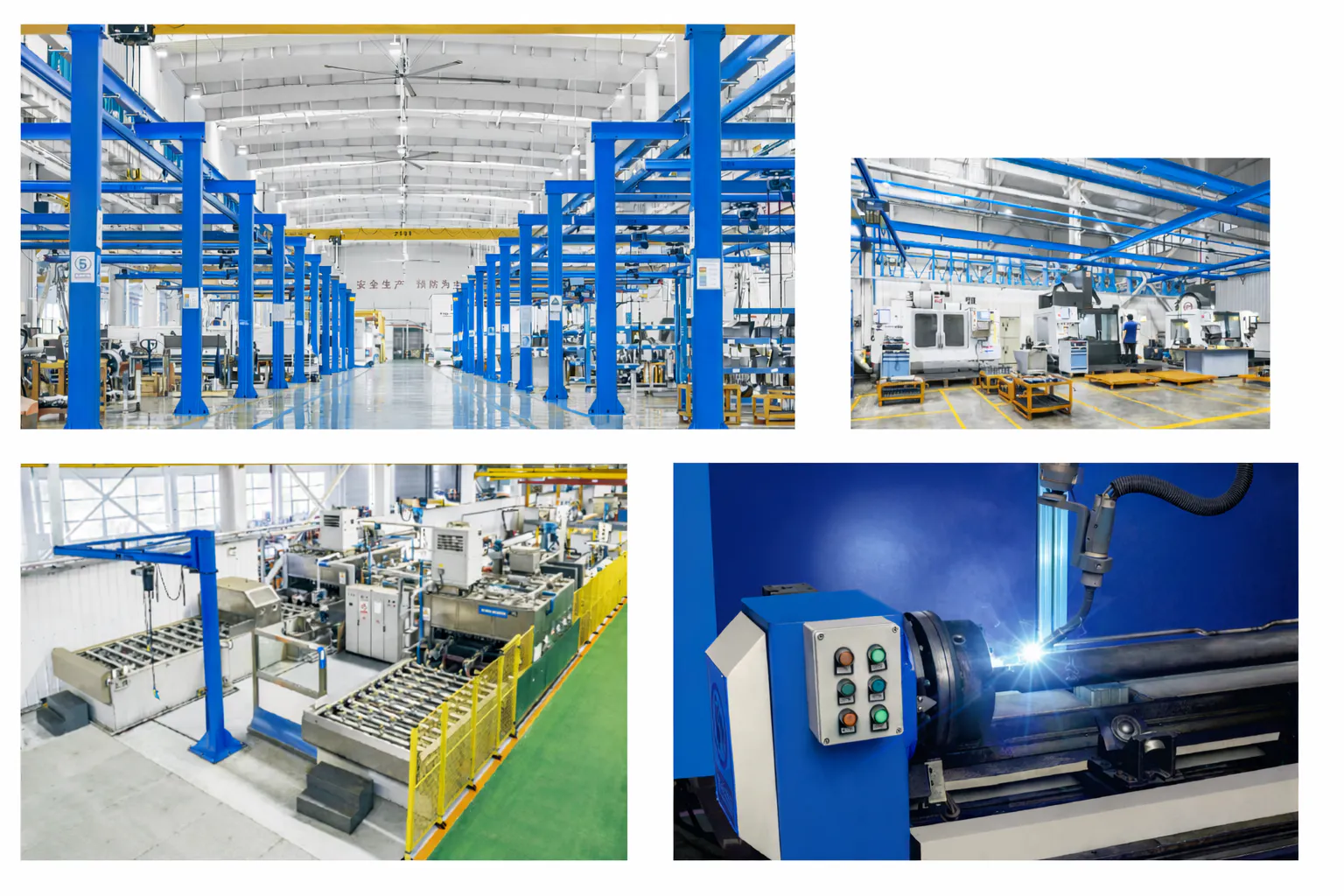
We are a specialist hydraulic cylinder manufacturer and supplier with deep experience in the design, production, and application engineering of forklift hydraulic cylinders for demanding industrial environments. Our product range covers the full EP-HCY and EP-HCYA forklift cylinder series, with standard and chemical-resistant configuration options to serve pharmaceutical, food-grade, and chemical distribution facilities in Colombia and across Latin America. Our engineering team understands the INVIMA regulatory environment in Colombia and can assist procurement and maintenance managers in Bogotá, Medellín, Cali, and Barranquilla in selecting cylinders that meet both operational performance requirements and GMP facility compliance documentation standards.
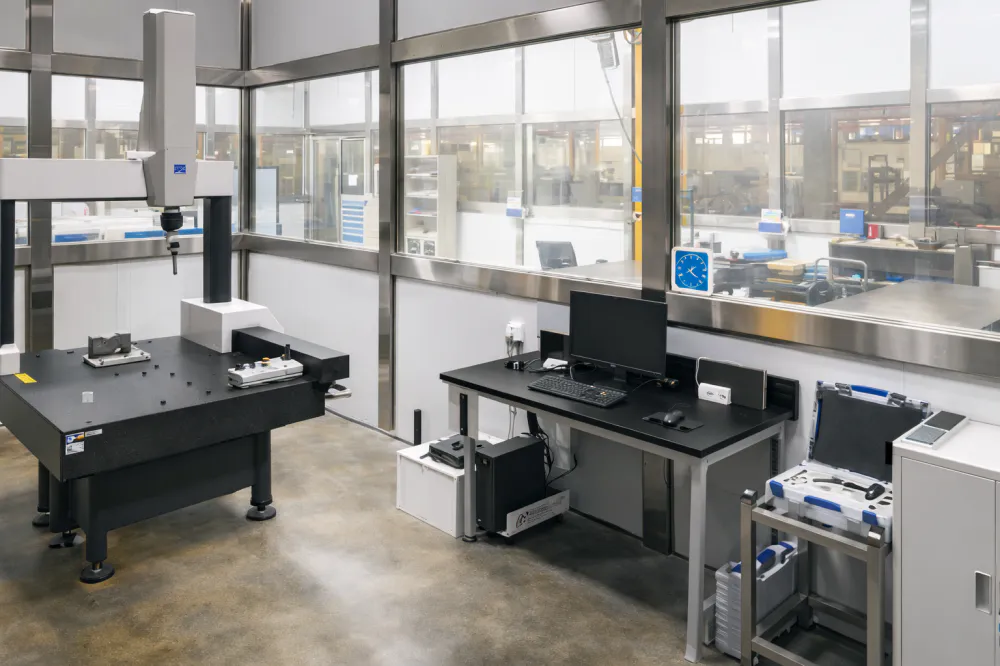
We supply tilt cylinders, lift cylinders, and accessories for all major forklift platforms including Toyota, Hyster, Caterpillar, Komatsu, Crown, and Linde equipment. Our ISO 9001-certified production process includes dimensional inspection, pressure testing to 1.5x working pressure, and optional certificate of conformance documentation for regulated industry customers.
Domande frequenti
Q1. What seal material should I specify for a tilt cylinder used in a pharmaceutical warehouse that uses IPA cleaning sprays daily?
Q2. Where can I find a supplier for tilt cylinder seal kits with FKM seals that ships to Bogota and Medellin in Colombia?
Q3. How does INVIMA GMP inspection affect the maintenance documentation required for forklift hydraulic cylinders in a Colombian pharmaceutical warehouse?
Q4. What is the difference between a forklift lift cylinder and a tilt cylinder when evaluating chemical resistance requirements in a warehouse?
Q5. How often should a tilt cylinder seal replacement be performed in a chemical storage facility in Cartagena or Barranquilla?
Q6. What are the different types of forklift cylinders and which type handles the most chemical exposure risk in a pharmaceutical warehouse?
Q7. How do I get a quote for a replacement hydraulic tilt cylinder for a Hyster forklift operating in a chemical warehouse in Colombia?
Redattore: PXY