Maintenance & Technical Guides | Seal Replacement
How Often Should You Replace Forklift Tilt Cylinder Seals in a High-Cycle Industrial Facility?
A practical maintenance guide for industrial fleet managers and hydraulic technicians in Colombia and across Latin America — covering seal service intervals, material selection, early-warning symptoms, and step-by-step replacement procedures for forklift tilt cylinder seal kits in demanding high-cycle environments.
Why Seal Replacement Intervals Matter More Than Most Maintenance Managers Realise
In high-cycle industrial facilities — automotive parts warehouses, steel service centres, cold-chain logistics hubs, and heavy-load manufacturing plants — forklifts may execute more than 1,200 tilt commands per shift. At that duty rate, the elastomeric seals inside the cylinder are performing dynamic sealing contact with the piston rod and barrel bore thousands of times per day. Each contact cycle causes microscopic wear. Oil oxidation compounds the issue by hardening seal lips over time. Temperature cycling — from a cold morning start to operating temperature — introduces thermal fatigue into the seal material that accelerates crack initiation.
Most standard forklift hydraulic cylinder maintenance schedules were written for moderate industrial duty — typically one 8-hour shift per day, five days per week, in a climate-controlled environment. For Colombian industrial facilities in Bogotá, Medellín, or Barranquilla that run two or three shifts per day, six or seven days per week, those standard seal replacement intervals are simply not adequate. Using them as-is creates a predictable failure pattern: seals degrade faster than the schedule anticipates, the cylinder begins to drift, leakage appears at the gland, and maintenance is reactive rather than planned.
This guide provides the interval framework for high-cycle environments, explains what drives seal degradation in each specific seal position, and gives maintenance teams a practical basis for calculating their own facility-specific replacement schedule based on operating hours, shift pattern, and environmental exposure.
1. What Is a Tilt Cylinder on a Forklift and Where Are the Seals Located?
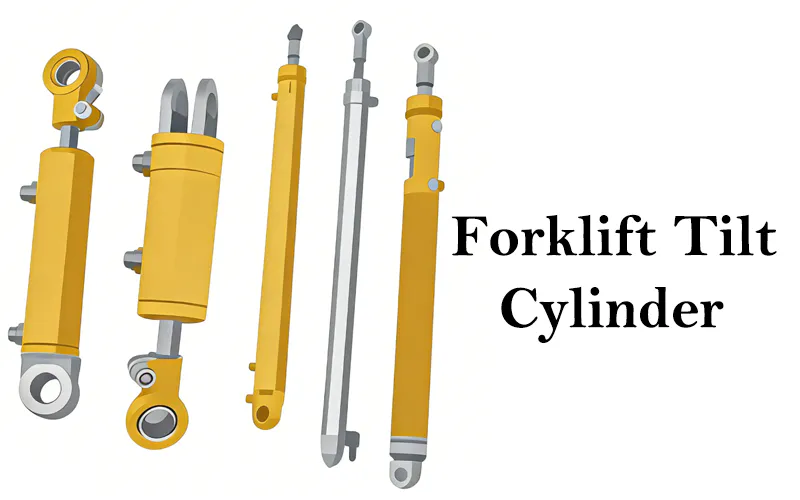
A forklift tilt cylinder is a double-acting hydraulic actuator that controls the angular position of the mast relative to the chassis. When the operator moves the tilt control lever, pressurised hydraulic oil flows into one end of the cylinder — either the cap end to tilt the mast forward or the rod end to tilt it back — causing the piston to move and pivoting the mast assembly about the mounting pins at the chassis. The cylinder must hold its set position under full load between tilt commands, which places continuous demand on the internal seals even when the machine appears stationary.
Understanding seal location is the first step to understanding seal wear patterns. Four distinct seal zones exist within the assembly, each experiencing different stress profiles:
The piston seal pack sits on the piston body and provides the primary separation between the cap-end and rod-end pressure chambers. This is the highest-stress seal in the assembly because it must contain full working pressure on one side while the other side is connected to return. Internal leakage past the piston seal directly causes tilt drift — the uncontrolled mast creep under load that indicates the piston can no longer hold position. In a high-cycle facility, piston seal wear is the leading cause of unscheduled cylinder downtime.
The rod seal sits in the gland housing at the rod-end of the barrel. Its job is to prevent hydraulic oil from escaping along the surface of the piston rod as it extends and retracts. External leakage at the gland is the most visible failure sign — oil streaking down the rod or pooling on the chassis below the cylinder. Rod seal failure in a high-cycle environment is commonly caused by rod surface damage from contamination ingress past the wiper seal, combined with thermal cycling fatigue in the seal lip material over many thousands of rod strokes.
The wiper seal, also called the scraper seal, is the outermost element in the rod gland. Its sole function is to remove dust, debris, and moisture from the rod surface as the rod retracts into the barrel. A failed wiper allows abrasive particles to reach the primary rod seal, accelerating rod seal wear by two to five times compared to the rate when a serviceable wiper is in place. In industrial environments with cardboard dust, metal swarf, concrete powder, or outdoor particulate exposure, the wiper is the fastest-wearing seal in the assembly and should be treated as a consumable at much shorter intervals than the internal seals.
The end cap seals are O-rings or rectangular-section static seals that prevent leakage at the threaded or welded cap connections. Because these seals do not move, their failure mode is different from the dynamic seals — they fail primarily through compression set (permanent deformation under sustained compression), thermal degradation from sustained elevated oil temperature, or chemical attack from the hydraulic fluid. In most high-cycle facilities, end cap seals outlast at least two to three piston and rod seal change cycles and are typically replaced as a precaution when the cylinder is disassembled for other seal work.
2. Manufacturing Structure of the Forklift Tilt Cylinder — How Design Affects Seal Life
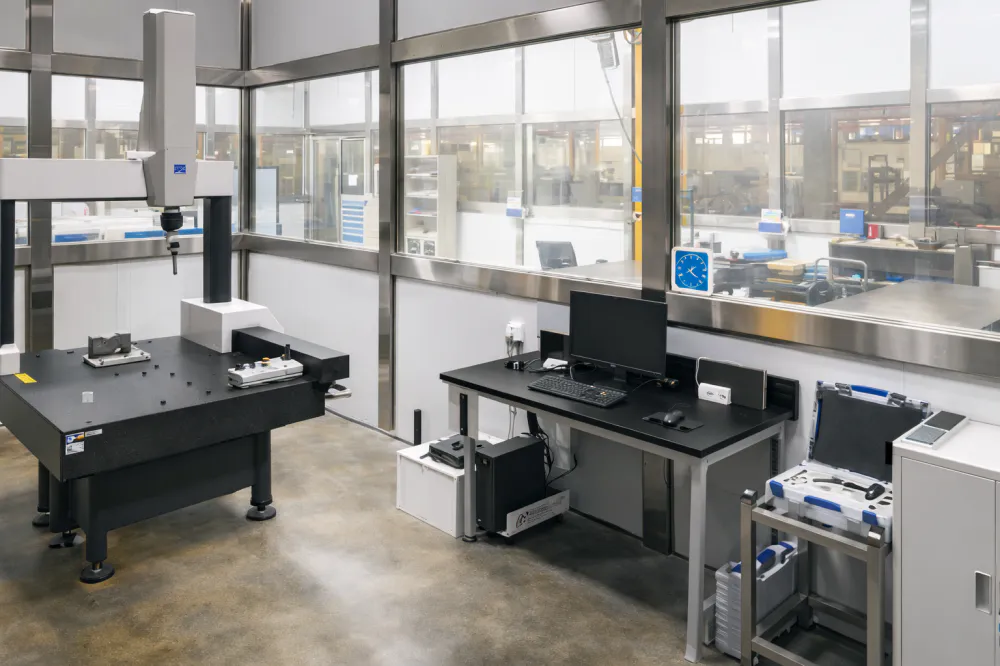
The construction quality of the forklift tilt cylinder itself determines the upper limit of how long the seals can last. Precise bore honing, correct chrome plating on the piston rod, and accurate gland bore concentricity provide the dimensional conditions that allow seals to perform to their rated service life. A cylinder with surface finish defects, bore ovality, or an undersize chrome deposit puts the seals under stress from the first stroke — and they will degrade faster regardless of the material specification.
The following structural elements of the cylinder directly interact with or support the seal system:
| Component | Specification for Optimal Seal Life | Degradation Risk if Specification Not Met |
|---|---|---|
| Barrel Bore | Honed to Ra 0.4 µm or better; bore roundness within 0.02 mm | Rough bore surface cuts piston seal lip; ovality causes seal to breath and bypass under rotation |
| Поршень штангасы | C45 steel; chrome deposit min. 0.025 mm; ground to h6 tolerance; Ra 0.2 µm | Thin chrome chips or peels under dynamic load; pitted surface abrades rod seal lip on every stroke |
| Gland Bore | Concentric to barrel bore within 0.05 mm; gland bore to H7 tolerance for seal housing | Eccentric gland causes rod to contact seal housing on one side; concentrated wear shortens seal life |
| Piston Body | Piston OD concentric to rod axis; piston groove dimensions to ISO 5597 | Piston wobble causes seal to extrude into clearance gap; seal extrusion is the primary cause of rapid piston seal failure |
| End Cap Thread or Weld | Full-penetration weld or full-thread engagement; O-ring groove to ISO 3601 | Incomplete thread engagement allows cap to move under pressure cycling; static seal is compressed and released, causing fatigue cracking |
| Port Fittings | BSP or SAE port thread; no burrs in flow path | Burrs or sharp edges in flow path generate oil turbulence that suspends contamination particles and drives them into the piston seal zone |
3. Material System — Selecting the Right Forklift Tilt Cylinder Seal Kit
The cylinder seal kit is not a single-material component — it is a carefully engineered assembly of different elastomers and polymer compounds, each optimised for the specific stress environment of its position in the cylinder. Selecting the wrong seal kit material for the operating environment will shorten seal life dramatically regardless of the replacement interval used, while the correct material specification extends service life substantially even in adverse conditions.
NBR is the standard elastomer for forklift tilt cylinder seal kits in most general industrial applications running on mineral hydraulic oil (ISO VG 46 or VG 68 anti-wear grade). It offers good resistance to petroleum-based fluids across a temperature range of -30°C to +110°C, combining adequate elasticity with acceptable abrasion resistance at normal operating conditions. NBR is the appropriate choice for the majority of Colombian industrial facilities where the hydraulic system uses standard mineral oil and ambient temperatures remain within the typical range for warehouse and manufacturing environments. However, NBR swells when exposed to certain ester-based or synthetic hydraulic fluids and is not suitable for systems using fire-resistant water-glycol (HFC) fluids.
Polyurethane seals are specified for high-wear applications where mechanical abrasion resistance is the primary performance criterion. PUR has approximately three to four times the abrasion resistance of NBR at the same hardness, making it the material of choice for wiper seals and primary rod seals in high-cycle environments with particulate contamination exposure. In Colombian steel, mining, and construction equipment maintenance operations in Medellín and the surrounding industrial zone, PUR seal kits are the standard upgrade over NBR for applications involving metal swarf, concrete dust, or outdoor deployment. The limitation of PUR is its sensitivity to prolonged hot-water or steam exposure — for cold-chain facilities that use steam cleaning, FKM is preferred.
FKM seals are specified for extreme thermal environments, chemical-splash exposure, or applications using synthetic ester or water-glycol hydraulic fluids. FKM maintains its sealing characteristics from -20°C to +200°C and resists a wide range of organic solvents, concentrated acids, and alkalis that would degrade NBR within days. In the context of forklift tilt cylinder seal replacement for pharmaceutical warehouses, chemical distribution centres, and food processing facilities in Bogotá and Barranquilla, FKM kits are the correct specification. The higher cost of FKM versus NBR is justified by the dramatically extended service life in aggressive environments — typically 1.5 to 2.5 times the NBR service life at the same duty conditions.
PTFE (pure or composite-filled) is used for piston guide rings, anti-extrusion backup rings, and low-friction bearing elements rather than as a primary dynamic seal material. PTFE guide rings centre the piston within the barrel bore, reducing lateral piston load on the primary seal and extending the service life of the elastomeric piston seal by reducing the eccentric wear that occurs when the piston contacts the bore wall under side load. In heavy-duty configurations — such as those on counterbalance forklifts handling steel coil, paper rolls, or heavy machinery components — PTFE-filled composite rings provide the lateral load support that standard NBR seal packs alone cannot maintain at high cycle rates.
4. Seal Replacement Intervals — Standard vs. High-Cycle Industrial Duty
The table below provides the interval framework for forklift tilt cylinder seal replacement across three duty classifications. Colombian facilities should self-assess their duty class based on the operating hours per day and the environmental exposure profile, then apply the corresponding interval for each seal zone. Intervals are expressed in operating hours because daily shift patterns vary significantly between facilities — using hours as the baseline ensures the interval tracks actual wear rather than elapsed calendar time.
| Seal Zone | Light Duty (1 shift / day) | Standard Duty (2 shifts / day) | High Cycle (≥3 shifts or 1,200+ tilt/shift) |
|---|---|---|---|
| Wiper Seal | 2,000 hours | 1,000 hours | 500 hours |
| Rod Seal (Primary) | 3,000 hours | 2,000 hours | 1,000 hours |
| Piston Seals | 4,000 hours | 2,000–2,500 hours | 1,200 hours |
| Anti-Extrusion Backup Rings | With piston seal cycle | With piston seal cycle | With piston seal cycle |
| End Cap Static Seals | At disassembly or 8,000 hours | At every third piston seal cycle | At every second piston seal cycle |
| Full Forklift Tilt Cylinder Seal Kit (all zones) | Every 3,000–4,000 hours | Every 2,000 hours | Every 1,000–1,200 hours |
These intervals assume mineral hydraulic oil maintained at ISO 16/14/11 cleanliness or better, oil temperature below 70°C, and the hydraulic system operating within the cylinder’s rated pressure range. Deviations from any of these conditions — contaminated oil, overheated fluid, pressure spikes — reduce effective seal life and should trigger an earlier inspection regardless of hours logged.
5. Featured Cylinders — Knowing Your Cylinder Specification Helps You Source the Right Seal Kit
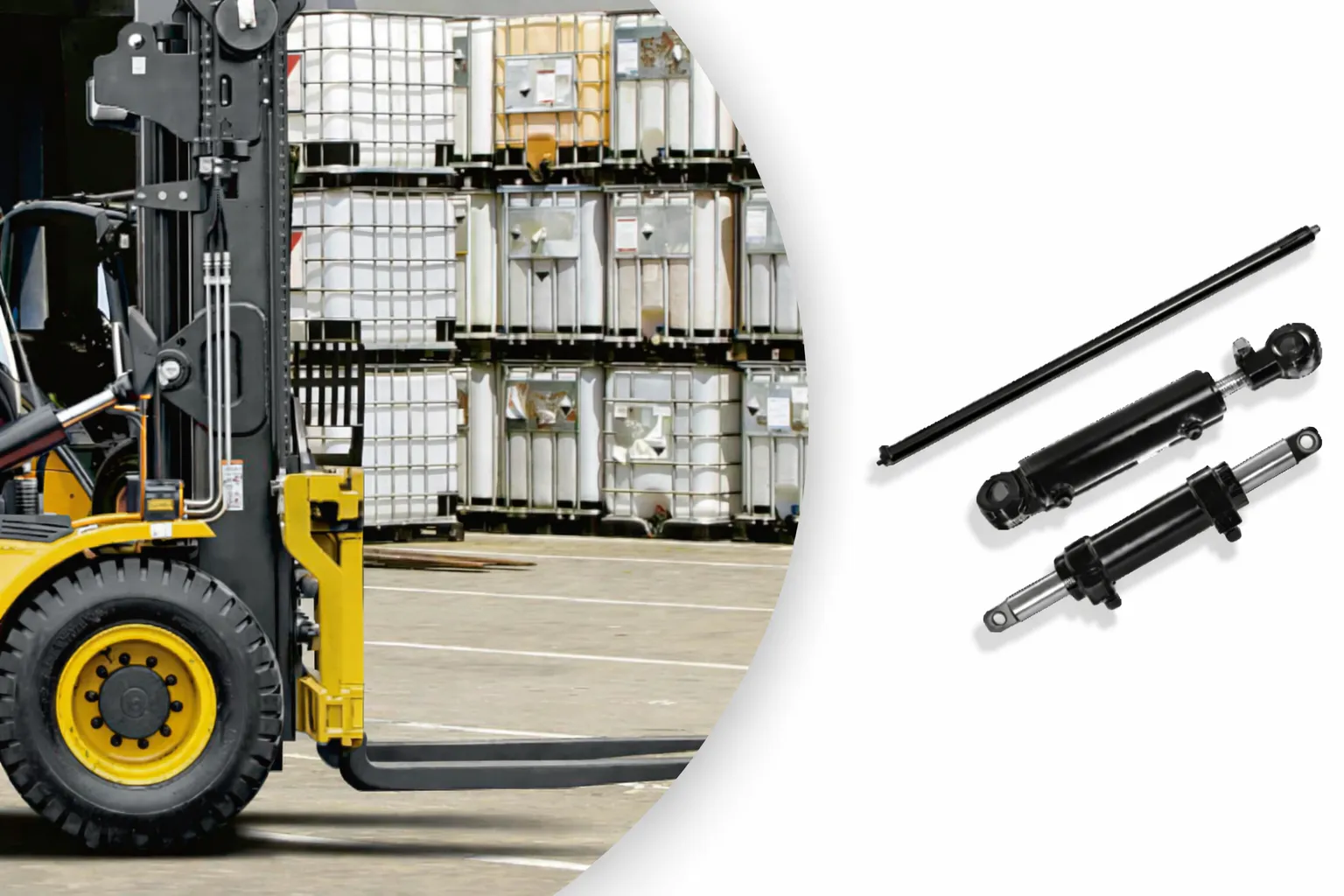
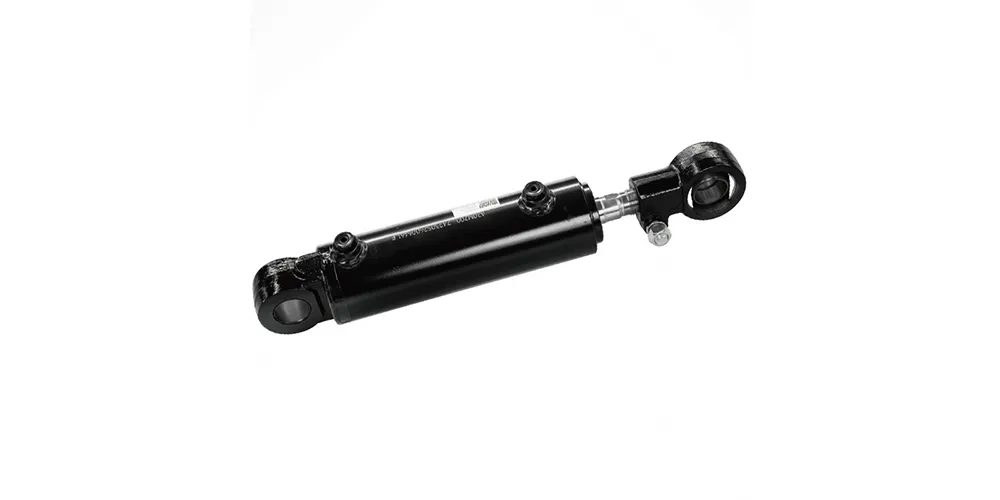
Before ordering a forklift tilt cylinder seal kit, technicians must confirm the exact cylinder model, bore diameter, rod diameter, and gland dimensions. The two cylinders below are representative units from our product range; their specifications illustrate the type of data needed to match the correct seal kit to the installed cylinder in your facility.


6. Early Warning Symptoms — What to Look for Before Seals Fail
A planned forklift tilt cylinder seal replacement is significantly less disruptive and less expensive than a reactive replacement after failure. The key to staying on the planned side of this equation is recognising the early symptoms of seal degradation before they progress to a failure event. In a high-cycle industrial facility, a technician doing a daily pre-shift walk-round of the forklift fleet should be looking for the following indicators, each of which signals a specific seal zone approaching end of life.
A thin, uniform oil film on the chrome rod surface after operation is normal and expected — it is part of the lubrication film that protects the rod seal. Active weeping, oil drops forming at the gland face, or oily accumulation on the chassis below the cylinder are not normal and indicate the rod seal has lost seating contact. In a Colombian industrial facility subject to SG-SST audits, this is a documented defect requiring maintenance action before the next scheduled operational period.
Tilt cylinder drift — mast movement without operator input when holding a load — is the clearest indicator of piston seal bypass. Perform a drift test: lift a rated load to a comfortable working height, tilt the mast to a neutral position with the load suspended, place controls in neutral, and observe the mast angle over five minutes. Any drift exceeding 50 mm in five minutes under rated load indicates piston seals approaching or at end of service life. Document the drift measurement as a baseline for trend monitoring before the seal replacement is completed.
A cylinder with worn piston seals may not show visible external leakage but will exhibit a slight hesitation at the start of each tilt stroke — the pump must overcome the internal bypass flow before net useful movement occurs. Operators in a high-cycle environment notice this as a fractional delay between lever activation and mast movement. When multiple operators independently report this behaviour on the same machine across different shifts, it is a reliable sign that internal seal bypass is reducing hydraulic efficiency.
Dark streaks or abrasive particle accumulation baked onto the chrome rod surface indicates that the wiper seal has failed to scrape the rod clean during retraction. Once abrasive particles bypass the wiper, they reach the primary rod seal on every subsequent retraction stroke. This is an emergency indicator — the wiper must be replaced immediately, and the rod surface should be inspected for chrome scoring. If scoring has already occurred, forklift hydraulic cylinder repair or rod rechroming may be required before a seal kit change alone will restore the cylinder to serviceable condition.
Internal bypass across worn piston seals generates heat — the kinetic energy of the bypassing oil converts to thermal energy in the restricted seal clearance zone. If the hydraulic reservoir temperature is consistently running 10–15°C higher than it did when the machine was serviced, and no other cause such as a blocked cooler or restricted return filter is identified, piston seal bypass is a probable contributing factor. Elevated oil temperature accelerates the degradation of all remaining seals in the system, creating a compounding failure progression that makes early intervention particularly valuable.
7. Step-by-Step Forklift Tilt Cylinder Seal Replacement Procedure
Forklift tilt cylinder seal replacement is a hydraulic system maintenance task that must be performed with the hydraulic pressure fully relieved and the machine safely immobilised. The following procedure outline provides the key technical steps for a complete seal kit change on a standard double-acting tilt cylinder. Specific torque values, gland thread specifications, and seal groove dimensions must be confirmed from the cylinder manufacturer’s technical documentation before beginning work.
| Step | Action | Critical Point |
|---|---|---|
| 1 | Lower forks fully, place machine on level ground, apply parking brake and chock wheels | Machine must not be able to move; mast must be in fully lowered position before any hydraulic disconnection |
| 2 | Relieve all hydraulic pressure by cycling the tilt and lift controls several times with engine off | Residual pressure in accumulator circuits or trapped pilot pressure must be fully vented before disconnecting hoses |
| 3 | Disconnect the cylinder hoses at the cylinder port fittings; cap hose ends and cylinder ports immediately | Clean port area before disconnecting; cap both hoses and ports to prevent ingress during removal — contamination introduced here will damage the new seals |
| 4 | Remove the cylinder pivot pins at both clevis mounts; support the cylinder weight before removing the final pin | For heavy cylinders such as the EP-HCY-1 (33 kg), use a mechanical lift assist — manual unsupported handling at this weight is a violation of Colombian manual handling ergonomics guidance |
| 5 | Take the cylinder to a clean bench; drain residual oil into an appropriate collection vessel | Used hydraulic oil must be collected and disposed of per Colombia’s Decreto 4741 on hazardous waste management — oil cannot be drained to floor drains or soil |
| 6 | Unscrew or disassemble the gland assembly; slide the gland off the rod; withdraw the piston rod and piston assembly from the barrel | Support the rod as it exits the barrel to prevent it falling and damaging the chrome surface on the bench or floor |
| 7 | Remove all old seals from the piston groove, gland housing, and end cap; clean all metal components with clean flushing oil | Inspect the bore surface, rod chrome, piston OD, and gland bore for scoring or damage before installing new seals — new seals on damaged surfaces will fail rapidly |
| 8 | Lubricate all new seals from the forklift tilt cylinder seal kit with clean system oil; install seals using appropriate seal installation tools | Never use screwdrivers or sharp tools to seat seals — lip damage during installation is the most common cause of immediate post-rebuild leakage |
| 9 | Reassemble piston and rod into barrel; install gland assembly to specified torque; fill with clean hydraulic oil before reconnecting | Gland torque must match the manufacturer’s specification — under-torque allows gland to back off under pressure; over-torque distorts the seal housing and damages the new rod seal |
| 10 | Reinstall cylinder, reconnect hoses, bleed air from circuit, and perform a drift test before returning to service | Drift test result should be logged as the post-rebuild baseline for future comparison at the next drift check; any drift above 20 mm / 5 min after a fresh seal kit indicates residual internal damage requiring further investigation |
8. Regulatory Framework — Colombia, Latin America, and International Standards
Seal replacement and hydraulic system maintenance in Colombia is governed by a combination of occupational safety legislation, industry technical standards, and international frameworks referenced in equipment procurement contracts and OEM compliance documentation. Understanding these requirements protects maintenance teams, operations managers, and their employers from liability in the event of an incident related to hydraulic system failure.
| Region | Standard / Regulation | Relevance to Tilt Cylinder Seal Maintenance |
|---|---|---|
| Colombia | Decreto 1072 de 2015 (SG-SST) | Mandatory occupational safety management system requires documented PM programme for all powered industrial trucks, including hydraulic cylinder inspection, leak documentation, and seal replacement records. |
| Colombia | Resolución 2844 de 2007 | Ergonomics and manual handling standards; cylinder removal and handling during seal replacement for heavy cylinders must comply with maximum manual lift load guidelines. |
| Colombia | Decreto 4741 de 2005 | Hazardous waste management; used hydraulic oil drained during cylinder seal replacement is classified as hazardous waste and must be collected and disposed of through an authorised waste management carrier. |
| Colombia | NTC 3915 (ICONTEC) | National technical standard for industrial hydraulic cylinder testing; provides the pressure testing criteria applicable after seal replacement before returning a cylinder to service. |
| Latin America | ABNT NBR 15673 (Brazil) / IRAM 8055 (Argentina) | Annual drift testing of forklift hydraulic cylinders is a mandatory inspection element in Brazil and Argentina; results must be documented and retained for regulatory audit. |
| European Union | ЕО Машина жасау директивасы 2006/42/EC | CE-marked forklifts must be maintained to prevent uncontrolled mast movement; tilt cylinder seal degradation that produces drift beyond specified limits technically places the machine out of compliance with CE marking requirements. |
| USA / International | OSHA 29 CFR 1910.178 / ANSI B56.1 | Any hydraulic leak on a forklift requires immediate removal from service until repaired; relevant for Colombian facilities operating under US standards or supplying US-market customers with equipment conformance documentation. |
| International | ISO 3691-1:2011 | International counterbalance forklift safety standard; defines tilt cylinder hydraulic stability test criteria and prescribes the drift measurement method referenced in the Step 10 post-rebuild verification procedure described above. |
For Colombian facilities seeking practical guidance, the documentation requirement under Decreto 1072 de 2015 SG-SST means that every seal replacement event should be recorded with: the machine ID, the cylinder location, the hours at replacement, the seal kit specification used, the post-replacement drift test result, and the technician’s name and qualification. This record forms part of the preventive maintenance evidence that demonstrates legal compliance and provides the data history needed to calculate facility-specific replacement intervals.
9. Hydraulic Oil Condition — The Hidden Factor in Seal Service Life
Even well-specified and properly installed seals degrade faster than their rated service life when the hydraulic oil is contaminated, oxidised, or the wrong viscosity. This is a particularly relevant issue for high-cycle industrial facilities in Colombia where the combination of high duty rates and warm ambient temperatures creates conditions that accelerate oil degradation compared to the laboratory conditions under which seal life ratings are established.
The four primary oil condition factors that shorten seal service life are:
| Oil Condition Factor | Effect on Seal Life | Monitoring / Control |
|---|---|---|
| Particulate contamination above ISO 16/14/11 | Hard particles abrade seal lip contact surfaces; accelerates wear by 2–5x depending on particle hardness and size | Return-line filter (10 µm nominal); reservoir breather cap with desiccant; oil sample analysis every 500 hours |
| Elevated operating temperature (>70°C continuous) | Accelerates oxidation of both oil and seal elastomers; NBR hardens and cracks at sustained temperatures above 100°C | Verify oil cooler / heat exchanger condition; check reservoir fluid level (low level = higher thermal loading per litre) |
| Water contamination (>0.1% by volume) | Water promotes corrosion on metal surfaces that the seals contact; causes NBR seal degradation and promotes microbial growth in reservoir | Keep reservoir properly sealed; use desiccant breather; oil sample Karl Fischer water content analysis |
| Oil viscosity outside specification | Too-thin oil reduces seal hydrodynamic film; too-thick oil increases seal friction load and delays response; both accelerate seal wear | Confirm correct ISO VG grade for the operating temperature range; use high-VI oil in facilities with significant ambient temperature variation |
For facilities operating forklift fleets in Barranquilla’s warm and humid coastal climate, where ambient temperatures often remain above 30°C throughout the year, specifying ISO VG 68 hydraulic oil (rather than the lighter VG 46 commonly used in cooler climates) prevents viscosity-related film breakdown during sustained high-cycle operation. The additional viscosity margin at elevated ambient temperature directly extends piston and rod seal service life.
10. Related Products — One-Stop Supply for Your Hydraulic Maintenance Programme
Effective tilt cylinder maintenance depends not only on the cylinder and seal kit but on the quality and compatibility of the connected hydraulic drive system. The following product families complement this cylinder range and are available for coordinated procurement from a single technically consistent source.
Tilt Cylinder Series
The extended Tilt Cylinder product range covers a wider set of mast configurations and attachment-specific applications beyond the standard counterbalance forklift tilt cylinder. For facilities running reach trucks, VNA machines, or articulated forklifts alongside standard counterbalance units, the tilt cylinder range provides the correct stroke and mounting geometry for each machine class — with matched seal specifications that allow your maintenance team to use a single forklift tilt cylinder seal kit specification across multiple machine types, simplifying spare parts inventory management and reducing the risk of kit mix-up during replacement. All units share the same pressure ratings as the EP-HCY series, ensuring system compatibility when mixed fleet procurement is required.
Гидравликалық сорғы станцияларының сериясы
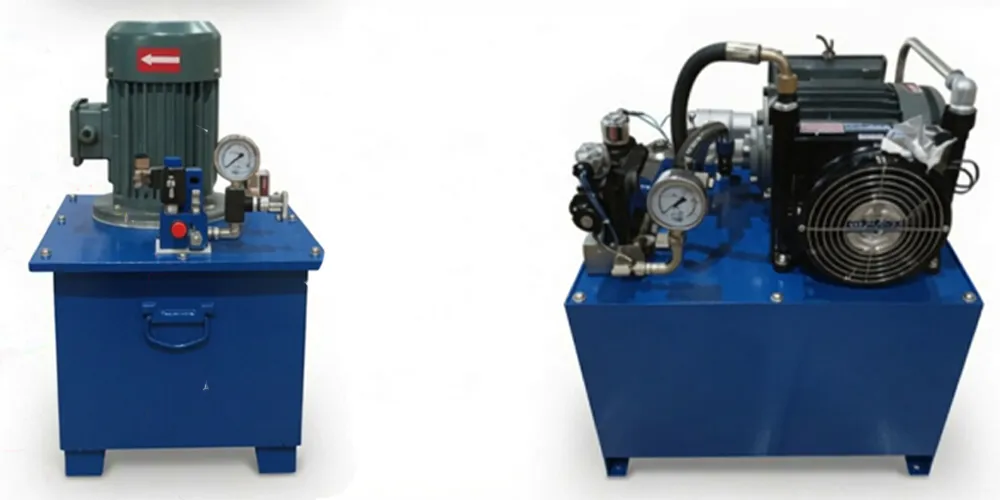
The hydraulic pump station series provides the power unit that determines the flow and pressure environment in which the tilt cylinder seals operate. A pump station matched to the operating pressure of the EP-HCY cylinder range ensures that the seals never experience over-pressure events from mismatched system settings — one of the most underappreciated causes of premature seal failure in facilities where cylinders have been replaced without cross-checking the pump station relief valve setting against the new cylinder’s rated working pressure. Pump stations from this range also include integrated filtration packages that maintain hydraulic oil at the cleanliness level needed for rated seal service life, removing the need to spec and fit external filtration separately. For Colombian facilities building or refreshing their maintenance infrastructure, combining both components from a single supplier simplifies commissioning and eliminates the most common inter-component specification conflicts.
11. About Us
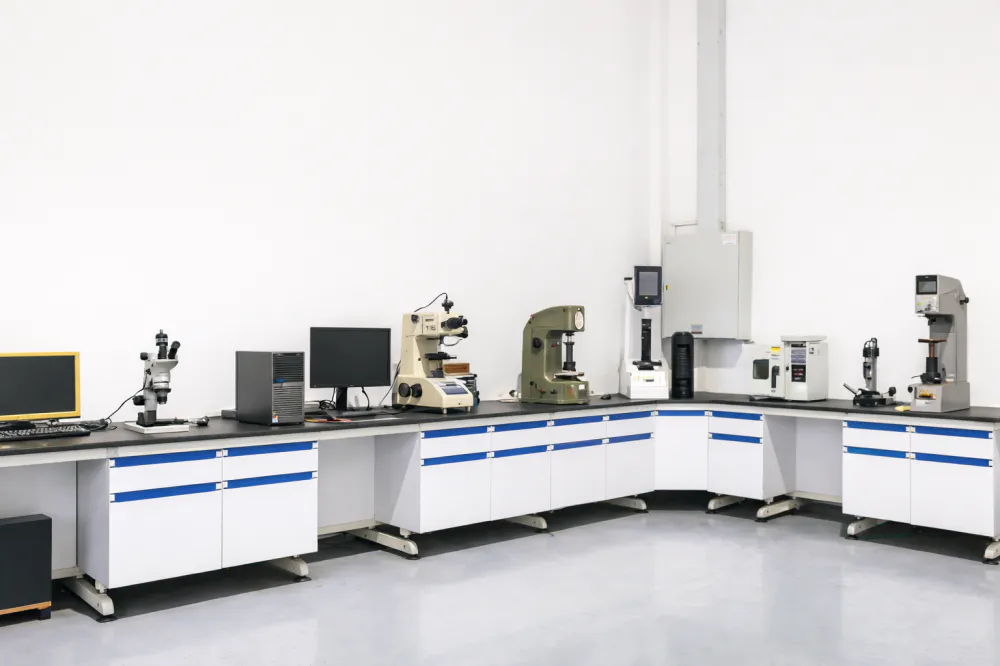
We are a specialist manufacturer of hydraulic tilt cylinders, lift cylinders, and complementary hydraulic drive components for industrial material handling applications. Our production facilities operate fully automatic tilt cylinder assembly lines with CNC machining centres, robot welding systems, automated dimensional inspection equipment, and dedicated pressure-testing stations. Each cylinder leaves our facility with a pressure test certificate and dimensional inspection record that can be provided to customers for maintenance compliance documentation under Colombia’s SG-SST requirements or any equivalent regulatory framework. We produce standard catalogue configurations and fully custom cylinders — including non-standard stroke lengths, bore diameters, and installation geometries — to match specific forklift platform requirements for Colombian and global B2B customers. Our technical team is available to assist with cylinder identification, seal kit specification, and post-rebuild drift test acceptance criteria for any unit in our range.
Жиі қойылатын сұрақтар
Q1. How often should I replace the forklift tilt cylinder seal kit on forklifts running three shifts per day in a Colombian industrial facility?
For a three-shift operation in Colombia, the recommended interval is the full forklift tilt cylinder seal kit every 1,000 to 1,200 operating hours, with the wiper seal inspected and replaced at 500 hours. At an average of 24 operating hours per day over six days per week, 1,000 hours is reached in approximately seven months. This is significantly shorter than the standard 2,000-hour interval published in OEM documentation for single-shift duty, and reflects the proportionally higher wear rate in the high-cycle environment. Monthly drift tests should be conducted as an interim check between scheduled seal changes.
Q2. What is a tilt cylinder on a forklift and how do I know if the seals have failed in my warehouse fleet in Medellin?
The tilt cylinder is the hydraulic actuator that controls the forward and backward angle of the forklift mast. Seal failure shows up in three ways: visible oil leakage along the piston rod or at the gland face; mast drift under a held load (mast moves without any operator input); and a hesitation or sluggishness at the start of each tilt command as the pump overcomes the bypass flow through worn piston seals. Any of these symptoms in a Medellín facility should trigger immediate inspection and planned forklift tilt cylinder seal replacement before the next operating shift.
Q3. What is the difference between a lift cylinder and a tilt cylinder and do they use the same seal kit for replacement in an industrial forklift?
The lift cylinder forklift component provides vertical fork elevation — it works under full load on every cycle and uses a single-acting design in some configurations. The tilt cylinder controls mast angle and is typically double-acting. They have different bore diameters, stroke lengths, gland designs, and installation geometries — seal kits are not interchangeable. Each cylinder requires a seal kit matched to its specific bore, rod, and gland dimensions. Confirm the cylinder model and bore specifications before ordering either seal kit to avoid receiving the wrong components.
Q4. Where can I source a reliable forklift tilt cylinder seal kit supplier in Colombia with fast delivery and full technical documentation?
For Colombian operators, the priority criteria for seal kit supplier selection should be: confirmed compatibility with your specific cylinder bore and rod diameter, availability of FKM, PUR, and NBR material options depending on your fluid and environment specification, and ability to provide material certificates and test records for compliance with SG-SST documentation requirements under Decreto 1072. Having an established supplier who understands the technical requirements — not just a catalogue distributor — is particularly important for high-cycle facilities where specifying the wrong kit creates a predictable short seal life with no warning.
Q5. What causes forklift tilt cylinder drift and how do I fix it quickly without replacing the entire cylinder assembly?
Tilt cylinder drift is almost always caused by internal bypass across worn piston seals. In the large majority of cases, the barrel bore and piston rod are still serviceable — only the elastomeric seal has reached end of life. A forklift tilt cylinder seal replacement targeting the piston seal and piston guide rings restores full volumetric efficiency and eliminates drift. If the barrel bore shows scoring or the rod chrome is pitted, forklift hydraulic cylinder repair or barrel re-honing may also be needed before the new seals will perform as rated. A post-rebuild drift test confirms whether the repair has been successful.
Q6. Which seal material should I specify in a forklift tilt cylinder seal kit for a hyster forklift operating in a high-temperature steel processing plant in Colombia?
For a hyster forklift tilt cylinder operating in a high-temperature steel environment — where radiant heat from steel products may elevate hydraulic oil temperature above 70°C during sustained operation — FKM (fluoroelastomer) seals are the correct specification. FKM maintains dimensional stability and sealing contact up to 200°C, compared to NBR which begins to harden and crack above 110°C. An FKM forklift tilt cylinder seal kit in this environment will typically deliver 1.5 to 2 times the service life of an equivalent NBR kit, justifying the higher kit cost within the first service interval.
Q7. How does Colombia’s Decreto 1072 de 2015 affect forklift tilt cylinder seal replacement documentation requirements in an SG-SST compliant facility?
Decreto 1072 de 2015 requires that all powered industrial trucks in Colombian workplaces be covered by a documented preventive maintenance programme under the SG-SST. For tilt cylinder seal replacement, this means each event should be recorded with the machine identifier, the cylinder location on the machine, the operating hours at replacement, the seal kit specification and material used, the name and qualification of the technician performing the work, and the post-rebuild drift test result. This record constitutes maintenance evidence that demonstrates due diligence in the event of a workplace incident and supports the audit trail required during SG-SST inspection visits.
Редактор: PXY