Aviation GSE Technical Reference
European airport apron ground support equipment forklift tilting cylinder
A technical compliance and specification guide for ground support equipment managers, procurement engineers, and maintenance organizations sourcing a forklift tilt cylinder for GSE applications at European airports, including regulatory context for buyers in Colombia and across the Americas managing equipment procurement for international cargo and airline operations.
GSE Specification Reference at a Glance
1. Ground Support Equipment and the Role of the Forklift Tilt Cylinder on Airport Aprons
Ground support equipment (GSE) covers a broad category of powered vehicles and handling units that operate on or immediately adjacent to the aircraft stands, taxiways, and cargo aprons of commercial airports. Within this category, forklifts equipped with a forklift tilt cylinder form a critical subset, moving unit load devices (ULDs), cargo pallets, catering supplies, aircraft servicing equipment, and spare parts between airside warehouses, aircraft holds, and maintenance areas on schedules synchronized to flight departure and arrival cycles. The demanding pace of an active cargo apron, combined with the proximity to aircraft and the safety consequences of load handling failures near aircraft structures, sets GSE forklift tilt cylinder requirements apart from those applying to general industrial forklifts in warehouse or manufacturing settings.
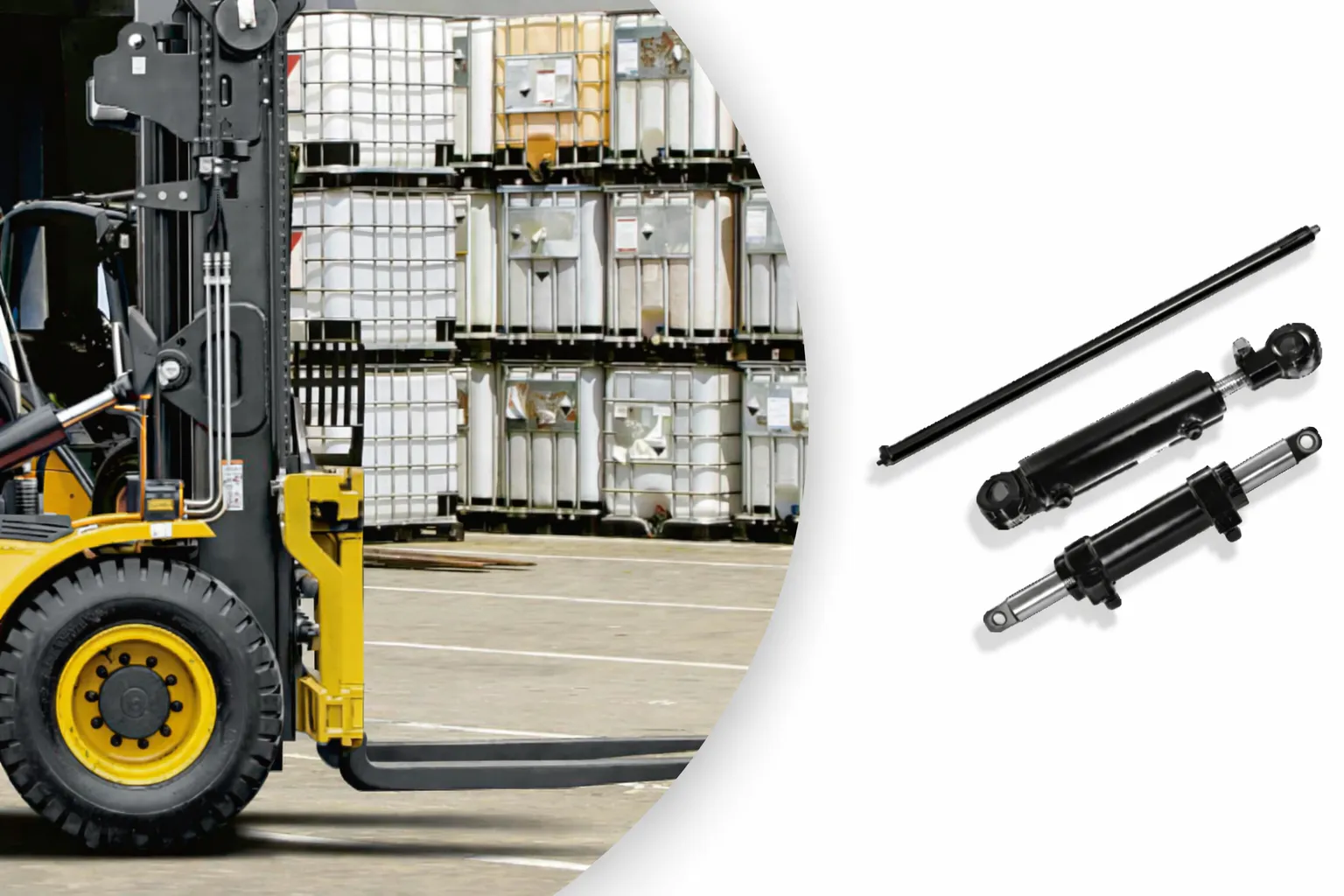
The forklift tilt cylinder on a GSE forklift performs the same mechanical function as on any industrial vehicle: it angles the mast and forks forward and backward to allow controlled load placement and stabilization during transport. Every forklift tilt cylinder on an active apron is effectively a safety-critical component by virtue of its location. But on an airport apron, the environment around that cylinder includes jet blast, aviation fuel splash, high-pressure apron wash-down cycles, and the strict Foreign Object Debris (FOD) management requirements that prohibit any loose particles, seal fragments, or hydraulic fluid leakage that could be ingested by aircraft engines. These factors raise the certification bar for hydraulic components used in GSE above the level that applies in most other forklift operating environments.
For procurement teams in Colombia managing equipment acquisitions for cargo terminals at El Dorado International Airport in Bogota, Jose Maria Cordova International in Medellin, or Alfonso Bonilla Aragon in Cali, understanding the European GSE certification framework is directly relevant. Airlines operating international connections to European hubs expect GSE contractors to maintain equipment documentation consistent with European ground handling industry standards, even for operations conducted entirely within Colombian airport perimeters.
2. Manufacturing Structure of an Aviation-Grade Forklift Tilt Cylinder
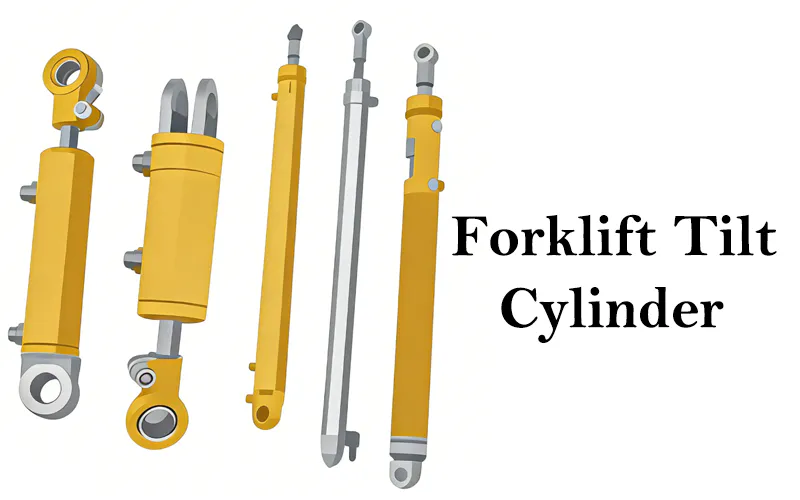
A forklift tilt cylinder specified for GSE service must meet a more demanding construction standard than a comparable warehouse unit because airport apron conditions expose every external surface and seal point to conditions that would be considered exceptional in a standard industrial environment. A forklift hydraulic cylinder diagram provided by the manufacturer helps GSE maintenance engineers understand mounting dimensions and port locations before specifying a forklift tilt cylinder replacement. Understanding the structural components helps GSE procurement teams evaluate supplier documentation against applicable standards and identify the specific features that distinguish an aviation-appropriate forklift tilt cylinder from a general-duty unit.
Cylinder Barrel
The barrel is a seamless cold-drawn steel tube with an internally honed bore. For apron-duty GSE, the external surface treatment must resist not only general atmospheric corrosion but also the combined attack of deicing fluid residue, aircraft fuel micro-droplets from engine blast, and the alkaline detergents used in pressure-wash apron cleaning cycles. Phosphate primer plus high-build enamel topcoat is the standard treatment, verified for compatibility with the cleaning agents in use at the specific airport where the forklift tilt cylinder will operate.
Chrome Piston Rod
The polished chrome rod is the primary corrosion-vulnerable surface on any forklift tilt cylinder, and on a GSE vehicle the additional exposure to deicing fluid chemistry, condensation from temperature transitions between air-conditioned cargo buildings and outdoor aprons, and the abrasive silica content of apron concrete dust requires chrome plating to be specified at the upper end of the thickness range and verified against the FOD risk that chrome micro-flakes could represent if the surface deteriorates through corrosion pitting.
Seal System and Gland
The rod gland assembly on an airport-duty forklift tilt cylinder requires seal compound selection that accounts for both the standard hydraulic fluid in service and the potential fire-resistant hydraulic fluid alternative used at some European airport ground support facilities. Seal compatibility with HFC-type and polyol ester fluids must be verified if the specific operating site mandates these fluids, since standard nitrile or polyurethane seal compounds from a forklift tilt cylinder seal kit may degrade when immersed in these chemistries over extended service periods.
Port Fittings and Leak Prevention
Hydraulic port fittings on a GSE forklift tilt cylinder must be torqued to specification and verified leak-free because any hydraulic oil seepage onto an apron surface creates both a slip hazard and an FOD investigation event. Port thread standard, fitting type, and torque documentation are therefore inspection items in GSE maintenance records that do not typically appear in standard warehouse forklift service documentation.
3. Material System for Airport Apron Duty
Material selection for a forklift tilt cylinder operating in a European airport apron environment must address a set of chemical and thermal exposure conditions that differ significantly from standard indoor or outdoor industrial applications. Barrel material in a GSE tilt cylinder follows the same seamless carbon steel specification as general industrial units, but the external coating system must be selected and verified against the specific cleaning chemicals and deicing agents used at the target airport. Some European airports and ground handlers mandate approval of hydraulic component specifications as part of their GSE acceptance process precisely because coating failures on active aprons create FOD and surface contamination risks that industrial standards alone do not govern.
Rod material for a forklift hydraulic lift cylinder and its paired tilt actuator in GSE service follows the same 40Cr or 45# alloy steel specification as industrial duty, but the hard chrome plating thickness specification should be confirmed at the higher end of the standard range for active outdoor apron service rather than the minimum adequate for indoor warehouse use. Hard chrome provides the corrosion barrier against the combined moisture, deicing fluid residue, and jet blast effects that a GSE forklift tilt cylinder encounters during routine apron operations at major European cargo hubs including Amsterdam Schiphol, Frankfurt Cargo City, and Paris Charles de Gaulle cargo terminals.
Seal material is the most critical material selection variable for airport GSE. A standard forklift tilt cylinder seal kit based on polyurethane or nitrile compound performs reliably with mineral hydraulic oil, but a significant number of European airport GSE operations use fire-resistant hydraulic fluid in ground vehicles operating within proximity of aircraft fuel systems. Buyers sourcing a forklift tilt cylinder for these specific applications must verify seal compound compatibility with the exact fire-resistant fluid specification in use, specifying fluorocarbon (FKM) or EPDM seals where polyol ester or water-glycol fluids are mandated by the airport ground handling operator’s fire safety policy.
4. Certification Framework for GSE in European Airports
Several overlapping standards and regulatory frameworks govern the design, manufacture, and ongoing maintenance certification of GSE equipment, including the forklift tilt cylinder as a hydraulic pressure-bearing component.
| Standard / Regulation | Governing Body | Relevance to Forklift Tilt Cylinder |
|---|---|---|
| IATA AHM (Airport Handling Manual) | IATA | Sets minimum GSE equipment maintenance and inspection standards adopted by signatory airlines; hydraulic system condition is an inspection item for forklift-type GSE |
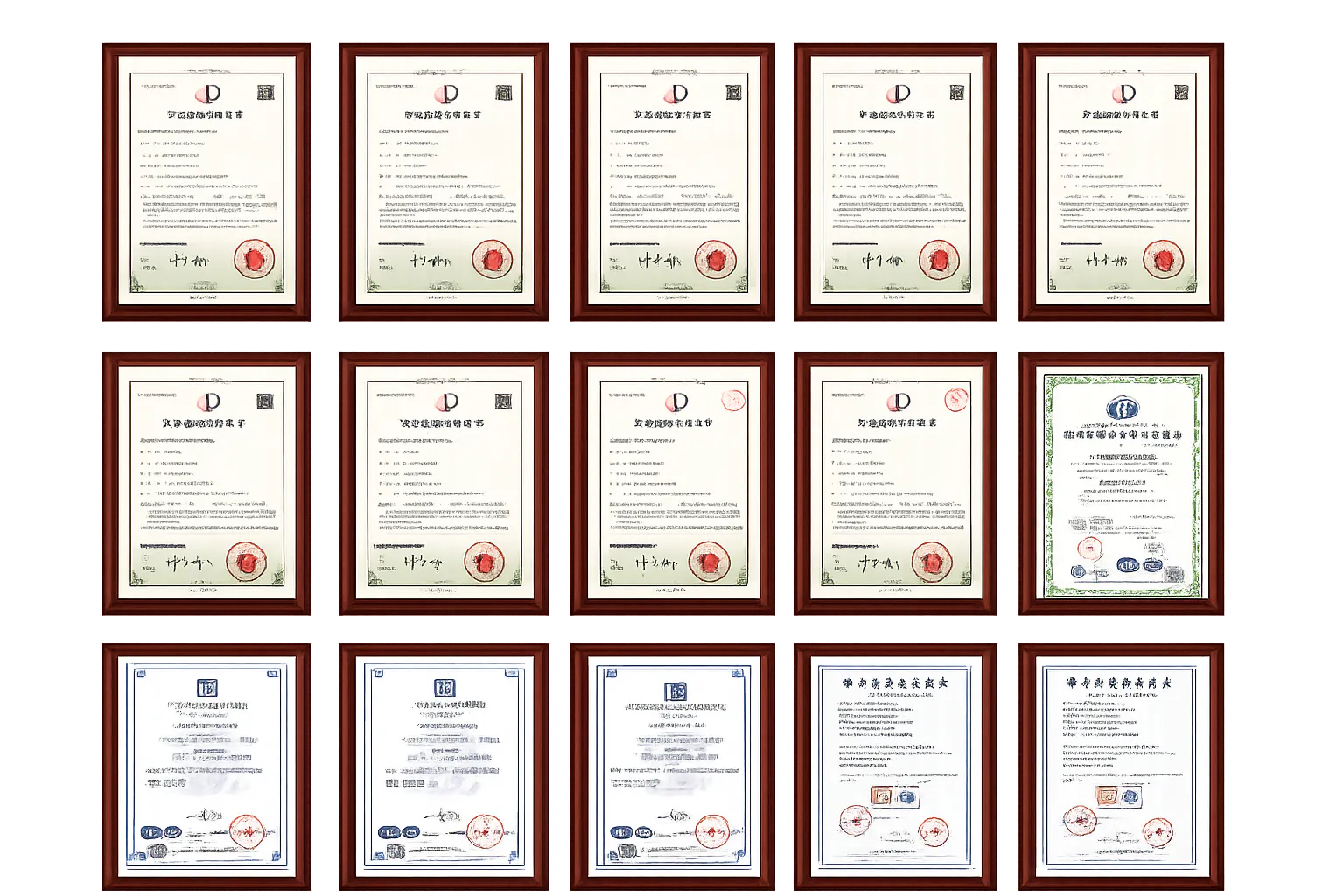
| EN 1915 Series | CEN (European Committee for Standardization) | Specifies general requirements, stability tests, and load testing for GSE; hydraulic cylinder pressure rating must satisfy EN 1915-1 structural integrity requirements |
| EU Machinery Regulation 2023/1230 | European Commission | Essential health and safety requirements for hydraulic components in powered industrial equipment, effective January 2027; replaces Machinery Directive 2006/42/EC |
| EASA Certification Specifications | European Union Aviation Safety Agency | EASA does not directly certify GSE but sets airside operational safety standards that drive national Civil Aviation Authority requirements for GSE equipment operated on EU aerodrome aprons |
| ISO 3691 (Industrial Trucks) | ISO | International safety requirements for powered industrial trucks including fork lift trucks; serves as the baseline hydraulic cylinder performance standard where airport-specific standards do not address component detail |
| ACI EUROPE Ground Operations Standards | Airports Council International Europe | Aerodrome operating standards adopted by major European hub airports; GSE equipment maintenance intervals and hydraulic fluid containment requirements vary by airport under ACI guidance |
5. Fire-Resistant Hydraulic Fluid Compatibility and Seal Selection
The single most technically critical aspect of specifying a forklift tilt cylinder for certain European airport GSE applications is confirming seal compound compatibility with the fire-resistant hydraulic fluid in use at the specific ground handling facility. Many European airports and ground handlers operating within designated fire-risk zones near aircraft fuel systems specify HFC water-glycol, phosphate ester, or polyol ester fire-resistant hydraulic fluid rather than standard mineral oil, and the seal compounds that perform reliably with mineral oil frequently degrade rapidly in contact with these alternative fluid chemistries.
A forklift tilt cylinder seal kit containing standard polyurethane piston and rod seals will typically sustain degradation within weeks if operated with water-glycol hydraulic fluid without prior compatibility verification. Fluorocarbon (FKM) seal compounds provide the broadest compatibility across mineral oil, HFC, and polyol ester fluids, making them the default specification choice for GSE forklift tilt cylinder procurement where the exact fluid chemistry in use across a multi-operator airport environment may be difficult to confirm in advance. The additional cost of FKM seals versus standard polyurethane is minor relative to the downtime and replacement expense of a premature forklift tilt cylinder seal replacement caused by fluid incompatibility.
Buyers requesting a custom forklift tilt cylinder seal kit for GSE applications should provide the fire-resistant fluid specification document rather than only the commercial product name, since different products within the same fluid category can have significantly different compatibility profiles with the same seal compound. Requesting a forklift tilt cylinder diagram alongside the seal kit specification helps the maintenance technician confirm groove dimensions before ordering, and allows a second check that the forklift hydraulic tilt cylinder unit being serviced matches the intended seal kit configuration. This documentation step is standard practice in European aviation GSE procurement but less commonly followed when sourcing hydraulic cylinder parts through general industrial distribution channels.
6. GSE Application Scenarios Requiring a Forklift Tilt Cylinder
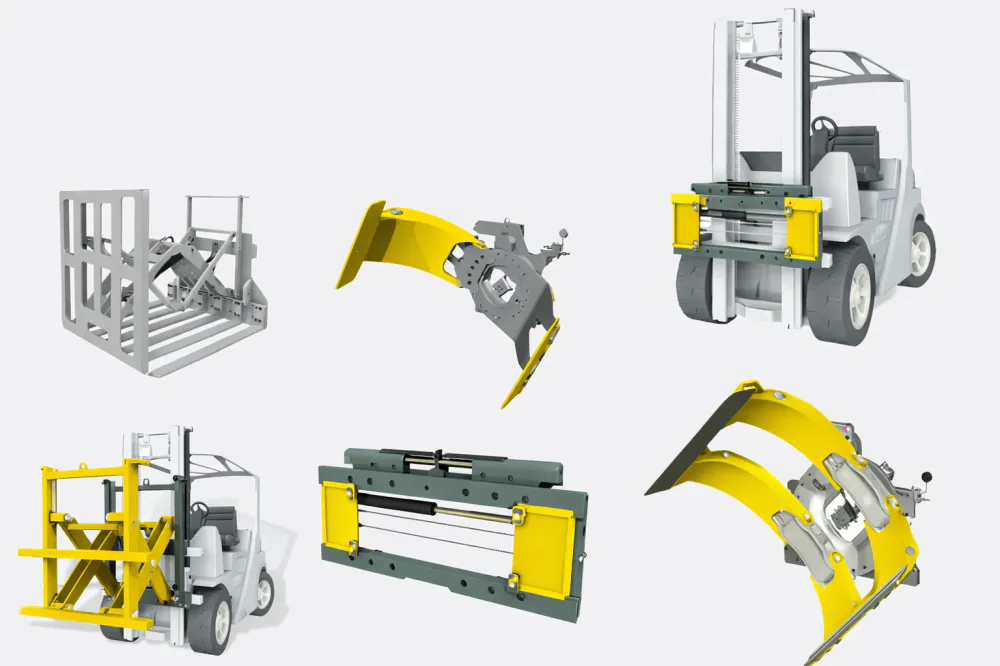
Several distinct GSE vehicle types on a European airport apron incorporate a hydraulic forklift tilt cylinder as the mast angle actuator, each placing slightly different duty demands on the cylinder depending on the load type and operational frequency.
Airside Cargo Forklift
Cargo forklifts operating in airside warehouses and between aircraft stands handle ULD pallets and loose cargo bins, relying on the forklift tilt cylinder for precise fork angle adjustment when matching load heights to aircraft hold floor levels and cargo dock interfaces where millimetre-level positioning accuracy prevents structural damage to cargo and aircraft door frames.
Catering Vehicle Support Forklift
Ground handling forklifts transferring catering trolleys and galley supplies between catering centers and aircraft galley doors use a hydraulic forklift tilt cylinder to angle loads for stable transport across apron surface joints, and to position supplies at the correct height for transfer into the aircraft cabin servicing vehicle lift platform.
Aircraft Maintenance Logistics Forklift
Maintenance hangar and apron access forklifts handling aircraft spare parts, tooling crates, and rotable component pallets in maintenance base environments operate the forklift tilt cylinder at high cycle counts during intensive maintenance events. Verifying the size forklift tilt cylinder against the forklift mast cylinder specification during scheduled forklift hydraulic cylinder repair sessions ensures the replacement unit fits without bracket modification. Seal condition monitoring remains a relevant item in scheduled inspection programs aligned to aircraft maintenance check intervals, particularly for forklift tilt cylinder parts including wiper seals that are exposed directly to apron contamination on every operating cycle.
Deicing Support Equipment
Forklift-type vehicles supporting deicing operations, including those transporting propylene glycol fluid containers and deicing equipment components, require a forklift tilt cylinder with confirmed chemical resistance to glycol splash, which can contact the exposed rod surface during typical winter apron operations at northern European airports handling high volumes of deicing activity during frost seasons.
Airport Cargo Terminal Operations
Within enclosed cargo terminal buildings at airports like Amsterdam, Frankfurt, or Madrid Barajas, forklifts move between apron and terminal environments where the forklift tilt cylinder transitions from outdoor temperature and wash-down exposure to temperature-controlled interior spaces, creating condensation cycles that accelerate chrome rod surface deterioration if the pre-season and mid-season inspection program does not address these transition effects.
Colombian Airport Cargo Operations
At El Dorado International Cargo Terminal in Bogota and regional cargo facilities at Medellin and Cali, forklift-type GSE operating in cargo handling areas is increasingly expected to meet documentation standards consistent with partner airline requirements from European and North American carriers, driving demand for forklift tilt cylinder supply with full technical documentation packages.
7. Regulatory Framework Across Jurisdictions
GSE equipment and the hydraulic components within it, including the forklift tilt cylinder, fall under a layered regulatory structure that differs meaningfully from the frameworks governing the same equipment in standard industrial or agricultural settings. In Colombia, the Aeronautica Civil de Colombia (Aerocivil) regulates ground handling operations and GSE safety requirements at Colombian civil airports under Reglamento Aeronautico de Colombia (RAC) standards. Cargo terminal operators and ground handling companies at El Dorado and other international airports in Colombia are expected to maintain GSE maintenance documentation consistent with the airline service level agreements in place, which frequently reference IATA AHM or EASA-aligned ground handling standards depending on the origin of the airline partner.
Within the European Union, EASA provides the aviation safety regulatory framework but delegates GSE-specific requirements to national civil aviation authorities under each member state’s aerodrome regulations. In practice, major European airports apply EN 1915 as the GSE structural requirement and IATA AHM as the operational maintenance standard, with the EU Machinery Regulation 2023/1230 providing the overarching framework for hydraulic component safety requirements in powered industrial equipment operating on aerodromes. A forklift tilt cylinder supplied for GSE use at a German, French, or Dutch airport should be accompanied by documentation satisfying the technical file requirements of the Machinery Regulation, including working pressure certificates and dimensional verification.
In the United Kingdom, following its departure from the European Union, the Civil Aviation Authority (CAA) maintains CAP 642 as the regulatory framework for airside vehicle operations, covering GSE equipment inspection and maintenance requirements that parallel but are no longer directly aligned with the EU framework. FAA Advisory Circular AC 00-34A governs aircraft rescue and firefighting at US airports, while general GSE hydraulic maintenance at US airports references OSHA 1910.178 for forklift-type equipment in ground handling service, providing the compliance baseline for Colombian cargo operators handling US-origin flight connections.
The practical implication of this multi-jurisdictional regulatory environment for buyers sourcing a forklift tilt cylinder replacement for GSE use is the need for a supplier capable of providing a documentation package that can satisfy audit requirements across more than one regulatory framework simultaneously, since a Colombian ground handler serving European and North American airline partners may face compliance inquiries from any of these jurisdictions within the same operating year. A well-documented forklift tilt cylinder supply chain protects the ground handler from audit exposure across all applicable frameworks simultaneously.
8. Featured Products for GSE Forklift Tilt Cylinder Applications
The following models represent configurations suited to GSE accessory and primary tilt cylinder applications, with pressure ratings appropriate to the demands of cargo and maintenance logistics equipment operating on active airport aprons.
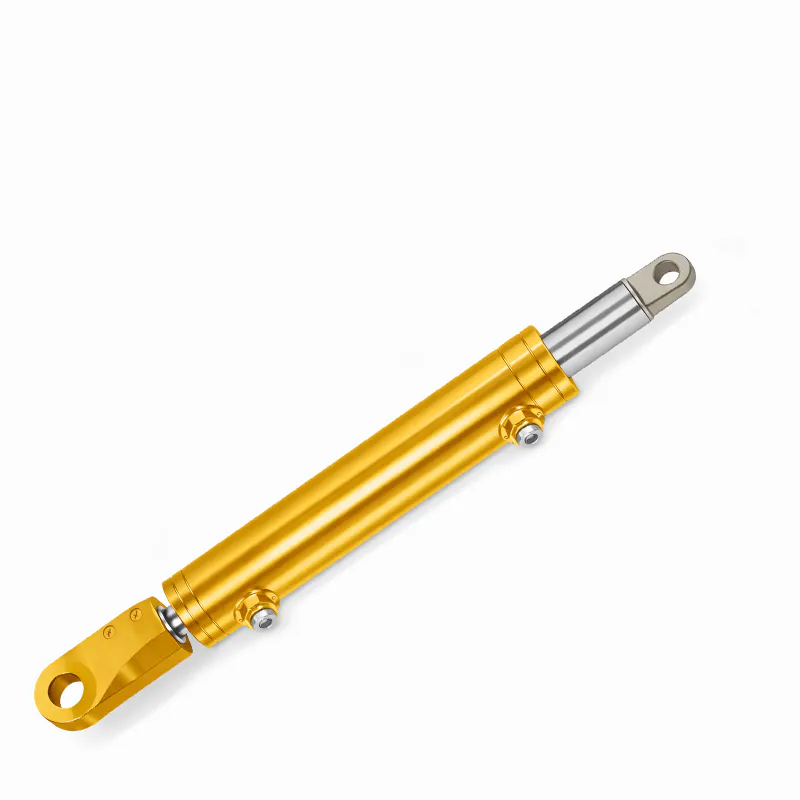
EP-HCYA-1 Cylinder for Forklift Accessories
| Çalışma Basıncı | 25 MPa |
| Max Withstand Pressure | 35 MPa |
| Felç | 200 mm |
| Mounting Hole Distance | 450 mm |
| Ağırlık | 6 kg |
A compact, high-pressure forklift tilt cylinder suited to auxiliary mast accessory positions on lighter GSE forklifts where low overall cylinder weight reduces mast assembly mass without sacrificing pressure capacity at the 25 MPa working level.
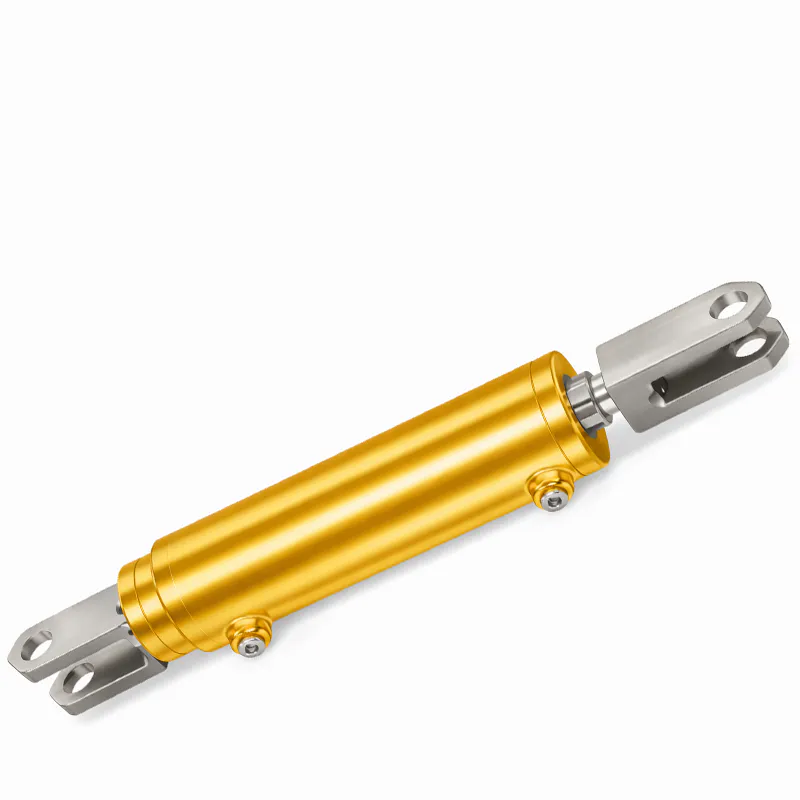
EP-HCYA-2 Cylinder for Forklift Accessories
| Çalışma Basıncı | 25 MPa |
| Max Withstand Pressure | 35 MPa |
| Felç | 200 mm |
| Mounting Hole Distance | 597 mm |
| Ağırlık | 38 kg |
A heavier-duty accessory cylinder configuration with a larger mounting hole distance, suited to primary accessory cylinder positions on cargo forklifts handling the weight range typical of ULD pallets and heavy cargo bins in airport cargo terminal operations.
9. About Us
We are a dedicated OEM and ODM manufacturer of forklift tilt cylinder assemblies and forklift hydraulic lift cylinder units, serving ground support equipment operators, cargo handling organizations, and forklift fleet managers across Colombia and international markets. Our forklift tilt cylinder product range covers working pressures up to 25 MPa, with seal compound options available for both standard mineral oil and fire-resistant hydraulic fluid applications, and full technical documentation packages that satisfy the audit requirements of major airline and airport compliance programs. Every forklift tilt cylinder we produce is backed by a pressure test certificate and dimensional drawing that can be submitted directly into airline ground handling compliance records.
10. Related Products for GSE Hydraulic System Supply
Beyond the forklift tilt cylinder, we supply compatible hydraulic system products that support complete GSE circuit maintenance and one-stop procurement for ground handling organizations.
Eğimli Silindir Serisi
Our full Eğim Silindiri range covers construction, industrial, and ground support equipment tilt actuation applications, sharing the same seal material options and pressure documentation standards applied to our forklift tilt cylinder supply for airport GSE procurement programs.
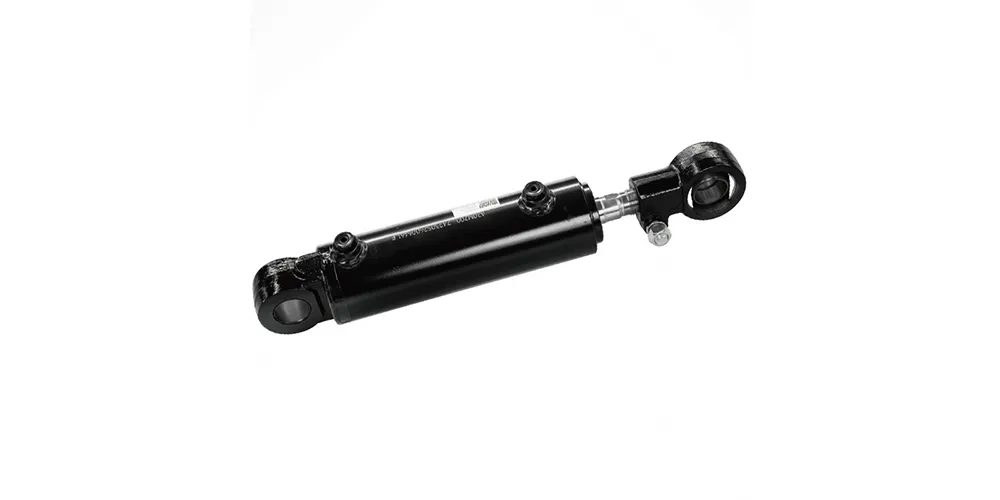
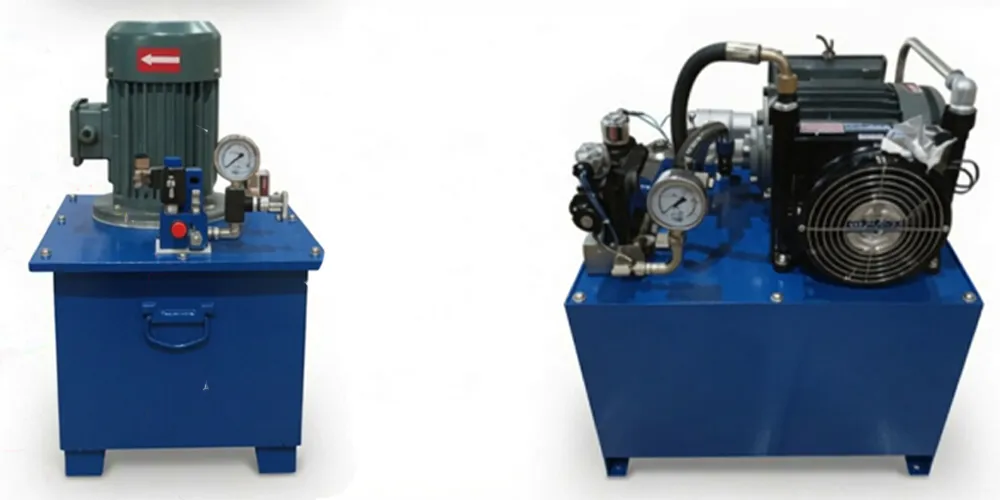
Hidrolik Pompa İstasyonu Serisi
A correctly matched hydraulic pump station ensures the forklift tilt cylinder circuit receives the correct working pressure and flow rate for consistent mast response across GSE cargo handling cycles, where uneven tilt response on an active apron creates both operational and safety concerns.
Sıkça Sorulan Sorular
Q1. What is a tilt cylinder forklift and what is the difference between lift cylinder and tilt cylinder on a GSE airport vehicle?
A1. A forklift tilt cylinder angles the mast and forks for load positioning and stabilization, while a lift cylinder forklift assembly raises and lowers the mast vertically. On a GSE vehicle, both functions require precise hydraulic control to handle cargo safely in proximity to aircraft structures.
Q2. What is a tilt on a forklift and why does it need specific certification for European airport apron operations?
A2. The tilt function controls mast angle during load handling. On European airport aprons, the forklift tilt cylinder must be documented to meet EN 1915 structural requirements and IATA AHM maintenance standards, since any hydraulic failure or leakage on an active apron creates FOD and safety risks that trigger immediate equipment removal from airside service.
Q3. What are the different types of forklift cylinders used on GSE vehicles at cargo terminals?
A3. A typical GSE cargo forklift hydraulic system includes a forklift tilt cylinder for mast angle control, a forklift hydraulic lift cylinder for vertical movement, and on some configurations a free lift or steering cylinder, all of which are subject to inspection under ground handling maintenance programs.
Q4. Where can a Colombian cargo ground handler request a quote for a GSE forklift tilt cylinder with EN 1915 documentation?
A4. Contact our engineering team with your cylinder dimensions, working pressure requirement, and the specific airport or airline compliance standard you need the documentation to satisfy, and we will confirm availability and prepare the appropriate technical file documentation with your quotation.
Q5. How do I verify which seal compound is compatible with the fire-resistant hydraulic fluid used at my airport?
A5. Provide the fire-resistant fluid specification datasheet from your ground handling operator or airport authority when requesting a forklift tilt cylinder seal kit, since the specific fluid chemistry determines seal compound selection and a datasheet provides more reliable guidance than the fluid commercial name alone.
Q6. What dimensions forklift tilt cylinder measurements are needed before ordering a GSE replacement unit?
A6. Measure bore diameter, rod diameter, stroke length, closed length, mounting hole distance, pin bore diameter, port thread standard, and overall cylinder weight, then submit these alongside any existing mast bracket drawings or the original forklift tilt cylinder model number for fitment confirmation.
Q7. What documentation should a hyster forklift tilt cylinder replacement order include for a Colombian airport GSE compliance audit?
A7. A compliant order package should include a dimensional drawing confirming fitment, a pressure test certificate for working and maximum withstand pressures, material certification for barrel and rod, and a seal compound compatibility statement for the hydraulic fluid in service at the facility.
Q8. How often should the forklift tilt cylinder seal kit be renewed on a cargo forklift running continuous multi-shift GSE operations?
A8. High-cycle cargo GSE forklifts operating continuous multi-shift schedules should implement seal condition inspection at each scheduled aircraft maintenance check alignment, with forklift tilt cylinder seal replacement triggered by any visible seepage, increased drift, or wiper seal lip deterioration identified during inspection.
Q9. What causes forklift tilt cylinder drift on a GSE vehicle and how do I diagnose it correctly?
A9. Drift under a loaded stationary mast without visible external seepage points to piston seal bypass. Drift accompanied by oil weeping at the rod gland indicates primary rod seal failure. Both require a forklift tilt cylinder seal replacement, but identifying the primary source determines whether the inspection should also check bore condition before refitting new seals.
Q10. Which hydraulic oil specification is recommended for a forklift tilt cylinder used in outdoor winter apron operations at northern European airports?
A10. ISO VG 32 or VG 46 low-temperature hydraulic oil with a pour point below minus 35 degrees Celsius is typically specified for outdoor winter apron operations, ensuring adequate cold-start fluidity and preventing sluggish forklift tilt cylinder mast response during morning shift startup in sub-zero apron temperatures.
Q11. When is it necessary to replace the entire forklift tilt cylinder rather than renewing the seal kit on a GSE vehicle?
A11. Complete forklift tilt cylinder replacement is required when chrome rod pitting penetrates through the chrome layer, barrel bore ovality exceeds tolerance, mounting eye pin bores show excessive wear, or the cylinder has sustained a structural impact on the apron that may have affected rod straightness, since any of these conditions would prevent a seal kit renewal from restoring reliable hydraulic performance.
Request GSE Forklift Tilt Cylinder Documentation and Supply Quotation
Submit your cylinder dimensions, hydraulic fluid specification, and applicable airport or airline compliance standard for a confirmed forklift tilt cylinder supply quotation with full documentation package, covering GSE buyers at Colombian airports and European ground handling operations.
Meta Description:
Forklift tilt cylinder certification guide for GSE at European airports, covering EN 1915, IATA AHM, fire-resistant fluid seals, and Colombia compliance.
Editör: PXY