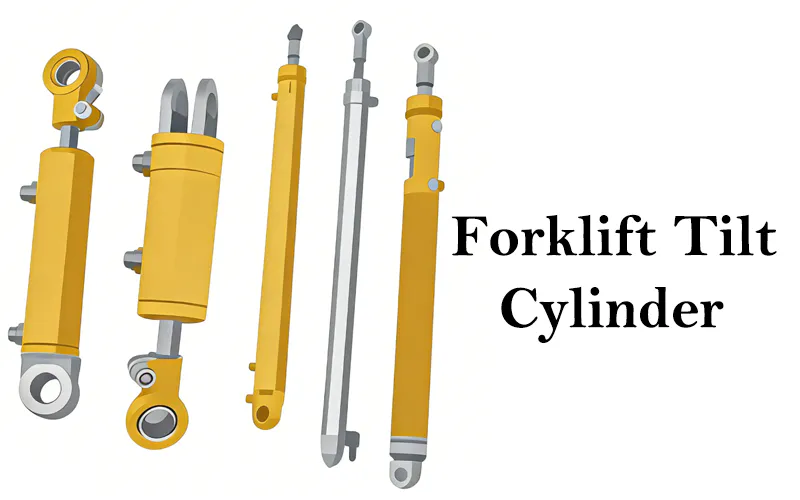
Forklift Tilt Cylinder Dual-Action Performance in Woodworking Mill Operations: Maximising Throughput
How the forklift eğim silindiri dual-action hydraulic design drives throughput, load safety, and operational precision in sawmill, panel board, and solid wood processing environments across Europe and Colombia.
Why the Forklift Tilt Cylinder Is the Critical Hydraulic Component in Woodworking Mills
Woodworking mills — whether sawmills cutting green or dried timber, medium-density fibreboard production plants, plywood laminating facilities, or solid wood furniture component factories — operate material handling environments that are among the most demanding for forklift hydraulic components. The combination of heavy, often unevenly distributed log and board loads, wet and resin-contaminated surfaces, sawdust particulate infiltration, and the production pressure to maintain continuous throughput creates conditions in which the hydraulic forklift tilt cylinder must perform reliably through thousands of cycles per shift without the benefit of the controlled atmospheres and regular maintenance access common in warehouse environments. In a Colombian sawmill producing structural timber for the national construction market, or a European engineered wood panel facility supplying MDF to furniture manufacturers across the EU, the forklift tilt cylinder is the hydraulic component that determines how precisely, how quickly, and how safely each load moves through the production sequence.
The dual-action characteristic of the forklift tilt cylinder — the ability to extend under hydraulic pressure for forward tilt and to retract under hydraulic pressure for backward tilt, in contrast to single-acting cylinders that rely on gravity or spring return for one direction — is what makes it the appropriate actuator for woodworking mill material handling. In a mill environment, the forklift operator must frequently tilt the mast backward against a loaded condition to secure a stack of rough-sawn boards on the forks during travel between the saw table and the timber yard, then tilt forward against the weight of the same load to release it onto a drying stack or conveyor. Both movements require controlled hydraulic force against the load — forward tilt against the load inertia and the friction of the fork tines in the timber, and backward tilt against the pendulum tendency of the load center of gravity shifting forward as the mast angle changes. Only a double-acting forklift tilt cylinder provides this controlled bidirectional force capability, which is why all counterbalanced and reach-type forklifts used in timber and wood panel operations use double-acting forklift tilt cylinders as their standard tilt actuation configuration.
This article examines the dual-action forklift tilt cylinder from the perspective of woodworking mill throughput optimisation — covering the manufacturing structure and material system that determines performance in dusty, wet, and chemically aggressive wood processing environments, the specific load handling sequences where tilt cylinder performance is a throughput bottleneck, the product specifications relevant to wood industry applications, and the Colombian and European regulatory requirements that govern forklift hydraulic system maintenance in wood processing workplaces.
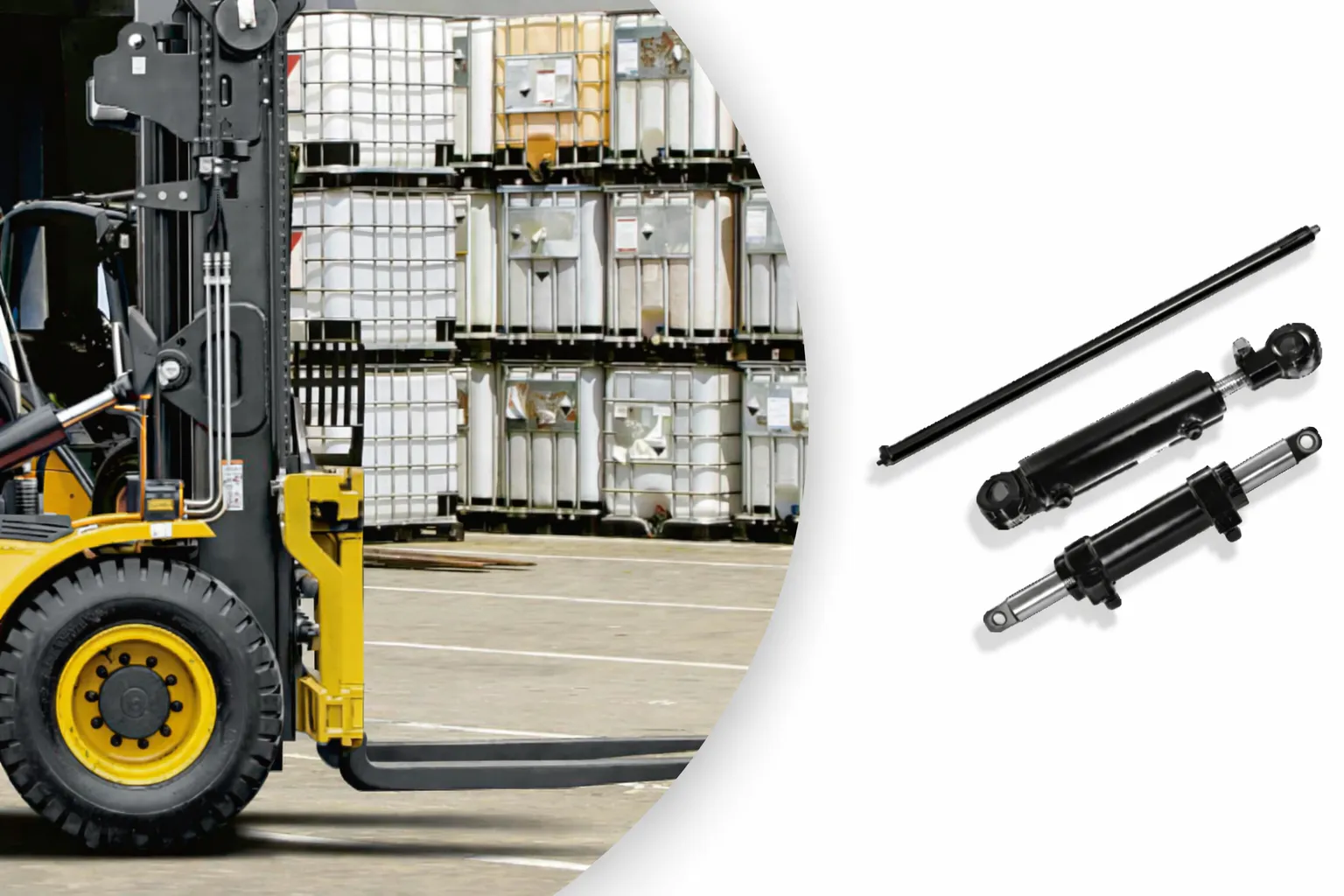
Understanding Dual-Action Forklift Tilt Cylinder Operation in Wood Mill Environments
The dual-action forklift tilt cylinder operates on Pascal’s law of hydraulic pressure transmission: hydraulic oil under pressure is directed to one of two cylinder ports — the cap-end port or the rod-end port — to produce extension or retraction of the piston rod respectively. When the operator actuates the tilt-forward lever on the forklift control console, the hydraulic control valve directs pressurised oil from the hydraulic pump to the rod-end port of the forklift tilt cylinder, extending the piston rod and pushing the mast top away from the operator. When the operator actuates the tilt-backward lever, oil is directed to the cap-end port, retracting the rod and pulling the mast top toward the operator. The oil displaced from the inactive side of the piston returns to the hydraulic reservoir through the control valve return circuit. This bidirectional active force generation is what defines the dual-action — or double-acting — forklift tilt cylinder as distinct from single-acting alternatives, and it is the characteristic that makes it the only suitable tilt actuator for loaded forklift operations in woodworking mills.
What is a tilt on a forklift, precisely, from an operational perspective in a woodworking mill? The tilt is the angular rotation of the mast-and-carriage assembly around the mast pivot axis, driven by the forklift tilt cylinder, which changes the angle of the forks relative to the floor of the mill. In a typical counterbalanced forklift, the mast can tilt backward (forks angled up at the tips relative to horizontal) by 5 to 8 degrees from vertical, and forward (forks angled down at the tips) by 3 to 5 degrees. In woodworking mill operations, this tilt range is used constantly — backward tilt stabilises timber loads on the forks during travel across uneven mill yard surfaces, and forward tilt allows the operator to shed the load off the fork tips when depositing a stack onto a conveyor or ground storage position with a precise dropping motion that avoids splintering or dislodging the stack from its intended position. The forklift tilt cylinder must respond to each of these tilt commands smoothly, without hesitation or hunting, through thousands of cycles per shift in conditions that include sawdust infiltration, oil contamination from the wood itself, and temperature swings between night cold and midday heat in outdoor or semi-enclosed mill yards.
The throughput impact of the forklift tilt cylinder response speed and reliability in woodworking operations is direct and quantifiable. A typical rough-sawn timber handling cycle — picking up a stack from the breakdown saw output conveyor, travelling to the sorting area, adjusting tilt for stack placement, depositing, and returning — involves four to six separate tilt actuations per cycle. At a throughput rate of 40 cycles per hour on a busy mill, this means 160 to 240 forklift tilt cylinder actuations per hour, or 1,280 to 1,920 per 8-hour shift. A forklift tilt cylinder that introduces a 0.5-second delay on each actuation due to internal valve stick from sawdust contamination or seal stiction from low-viscosity hydraulic fluid adds 640 to 960 seconds — 10 to 16 minutes — of non-productive delay per shift, per forklift. Across a fleet of four forklifts in a medium Colombian timber processing facility, that becomes 40 to 64 minutes of lost throughput per shift from a seemingly minor hydraulic performance degradation.
What Are the Different Types of Forklift Cylinders Used in Wood Industry Material Handling?
| Silindir Tipi | İşlev | Action Type | Wood Mill Application |
|---|---|---|---|
| Forklift devirme silindiri | Tilts mast forward and backward | Double-acting (dual-action) | Load stabilisation during travel; stack placement |
| Forklift mast cylinder / lift cylinder forklift | Raises and lowers forks vertically | Single-acting telescopic (gravity return) | Lifting timber bundles; stacking panels |
| Side-shift cylinder | Moves carriage left-right on mast rails | Double-acting | Aligning fork to pallet or board stack without repositioning truck |
| Attachment cylinder (EP-HCYA series) | Powers fork positioners, clamps, rotators | Double-acting | Log rotators; board clamp attachments; push-pull tools |
| Steering cylinder | Controls rear-wheel steering | Double-acting | Manoeuvring in confined mill yard aisles |
Manufacturing Structure of the Forklift Tilt Cylinder for Wood Industry Duty
The structural design of a forklift tilt cylinder must accommodate the specific loading conditions and contamination environment of woodworking mills to achieve the throughput performance that production scheduling demands. Three structural elements are particularly important for wood industry duty: the cylinder barrel and bore geometry, the piston rod and gland assembly, and the mounting and clevis system. Each of these structural elements faces stresses and contamination challenges in a woodworking mill that are different from those encountered in a warehouse or construction site application, and understanding these differences helps maintenance teams and procurement specialists specify and maintain the appropriate cylinder for the duty.
The cylinder barrel in a wood-industry forklift tilt cylinder must maintain its bore concentricity and surface finish integrity through repeated loading cycles that include cyclic bending from the asymmetric weight distribution of long timber loads overhung on the fork tips. A 4-metre long green softwood log weighing 600 kg centered at 2 metres from the fork heels imposes a bending moment on the mast structure that is transmitted through the forklift tilt cylinder mounting brackets — loading the cylinder in both the intended axial direction and an off-axis bending direction that standard axial compression design does not fully capture. Barrel wall thickness in the tilt cylinder is selected with sufficient material section to keep the combined stress — axial from hydraulic pressure and bending from structural load — within the fatigue limit of the barrel material for the intended service life. For wood-industry duty, this typically means a barrel made from seamless precision steel tube conforming to EN 10305-4 with a minimum wall thickness that provides a hoop stress safety factor of 4 or better at maximum working pressure, specifically to absorb the additional bending from long-load off-axis forces.
The piston rod of the forklift tilt cylinder in a woodworking mill faces a combination of challenges that does not exist in most other industrial environments: airborne wood dust (including the abrasive silica contained in some tropical hardwoods processed in Colombian mills), resin deposits that accumulate on the exposed rod surface and are then drawn past the wiper seal into the seal gland during rod retraction, and the occasional water spray from green timber dewatering or fire suppression systems that contacts the exposed chrome rod surface. The wiper seal on the rod-end gland is the primary defence against all of these contamination routes — it must scrape the rod surface clean on every retraction stroke, preventing resin and sawdust from being drawn into the primary sealing zone where they would abrade the rod seal lip and generate metal particles in the hydraulic fluid. Double-lip wiper seals with a dust-exclusion outer lip and a lubrication reservoir between the lips are specified for wood-industry forklift tilt cylinder duty, providing substantially better contamination exclusion than the single-lip wiper seals adequate for clean-environment applications.
The mounting and clevis system of the forklift tilt cylinder must accommodate the dimensional changes of the mast structure as it is loaded and unloaded — the mast flexes slightly under load, changing the effective distance between the cylinder cap-end pivot and the mast bracket mounting point by a small but real amount. Clevis pin bores with adequate running clearance (typically ISO H8/f8 fit) and pin materials that resist galling and corrosion in the wet sawdust environment are specified. Some woodworking-duty tilt cylinders use self-aligning rod-end bearings (spherical bearings) at the rod-end clevis rather than simple pin-in-bore connections, providing angular float that accommodates mast flex without introducing side loads at the rod seal.
Explore our complete forklift tilt cylinder range engineered for heavy industrial and wood processing applications
Material System: Alloys, Seals, and Surface Treatments for Wood Mill Forklift Tilt Cylinder Service
The material system of a forklift tilt cylinder for woodworking mill service must address the specific chemical, thermal, and mechanical challenges of the wood processing environment. Three material domains drive the performance and maintenance interval of the cylinder: the barrel and piston rod metallurgy, the dynamic seal compound selection, and the surface treatment applied to the rod and external surfaces. Each of these material choices has a direct effect on the frequency of forklift tilt cylinder seal replacement, the susceptibility to forklift tilt cylinder drift, and the total maintenance cost over the cylinder’s service life — all of which affect mill throughput either directly or through planned and unplanned downtime.
The barrel material for wood-industry forklift tilt cylinder production is typically a normalised or quench-and-tempered seamless carbon steel tube with a minimum tensile strength of 580 MPa. This steel specification provides the pressure containment safety margin needed for working pressures up to 18.1 MPa (as used in the EP-HCY-1 and EP-HCY-2 series) or up to 25 MPa (as used in the EP-HCYA attachment cylinder series), with burst pressure ratios of 2.5 to 3.0. The bore is honed to a surface roughness of Ra 0.4 to 0.8 micrometers to minimise internal piston leakage and forklift tilt cylinder drift while providing adequate oil film retention for seal lubrication. In woodworking mills where sawdust contamination of the hydraulic fluid is a persistent risk — caused by dust settling in vented reservoirs or ingress through degraded breather filters — the finer bore finish also provides greater tolerance to marginal fluid cleanliness by maintaining smaller abrasive particle clearances at the piston-to-bore interface.
The hydraulic piston rod chrome plating specification is particularly important for woodworking mill service due to the abrasive nature of wood dust particles, which include not only cellulose fibres but also silica crystals from the soil adhering to logs, particularly in Colombian mills processing tropical timber from areas with high silica-content soils. Hard chrome plating at 25 to 50 micrometers thickness with a Vickers hardness of 900 to 1100 HV provides adequate resistance to this abrasive environment. The chrome layer must be continuous and crack-free to prevent hydraulic fluid corrosion of the underlying steel rod in the presence of condensate that forms on the cold rod surface in the morning hours in tropical Colombian climates, and in the damp interior of enclosed sawmill buildings. Some forklift tilt cylinder manufacturers are introducing electroless nickel plating or DLC (diamond-like carbon) coating as alternatives to hard chrome for rod surface treatment, providing equivalent or better hardness and corrosion resistance with lower environmental impact from the plating process — relevant to Colombian manufacturers pursuing ISO 14001 environmental management certification.
The seal material selection for woodworking mill forklift tilt cylinder service must account for the resin content of the hydraulic fluid — wood resins, particularly from pine and some tropical hardwoods, can contaminate hydraulic fluid and cause swelling or hardening of certain seal compounds. Polyurethane seals are generally resistant to the resins encountered in PET-based wood adhesives and wood extractives, and they provide better abrasion resistance than nitrile rubber seals in the presence of wood particle contamination. For mills processing resin-heavy timbers — pine, Douglas fir, or tropical species like teak — the forklift tilt cylinder seal kit specification should confirm polyurethane compatibility with the specific hydraulic oil and resin combination in use. PTFE-lined seals or full PTFE seals are specified for the highest-contamination environments, where their chemical inertness and low friction provide immunity to chemical attack from both resin extractives and the oxidation products of degraded hydraulic oil.
Featured Products for Woodworking Mill Applications
Two products from the EP-HCY and EP-HCYA ranges are particularly suited to woodworking mill material handling environments — covering both the mast tilt function and the attachment actuation function that are essential for throughput-optimised timber and panel handling.
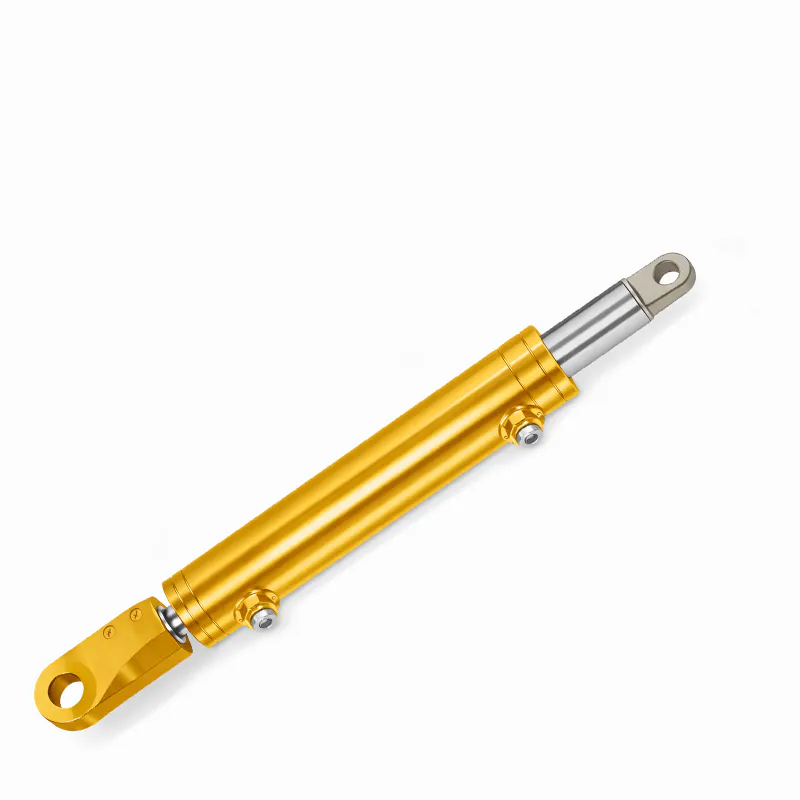
The EP-HCYA-1 is a compact double-acting hydraulic cylinder for forklift attachments, rated at 25 MPa working pressure with a maximum withstand pressure of 35 MPa. At only 6 kg and with a 200 mm piston stroke and 450 mm mounting distance, it is the ideal actuator for log rotator attachments, board clamp mechanisms, and push-pull devices used in woodworking mills to precisely manipulate timber lengths and board stacks without manual intervention. The 25 MPa pressure rating gives the EP-HCYA-1 sufficient force output to operate heavy-duty log handling attachments on 3 to 5 tonne forestry and mill forklifts, while the compact dimensions fit within the space constraints of the fork carriage where attachment cylinders must share mounting real estate with the mast carriage rollers and side-shift mechanism. The 35 MPa burst-withstand pressure provides the safety margin needed for attachment applications where hydraulic shock events — sudden engagement of a clamping attachment against a hard timber face — generate pressure spikes above the normal working level.
| Parameter | EP-HCYA-1 Value |
|---|---|
| Çalışma Basıncı | 25 MPa |
| Max Withstand Pressure | 35 MPa |
| Piston Stroke | 200 mm |
| Mounting Distance | 450 mm |
| Ağırlık | 6 kg |
| Başvuru | Forklift attachments, clamps, rotators |

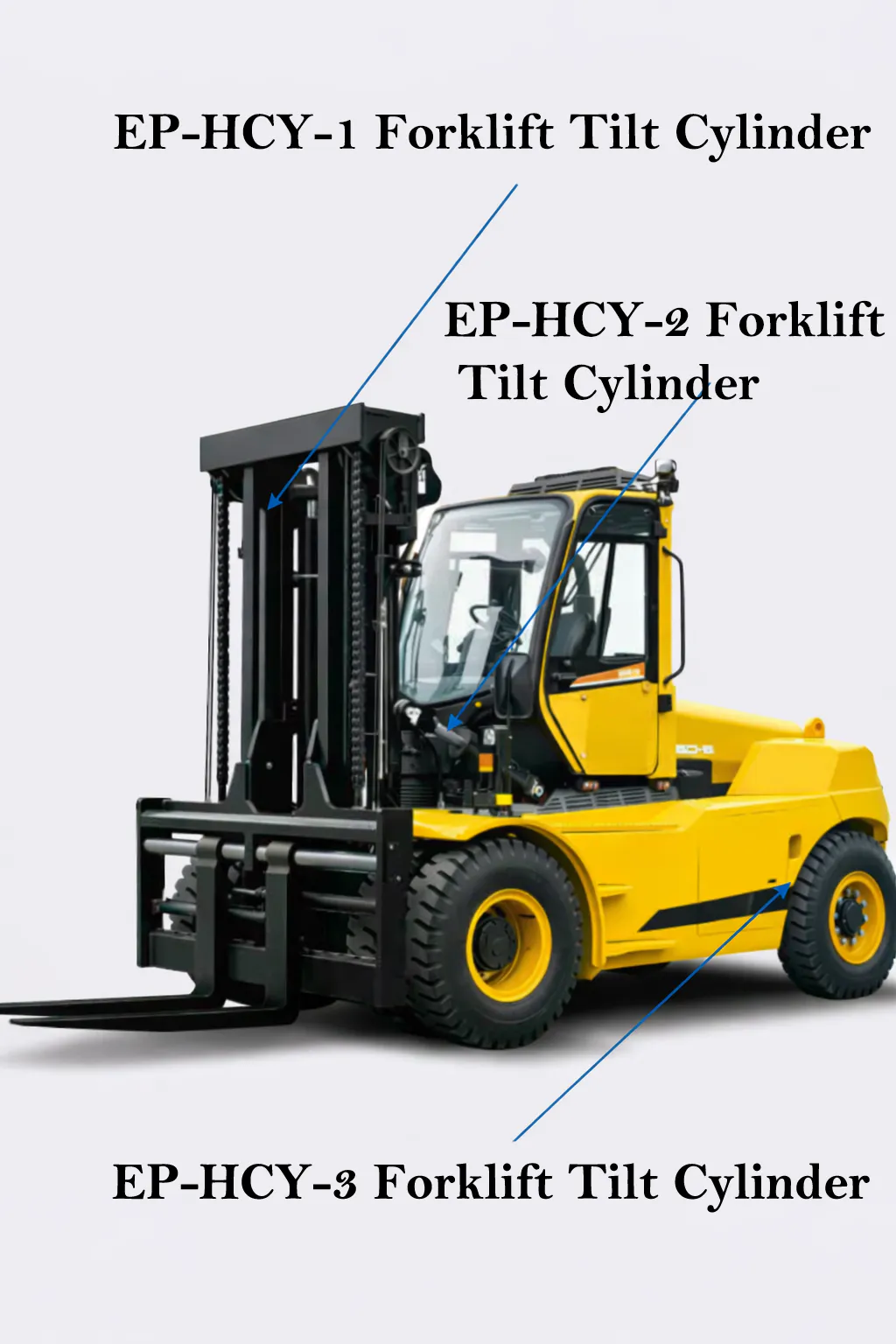
The EP-HCY-3 is a hydraulic forklift tilt cylinder rated at 16 MPa working pressure with a maximum withstand pressure of 24 MPa, designed for precision steering control in compact forklifts of the 1.5 to 3 tonne class commonly used in enclosed woodworking mill buildings and furniture component processing areas. With a piston stroke of 96.5 mm applied symmetrically in its dual-stage configuration (96.5 x 2 mm total effective stroke range), a mounting distance of 585.7 mm, and a weight of 16.5 kg, the EP-HCY-3 provides the compact geometry needed for forklifts operating in the narrow aisles between drying racks, sorting conveyors, and grading stations that characterise the interior layout of solid wood processing plants. The 16 MPa pressure rating is appropriate for the lower-pressure hydraulic systems used in smaller capacity forklifts, where the 24 MPa maximum withstand pressure provides a 1.5x safety factor over the rated working pressure — appropriate for the moderate shock loading typical of indoor wood component handling as opposed to the heavier shock events of outdoor log yard operations.
| Parameter | EP-HCY-3 Value |
|---|---|
| Çalışma Basıncı | 16 MPa |
| Max Withstand Pressure | 24 MPa |
| Piston Stroke | 96.5 x 2 mm |
| Mounting Distance | 585,7 mm |
| Ağırlık | 16,5 kg |
| Başvuru | Compact forklifts, indoor mill handling |
Maximising Mill Throughput: How Forklift Tilt Cylinder Performance Drives Each Production Stage
Throughput maximisation in a woodworking mill is fundamentally a material flow optimisation problem — the rate at which timber or panel product moves through the production sequence from raw input to finished output determines the revenue capacity of the facility. The forklift tilt cylinder contributes to throughput at each stage of the production sequence, and understanding where tilt cylinder performance creates or eliminates bottlenecks is essential for mill managers planning forklift specifications, maintenance schedules, and equipment replacement cycles in both Colombian and European wood processing operations.
At the log yard stage — where raw logs are sorted by species, diameter, and quality before being fed to the breakdown saw — the forklift handles loads that are both heavy (logs of 400 to 2,000 kg depending on species and length) and geometrically irregular. The forklift tilt cylinder backward tilt function is critical here for keeping round or oval log profiles from rolling off the forks during the travel from the log pile to the saw table. In Colombian mills processing tropical hardwoods with high green density — balso, teak, and timber species used for construction — log weights per metre of length can exceed 600 kg, requiring the forklift tilt cylinder to hold a high backward tilt angle against a significant overturning moment from the load center of gravity. The dual-action forklift tilt cylinder must develop enough force in the retraction direction to maintain this tilt angle against the load even as the mast transitions from a static to a dynamic condition during acceleration and braking.
At the breakdown saw output stage, the forklift handles green-sawn boards that are wet, slippery, and arranged in loosely assembled stacks that shift under inertia during transport. The throughput rate at this stage is closely tied to how quickly the forklift can pick up a stack from the saw output conveyor — which requires a precise forward tilt sequence to slide the forks under the board stack from the front, then a controlled backward tilt sequence to clear the stack from the conveyor and stabilise it on the forks. A forklift tilt cylinder with smooth, responsive dual-action performance allows an experienced operator to complete this pick-up sequence in 15 to 20 seconds per cycle. A cylinder with stick-slip response — characteristic of glazed or contaminated seals or of air entrainment in the hydraulic circuit — increases this time to 25 to 35 seconds per cycle, reducing the number of cycles per hour by 25 to 40% and directly cutting sorting throughput by the same proportion.
Kiln charging and discharging operations — where timber bundles are loaded into and unloaded from drying kilns or air-drying stacks — place the most precise demands on the forklift tilt cylinder because the stacking geometry must be consistent for proper airflow and even drying across the bundle. The tilt cylinder must allow the operator to fine-adjust the forward tilt angle to deposit each layer of a drying stack at precisely the same height and orientation as the previous layer, building the stack so that stickers (separating strips) remain properly aligned to provide airflow channels. Stack misalignment from inconsistent forklift tilt cylinder forward tilt control accumulates through multiple layers of a bundle and can result in structural instability of the full drying stack, which in the worst case collapses and destroys hours of stacking work and potentially damages equipment.
At the planer mill or finishing mill infeed stage, dried or kiln-dried timber boards must be precisely positioned on the planer infeed conveyor with consistent alignment and correct face orientation. A misoriented board fed face-down into a surface planer produces a defect that requires the board to be re-run — adding a cycle time and consuming the planer’s productive capacity on rework rather than throughput. The forklift tilt cylinder in this application must provide enough fine-control resolution to correct the face orientation of boards by 1 to 2 degrees of tilt angle as they are placed on the infeed — achievable with a smooth, low-friction dual-action forklift tilt cylinder and an experienced operator, but extremely difficult with a cylinder that exhibits stick-slip or drift behavior.
Forklift Tilt Cylinder Maintenance Schedule for Woodworking Mill Environments
The contamination and loading conditions of woodworking mills require more frequent forklift tilt cylinder inspection and maintenance than the schedules adequate for warehouse or distribution centre operations. The following schedule is based on typical sawmill and panel processing facility operating conditions with two 8-hour production shifts per day, 5 days per week, in a partly outdoor or semi-enclosed mill yard environment.
| Interval | Inspection or Action | Forklift Tilt Cylinder Components Checked | Wood Mill Specific Adjustment |
|---|---|---|---|
| Pre-shift (daily) | Visual inspection, tilt function test | Rod surface for scoring; wiper seal for resin buildup; clevis pins for movement | Wipe rod surface — remove resin deposits before operating |
| Weekly | Hydraulic fluid sample and cleanliness check | Fluid colour, particle count, resin content test strip | Replace fluid if resin contamination visible (cloudy or sticky texture) |
| Monthly | Drift measurement and seal inspection | Tilt cylinder drift rate; gland area for oil weeping; rod chrome condition | Drift exceeding 2 mm/min requires forklift tilt cylinder seal replacement |
| Quarterly | Full cylinder inspection and lubrication | Clevis pin wear measurement; mounting bracket bolt torque; wiper seal replacement if needed | Replace wiper seal if resin hardening is noted — do not attempt to clean only |
| Annually (or 1,500 hours) | Complete forklift tilt cylinder seal kit replacement | All dynamic seals, wiper, static O-rings, clevis pin bushings | Include rod chrome inspection — replace cylinder if chrome pitting present |
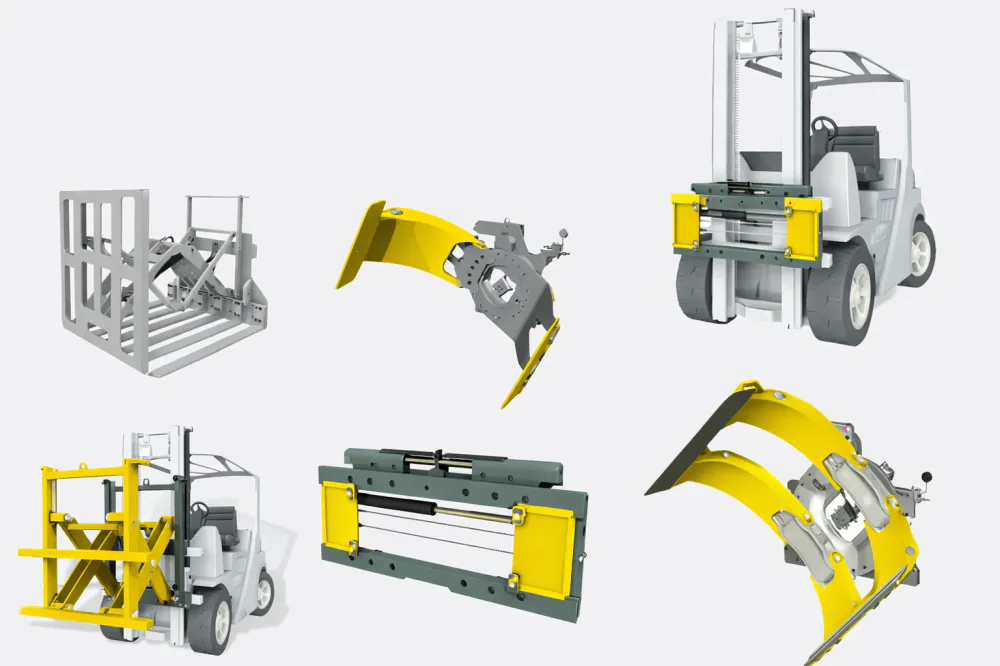
What Is the Difference Between Lift Cylinder and Tilt Cylinder in a Woodworking Mill Forklift?
Mill maintenance teams frequently need to distinguish the forklift tilt cylinder from the forklift mast cylinder (also called the lift cylinder forklift or forklift hydraulic lift cylinder) when troubleshooting hydraulic problems or ordering replacement parts. The functional and structural differences are significant, and confusing the two types leads to incorrect parts ordering and misdiagnosis of hydraulic faults. The lift cylinder is the vertical cylinder inside the mast that raises and lowers the carriage and forks — it extends when the operator raises the forks and retracts when the forks are lowered, relying on the weight of the mast and carriage assembly to retract the cylinder against gravity when the hydraulic valve opens the lowering circuit. The lift cylinder is almost always a single-acting cylinder, operating only on the extension stroke under hydraulic pressure, because the weight of the carriage and load provides the return force for lowering. The mast cylinder in a telescopic mast assembly is typically a multi-stage telescopic cylinder that stores within the mast tube sections.
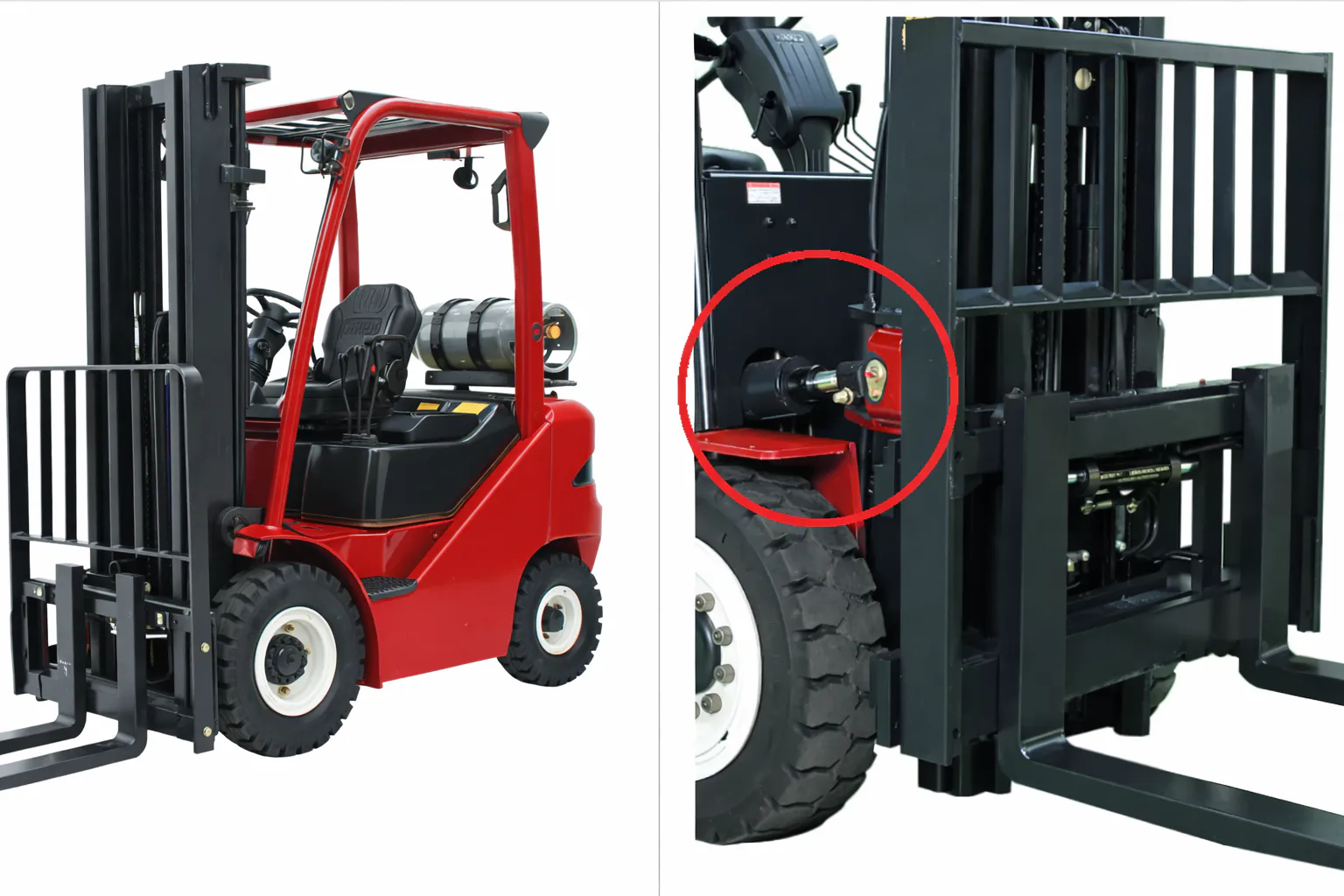
The forklift tilt cylinder, by contrast, is always a double-acting cylinder — it must develop active hydraulic force in both the extension (forward tilt) direction and the retraction (backward tilt) direction, because the mast weight alone is insufficient to return the mast to backward tilt position against a load whose center of gravity is forward of the mast pivot when the forks are carrying timber. This is the core functional difference: the lift cylinder uses gravity to lower, the forklift tilt cylinder uses active hydraulic pressure to tilt in both directions. In terms of forklift hydraulic cylinder diagram layout, the lift cylinder is typically depicted in the center of the mast assembly running vertically, while the forklift tilt cylinder is shown as a diagonal element running from the front of the forklift chassis frame to a mounting bracket on the lower mast — one on each side of the mast in most counterbalanced forklift designs. The size forklift tilt cylinder is typically much smaller in bore diameter and shorter in stroke than the lift cylinder, reflecting the lower force requirement (angular rotation requires less force than vertical lifting) and the smaller arc of motion involved.
Regulatory Compliance: Forklift Tilt Cylinder Standards in Wood Processing Workplaces
Colombian wood processing facilities operating forklifts with hydraulic forklift tilt cylinders are subject to the occupational health and safety management system requirements of Decreto 1072 de 2015 (Decreto Unico Reglamentario del Sector Trabajo) and the specific equipment safety standards of Resolucion 2400 de 1979. The Colombian Ministerio de Trabajo has issued guidance on forklift maintenance within wood processing environments, including requirements for hydraulic system inspection intervals, operator training on tilt cylinder use with irregular loads such as timber bundles and log lifts, and documentation of forklift tilt cylinder maintenance records. ICONTEC (Instituto Colombiano de Normas Tecnicas y Certificacion) maintains NTC standards aligned with ISO 3691 for industrial trucks, providing the technical specifications for forklift tilt cylinder performance that Colombian facilities must meet as part of their safety management system compliance.
European sawmills and wood processing facilities must operate forklifts that comply with the Machinery Directive 2006/42/EC, under which the forklift — including its hydraulic system and forklift tilt cylinder — is a declared machine with CE marking covering the complete system. In addition, EN 15635 (Industrial Static Storage Equipment — Application and Maintenance of Storage Equipment) requires that the handling equipment used to service storage racking in timber yards be maintained in condition that prevents damage to the racking structure — including maintenance of the forklift tilt cylinder to prevent drift-induced load shifting that could cause rack impacts. European wood processing plants in Germany, Scandinavia, and France operating under ISO 45001 occupational health and safety management systems include forklift tilt cylinder inspection and maintenance as a documented element of their hazard and risk register for the material handling activity.
Australian timber processing facilities operating forklifts must comply with AS 2359 (Industrial Trucks) and the Model Work Health and Safety Regulations adopted by Safe Work Australia. The Australian standard requires that forklifts including their hydraulic forklift tilt cylinder be maintained in accordance with the manufacturer’s specifications and inspected by a competent person at intervals determined by the risk assessment for the specific operating environment. For wood processing environments specifically, Safe Work Australia guidance on log handling and timber yard material handling identifies the tilt cylinder as a critical safety component for load control during log pick-up from the ground — an operation where forward tilt position control errors carry a risk of log roll-off and crush injury to personnel in the vicinity. This specific guidance increases the diligence required on forklift tilt cylinder inspection in Australian timber operations relative to standard forklift maintenance frameworks.
In Canada, forklift operation in wood products facilities — particularly the significant British Columbia and Quebec forest products sectors — is governed by CSA B335 (Safety Standard for Lift Trucks) and provincial occupational health and safety regulations. CSA B335 includes provisions for the hydraulic system of forklifts, addressing the inspection and maintenance of the forklift tilt cylinder and lift cylinder as critical safety components. The British Columbia Forest Safety Council additionally publishes woodlands and mill safety guidelines that specifically address forklift use in sawmill environments, including guidance on recognising hydraulic cylinder performance degradation symptoms — such as forklift tilt cylinder drift and slow response — that indicate the need for maintenance before the forklift returns to production service handling timber loads.
Compatible System Products for Wood Mill Forklift Hydraulics
The dual-action forklift tilt cylinder functions as part of a complete hydraulic circuit. The following companion products ensure that the tilt cylinder operates at its designed performance level throughout the service interval, and that a one-stop supply arrangement covers all hydraulic system components for wood processing mill forklift maintenance.
Beyond the forklift-specific forklift tilt cylinder range, the full industrial tilt cylinder range covers the heavy hydraulic actuator requirements of wood processing machinery — including log deck tipping cylinders on breakdown saw infeed systems, cant rotator cylinders on gang-edger lines, and panel press platens on MDF and OSB production lines. These industrial tilt cylinders use the same double-acting architecture and material specifications as the forklift tilt cylinder range but are engineered to the higher-stroke and larger-bore requirements of stationary production machinery. Sourcing both the forklift tilt cylinder for material handling equipment and the industrial tilt cylinder for production machinery from the same supplier simplifies seal kit management, fluid compatibility verification, and technical support relationships for the complete wood processing facility.
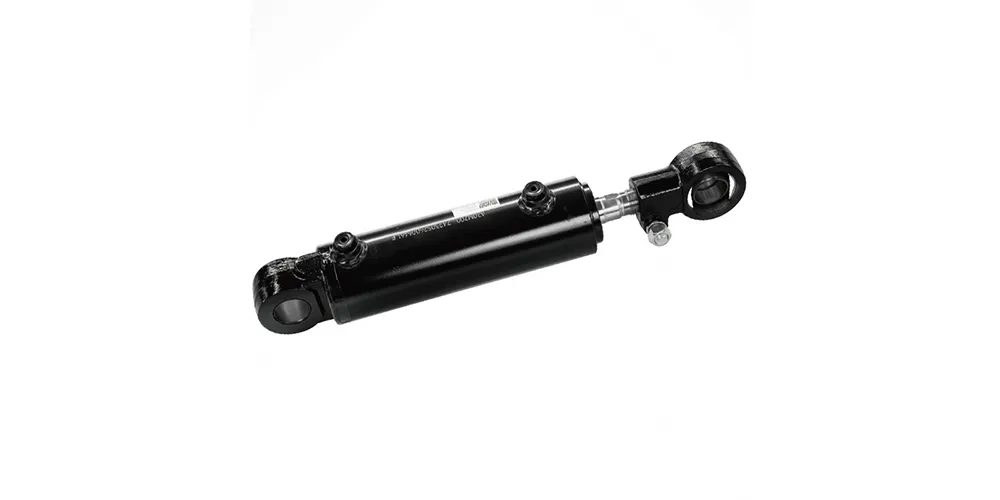
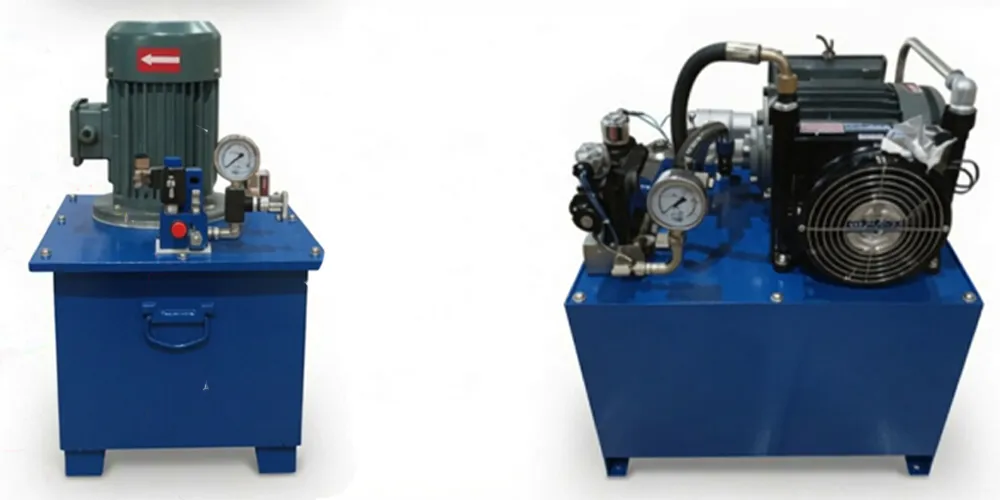
The dual-action performance of the forklift tilt cylinder depends critically on the cleanliness, pressure stability, and flow rate delivered by the forklift hydraulic pump system. In woodworking mill environments where sawdust ingress into the hydraulic reservoir is a persistent maintenance challenge, a hydraulic pump station fitted with a high-capacity breather filter (Beta 12 filtration or finer), a low-level alarm to prevent pump starvation, and a fluid sampling port for routine contamination monitoring provides the supply-side foundation for achieving the tilt cylinder’s rated service life. Our hydraulic pump station range includes units matched to the flow and pressure requirements of the EP-HCY and EP-HCYA forklift tilt cylinder series, with reservoir capacities appropriate for the extended duty cycles of multi-shift wood processing operations and with ports for cooler connections in high-ambient-temperature tropical Colombian mill environments.
About Our Forklift Tilt Cylinder Manufacturing
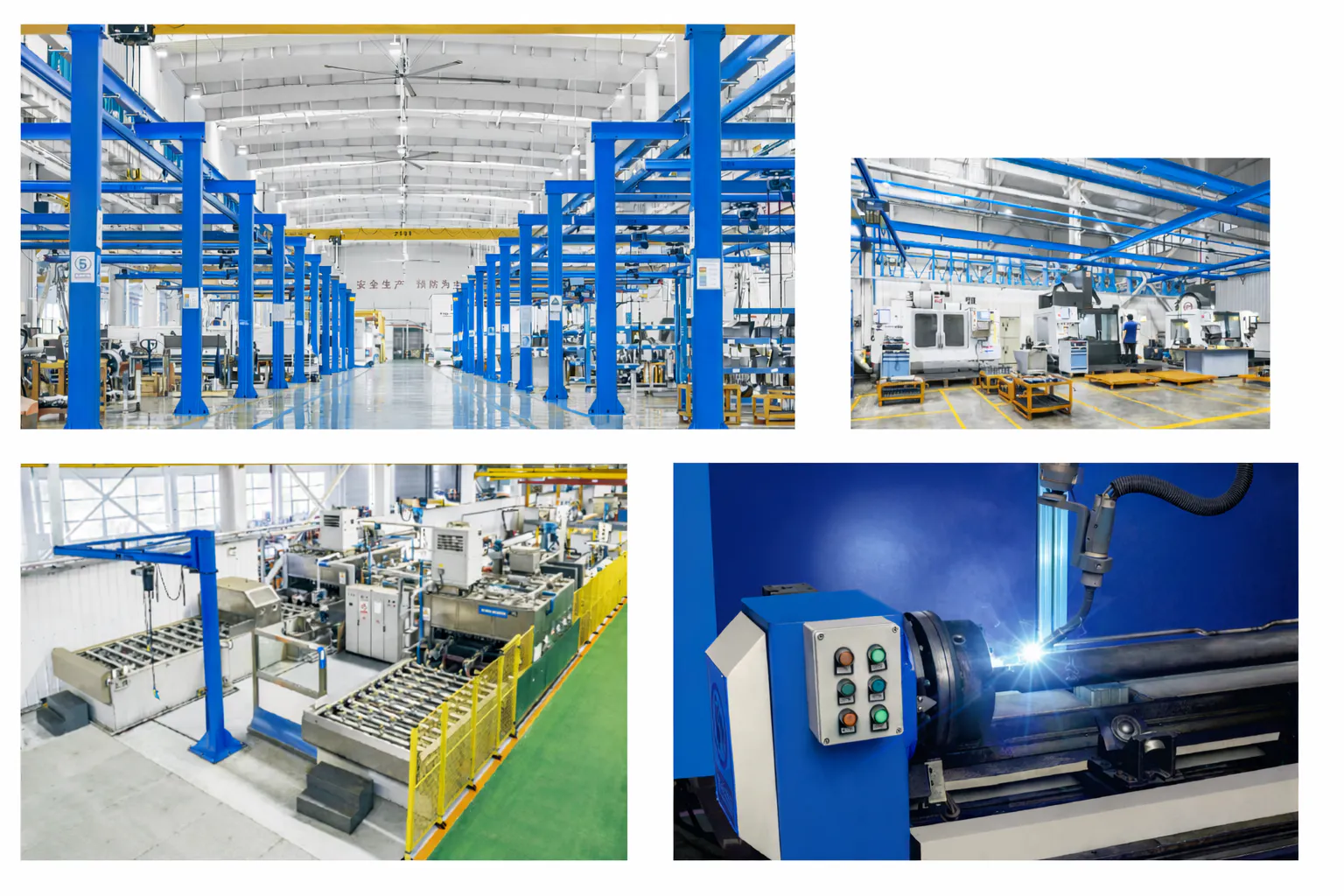
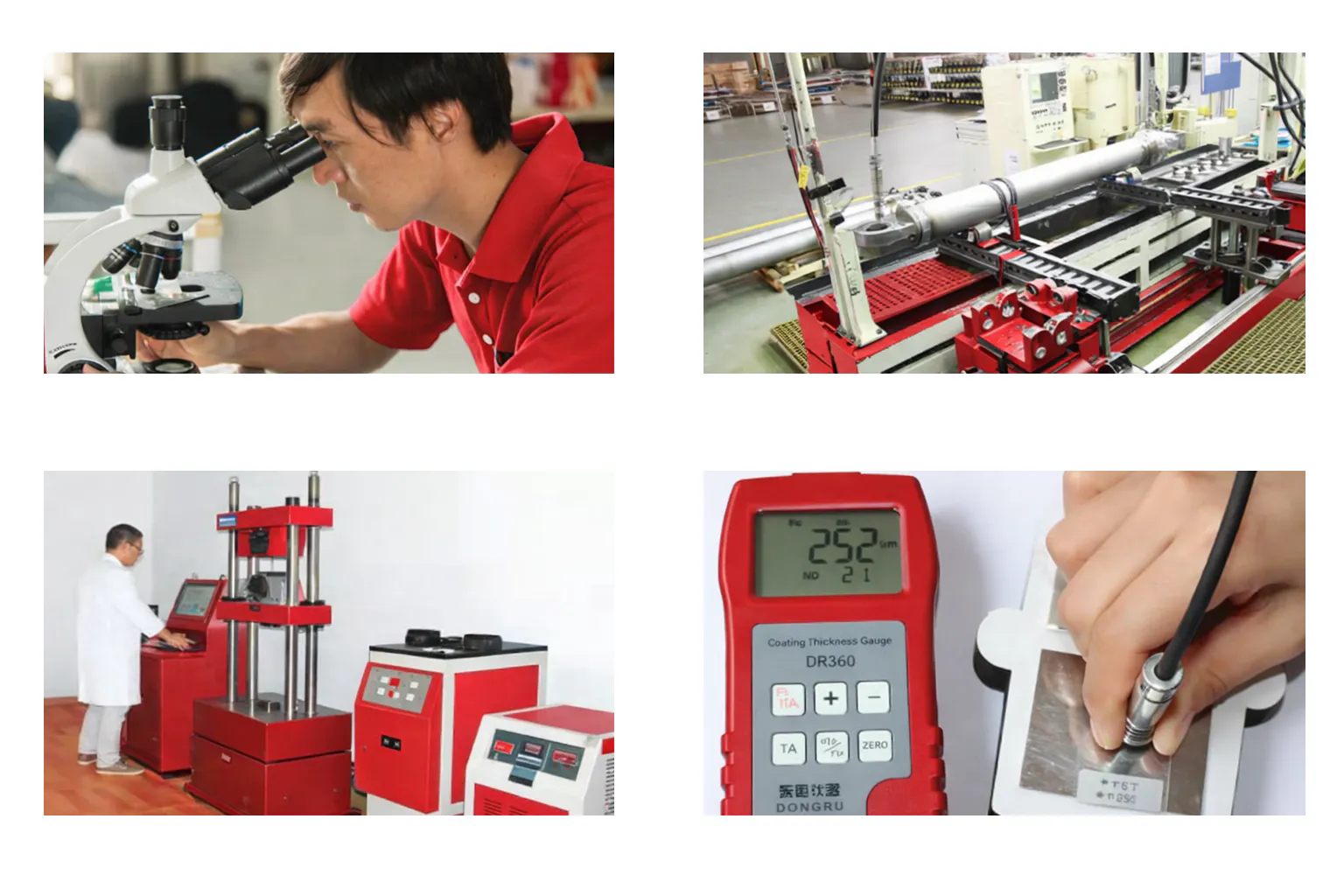
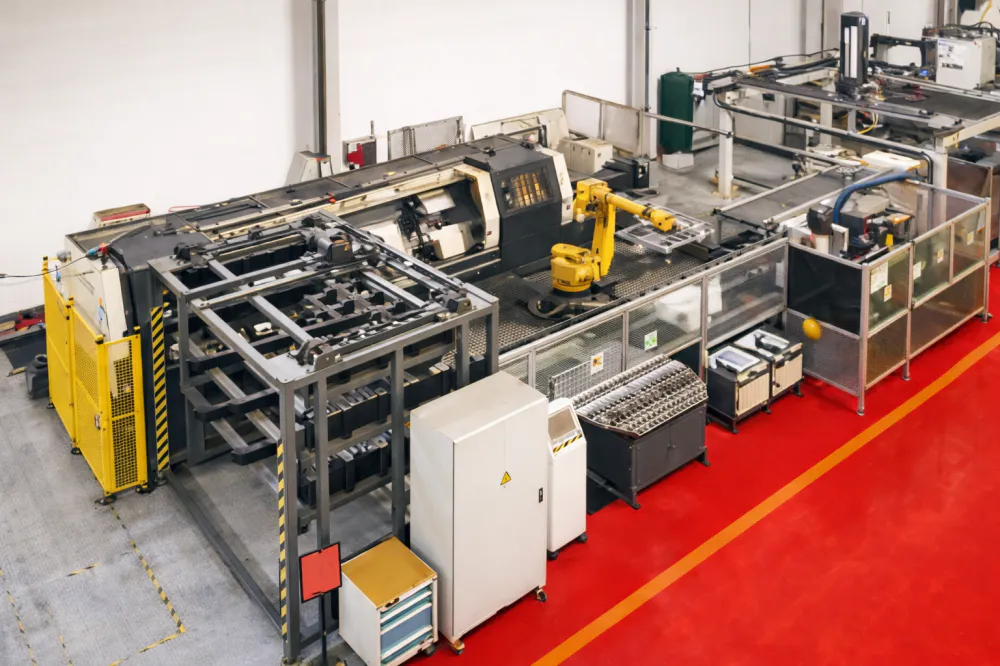
We manufacture the full range of hydraulic forklift tilt cylinders and attachment cylinders for material handling equipment across industrial, forestry, wood processing, and general manufacturing applications. Our dedicated forklift cylinder production facility operates four semi-automatic lift cylinder assembly lines and one fully automatic tilt cylinder assembly line, with annual production capacity of 1 million units across the standard and custom range. The facility is equipped with CNC machining centres, high-precision cylinder boring machines, robot welding stations, automatic cleaning systems, and CMM dimensional inspection equipment for critical parameter verification including bore finish, rod concentricity, and clevis bore alignment. ISO 9001 quality management certification covers the complete production process from raw material procurement through final inspection and dispatch.
Our forklift tilt cylinder range encompasses the EP-HCY series mast tilt cylinders and the EP-HCYA series attachment cylinders, covering working pressures from 16 MPa through 25 MPa and a stroke range from 96.5 mm through 1,500 mm in the standard product line. Custom bore diameters within the range D360MM maximum and stroke lengths to L6000MM are available for non-standard forklift platform applications or stationary machinery integrations. We supply to forklift OEMs, aftermarket distributors, and end-user facilities globally, with established supply relationships in Colombia — serving Bogota, Medellin, Cali, Barranquilla, and the timber processing regions of the Colombian Pacific coast and interior — as well as in Europe, North America, and Oceania. Our engineering team provides technical consultation on forklift tilt cylinder specifications for specific applications, including wood processing duty cycles where contamination and loading conditions require customised seal material or surface treatment specifications.
Çalıştay
Sıkça Sorulan Sorular
Editör: PXY