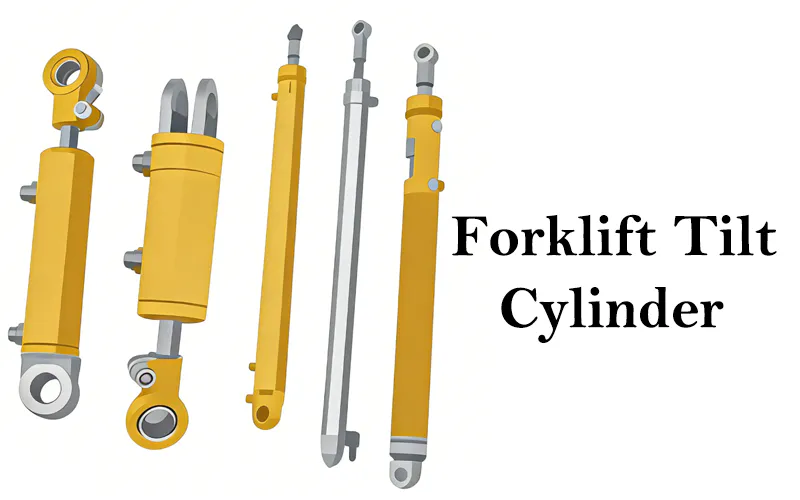
Forklift Hydraulics Knowledge Guide
A practical reference for maintenance engineers, fleet managers, and procurement teams in Colombia and across Latin America who want to understand what really controls the lifespan of a أسطوانة إمالة الرافعة الشوكية — and how to get the most out of every unit in the fleet.
Topics in this article: Service Life Ranges | Manufacturing Structure | Material System | Wear Factors | Operating Environment | Maintenance Protocols | Signs of Failure | Regulations | FAQ
Typical Service Life: What the Numbers Actually Mean
One of the most common questions from fleet operators in Bogotá, Medellín, and Barranquilla — and in industrial facilities across Colombia — is simply: how many years should we expect a أسطوانة إمالة الرافعة الشوكية to last before it needs to be rebuilt or replaced? The answer is more nuanced than a single number, but the industry baseline is instructive. Under normal warehouse conditions with regular maintenance, a properly specified hydraulic tilt cylinder on a counterbalance forklift typically achieves between five and ten years of service life, or roughly 8,000 to 15,000 operating hours before the first major seal replacement becomes necessary.
However, this is a rough average that masks enormous variation. Forklifts in multi-shift operations at Colombian port terminals in Cartagena or Buenaventura may accumulate 4,000 operating hours per year — meaning the same cylinder could need attention after as little as two to three years in those environments. By contrast, a forklift in a dry, climate-controlled pharmaceutical storage facility operating a single shift may run the same cylinder for twelve years or more without major intervention. The key variable is not calendar time but cumulative duty cycles, the quality of lubrication and hydraulic fluid maintenance, and the severity of the mechanical and chemical stresses the cylinder encounters during operation.
Understanding service life as a spectrum — rather than a fixed number — allows maintenance teams to build more accurate replacement budgets and avoid the two most common mistakes: replacing cylinders too early (wasting budget) or waiting until catastrophic seal failure creates a safety incident or extended production downtime. The sections below break down exactly what controls where a specific cylinder falls on that spectrum.
هيكل تصنيع أسطوانة إمالة الرافعة الشوكية
To understand what limits the service life of this hydraulic actuator, you first need to understand what it is made of and how those components interact under load. The tilt cylinder is a double-acting hydraulic actuator — pressurized oil on either side of the internal piston produces controlled forward and backward extension of the piston rod, tilting the forklift mast to the angle commanded by the operator. Every structural component plays a distinct role in determining how long the cylinder will function reliably before wear accumulates to the point where performance is compromised.
أسطوانة
The barrel is a precision-honed steel tube that guides the piston and contains the hydraulic oil under pressure. Its inner bore surface finish — typically Ra 0.2 to 0.4 μm — determines how long the piston seals remain effective. Scoring, corrosion pitting, or out-of-round wear on the bore surface is the most common reason why rebuilt cylinders fail prematurely: even new seals cannot compensate for a damaged bore.
ذراع المكبس
The piston rod is the component most visible during operation — it extends and retracts through the front gland every time the mast tilts. Standard rods are induction-hardened steel with a hard chrome surface layer (typically 25–35 μm minimum). The chrome surface protects against corrosion and provides the smooth running surface that the rod seals need to maintain their contact integrity. Surface damage here — from mechanical impact, chemical attack, or abrasion — directly transfers into accelerated seal wear.
Sealing System
The forklift tilt cylinder seal kit consists of a layered sealing system: a wiper seal at the front gland entry point removes contaminants from the rod before they reach the primary rod seal; the U-cup primary rod seal prevents oil from escaping; the piston seal divides the bore into two pressure chambers and determines internal leakage. When people talk about forklift tilt cylinder seal replacement, they are nearly always referring to this complete assembly, not individual seals.
End Caps and Gland
The front gland and rear end cap close the barrel and carry the mounting loads transferred from the mast and chassis frame. These components are subjected to continuous bending forces as the cylinder operates at an angle. Material fatigue in the gland or end cap threads is rare under normal operating conditions but becomes a risk when a cylinder is used beyond its rated working pressure, or when mounting pins are allowed to wear to the point where the cylinder rocks during operation.
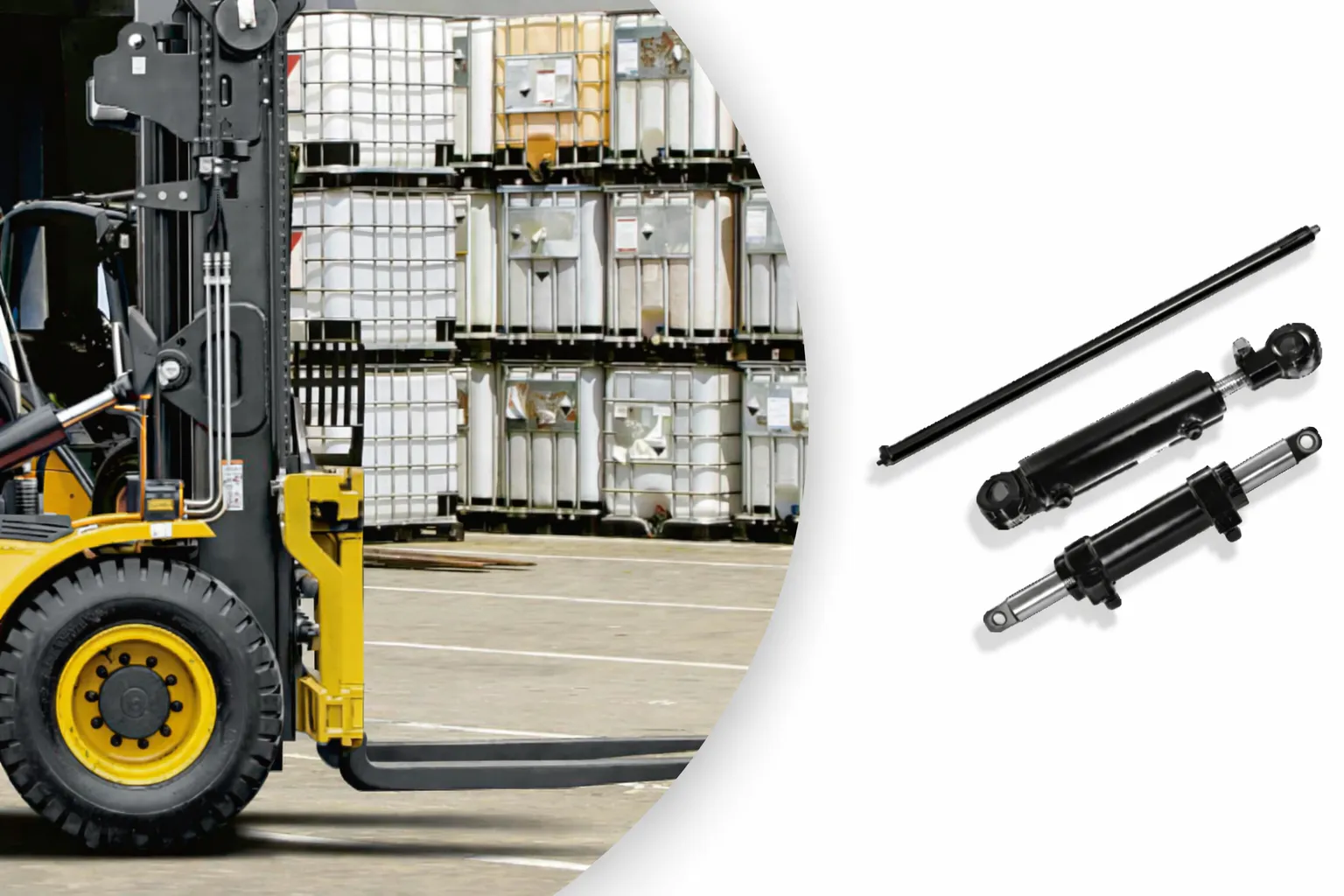
Material System and Its Effect on Longevity
The material composition of each component in the أسطوانة إمالة الرافعة الشوكية is the primary engineering variable that the manufacturer controls to determine baseline service life potential. Understanding the material system helps maintenance managers evaluate whether a given cylinder was designed for the actual duty it will face, and whether the replacement parts being sourced are genuinely equivalent to the original specification.
The barrel is manufactured from seamless cold-drawn steel tube — typically DIN 2391 or equivalent — because seamless construction eliminates the weld seam that would be a fatigue initiation point under the cyclic pressure loads of a working hydraulic cylinder. After honing to dimensional tolerance, the bore is often treated with a phosphate conversion coating to provide initial corrosion protection during storage and transport before the hydraulic oil provides ongoing protection during service.
Seal materials are where the forklift tilt cylinder seal kit specification matters most. Standard kits use nitrile rubber (NBR) for the U-cup and wiper seals — adequate for mineral hydraulic oil in temperature ranges from −25°C to +100°C. For forklifts operating in Colombian facilities that use fire-resistant or biodegradable hydraulic fluids, or in coastal environments where the hydraulic circuit sees elevated water contamination, polyurethane seals or fluorocarbon (FKM/Viton) seals offer substantially better chemical resistance and extended life. Specifying the wrong seal compound is one of the most avoidable causes of premature seal failure in tropical and coastal operating environments.
| مادة مانعة للتسرب | Temp. Range | Best For | Avoid With |
|---|---|---|---|
| NBR (Nitrile) | −25°C to +100°C | Standard mineral oil; dry indoor environments | Ketones, aromatic solvents, ozone |
| Polyurethane (PU) | −30°C to +80°C | Abrasion-heavy environments; dusty Colombian industrial zones | Prolonged hot water; steam |
| FKM / Viton | −20°C to +200°C | Biodegradable / fire-resistant fluids; high-temp areas | Ketones; methyl esters at high concentration |
| PTFE (Teflon, static) | −200°C to +260°C | Backup rings; piston seal anti-extrusion rings | Primary dynamic rod seal position alone |
The Six Primary Factors That Determine Service Life
Across maintenance case studies from Colombian distribution centers, mining logistics operations in Antioquia, and agricultural equipment depots in the Llanos Orientales, the following six factors emerge repeatedly as the decisive variables that separate a well-maintained unit that runs for 12 years from one that fails in 18 months.
Oil contamination is the single largest destroyer of hydraulic seals and barrel bore surfaces in working forklifts. Particles as small as 10 to 15 microns — invisible to the naked eye — act as abrasive media between the piston rod and rod seal contact surfaces, cutting microscopic grooves that accumulate over thousands of duty cycles. ISO 4406 cleanliness Class 16/14/11 is the minimum recommended for forklift hydraulic circuits; many Colombian industrial fleets run significantly dirtier oil than this because filter change intervals are tied to calendar time rather than actual contamination monitoring.
Every mast tilt event — whether forward or backward — is one complete hydraulic tilt actuator extension or retraction cycle. A forklift tilting its mast 20 times per hour on a busy loading dock accumulates roughly 35,000 to 40,000 duty cycles per year. A forklift tilting only 5 times per hour in a slow-cycle cold store accumulates fewer than 10,000 per year. At high cycle counts, wear accumulates faster not just from seal friction but from the fatigue loading on piston rod chrome surfaces at each stroke reversal point, where the rod transitions from maximum extension back toward the body.
This tilt actuator is mounted externally on the mast frame, fully exposed to the operating environment. In coastal facilities near Cartagena or Buenaventura, chloride-laden salt air attacks chrome plating and any exposed steel surfaces continuously. In dusty cement plants, sugar mills in the Valle del Cauca, or coal handling yards in the César department, abrasive airborne particles accumulate on the piston rod, and any that penetrate past the wiper seal accelerate internal bore wear dramatically. Outdoor forklifts in Colombian tropical climates also face UV degradation of seal compounds that laboratory tests at room temperature do not capture.
Operators who tilt the mast against the mechanical stop at full extension under heavy load repeatedly are applying impact forces to the cylinder that its working pressure rating does not account for. Pressure spikes from sudden mast stops can reach two to three times the nominal system pressure for milliseconds at a time — well above the cylinder’s rated burst safety margin in aggregate over thousands of cycles. Similarly, allowing the forklift to travel with the mast significantly forward-tilted transfers additional bending moments through the forklift hydraulic tilt cylinder mounting pins, accelerating wear at the trunnion interfaces.
A tilt cylinder that is correctly sized for the machine — matching the rated lift capacity, hydraulic system working pressure, and stroke geometry — will consistently outlast an undersized or mismatched replacement. Proper sizing refers to more than just the physical envelope: bore diameter determines the force output, and rod diameter determines the column strength under side loading. Running an undersized cylinder on a heavier capacity machine than it was rated for compresses service life dramatically, sometimes to a fraction of the expected interval.
Of all the factors affecting أسطوانة إمالة الرافعة الشوكية longevity, maintenance program quality is the one most directly within the fleet operator’s control. Regular inspection of the piston rod surface, timely forklift tilt cylinder seal replacement at the first sign of weeping rather than waiting for external puddles, scheduled hydraulic oil and filter changes, and annual physical inspection of mounting pin bore wear in the mast and chassis frame all compound to produce dramatically extended cylinder service intervals. Colombian facilities that invest in structured preventive maintenance programs consistently report 40 to 60 percent longer tilt cylinder service lives compared to those operating on a pure breakdown-maintenance model.
Service Life by Environment: A Reference Table
The table below summarizes expected service life ranges for a أسطوانة إمالة الرافعة الشوكية across different operating environments and maintenance levels. These ranges are based on industry maintenance benchmarks and apply to correctly specified cylinders used within their rated working pressure and load limits. Actual results will vary.
| Operating Environment | Duty Cycles / Year | Expected Life (Basic Maintenance) | Expected Life (Proactive Maintenance) |
|---|---|---|---|
| Climate-controlled pharmaceutical / food warehouse | 8,000–12,000 | 7–10 years | 12–15+ years |
| Standard indoor distribution center (single shift) | 15,000–25,000 | 5–8 years | 8–12 years |
| Port terminal or multi-shift logistics (Cartagena, Buenaventura) | 35,000–50,000 | 2–4 years | 4–7 years |
| Dusty industrial plant (cement, sugar mill, mining) | 20,000–40,000 | 2–5 years | 5–9 years |
| Outdoor agricultural / construction logistics (Llanos Orientales) | 15,000–30,000 | 2–4 years | 4–7 years |
| Cold storage (below −15°C) | 8,000–15,000 | 4–6 years | 6–10 years |
How to Read the Warning Signs: When Replacement Is Approaching
Experienced forklift maintenance technicians recognize the sequence of symptoms that indicates a أسطوانة إمالة الرافعة الشوكية is approaching the end of its serviceable life. Understanding this progression helps maintenance planners schedule replacements proactively rather than reactively — avoiding the costs and safety risks associated with unplanned failures on the shop floor.
Early stage: The first sign is typically a fine oil film visible on the piston rod surface when the mast is in a tilted position. This is often mistaken for condensation in humid environments like Cartagena’s waterfront logistics zones. The wiper seal is beginning to allow minor oil migration past it. At this stage, a forklift tilt cylinder seal kit replacement on the rod seal and wiper is all that is needed, and the cylinder bore and rod are still in good condition.
Intermediate stage: Mast drift becomes the next observable symptom — the mast slowly changes angle from the operator’s set position without any control input. This indicates that the piston seal is allowing internal oil bypass between the two cylinder chambers. Drift is directly hazardous when loads are being carried, as it causes uncontrolled mast movement that can shift the load center and create a tip-over risk. A full seal kit rebuild is required at this stage; the bore condition should also be inspected before reassembly.
Late stage / end of life: External oil dripping, visible scoring on the piston rod chrome surface, or measurable out-of-round bore wear confirmed during inspection indicate that the cylinder body itself has reached end of life. At this point, forklift tilt cylinder replacement rather than rebuild is the appropriate action, as installing new seals into a damaged barrel or on a scored rod will produce another seal failure within a short interval. This is the stage that reactive maintenance programs commonly encounter because earlier warning signs were not acted upon.

Practical Maintenance Steps That Extend Cylinder Life
The good news for maintenance teams managing forklift fleets in Colombia is that a structured approach to cylinder maintenance, even without sophisticated diagnostic equipment, reliably extends service life beyond the figures achievable with basic breakdown maintenance. The following practices are grounded in standard hydraulic maintenance engineering and are directly applicable to most Colombian industrial operating contexts.
Rod Surface Cleaning
Before each operating shift in dusty or outdoor environments, wipe the exposed piston rod with a clean lint-free cloth. Contaminant particles that accumulate on the rod surface during the previous shift are effectively pushed past the wiper seal on the first extension stroke of the day, introducing abrasives directly onto the rod seal contact surface. This 30-second habit reduces seal wear by a meaningful margin over time.
Hydraulic Oil and Filter Changes
Follow the forklift manufacturer’s oil change interval in calendar time or operating hours — whichever comes first — but in high-contamination environments, shorten the interval by 30 to 40 percent. Consider adopting a contamination monitoring program where an oil sample is drawn quarterly and analyzed for particle count, water content, and metal wear debris. This allows filter and oil changes to be scheduled based on actual fluid condition rather than fixed time intervals, reducing unnecessary changes while catching contamination build-up before it damages cylinders.
Mounting Pin Inspection
The trunnion pins that attach the tilt cylinder to the mast and chassis frame wear over time. As pin-to-bore clearance increases, the cylinder begins to rock during operation, applying off-axis bending loads to the piston rod that it was not designed to carry continuously. Inspect pin and bore dimensions annually and replace pins when clearance exceeds the OEM-specified limit. Pin replacement is a low-cost maintenance action that protects the much more expensive cylinder body.
Seal Kit Replacement Timing
Replace the أسطوانة إمالة الرافعة الشوكية seal kit at the first confirmed observation of rod weeping — not when oil is dripping onto the floor. The cost difference between a proactive seal kit replacement and an emergency floor-level leak repair (which includes downtime, environmental clean-up, and potential safety incident documentation under Colombian workplace regulations) is substantial. For high-duty fleets, consider a scheduled seal kit replacement interval of every 2,000 to 3,000 operating hours regardless of visible condition.
Featured Product: EP-HCY-2 Forklift Tilt Cylinder
For counterbalance forklifts operating in Colombian warehouses, logistics centers, and industrial facilities where a reliable mid-range hydraulic أسطوانة إمالة الرافعة الشوكية is needed, the EP-HCY-2 offers a well-balanced specification between compact dimensions and meaningful working pressure headroom. Its 18.1 MPa working pressure and 27 MPa maximum withstand pressure provide the safety margin needed to handle the pressure spikes associated with high-cycle, high-load tilt operations without accelerating barrel or seal wear.

أسطوانة إمالة الرافعة الشوكية EP-HCY-2
| المعلمة | مواصفة |
|---|---|
| ضغط العمل | 18.1 ميجا باسكال |
| أقصى ضغط يتحمله | 27 ميجا باسكال |
| سكتة دماغية | 156 مم |
| مسافة التركيب | 453 مم |
| وزن | 12 كجم |
| نوع الإجراء | مفعول مزدوج |
الإطار التنظيمي: المعايير الكولومبية والدولية
The inspection, maintenance, and replacement of these hydraulic actuators in Colombia is governed by both national occupational safety regulations and international equipment standards. Understanding these frameworks helps maintenance managers document their cylinder management programs correctly for regulatory compliance and insurance purposes.
Decreto 1072 de 2015 / SG-SST — Colombia
Under Colombia’s Decreto 1072 de 2015 (Sistema de Gestión de Seguridad y Salud en el Trabajo), employers are required to identify and control mechanical hazards from equipment. A hydraulic cylinder leak that creates a floor slip hazard, or a cylinder failure that causes uncontrolled mast movement, is a reportable incident under the SG-SST framework. Maintenance records demonstrating scheduled inspection and timely forklift tilt cylinder seal replacement serve as evidence of due diligence in any post-incident audit by the Ministerio del Trabajo.
OSHA 29 CFR 1910.178 — USA (Referenced by Multinationals in Colombia)
Many multinational companies with Colombian operations apply OSHA powered industrial truck standards to their global fleets. Section 1910.178(q) requires that forklifts with hydraulic defects — including leaking or malfunctioning tilt cylinders — be removed from service until repaired. Maintenance programs compliant with this standard specify maximum allowable tilt cylinder drift rates, oil leakage thresholds, and inspection frequencies that go beyond what Colombian national standards currently mandate, providing a higher baseline of hydraulic system integrity.
EN ISO 3691-1:2015 — European Industrial Truck Safety
EN ISO 3691-1 sets safety requirements for counterbalanced forklifts, including performance requirements for the hydraulic tilt system. The standard specifies maximum permissible mast tilt drift rates under load — directly relevant to the piston seal condition in the forklift hydraulic tilt cylinder. Colombian importers of European-manufactured forklifts often encounter these specifications in OEM maintenance manuals, and aligning maintenance practices with EN ISO 3691-1 hydraulic performance benchmarks ensures that the machines remain within their original CE conformity envelope throughout their service life.
ISO 4413:2011 — Hydraulic Fluid Power Safety
ISO 4413 specifies requirements for hydraulic systems in machinery, including forklifts. Relevant provisions for the forklift tilt cylinder include minimum burst pressure ratios (cylinders must withstand at least 4x working pressure), requirements for containment of hydraulic fluid in applications where leakage creates environmental or safety risks, and hose and fitting compatibility requirements. The EP-HCY series cylinders comply with ISO 4413 burst pressure requirements, with the EP-HCY-2 tested to a maximum withstand pressure of 27 MPa against an 18.1 MPa working pressure — a 1.49x factor at operating pressure, meeting international minimum safety expectations.
NTC-ICONTEC Standards — Colombia
Colombia’s Instituto Colombiano de Normas Técnicas (ICONTEC) has adopted ISO-aligned standards for hydraulic fluid power equipment including cylinders. Locally manufactured or imported hydraulic cylinders used in industrial trucks are expected to conform to applicable dimensional and performance standards. Procurement teams at Colombian industrial facilities should request conformance documentation from hydraulic cylinder suppliers to support internal quality management systems and demonstrate regulatory due diligence under applicable Colombian industrial safety frameworks.
Resolución 1409 de 2012 — Colombia (Work at Height Safety)
Where forklifts are used with man-up attachments or order-picker configurations that elevate personnel, the hydraulic system integrity — including the tilt cylinder — is subject to additional scrutiny under Resolución 1409 de 2012. A forklift hydraulic cylinder failure that causes mast drift while an operator is elevated becomes a fall risk event requiring incident investigation. This regulation reinforces the importance of maintaining these cylinders at their rated performance specifications and replacing any cylinder showing measurable mast drift before it enters service in personnel-elevation applications.
المنتجات ذات الصلة
ال أسطوانة إمالة الرافعة الشوكية is one component within the broader hydraulic system of the forklift. The following complementary products are designed to work alongside the tilt cylinder, providing system-level compatibility and one-stop procurement for fleet maintenance and upgrade projects.
Tilt Cylinder Range
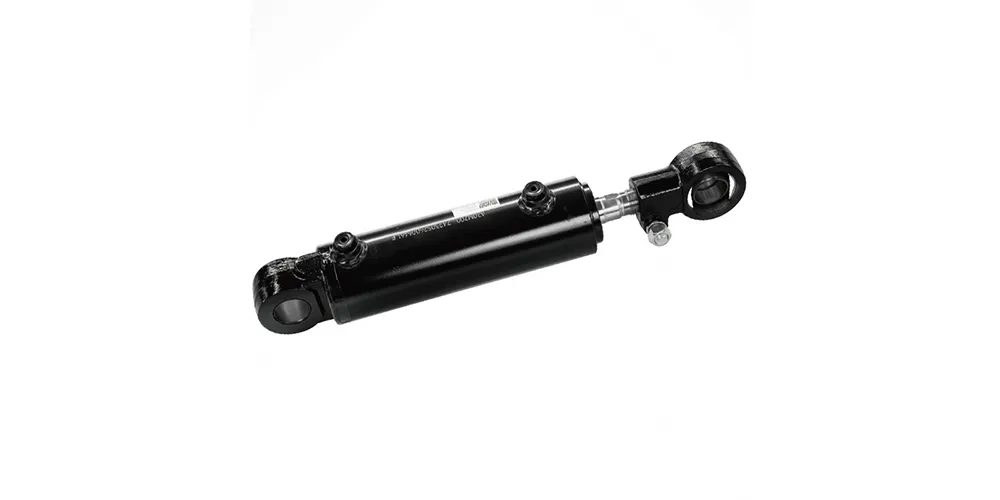
ملكنا أسطوانة الإمالة series covers a broad range of forklift and industrial truck mast tilt applications. Available in multiple bore and stroke configurations to match different machine capacities, these cylinders are designed for direct replacement of OEM units across Toyota, Hyster, Linde, Crown, Komatsu, Caterpillar, and other major forklift platforms commonly operated across Colombia. Seal material upgrade options are available for demanding environmental conditions.
سلسلة محطات الضخ الهيدروليكية
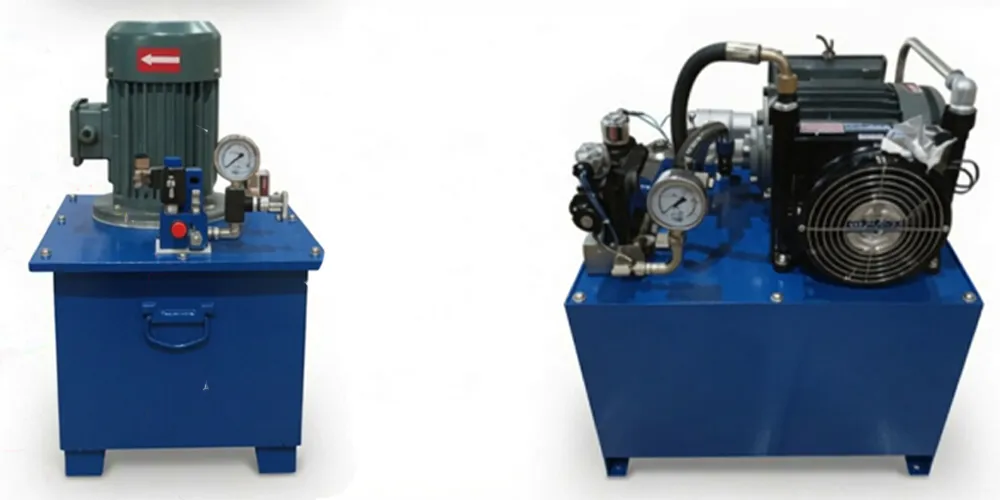
Our hydraulic pump station series provides the power unit that drives tilt cylinders and lift cylinders in standalone or retrofit applications. Where a forklift requires a hydraulic system upgrade to improve tilt control performance or to support additional hydraulic attachments, the pump station ensures consistent flow and pressure delivery that matches the cylinder’s rated working parameters, protecting cylinder service life by preventing under-pressure operation that causes cavitation or over-pressure spikes that stress seals.
الأسئلة الشائعة
Common questions from fleet managers, maintenance engineers, and purchasing teams in Colombia and Latin America about forklift tilt cylinder service life, maintenance, and replacement.
Q1. How long does a forklift tilt cylinder typically last in a Colombian distribution center operating two shifts per day?
Q2. What is the difference between a lift cylinder and a tilt cylinder on a forklift, and which one needs more frequent maintenance?
Q3. What are the warning signs that this hydraulic actuator needs immediate seal replacement before further operation?
Q4. How does the operating environment in Colombian port terminals affect the expected service life of a hydraulic mast tilt cylinder?
Q5. What hydraulic oil specification is best for maximizing the service life of a forklift tilt cylinder in a tropical climate like Colombia’s?
Q6. What are the different types of cylinders on a forklift and how does each one affect overall performance and safety?
Q7. How can maintenance teams in Colombia document tilt cylinder inspections to comply with the SG-SST occupational safety framework?
المحرر: PXY