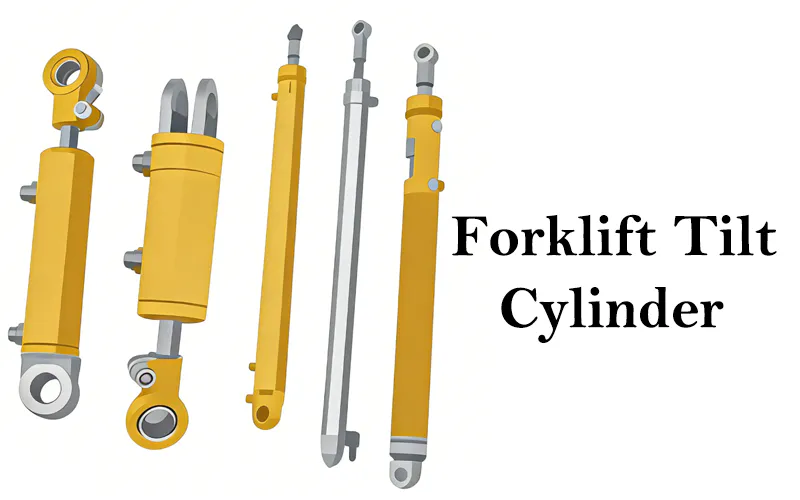
Penerangan Produk
Attractive Price 18MPa 3.4kg hydraulic Tilt Cylinder for Forklift
In forklifts, the tilt cylinder is a hydraulic cylinder responsible for tilting the mast and forks of the forklift. It allows the operator to adjust the angle of the divisions to accommodate different load-handling needs. Here are some key points about the tilt cylinder in a forklift:
Function: The tilt cylinder controls the tilting movement of the mast and forks. It lets the operator tilt the forks CHINAMFG or backward to pick up, transport, and deposit loads. The forklift operator can ensure proper load stability, precise positioning, and safe material handling by adjusting the tilt angle.
Hydraulic Power: The tilt cylinder is powered by hydraulic fluid under pressure. It is connected to the forklift’s hydraulic system, which consists of a hydraulic pump, control valves, hoses, and a reservoir. When the operator activates the tilt control lever, hydraulic fluid is directed to the tilt cylinder, causing it to extend or retract and initiate the tilt movement.
| bore diameter (D) | rod diameter (d) | stroke (S) | Installation distance (L) | working pressure | Interface dimensions (M) | weight |
| Φ60 | Φ30 | 32 | 109 | 18MPa | 2-M14*1.5 | 3.4kg |
(1) Our company can customize non-standard oil cylinders within the range of cylinder diameter D360MM and stroke L6000MM according to customer requirements;
(2) The above product prices are nontax unit prices, excluding packaging and transportation costs required for export
Permohonan
Application of Forklift series Tilt Cylinder
1. Pengendalian Beban: The primary application of the tilt cylinder is to facilitate the handling of loads. By adjusting the tilt angle of the mast and forks, the tilt cylinder allows the forklift operator to pick up, transport, and deposit loads with precision. It enables the operator to tilt the forks CHINAMFG to engage and lift the load or tilt them backward to stabilize and deposit the load.
2. Load Stabilization: The tilt cylinder plays a crucial role in load stabilization. When lifting and transporting loads, especially those unbalanced or unevenly distributed, the tilt cylinder allows the operator to adjust the tilt angle to prevent load shifting or toppling. This ensures load stability and reduces the risk of accidents or damage to the load and surrounding structures.
3. Accessing and Depositing Loads: The tilt cylinder enables the forklift operator to access and deposit loads in various locations. It allows the forks to tilt CHINAMFG or backward, making it easier to position them under pallets or other load types. Adjusting the tilt angle allows the operator to align the forks with the load and safely deposit it CHINAMFG racks, shelves, or other storage areas.
4. Load Manipulation: The tilt cylinder allows load manipulation and fine control during material handling operations. By incrementally adjusting the tilt angle, the operator can tilt the forks slightly to level the load on uneven surfaces or adjust the load position for better visibility and maneuverability. This enables efficient handling of delicate or fragile loads, optimizing safety and productivity.
5. Pallet Stacking: The tilt cylinder is widely used in pallet stacking applications. It enables the operator to tilt the forks backward to create a slight incline, allowing for easy entry and retrieval of pallets from stacked loads. The tilt cylinder also assists in aligning the divisions with the pallets during stacking, ensuring accurate placement and stability of the stacked pallets.
6. Customized Load Handling: The tilt cylinder in a forklift series can be used for customized load-handling applications. Some forklift models feature additional attachments or accessories, such as side shifters or clamp arms, which can be controlled by the tilt cylinder. This allows forklift operators to adapt the tilt angle and manipulate loads with specialized requirements, such as gripping or rotating materials.
Importance of Forklift Tilt Cylinder
Load Stability: The tilt cylinder allows the operator to adjust the tilt angle of the mast and forks, ensuring load stability during material handling operations. By tilting the forks CHINAMFG or backward, the operator can secure the load and prevent it from shifting or falling off them. This enhances safety and minimizes the risk of accidents or damage to the bag.
Precise Load Positioning: The tilt cylinder enables precise load positioning, allowing the operator to align the forks with the load and accurately deposit it CHINAMFG racks, shelves, or other storage areas. Adjusting the tilt angle allows the operator to achieve optimal load placement, which is critical in tight or confined spaces where maneuverability is limited.
Versatility: The tilt cylinder provides versatility in load-handling applications. The forklift can handle various load sizes and shapes by adjusting the tilt angle to accommodate different load requirements. This versatility enhances the adaptability of the forklift in multiple industries and warehouses, where different types of goods and materials must be handled.
Improved Operator Visibility: Adjusting the tilt angle can improve the operator’s visibility during material handling operations. By tilting the forks backward, the operator can have a better line of sight over the load, increasing situational awareness and reducing the risk of accidents caused by limited visibility.
In summary, the tilt cylinder in a forklift is of utmost importance as it ensures load stability, enables precise load positioning, enhances versatility, improves operator visibility and ergonomics, facilitates efficient pallet stacking, and allows customization and attachment compatibility. These factors contribute to safer, more efficient, and more productive material handling operations in warehouses, distribution centers, manufacturing facilities, and other industrial settings.
Our Company
We have a first-class independent R&D platform for assembly. The forklift cylinder production workshop has 4 semi-automatic lifting cylinder assembly lines and 1 fully automatic tilting cylinder assembly line, with a designed annual production capacity of 1 million pieces; the special cylinder workshop is equipped with semi-automatic cleaning and assembly systems of various specifications, with a designed annual production capacity of 200,000 essays. It has famous CNC machining equipment, machining centers, special equipment for high-precision cylinder processing, robot welding machines, automatic cleaning machines, automatic cylinder assembly machines, and automatic paint production lines. We have more than 300 sets of critical equipment running. The optimized allocation and efficient utilization of equipment resources ensure the precision requirements of the products and meet the high standard quality requirements of the products.
|
Forklift cylinder assembly shop |
Other types of cylinder assembly shop |
Welding
Painting & coating
|
Painting & coating line |
Fully automatic water-based |
Testing
To further improve product performance, and establish the leadership position of our hydraulic cylinder in the industry, our company and zjimee jointly established a Comprehensive performance laboratory of hydraulic cylinders, hydraulic valves, and hydraulic pumps; the lab is computer-assisted testing, using electro-hydraulic control technology, the test conditions preset by computer, which improves the test accuracy and system versatility, and the experimental data.
The automatic collection is realized through the application of sensors, and the output data, such as the internal leakage and load efficiency of the cylinder or the valve, are directly processed by the
computer and converted to standard units (ml/min; %). At the same time, to ensure the working safety of the hydraulic system, the state monitoring function is carried out for key performance parameters, such as “oil temperature monitoring, liquid level monitoring, filter device monitoring,” etc. Among them, the hydraulic cylinder test stand can test the performance of “load efficiency” and “internal leakage” by readings. At the same time, it is equipped with a grating ruler measuring instrument, which meets the requirements of all test items of hydraulic cylinder products in the national standard
Our Factory
Pembungkusan & Penghantaran
| Pensijilan: | GS, RoHS, CE, ISO9001 |
|---|---|
| Tekanan: | Tekanan Sederhana |
| Suhu Kerja: | Suhu Biasa |
| Cara Lakonan: | Lakonan Berganda |
| Kaedah Kerja: | Rotary |
| Borang yang Diselaraskan: | Jenis Terkawal |
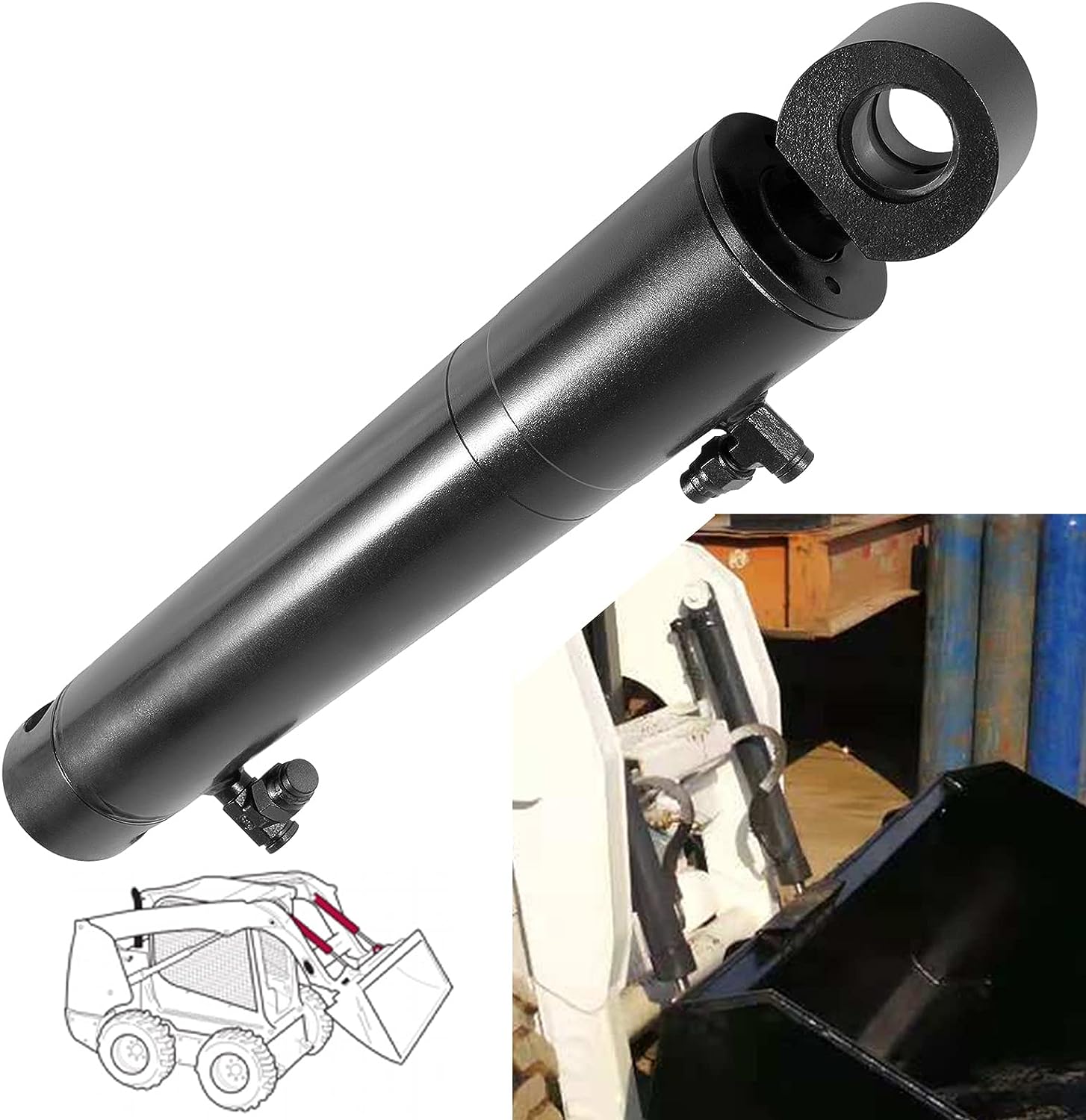
How does a tilt cylinder handle variations in hydraulic pressure and flow rate?
A tilt cylinder is designed to handle variations in hydraulic pressure and flow rate effectively. It incorporates specific features and mechanisms that allow it to operate reliably under different hydraulic conditions. Here’s a detailed explanation:
- Pressure Compensation: Tilt cylinders are equipped with pressure compensation mechanisms to handle variations in hydraulic pressure. These mechanisms ensure that the cylinder can function properly even when the hydraulic system experiences fluctuations in pressure. The pressure compensation feature allows the cylinder to maintain consistent force and performance, regardless of the changes in hydraulic pressure.
- Flow Control: Tilt cylinders are designed to accommodate variations in hydraulic flow rate. They have internal passages and ports that allow the hydraulic fluid to flow into and out of the cylinder. The cylinder’s design ensures that it can handle different flow rates without compromising its functionality. Whether the hydraulic flow rate is high or low, the tilt cylinder can adjust accordingly and provide the necessary force and control for load manipulation.
- Sealing Mechanisms: Tilt cylinders incorporate sealing mechanisms to prevent leakage and maintain hydraulic integrity. These seals are designed to withstand variations in pressure and flow rate, ensuring that the hydraulic fluid remains contained within the cylinder. The seals also help maintain the required pressure within the cylinder, allowing it to operate efficiently and effectively, regardless of the hydraulic conditions.
- Internal Design: The internal design of a tilt cylinder takes into account variations in hydraulic pressure and flow rate. The cylinder’s internal components, such as piston, rod, and cylinder barrel, are engineered to withstand different hydraulic conditions. They are designed to handle the forces exerted by varying pressure and flow rates, ensuring smooth operation and longevity of the cylinder.
- Hydraulic System Compatibility: Tilt cylinders are designed to be compatible with the hydraulic systems of the equipment they are installed in. Manufacturers ensure that the cylinders can handle the expected pressure and flow rate ranges of the hydraulic system. This compatibility allows for seamless integration and optimal performance, even when there are variations in hydraulic conditions.
- Quality Control and Testing: Tilt cylinders undergo rigorous quality control measures and testing during the manufacturing process. These measures ensure that the cylinders can handle variations in hydraulic pressure and flow rate within specified tolerances. Manufacturers test the cylinders under different hydraulic conditions to verify their performance, reliability, and ability to handle variations in pressure and flow.
By incorporating pressure compensation mechanisms, flow control features, sealing mechanisms, robust internal design, hydraulic system compatibility, and thorough quality control, tilt cylinders are capable of handling variations in hydraulic pressure and flow rate. These cylinders provide reliable and consistent performance, regardless of the hydraulic conditions, ensuring smooth and efficient operation in material handling and construction equipment.
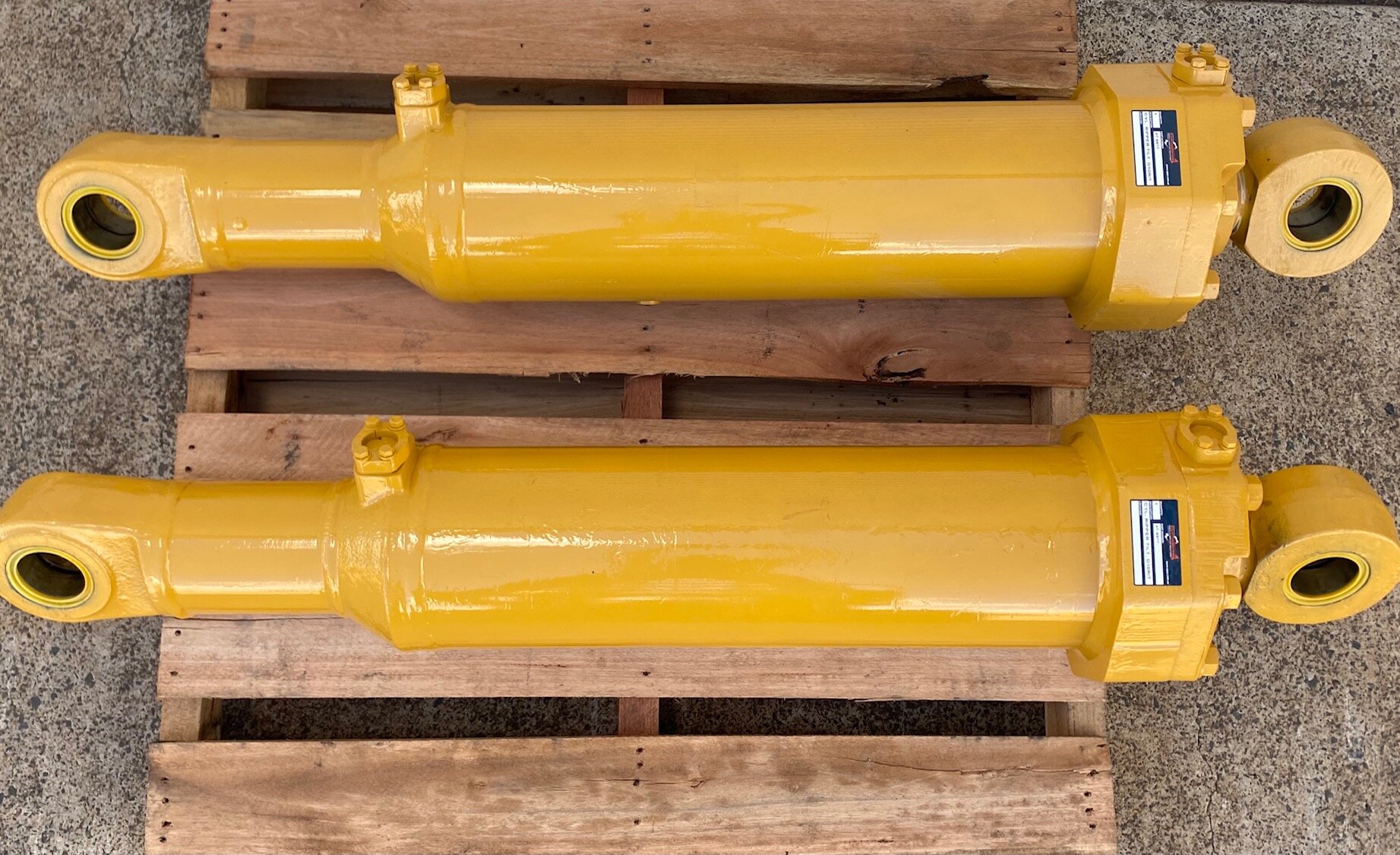
Apakah kelebihan menggunakan silinder condong dalam peralatan berat?
Penggunaan silinder condong dalam peralatan berat menawarkan beberapa kelebihan yang meningkatkan produktiviti, fleksibiliti dan kecekapan operasi. Berikut adalah kelebihan utama:
- Fleksibiliti Dipertingkat: Silinder condong membolehkan peralatan berat memiringkan dan melaraskan sudut lampiran atau alat. Ini memberikan fleksibiliti yang dipertingkatkan dalam pelbagai aplikasi, seperti penggredan, landskap, pengendalian bahan dan penggalian. Keupayaan untuk memiringkan lampiran membolehkan pengendali mengawal kedudukan dan orientasi dengan tepat, meningkatkan ketepatan dan kecekapan dalam menyelesaikan tugas.
- Kestabilan yang Dipertingkatkan: Silinder condong menyumbang kepada kestabilan dan keseimbangan peralatan berat yang lebih baik. Dengan memiringkan alat tambahan atau peralatan agar sepadan dengan keadaan rupa bumi atau beban, pengendali dapat mengekalkan kestabilan yang lebih baik semasa operasi. Ini amat bermanfaat dalam rupa bumi yang tidak rata atau mencabar di mana mengekalkan kestabilan adalah penting untuk kerja yang selamat dan cekap.
- Peningkatan Kecekapan: Silinder condong meningkatkan kecekapan operasi peralatan berat. Dengan membenarkan pengendali melaraskan sudut condong tanpa mengubah kedudukan keseluruhan mesin, masa dan usaha dapat dijimatkan. Pengendali boleh menukar sudut lampiran dengan cepat dan mudah, mengoptimumkan prestasi peralatan dan mengurangkan keperluan pelarasan manual atau peralatan tambahan.
- Kawalan Bahan Tepat: Silinder condong membolehkan kawalan tepat ke atas bahan yang dikendalikan atau dimanipulasi. Contohnya, dalam aplikasi pemuatan atau pembuangan bahan, pengendali boleh memiringkan baldi atau alat tambahan untuk mengawal sudut penuangan atau pembuangan dengan tepat. Tahap kawalan ini meningkatkan ketepatan, meminimumkan tumpahan dan mengurangkan pembaziran bahan, menghasilkan penjimatan kos dan kecekapan operasi yang lebih baik.
- Kebolehgunaan dan Kebolehsuaian: Silinder condong meningkatkan fleksibiliti dan kebolehsuaian peralatan berat. Dengan keupayaan untuk melaraskan sudut kecondongan, peralatan boleh digunakan untuk pelbagai tugas dan aplikasi. Silinder condong membolehkan peralatan menampung lampiran atau peralatan yang berbeza, mengembangkan keupayaannya dan menjadikannya sesuai untuk pelbagai keperluan kerja.
- Keselesaan dan Keselamatan Pengendali: Silinder condong menyumbang kepada keselesaan dan keselamatan pengendali. Dengan membenarkan pelarasan pada sudut condong, pengendali boleh mengekalkan kedudukan ergonomik yang lebih baik dan mengurangkan keletihan semasa operasi yang berpanjangan. Di samping itu, keupayaan untuk mengawal sudut condong meningkatkan keselamatan dengan memberikan penglihatan dan kawalan yang lebih baik ke atas kawasan kerja peralatan, sekali gus mengurangkan risiko kemalangan dan kerosakan.
Kelebihan menggunakan silinder condong dalam peralatan berat menjadikannya komponen penting dalam industri seperti pembinaan, perlombongan, pertanian dan pengendalian bahan. Silinder condong meningkatkan keupayaan operasi, meningkatkan kecekapan dan keselamatan, yang akhirnya membawa kepada peningkatan produktiviti dan keberkesanan kos.
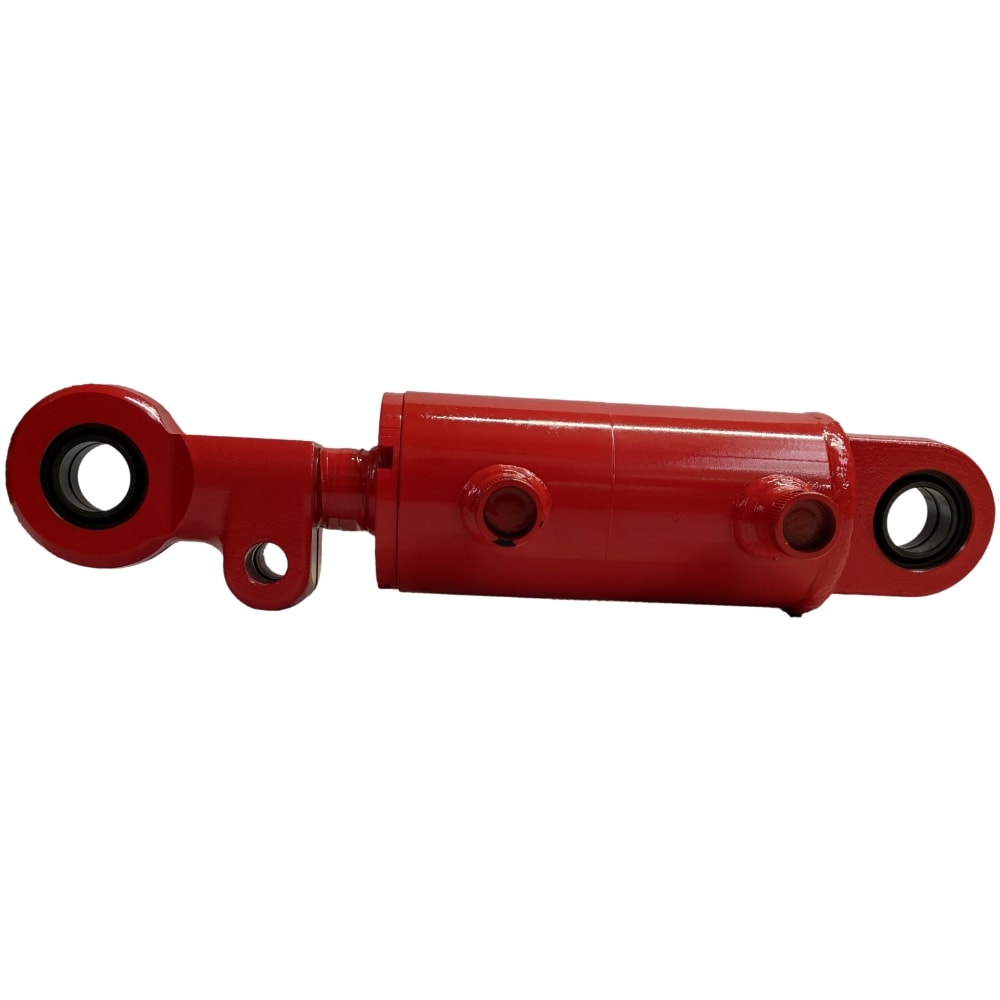
Bolehkah silinder condong digunakan untuk aplikasi condong dan meratakan?
Ya, silinder condong boleh digunakan untuk aplikasi condong dan meratakan. Ia adalah komponen hidraulik serba boleh yang direka bentuk untuk menyediakan pergerakan condong terkawal, serta memudahkan operasi meratakan. Berikut ialah penjelasan terperinci:
Aplikasi Condongan:
Silinder condong biasanya digunakan untuk aplikasi condong dalam pelbagai industri. Ia membolehkan kecondongan atau sudut terkawal komponen yang dipasang pada jentera berat. Contohnya:
- Dalam peralatan pembinaan, silinder condong membolehkan pelarasan baldi, bilah atau lampiran, membolehkan penggalian, penggredan dan perataan permukaan yang tepat.
- Dalam jentera perlombongan, silinder condong mengawal sudut baldi atau bilah, memudahkan pengendalian bahan dan penggalian yang cekap.
- Dalam peralatan pertanian, silinder condong membolehkan alat seperti bajak atau baldi dicondongkan, membolehkan petani melaraskan sudut kerja untuk pembajakan tanah atau pengendalian bahan yang optimum.
- Dalam jentera pengendalian bahan, silinder condong digunakan untuk mengawal kecondongan garpu, platform atau lampiran, memudahkan pemuatan, pemunggahan dan penyusunan barang yang cekap.
Aplikasi Penarafan:
Selain memiringkan, silinder condong juga boleh digunakan untuk aplikasi meratakan. Meratakan melibatkan pelarasan kedudukan mendatar atau penjajaran peralatan untuk memastikan permukaan yang rata dan stabil. Silinder condong boleh membantu dalam operasi meratakan dengan:
- Mengimbangi rupa bumi yang tidak rata: Silinder condong boleh digunakan untuk melaraskan kecondongan lampiran peralatan, mengimbangi permukaan yang tidak rata dan mengekalkan kedudukan yang rata.
- Menjajarkan komponen: Silinder condong boleh digunakan untuk menjajarkan atau meratakan komponen seperti bilah, baldi atau platform, bagi memastikan perataan yang konsisten dan tepat merentasi kawasan kerja.
- Menyediakan pelarasan halus: Injap kawalan dalam silinder condong membolehkan kawalan pergerakan condong yang tepat. Pengendali boleh membuat pelarasan kecil untuk mencapai tahap yang diingini, memastikan perataan yang tepat.
Dengan menggunakan keupayaan kawalan dan julat gerakan silinder condong, pengendali boleh melaksanakan tugas condong dan meratakan dengan berkesan dengan komponen hidraulik yang sama.
Secara ringkasnya, silinder condong adalah serba boleh dan boleh digunakan untuk aplikasi condong dan meratakan. Ia membolehkan kecondongan komponen yang dikawal dalam pelbagai industri dan juga boleh membantu dalam operasi meratakan yang tepat. Keupayaan untuk melaksanakan kedua-dua fungsi menjadikan silinder condong komponen hidraulik yang berharga dalam peralatan di mana kecondongan dan meratakan diperlukan.


editor by CX 2023-10-16