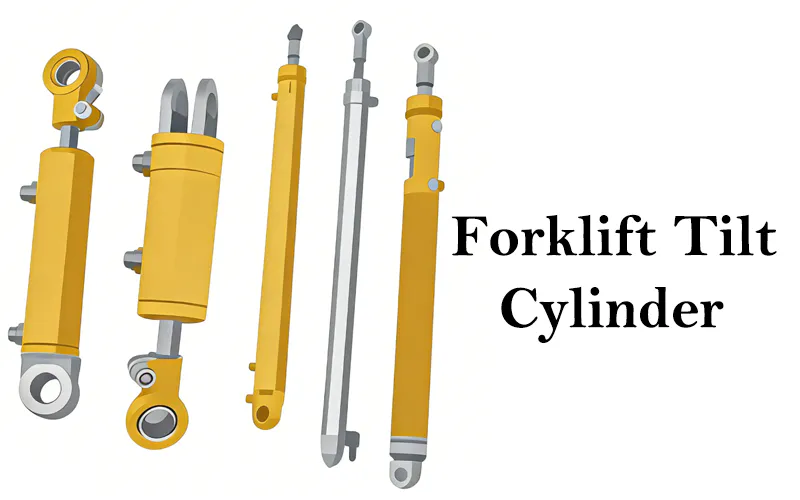
Опис продукту
Attractive Price 18MPa 3.4kg hydraulic Tilt Cylinder for Forklift
In forklifts, the tilt cylinder is a hydraulic cylinder responsible for tilting the mast and forks of the forklift. It allows the operator to adjust the angle of the divisions to accommodate different load-handling needs. Here are some key points about the tilt cylinder in a forklift:
Function: The tilt cylinder controls the tilting movement of the mast and forks. It lets the operator tilt the forks CHINAMFG or backward to pick up, transport, and deposit loads. The forklift operator can ensure proper load stability, precise positioning, and safe material handling by adjusting the tilt angle.
Hydraulic Power: The tilt cylinder is powered by hydraulic fluid under pressure. It is connected to the forklift’s hydraulic system, which consists of a hydraulic pump, control valves, hoses, and a reservoir. When the operator activates the tilt control lever, hydraulic fluid is directed to the tilt cylinder, causing it to extend or retract and initiate the tilt movement.
| bore diameter (D) | rod diameter (d) | stroke (S) | Installation distance (L) | working pressure | Interface dimensions (M) | weight |
| Φ60 | Φ30 | 32 | 109 | 18MPa | 2-M14*1.5 | 3.4kg |
(1) Our company can customize non-standard oil cylinders within the range of cylinder diameter D360MM and stroke L6000MM according to customer requirements;
(2) The above product prices are nontax unit prices, excluding packaging and transportation costs required for export
Застосування
Application of Forklift series Tilt Cylinder
1. Вантажопідйомність: The primary application of the tilt cylinder is to facilitate the handling of loads. By adjusting the tilt angle of the mast and forks, the tilt cylinder allows the forklift operator to pick up, transport, and deposit loads with precision. It enables the operator to tilt the forks CHINAMFG to engage and lift the load or tilt them backward to stabilize and deposit the load.
2. Load Stabilization: The tilt cylinder plays a crucial role in load stabilization. When lifting and transporting loads, especially those unbalanced or unevenly distributed, the tilt cylinder allows the operator to adjust the tilt angle to prevent load shifting or toppling. This ensures load stability and reduces the risk of accidents or damage to the load and surrounding structures.
3. Accessing and Depositing Loads: The tilt cylinder enables the forklift operator to access and deposit loads in various locations. It allows the forks to tilt CHINAMFG or backward, making it easier to position them under pallets or other load types. Adjusting the tilt angle allows the operator to align the forks with the load and safely deposit it CHINAMFG racks, shelves, or other storage areas.
4. Load Manipulation: The tilt cylinder allows load manipulation and fine control during material handling operations. By incrementally adjusting the tilt angle, the operator can tilt the forks slightly to level the load on uneven surfaces or adjust the load position for better visibility and maneuverability. This enables efficient handling of delicate or fragile loads, optimizing safety and productivity.
5. Pallet Stacking: The tilt cylinder is widely used in pallet stacking applications. It enables the operator to tilt the forks backward to create a slight incline, allowing for easy entry and retrieval of pallets from stacked loads. The tilt cylinder also assists in aligning the divisions with the pallets during stacking, ensuring accurate placement and stability of the stacked pallets.
6. Customized Load Handling: The tilt cylinder in a forklift series can be used for customized load-handling applications. Some forklift models feature additional attachments or accessories, such as side shifters or clamp arms, which can be controlled by the tilt cylinder. This allows forklift operators to adapt the tilt angle and manipulate loads with specialized requirements, such as gripping or rotating materials.
Importance of Forklift Tilt Cylinder
Load Stability: The tilt cylinder allows the operator to adjust the tilt angle of the mast and forks, ensuring load stability during material handling operations. By tilting the forks CHINAMFG or backward, the operator can secure the load and prevent it from shifting or falling off them. This enhances safety and minimizes the risk of accidents or damage to the bag.
Точне позиціонування навантаження: The tilt cylinder enables precise load positioning, allowing the operator to align the forks with the load and accurately deposit it CHINAMFG racks, shelves, or other storage areas. Adjusting the tilt angle allows the operator to achieve optimal load placement, which is critical in tight or confined spaces where maneuverability is limited.
Versatility: The tilt cylinder provides versatility in load-handling applications. The forklift can handle various load sizes and shapes by adjusting the tilt angle to accommodate different load requirements. This versatility enhances the adaptability of the forklift in multiple industries and warehouses, where different types of goods and materials must be handled.
Improved Operator Visibility: Adjusting the tilt angle can improve the operator’s visibility during material handling operations. By tilting the forks backward, the operator can have a better line of sight over the load, increasing situational awareness and reducing the risk of accidents caused by limited visibility.
In summary, the tilt cylinder in a forklift is of utmost importance as it ensures load stability, enables precise load positioning, enhances versatility, improves operator visibility and ergonomics, facilitates efficient pallet stacking, and allows customization and attachment compatibility. These factors contribute to safer, more efficient, and more productive material handling operations in warehouses, distribution centers, manufacturing facilities, and other industrial settings.
Our Company
We have a first-class independent R&D platform for assembly. The forklift cylinder production workshop has 4 semi-automatic lifting cylinder assembly lines and 1 fully automatic tilting cylinder assembly line, with a designed annual production capacity of 1 million pieces; the special cylinder workshop is equipped with semi-automatic cleaning and assembly systems of various specifications, with a designed annual production capacity of 200,000 essays. It has famous CNC machining equipment, machining centers, special equipment for high-precision cylinder processing, robot welding machines, automatic cleaning machines, automatic cylinder assembly machines, and automatic paint production lines. We have more than 300 sets of critical equipment running. The optimized allocation and efficient utilization of equipment resources ensure the precision requirements of the products and meet the high standard quality requirements of the products.
|
Forklift cylinder assembly shop |
Other types of cylinder assembly shop |
Welding
Painting & coating
|
Painting & coating line |
Fully automatic water-based |
Testing
To further improve product performance, and establish the leadership position of our hydraulic cylinder in the industry, our company and zjimee jointly established a Comprehensive performance laboratory of hydraulic cylinders, hydraulic valves, and hydraulic pumps; the lab is computer-assisted testing, using electro-hydraulic control technology, the test conditions preset by computer, which improves the test accuracy and system versatility, and the experimental data.
The automatic collection is realized through the application of sensors, and the output data, such as the internal leakage and load efficiency of the cylinder or the valve, are directly processed by the
computer and converted to standard units (ml/min; %). At the same time, to ensure the working safety of the hydraulic system, the state monitoring function is carried out for key performance parameters, such as “oil temperature monitoring, liquid level monitoring, filter device monitoring,” etc. Among them, the hydraulic cylinder test stand can test the performance of “load efficiency” and “internal leakage” by readings. At the same time, it is equipped with a grating ruler measuring instrument, which meets the requirements of all test items of hydraulic cylinder products in the national standard
Our Factory
Упаковка та доставка
| Сертифікація: | GS, RoHS, CE, ISO9001 |
|---|---|
| Тиск: | Середній тиск |
| Робоча температура: | Нормальна температура |
| Акторський шлях: | Подвійна дія |
| Метод роботи: | Роторний |
| Скоригована форма: | Регульований тип |
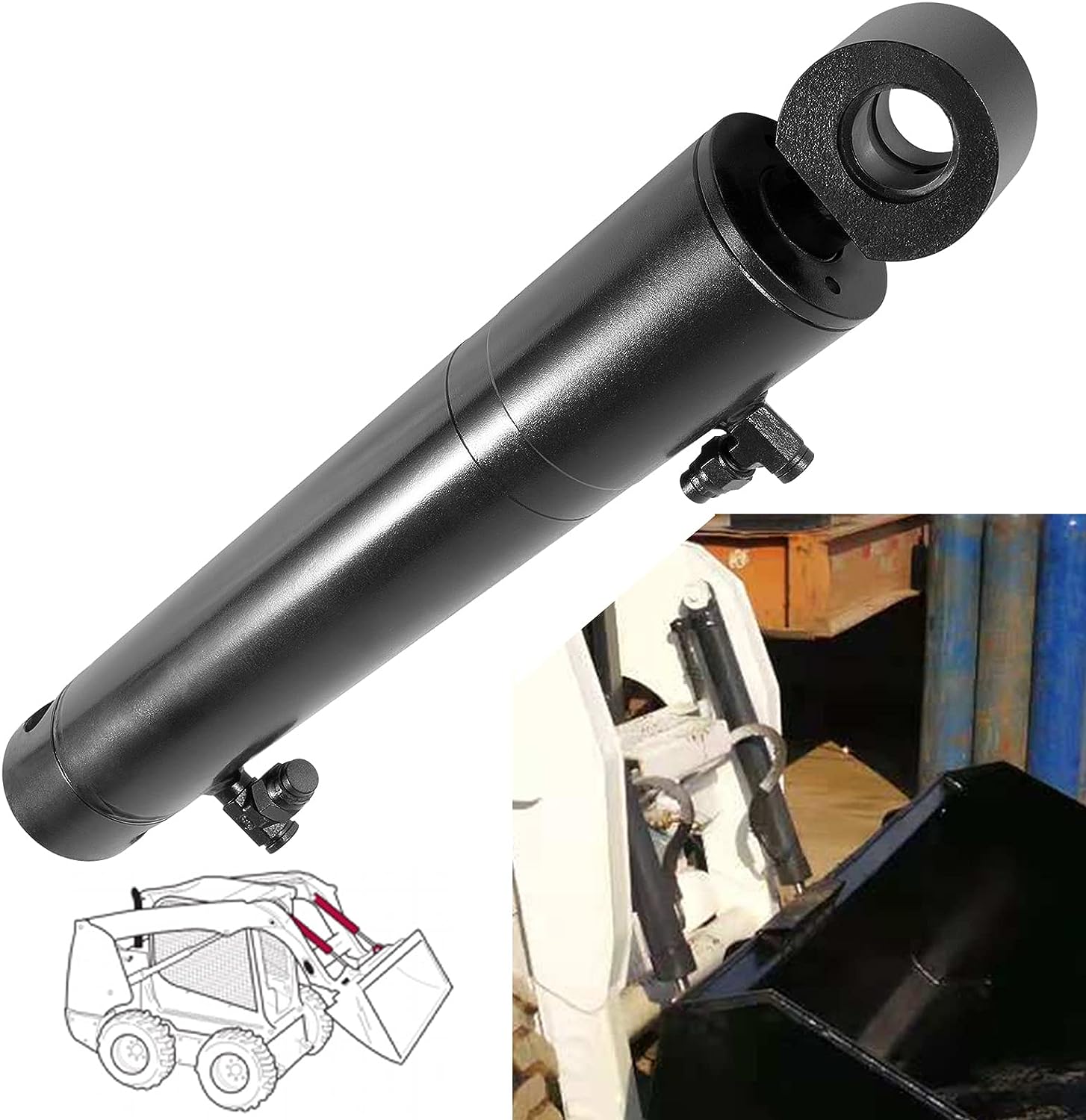
How does a tilt cylinder handle variations in hydraulic pressure and flow rate?
A tilt cylinder is designed to handle variations in hydraulic pressure and flow rate effectively. It incorporates specific features and mechanisms that allow it to operate reliably under different hydraulic conditions. Here’s a detailed explanation:
- Pressure Compensation: Tilt cylinders are equipped with pressure compensation mechanisms to handle variations in hydraulic pressure. These mechanisms ensure that the cylinder can function properly even when the hydraulic system experiences fluctuations in pressure. The pressure compensation feature allows the cylinder to maintain consistent force and performance, regardless of the changes in hydraulic pressure.
- Flow Control: Tilt cylinders are designed to accommodate variations in hydraulic flow rate. They have internal passages and ports that allow the hydraulic fluid to flow into and out of the cylinder. The cylinder’s design ensures that it can handle different flow rates without compromising its functionality. Whether the hydraulic flow rate is high or low, the tilt cylinder can adjust accordingly and provide the necessary force and control for load manipulation.
- Sealing Mechanisms: Tilt cylinders incorporate sealing mechanisms to prevent leakage and maintain hydraulic integrity. These seals are designed to withstand variations in pressure and flow rate, ensuring that the hydraulic fluid remains contained within the cylinder. The seals also help maintain the required pressure within the cylinder, allowing it to operate efficiently and effectively, regardless of the hydraulic conditions.
- Internal Design: The internal design of a tilt cylinder takes into account variations in hydraulic pressure and flow rate. The cylinder’s internal components, such as piston, rod, and cylinder barrel, are engineered to withstand different hydraulic conditions. They are designed to handle the forces exerted by varying pressure and flow rates, ensuring smooth operation and longevity of the cylinder.
- Hydraulic System Compatibility: Tilt cylinders are designed to be compatible with the hydraulic systems of the equipment they are installed in. Manufacturers ensure that the cylinders can handle the expected pressure and flow rate ranges of the hydraulic system. This compatibility allows for seamless integration and optimal performance, even when there are variations in hydraulic conditions.
- Quality Control and Testing: Tilt cylinders undergo rigorous quality control measures and testing during the manufacturing process. These measures ensure that the cylinders can handle variations in hydraulic pressure and flow rate within specified tolerances. Manufacturers test the cylinders under different hydraulic conditions to verify their performance, reliability, and ability to handle variations in pressure and flow.
By incorporating pressure compensation mechanisms, flow control features, sealing mechanisms, robust internal design, hydraulic system compatibility, and thorough quality control, tilt cylinders are capable of handling variations in hydraulic pressure and flow rate. These cylinders provide reliable and consistent performance, regardless of the hydraulic conditions, ensuring smooth and efficient operation in material handling and construction equipment.
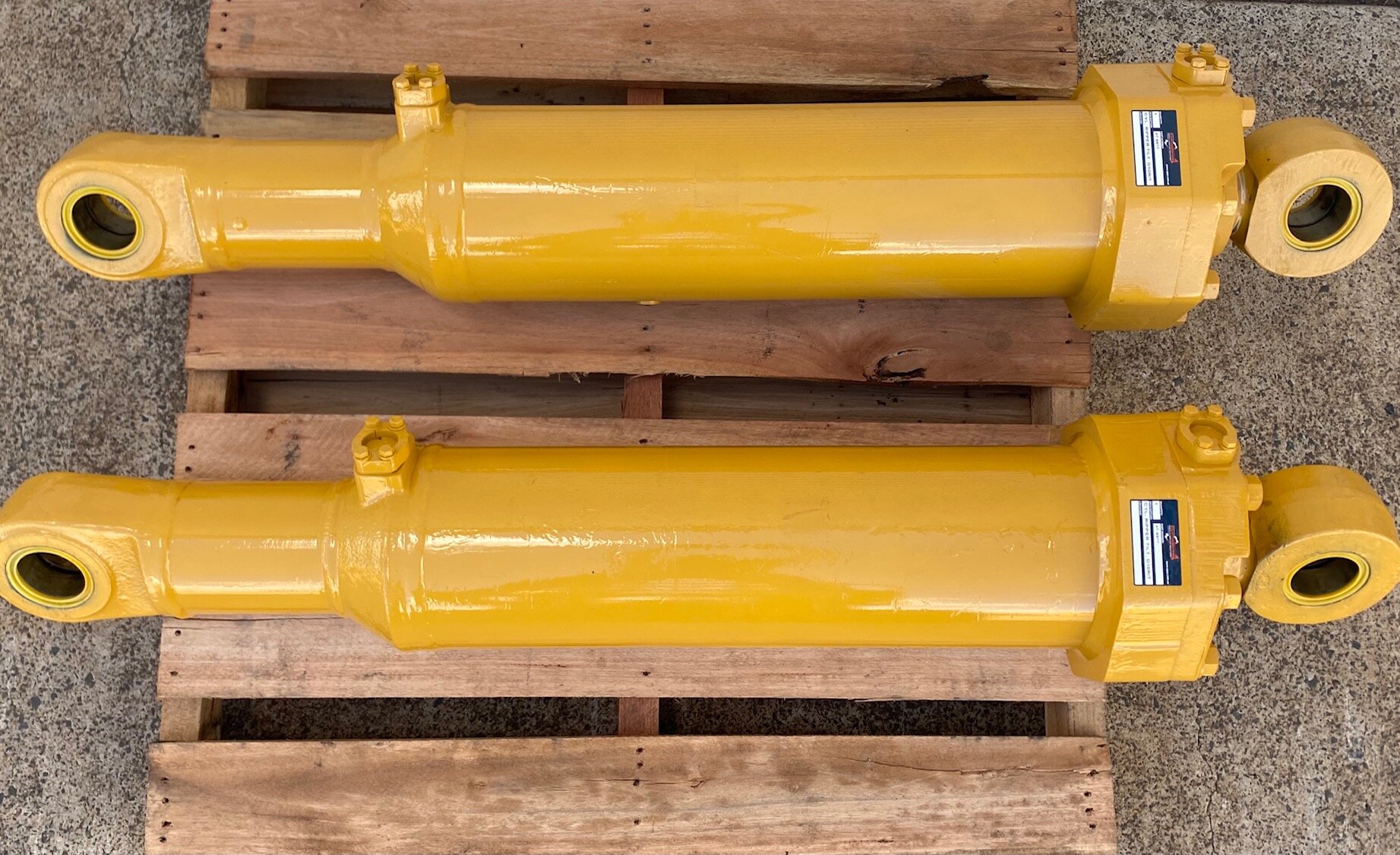
Які переваги використання циліндрів нахилу у важкій техніці?
Використання циліндрів нахилу у важкому обладнанні пропонує кілька переваг, що підвищують продуктивність, універсальність та ефективність експлуатації. Ось ключові переваги:
- Підвищена гнучкість: Циліндри нахилу дозволяють важкому обладнанню нахилятися та регулювати кут навісного обладнання або знарядь. Це забезпечує підвищену гнучкість у різних сферах застосування, таких як планування, ландшафтний дизайн, обробка матеріалів та земляні роботи. Можливість нахилу навісного обладнання дозволяє операторам точно контролювати положення та орієнтацію, підвищуючи точність та ефективність виконання завдань.
- Покращена стійкість: Циліндри нахилу сприяють покращенню стійкості та балансу важкого обладнання. Нахиляючи навісне обладнання або обладнання відповідно до рельєфу або умов навантаження, оператори можуть підтримувати кращу стійкість під час роботи. Це особливо корисно на нерівній або складній місцевості, де підтримка стійкості є критично важливою для безпечної та ефективної роботи.
- Підвищена ефективність: Циліндри нахилу підвищують ефективність роботи важкого обладнання. Дозволяючи операторам регулювати кут нахилу без зміни положення всієї машини, економиться час і зусилля. Оператори можуть швидко та легко змінювати кут навісного обладнання, оптимізуючи продуктивність обладнання та зменшуючи потребу в ручному регулюванні або додатковому обладнанні.
- Точний контроль матеріалу: Циліндри нахилу забезпечують точний контроль над матеріалом, що обробляється або маніпулюється. Наприклад, під час завантаження або розвантаження матеріалів оператори можуть нахиляти ківш або навісне обладнання, щоб точно контролювати кут засипання або розвантаження. Такий рівень контролю підвищує точність, мінімізує розсипання та зменшує втрати матеріалу, що призводить до економії коштів та підвищення експлуатаційної ефективності.
- Універсальність та адаптивність: Циліндри нахилу підвищують універсальність та адаптивність важкого обладнання. Завдяки можливості регулювання кута нахилу, обладнання можна використовувати для ширшого спектру завдань та застосувань. Циліндри нахилу дозволяють встановлювати на обладнання різне навісне обладнання або інструменти, розширюючи його можливості та роблячи його придатним для різних вимог роботи.
- Комфорт і безпека оператора: Циліндри нахилу сприяють комфорту та безпеці оператора. Завдяки можливості регулювання кута нахилу оператори можуть підтримувати краще ергономічне положення та зменшувати втому під час тривалої роботи. Крім того, можливість контролювати кут нахилу підвищує безпеку, забезпечуючи кращу видимість і контроль над робочою зоною обладнання, зменшуючи ризик нещасних випадків та пошкоджень.
Переваги використання циліндрів нахилу у важкому обладнанні роблять їх невід'ємними компонентами в таких галузях, як будівництво, гірничодобувна промисловість, сільське господарство та обробка матеріалів. Циліндри нахилу покращують експлуатаційні можливості, підвищують ефективність та підвищують безпеку, що зрештою призводить до підвищення продуктивності та економічної ефективності.
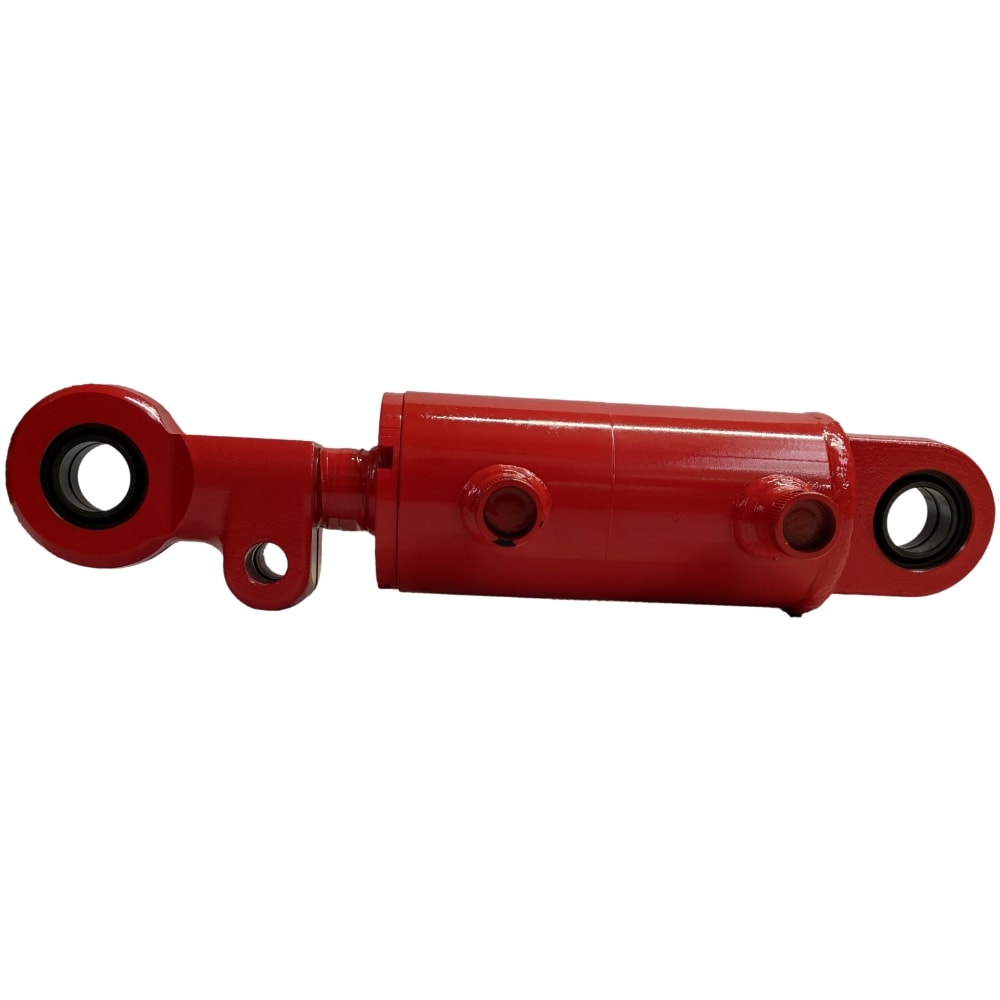
Чи можна використовувати циліндри нахилу як для нахилу, так і для вирівнювання?
Так, циліндри нахилу можна використовувати як для нахилу, так і для вирівнювання. Це універсальні гідравлічні компоненти, призначені для забезпечення контрольованих рухів нахилу, а також для полегшення операцій вирівнювання. Ось детальне пояснення:
Застосування для нахилу:
Циліндри нахилу зазвичай використовуються для нахилу в різних галузях промисловості. Вони дозволяють контролювати нахил або кут компонентів, прикріплених до важкого обладнання. Наприклад:
- У будівельній техніці циліндри нахилу дозволяють регулювати ковші, відвали або навісне обладнання, що дозволяє точно копати, планувати та вирівнювати поверхні.
- У гірничодобувній техніці циліндри нахилу контролюють кути ковшів або відвалів, сприяючи ефективному обробленню матеріалів та виїмці.
- У сільськогосподарській техніці циліндри нахилу дозволяють нахиляти знаряддя, таке як плуги або ковші, що дозволяє фермерам регулювати робочий кут для оптимальної обробки ґрунту або обробки матеріалів.
- У вантажно-розвантажувальних машинах циліндри нахилу використовуються для керування нахилом вил, платформ або навісного обладнання, що сприяє ефективному завантаженню, розвантаженню та штабелюванню товарів.
Застосування для вирівнювання:
Окрім нахилу, циліндри нахилу також можна використовувати для вирівнювання. Вирівнювання передбачає регулювання горизонтального положення або вирівнювання обладнання для забезпечення рівних і стійких поверхонь. Циліндри нахилу можуть допомогти в операціях вирівнювання шляхом:
- Компенсація нерівної місцевості: Циліндри нахилу можна використовувати для регулювання нахилу навісного обладнання, компенсуючи нерівні поверхні та підтримуючи рівне положення.
- Вирівнювання компонентів: Циліндри нахилу можна використовувати для вирівнювання або вирівнювання таких компонентів, як відвали, ковші або платформи, забезпечуючи стабільне та точне вирівнювання по всій робочій зоні.
- Забезпечення точного регулювання: регулювальні клапани в циліндрах нахилу дозволяють точно контролювати рух нахилу. Оператори можуть виконувати невеликі коригування для досягнення бажаного рівня, забезпечуючи точне вирівнювання.
Використовуючи можливості керування та діапазон руху циліндрів нахилу, оператори можуть ефективно виконувати завдання як нахилу, так і вирівнювання за допомогою одного й того ж гідравлічного компонента.
Таким чином, циліндри нахилу є універсальними та можуть використовуватися як для нахилу, так і для вирівнювання. Вони дозволяють контролювати нахил компонентів у різних галузях промисловості, а також можуть допомогти в точних операціях вирівнювання. Здатність виконувати обидві функції робить циліндри нахилу цінними гідравлічними компонентами в обладнанні, де потрібне нахил та вирівнювання.


editor by CX 2023-10-16