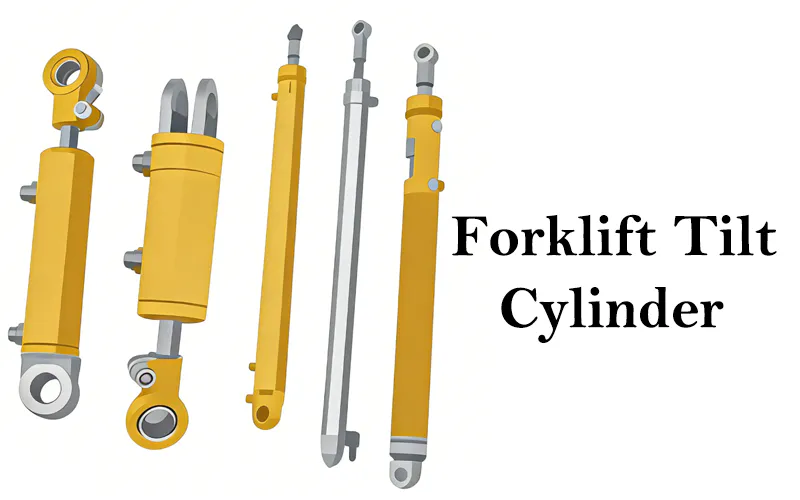
Opis produktu
Attractive Price 18MPa 3.4kg hydraulic Tilt Cylinder for Forklift
In forklifts, the tilt cylinder is a hydraulic cylinder responsible for tilting the mast and forks of the forklift. It allows the operator to adjust the angle of the divisions to accommodate different load-handling needs. Here are some key points about the tilt cylinder in a forklift:
Function: The tilt cylinder controls the tilting movement of the mast and forks. It lets the operator tilt the forks CHINAMFG or backward to pick up, transport, and deposit loads. The forklift operator can ensure proper load stability, precise positioning, and safe material handling by adjusting the tilt angle.
Hydraulic Power: The tilt cylinder is powered by hydraulic fluid under pressure. It is connected to the forklift’s hydraulic system, which consists of a hydraulic pump, control valves, hoses, and a reservoir. When the operator activates the tilt control lever, hydraulic fluid is directed to the tilt cylinder, causing it to extend or retract and initiate the tilt movement.
| bore diameter (D) | rod diameter (d) | stroke (S) | Installation distance (L) | working pressure | Interface dimensions (M) | weight |
| Φ60 | Φ30 | 32 | 109 | 18MPa | 2-M14*1.5 | 3.4kg |
(1) Our company can customize non-standard oil cylinders within the range of cylinder diameter D360MM and stroke L6000MM according to customer requirements;
(2) The above product prices are nontax unit prices, excluding packaging and transportation costs required for export
Aplikacja
Application of Forklift series Tilt Cylinder
1. Obsługa ładunków: The primary application of the tilt cylinder is to facilitate the handling of loads. By adjusting the tilt angle of the mast and forks, the tilt cylinder allows the forklift operator to pick up, transport, and deposit loads with precision. It enables the operator to tilt the forks CHINAMFG to engage and lift the load or tilt them backward to stabilize and deposit the load.
2. Load Stabilization: The tilt cylinder plays a crucial role in load stabilization. When lifting and transporting loads, especially those unbalanced or unevenly distributed, the tilt cylinder allows the operator to adjust the tilt angle to prevent load shifting or toppling. This ensures load stability and reduces the risk of accidents or damage to the load and surrounding structures.
3. Accessing and Depositing Loads: The tilt cylinder enables the forklift operator to access and deposit loads in various locations. It allows the forks to tilt CHINAMFG or backward, making it easier to position them under pallets or other load types. Adjusting the tilt angle allows the operator to align the forks with the load and safely deposit it CHINAMFG racks, shelves, or other storage areas.
4. Load Manipulation: The tilt cylinder allows load manipulation and fine control during material handling operations. By incrementally adjusting the tilt angle, the operator can tilt the forks slightly to level the load on uneven surfaces or adjust the load position for better visibility and maneuverability. This enables efficient handling of delicate or fragile loads, optimizing safety and productivity.
5. Pallet Stacking: The tilt cylinder is widely used in pallet stacking applications. It enables the operator to tilt the forks backward to create a slight incline, allowing for easy entry and retrieval of pallets from stacked loads. The tilt cylinder also assists in aligning the divisions with the pallets during stacking, ensuring accurate placement and stability of the stacked pallets.
6. Customized Load Handling: The tilt cylinder in a forklift series can be used for customized load-handling applications. Some forklift models feature additional attachments or accessories, such as side shifters or clamp arms, which can be controlled by the tilt cylinder. This allows forklift operators to adapt the tilt angle and manipulate loads with specialized requirements, such as gripping or rotating materials.
Importance of Forklift Tilt Cylinder
Load Stability: The tilt cylinder allows the operator to adjust the tilt angle of the mast and forks, ensuring load stability during material handling operations. By tilting the forks CHINAMFG or backward, the operator can secure the load and prevent it from shifting or falling off them. This enhances safety and minimizes the risk of accidents or damage to the bag.
Precyzyjne pozycjonowanie ładunku: The tilt cylinder enables precise load positioning, allowing the operator to align the forks with the load and accurately deposit it CHINAMFG racks, shelves, or other storage areas. Adjusting the tilt angle allows the operator to achieve optimal load placement, which is critical in tight or confined spaces where maneuverability is limited.
Versatility: The tilt cylinder provides versatility in load-handling applications. The forklift can handle various load sizes and shapes by adjusting the tilt angle to accommodate different load requirements. This versatility enhances the adaptability of the forklift in multiple industries and warehouses, where different types of goods and materials must be handled.
Improved Operator Visibility: Adjusting the tilt angle can improve the operator’s visibility during material handling operations. By tilting the forks backward, the operator can have a better line of sight over the load, increasing situational awareness and reducing the risk of accidents caused by limited visibility.
In summary, the tilt cylinder in a forklift is of utmost importance as it ensures load stability, enables precise load positioning, enhances versatility, improves operator visibility and ergonomics, facilitates efficient pallet stacking, and allows customization and attachment compatibility. These factors contribute to safer, more efficient, and more productive material handling operations in warehouses, distribution centers, manufacturing facilities, and other industrial settings.
Our Company
We have a first-class independent R&D platform for assembly. The forklift cylinder production workshop has 4 semi-automatic lifting cylinder assembly lines and 1 fully automatic tilting cylinder assembly line, with a designed annual production capacity of 1 million pieces; the special cylinder workshop is equipped with semi-automatic cleaning and assembly systems of various specifications, with a designed annual production capacity of 200,000 essays. It has famous CNC machining equipment, machining centers, special equipment for high-precision cylinder processing, robot welding machines, automatic cleaning machines, automatic cylinder assembly machines, and automatic paint production lines. We have more than 300 sets of critical equipment running. The optimized allocation and efficient utilization of equipment resources ensure the precision requirements of the products and meet the high standard quality requirements of the products.
|
Forklift cylinder assembly shop |
Other types of cylinder assembly shop |
Welding
Painting & coating
|
Painting & coating line |
Fully automatic water-based |
Testing
To further improve product performance, and establish the leadership position of our hydraulic cylinder in the industry, our company and zjimee jointly established a Comprehensive performance laboratory of hydraulic cylinders, hydraulic valves, and hydraulic pumps; the lab is computer-assisted testing, using electro-hydraulic control technology, the test conditions preset by computer, which improves the test accuracy and system versatility, and the experimental data.
The automatic collection is realized through the application of sensors, and the output data, such as the internal leakage and load efficiency of the cylinder or the valve, are directly processed by the
computer and converted to standard units (ml/min; %). At the same time, to ensure the working safety of the hydraulic system, the state monitoring function is carried out for key performance parameters, such as “oil temperature monitoring, liquid level monitoring, filter device monitoring,” etc. Among them, the hydraulic cylinder test stand can test the performance of “load efficiency” and “internal leakage” by readings. At the same time, it is equipped with a grating ruler measuring instrument, which meets the requirements of all test items of hydraulic cylinder products in the national standard
Our Factory
Opakowanie i wysyłka
| Orzecznictwo: | GS, RoHS, CE, ISO9001 |
|---|---|
| Ciśnienie: | Średnie ciśnienie |
| Temperatura pracy: | Normalna temperatura |
| Sposób działania: | Podwójne działanie |
| Metoda pracy: | Obrotowy |
| Dostosowana forma: | Typ regulowany |
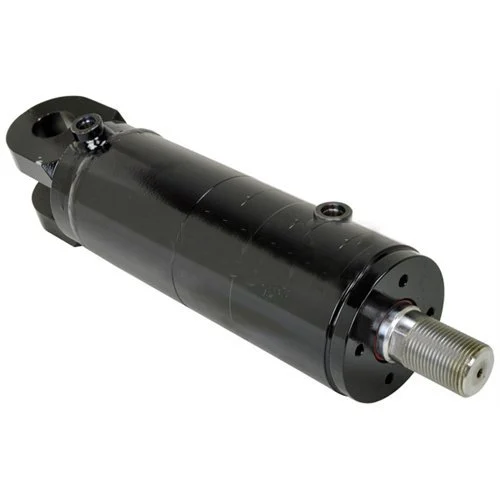
Czy siłowniki przechyłu można stosować w sprzęcie leśnym do transportu drzew?
Tak, siłowniki przechyłu mogą być stosowane w sprzęcie leśnym do transportu drzew. Siłowniki te odgrywają kluczową rolę w zwiększaniu wydajności i bezpieczeństwa maszyn leśnych wykorzystywanych do takich zadań, jak ścinka, okrzesywanie i załadunek drzew. Oto szczegółowe wyjaśnienie:
- Regulacja kąta nachylenia: Siłowniki nachylenia umożliwiają operatorom regulację kąta nachylenia osprzętu do maszyn leśnych, takiego jak chwytaki czy głowice ścinkowe. Naciskając siłowniki, operatorzy mogą nachylić osprzęt pod żądanym kątem, co ułatwia precyzyjne ścinanie drzew. Możliwość kontrolowania kąta nachylenia pozwala operatorom na ustawienie osprzętu w linii z pniem lub gałęziami drzewa, co zwiększa dokładność cięcia i minimalizuje ryzyko uszkodzenia maszyn lub otoczenia.
- Chwytanie i manipulowanie drzewami: Siłowniki przechyłu przyczyniają się do efektywnego chwytania i manipulowania drzewami. W połączeniu z chwytakami lub zaciskami, cylindry te zapewniają niezbędną siłę i kontrolę, aby bezpiecznie trzymać i manewrować drzewami. Operatorzy mogą regulować kąt nachylenia narzędzia, aby zapewnić mocny chwyt drzewa podczas ścinki, okrzesywania lub załadunku. Ta funkcja zwiększa bezpieczeństwo pracy, zapobiega poślizgowi drzewa i poprawia ogólną wydajność.
- Rozkład obciążenia: Precyzyjne obchodzenie się z drzewami wymaga prawidłowego rozłożenia obciążenia. Siłowniki przechyłu pozwalają operatorom regulować kąt nachylenia, aby równomiernie rozłożyć ciężar drzewa na całym sprzęcie. Ta optymalizacja rozkładu obciążenia jest szczególnie ważna podczas przenoszenia dużych lub ciężkich drzew. Dzięki zrównoważonemu ustawieniu za pomocą siłowników przechyłu, operatorzy mogą zminimalizować obciążenie sprzętu, zachować stabilność i zapewnić bezpieczne obchodzenie się z drzewami.
- Integracja z systemami sterowania: Siłowniki przechyłu można zintegrować z zaawansowanymi systemami sterowania w nowoczesnym sprzęcie leśnym. Systemy te mogą obejmować sterowanie hydrauliczne lub elektroniczne, które oferuje precyzyjną i zautomatyzowaną regulację kąta przechyłu. Dzięki wykorzystaniu takich systemów operatorzy mogą osiągnąć powtarzalną i precyzyjną obsługę drzew, zmniejszając zmęczenie operatora i poprawiając wydajność operacyjną.
- Bezpieczeństwo operatora i ergonomia: Siłowniki przechyłu przyczyniają się do bezpieczeństwa operatora i ergonomii podczas prac związanych z obsługą drzew. Umożliwiając precyzyjną regulację kąta nachylenia, siłowniki te pozwalają operatorom zachować wygodną i ergonomiczną pozycję podczas pracy. Zmniejsza to ryzyko przeciążenia lub urazu oraz poprawia kontrolę i widoczność operatora, szczególnie w trudnych warunkach leśnych.
- Wszechstronność osprzętu: Siłowniki przechyłu zapewniają wszechstronność osprzętu do maszyn leśnych. Można je stosować w różnych konfiguracjach, takich jak siłowniki jednostronnego lub dwustronnego działania, w zależności od konkretnych wymagań. Ta wszechstronność pozwala maszynom leśnym na obsługę drzew o różnych rozmiarach, kształtach i w różnych warunkach, dostosowując się do zróżnicowanych potrzeb operacji leśnych.
Dlatego siłowniki przechyłu mogą być skutecznie wykorzystywane w sprzęcie leśnym do obróbki drzew. Niezależnie od tego, czy chodzi o regulację kąta nachylenia, chwytanie i manipulowanie drzewami, optymalizację rozkładu obciążenia, integrację z systemami sterowania, bezpieczeństwo operatora i ergonomię, czy wszechstronność osprzętu, siłowniki przechyłu przyczyniają się do poprawy wydajności, dokładności i bezpieczeństwa operacji obróbki drzew w przemyśle leśnym.
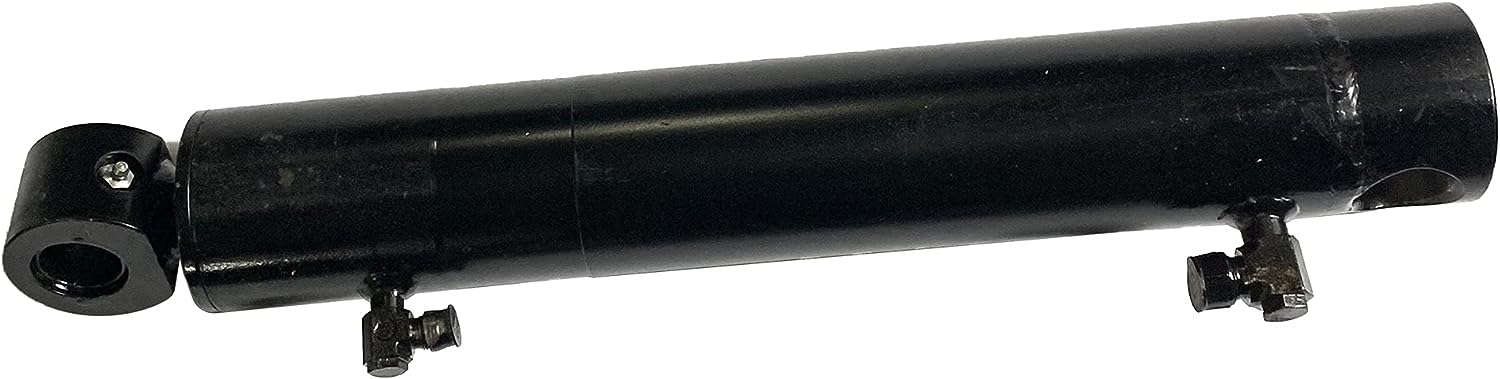
Jak siłownik przechyłu radzi sobie ze zmianami temperatury i warunków środowiskowych?
Siłownik przechylny został zaprojektowany tak, aby radzić sobie ze zmianami temperatury i warunków środowiskowych występujących w różnych zastosowaniach. Kilka cech i czynników zapewnia wydajność i trwałość siłownika w trudnych warunkach pracy. Oto szczegółowe wyjaśnienie:
- Wybór materiałów: Cylindry przechylne są zazwyczaj wykonane z wysokiej jakości materiałów, znanych ze swojej wytrzymałości, trwałości i odporności na czynniki środowiskowe. Typowe materiały to stal hartowana, stal stopowa lub inne materiały odporne na korozję. Wybrane materiały oferują doskonałe właściwości mechaniczne i są odporne na wahania temperatury, wilgoć oraz działanie chemikaliów i czynników ściernych.
- Obróbka powierzchni: Aby dodatkowo zwiększyć odporność cylindra na warunki środowiskowe, można zastosować obróbkę powierzchni, taką jak powłoki lub galwanizacja. Obróbka ta zapewnia dodatkową ochronę przed korozją, zużyciem i uszkodzeniami spowodowanymi przez wilgoć, substancje chemiczne lub cząstki ścierne. Typowe metody obróbki powierzchni obejmują chromowanie, cynkowanie lub specjalistyczne powłoki przeznaczone do określonych warunków środowiskowych.
- Systemy uszczelnień: Siłowniki przechyłu posiadają systemy uszczelnień, które zapobiegają przedostawaniu się zanieczyszczeń i utrzymują integralność układu hydraulicznego. Uszczelki stosowane w siłownikach przechyłu są zaprojektowane tak, aby wytrzymywały wahania temperatury, były odporne na degradację pod wpływem czynników środowiskowych i zapewniały niezawodne uszczelnienie przez długi okres eksploatacji. Prawidłowe uszczelnienie zapewnia wydajną pracę siłownika i minimalizuje ryzyko wycieku lub przedwczesnego zużycia.
- Smarowanie: Odpowiednie smarowanie jest niezbędne dla płynnej pracy i trwałości siłowników przechyłu. Środki smarne pomagają zmniejszyć tarcie, zminimalizować zużycie i chronić przed korozją. Wybór środka smarnego zależy od konkretnych warunków pracy i zakresu temperatur. W ekstremalnych temperaturach można stosować specjalistyczne środki smarne odporne na wysokie temperatury, aby zapewnić optymalną wydajność siłownika.
- Kompensacja temperatury: Cylindry przechyłu mogą być wyposażone w mechanizmy kompensacji temperatury, aby uwzględnić wahania temperatury roboczej. Mechanizmy te zapewniają stałą wydajność cylindra, niezależnie od wahań temperatury. Kompensacja temperatury może obejmować regulację ciśnienia lub natężenia przepływu w układzie hydraulicznym w celu utrzymania pożądanej siły i prędkości, kompensując zmiany lepkości cieczy związane z temperaturą.
- Testowanie i certyfikacja: Siłowniki przechylne przechodzą rygorystyczne testy i certyfikację, aby zagwarantować ich wydajność i niezawodność w różnych warunkach środowiskowych. Producenci poddają siłowniki symulowanym cyklom temperaturowym, narażeniu na zanieczyszczenia oraz innym testom środowiskowym, aby potwierdzić ich trwałość i funkcjonalność. Zgodność z normami branżowymi i certyfikatami gwarantuje, że siłowniki wytrzymają przewidywane temperatury i trudne warunki środowiskowe.
Dzięki odpowiedniemu doborowi materiałów, obróbce powierzchni, systemom uszczelnień, smarowaniu, mechanizmom kompensacji temperatury i rygorystycznym testom, siłowniki przechyłu są projektowane tak, aby radzić sobie ze zmianami temperatury i warunków środowiskowych. Te czynniki konstrukcyjne pozwalają siłownikom działać niezawodnie i utrzymywać optymalną wydajność w szerokim zakresie zastosowań i środowisk pracy.
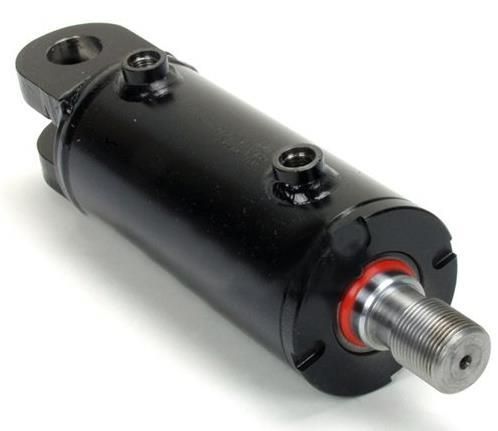
W jaki sposób siłownik przechyłu radzi sobie ze zmianami nachylenia i położenia urządzenia?
Siłownik przechyłu został zaprojektowany do radzenia sobie ze zmianami nachylenia i położenia sprzętu poprzez zastosowanie specjalnych funkcji i mechanizmów. Funkcje te pozwalają siłownikowi przechyłu skutecznie dostosowywać się do różnych kątów i pozycji. Oto wyjaśnienie, jak siłownik przechyłu radzi sobie ze zmianami nachylenia i położenia sprzętu:
- Zakres ruchu: Siłowniki przechyłu zostały zaprojektowane tak, aby zapewnić szeroki zakres ruchu. Mogą przechylać lub ustawiać komponenty pod określonym kątem, umożliwiając różne pozycje i kąty. Zakres ruchu zależy od konstrukcji i konstrukcji siłownika, a także punktów mocowania na urządzeniu. Ta wszechstronność umożliwia siłownikowi przechyłu dostosowanie się do różnych wymagań dotyczących przechyłu i różnych pozycji urządzenia.
- Zawory sterujące: Siłowniki przechyłu są wyposażone w zawory sterujące, które umożliwiają precyzyjną kontrolę ruchu przechyłu. Zawory te regulują przepływ i kierunek płynu hydraulicznego, umożliwiając operatorom kontrolę prędkości, zakresu i kierunku przechyłu. Regulując zawory sterujące, operatorzy mogą precyzyjnie dostroić położenie sprzętu, kompensując wahania przechyłu i zapewniając dokładne ustawienie.
- Mechanizmy sprzężenia zwrotnego: Niektóre siłowniki przechyłu posiadają mechanizmy sprzężenia zwrotnego, takie jak wyłączniki krańcowe lub czujniki. Mechanizmy te zapewniają w czasie rzeczywistym informacje zwrotne o położeniu i kącie przechylonego elementu. Monitorując te informacje, operatorzy mogą precyzyjnie regulować siłownik przechyłu, aby kompensować zmiany w nachyleniu i położeniu urządzenia. Gwarantuje to, że element pozostaje w pożądanej pozycji i pod pożądanym kątem, zwiększając wydajność operacyjną i bezpieczeństwo.
- Sterowanie układem hydraulicznym: Układ hydrauliczny napędzający siłownik przechyłu odgrywa kluczową rolę w obsłudze wahań przechyłu i pozycjonowania sprzętu. Układ hydrauliczny obejmuje regulatory ciśnienia, zawory sterujące przepływem i inne komponenty, które umożliwiają operatorom precyzyjną regulację ciśnienia i przepływu hydraulicznego. Manipulując elementami sterującymi układu hydraulicznego, operatorzy mogą kompensować wahania przechyłu sprzętu i precyzyjnie uzyskiwać pożądane pozycjonowanie.
- Solidna konstrukcja: Siłowniki przechyłu są wykonane z wytrzymałych materiałów i charakteryzują się odpornością na wahania nachylenia i ustawienia sprzętu. Zaprojektowano je z myślą o przenoszeniu dużych obciążeń i odporności na siły zewnętrzne, które mogą wpływać na ruch przechyłu. Solidna konstrukcja zapewnia trwałość i stabilność siłownika przechyłu, umożliwiając utrzymanie stałej wydajności nawet w trudnych warunkach pracy.
Podsumowując, połączenie takich czynników, jak zakres ruchu, zawory sterujące, mechanizmy sprzężenia zwrotnego, sterowanie układem hydraulicznym oraz solidna konstrukcja, pozwala siłownikowi przechyłu radzić sobie ze zmianami nachylenia i położenia sprzętu. Te cechy współdziałają, aby zapewnić precyzyjną kontrolę, adaptowalność i stabilność, umożliwiając siłownikowi przechyłu efektywne operowanie różnymi kątami i położeniami sprzętu, do którego jest przymocowany.


redaktor przez CX 2023-11-15