Описание продукта
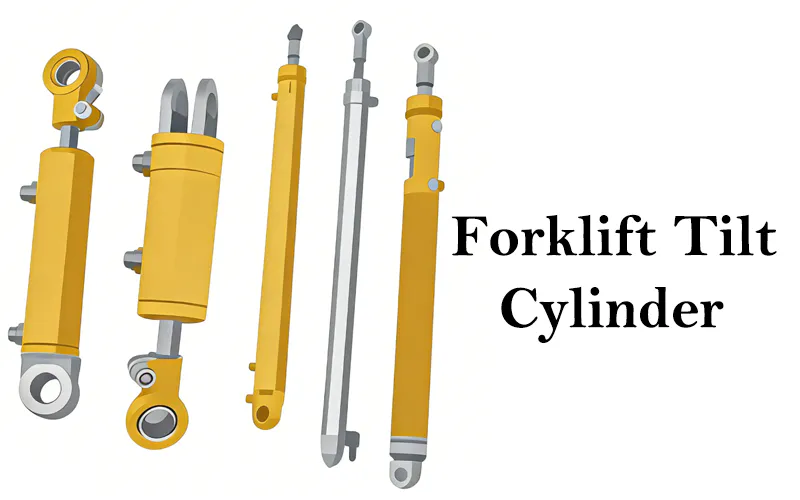
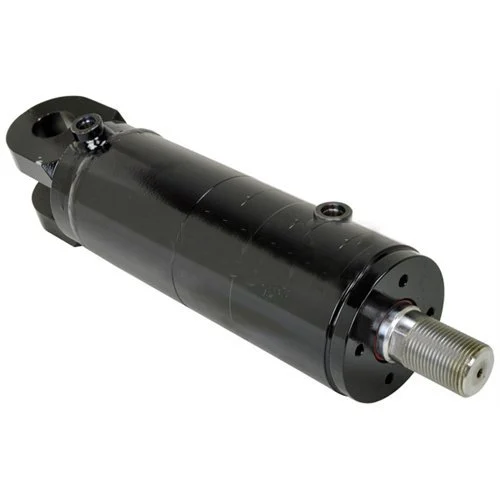
Attractive Price 18MPa 3.4kg hydraulic Tilt Cylinder for Forklift
In forklifts, the tilt cylinder is a hydraulic cylinder responsible for tilting the mast and forks of the forklift. It allows the operator to adjust the angle of the divisions to accommodate different load-handling needs. Here are some key points about the tilt cylinder in a forklift:
Function: The tilt cylinder controls the tilting movement of the mast and forks. It lets the operator tilt the forks CHINAMFG or backward to pick up, transport, and deposit loads. The forklift operator can ensure proper load stability, precise positioning, and safe material handling by adjusting the tilt angle.
Hydraulic Power: The tilt cylinder is powered by hydraulic fluid under pressure. It is connected to the forklift’s hydraulic system, which consists of a hydraulic pump, control valves, hoses, and a reservoir. When the operator activates the tilt control lever, hydraulic fluid is directed to the tilt cylinder, causing it to extend or retract and initiate the tilt movement.
| bore diameter (D) | rod diameter (d) | stroke (S) | Installation distance (L) | working pressure | Interface dimensions (M) | weight |
| Φ60 | Φ30 | 32 | 109 | 18MPa | 2-M14*1.5 | 3.4kg |
(1) Our company can customize non-standard oil cylinders within the range of cylinder diameter D360MM and stroke L6000MM according to customer requirements;
(2) The above product prices are nontax unit prices, excluding packaging and transportation costs required for export
Приложение
Application of Forklift series Tilt Cylinder
1. Обработка грузов: The primary application of the tilt cylinder is to facilitate the handling of loads. By adjusting the tilt angle of the mast and forks, the tilt cylinder allows the forklift operator to pick up, transport, and deposit loads with precision. It enables the operator to tilt the forks CHINAMFG to engage and lift the load or tilt them backward to stabilize and deposit the load.
2. Load Stabilization: The tilt cylinder plays a crucial role in load stabilization. When lifting and transporting loads, especially those unbalanced or unevenly distributed, the tilt cylinder allows the operator to adjust the tilt angle to prevent load shifting or toppling. This ensures load stability and reduces the risk of accidents or damage to the load and surrounding structures.
3. Accessing and Depositing Loads: The tilt cylinder enables the forklift operator to access and deposit loads in various locations. It allows the forks to tilt CHINAMFG or backward, making it easier to position them under pallets or other load types. Adjusting the tilt angle allows the operator to align the forks with the load and safely deposit it CHINAMFG racks, shelves, or other storage areas.
4. Load Manipulation: The tilt cylinder allows load manipulation and fine control during material handling operations. By incrementally adjusting the tilt angle, the operator can tilt the forks slightly to level the load on uneven surfaces or adjust the load position for better visibility and maneuverability. This enables efficient handling of delicate or fragile loads, optimizing safety and productivity.
5. Pallet Stacking: The tilt cylinder is widely used in pallet stacking applications. It enables the operator to tilt the forks backward to create a slight incline, allowing for easy entry and retrieval of pallets from stacked loads. The tilt cylinder also assists in aligning the divisions with the pallets during stacking, ensuring accurate placement and stability of the stacked pallets.
6. Customized Load Handling: The tilt cylinder in a forklift series can be used for customized load-handling applications. Some forklift models feature additional attachments or accessories, such as side shifters or clamp arms, which can be controlled by the tilt cylinder. This allows forklift operators to adapt the tilt angle and manipulate loads with specialized requirements, such as gripping or rotating materials.
Importance of Forklift Tilt Cylinder
Load Stability: The tilt cylinder allows the operator to adjust the tilt angle of the mast and forks, ensuring load stability during material handling operations. By tilting the forks CHINAMFG or backward, the operator can secure the load and prevent it from shifting or falling off them. This enhances safety and minimizes the risk of accidents or damage to the bag.
Точное позиционирование груза: The tilt cylinder enables precise load positioning, allowing the operator to align the forks with the load and accurately deposit it CHINAMFG racks, shelves, or other storage areas. Adjusting the tilt angle allows the operator to achieve optimal load placement, which is critical in tight or confined spaces where maneuverability is limited.
Versatility: The tilt cylinder provides versatility in load-handling applications. The forklift can handle various load sizes and shapes by adjusting the tilt angle to accommodate different load requirements. This versatility enhances the adaptability of the forklift in multiple industries and warehouses, where different types of goods and materials must be handled.
Improved Operator Visibility: Adjusting the tilt angle can improve the operator’s visibility during material handling operations. By tilting the forks backward, the operator can have a better line of sight over the load, increasing situational awareness and reducing the risk of accidents caused by limited visibility.
In summary, the tilt cylinder in a forklift is of utmost importance as it ensures load stability, enables precise load positioning, enhances versatility, improves operator visibility and ergonomics, facilitates efficient pallet stacking, and allows customization and attachment compatibility. These factors contribute to safer, more efficient, and more productive material handling operations in warehouses, distribution centers, manufacturing facilities, and other industrial settings.
Our Company
We have a first-class independent R&D platform for assembly. The forklift cylinder production workshop has 4 semi-automatic lifting cylinder assembly lines and 1 fully automatic tilting cylinder assembly line, with a designed annual production capacity of 1 million pieces; the special cylinder workshop is equipped with semi-automatic cleaning and assembly systems of various specifications, with a designed annual production capacity of 200,000 essays. It has famous CNC machining equipment, machining centers, special equipment for high-precision cylinder processing, robot welding machines, automatic cleaning machines, automatic cylinder assembly machines, and automatic paint production lines. We have more than 300 sets of critical equipment running. The optimized allocation and efficient utilization of equipment resources ensure the precision requirements of the products and meet the high standard quality requirements of the products.
|
Forklift cylinder assembly shop |
Other types of cylinder assembly shop |
Welding
Painting & coating
|
Painting & coating line |
Fully automatic water-based |
Testing
To further improve product performance, and establish the leadership position of our hydraulic cylinder in the industry, our company and zjimee jointly established a Comprehensive performance laboratory of hydraulic cylinders, hydraulic valves, and hydraulic pumps; the lab is computer-assisted testing, using electro-hydraulic control technology, the test conditions preset by computer, which improves the test accuracy and system versatility, and the experimental data.
The automatic collection is realized through the application of sensors, and the output data, such as the internal leakage and load efficiency of the cylinder or the valve, are directly processed by the
computer and converted to standard units (ml/min; %). At the same time, to ensure the working safety of the hydraulic system, the state monitoring function is carried out for key performance parameters, such as “oil temperature monitoring, liquid level monitoring, filter device monitoring,” etc. Among them, the hydraulic cylinder test stand can test the performance of “load efficiency” and “internal leakage” by readings. At the same time, it is equipped with a grating ruler measuring instrument, which meets the requirements of all test items of hydraulic cylinder products in the national standard
Our Factory
Упаковка и доставка
| Сертификация: | GS, RoHS, CE, ISO9001 |
|---|---|
| Давление: | Среднее давление |
| Рабочая температура: | Нормальная температура |
| Актерский Путь: | Двойного действия |
| Метод работы: | Ротари |
| Скорректированная форма: | Регулируемый тип |
Можно ли использовать наклонные цилиндры в лесозаготовительной технике для перемещения деревьев?
Да, наклонные цилиндры могут использоваться в лесозаготовительной технике для обработки деревьев. Эти цилиндры играют важную роль в повышении эффективности и безопасности лесозаготовительной техники, задействованной в таких задачах, как валка, обрезка сучьев и погрузка деревьев. Вот подробное объяснение:
- Регулировка угла наклона: Цилиндры наклона позволяют операторам регулировать угол наклона навесного оборудования для лесозаготовок, такого как грейферы или валочные головки. Приводя цилиндры в действие, операторы могут наклонять навесное оборудование под желаемым углом, что облегчает точную обработку деревьев. Возможность контролировать угол наклона позволяет операторам выравнивать навесное оборудование относительно ствола или ветвей дерева, повышая точность резки и минимизируя риск повреждения техники или окружающей среды.
- Захват и манипулирование деревьями: Наклонные цилиндры обеспечивают эффективный захват и манипулирование деревьями. В сочетании с захватами или зажимами эти цилиндры обеспечивают необходимую силу и контроль для надежного удержания и перемещения деревьев. Операторы могут регулировать угол наклона навесного оборудования, чтобы обеспечить надежный захват дерева во время валки, обрезки сучьев или погрузки. Эта возможность повышает безопасность работы, предотвращает соскальзывание деревьев и улучшает общую производительность.
- Распределение нагрузки: Для точной обработки деревьев необходимо правильное распределение нагрузки. Цилиндры наклона позволяют операторам регулировать угол наклона для равномерного распределения веса дерева по всей технике. Такая оптимизация распределения нагрузки особенно важна при работе с большими или тяжелыми деревьями. Достигая сбалансированного положения с помощью управления цилиндрами наклона, операторы могут минимизировать нагрузку на технику, поддерживать устойчивость и обеспечивать безопасную обработку деревьев.
- Интеграция с системами управления: Цилиндры наклона могут быть интегрированы с передовыми системами управления в современной лесозаготовительной технике. Эти системы управления могут включать гидравлические или электронные системы, обеспечивающие точную и автоматизированную регулировку угла наклона. Использование таких систем позволяет операторам добиваться стабильной и точной обработки деревьев, снижая утомляемость и повышая эффективность работы.
- Безопасность и эргономика оператора: Цилиндры наклона способствуют безопасности и эргономике оператора при работе с деревьями. Благодаря возможности точной регулировки угла наклона, эти цилиндры позволяют операторам поддерживать удобную и эргономичную рабочую позу. Это снижает риск перенапряжения или травм и улучшает контроль и обзорность оператора, особенно в сложных условиях лесного хозяйства.
- Универсальность навесного оборудования: Наклонные цилиндры обеспечивают универсальность навесного оборудования для лесозаготовок. В зависимости от конкретных требований к применению, их можно использовать в различных конфигурациях, например, в одностороннем или двустороннем исполнении. Эта универсальность позволяет лесозаготовительной технике работать с деревьями разных размеров, форм и состояний, адаптируясь к разнообразным потребностям лесохозяйственных работ.
Таким образом, наклонные цилиндры могут эффективно использоваться в лесозаготовительной технике для обработки деревьев. Будь то регулировка угла наклона, захват и манипулирование деревьями, оптимизация распределения нагрузки, интеграция с системами управления, безопасность оператора и эргономика, или универсальность навесного оборудования, наклонные цилиндры способствуют повышению эффективности, точности и безопасности операций по обработке деревьев в лесной промышленности.
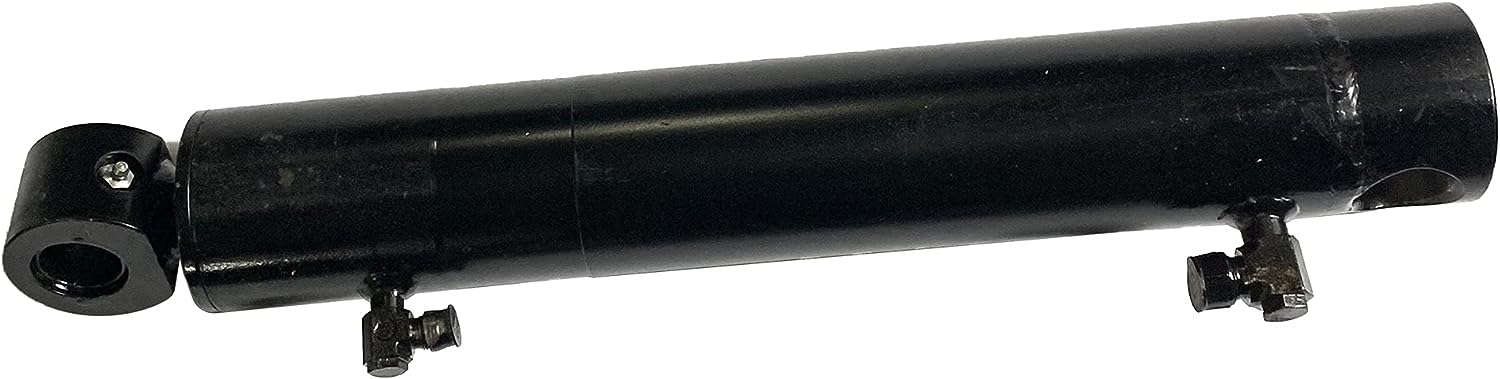
How does a tilt cylinder handle variations in temperature and environmental conditions?
A tilt cylinder is designed to handle variations in temperature and environmental conditions encountered in different applications. Several features and considerations ensure the cylinder’s performance and durability in challenging operating environments. Here’s a detailed explanation:
- Material Selection: Tilt cylinders are typically constructed using high-quality materials known for their strength, durability, and resistance to environmental factors. Common materials include hardened steel, alloy steel, or other corrosion-resistant materials. The chosen materials offer excellent mechanical properties and can withstand temperature fluctuations, moisture, and exposure to chemicals or abrasive elements.
- Surface Treatments: To further enhance the cylinder’s resistance to environmental conditions, surface treatments such as coatings or platings may be applied. These treatments provide additional protection against corrosion, wear, and damage caused by moisture, chemicals, or abrasive particles. Common surface treatments include chrome plating, zinc coating, or specialized coatings designed for specific environmental challenges.
- Sealing Systems: Tilt cylinders incorporate sealing systems to prevent the ingress of contaminants and maintain the integrity of the hydraulic system. The seals used in tilt cylinders are designed to withstand temperature variations, resist degradation from environmental factors, and provide reliable sealing performance over an extended service life. Proper sealing ensures the cylinder’s efficient operation and minimizes the risk of leakage or premature wear.
- Lubrication: Adequate lubrication is essential for the smooth operation and longevity of tilt cylinders. Lubricants help reduce friction, minimize wear, and protect against corrosion. The choice of lubricant depends on the specific operating conditions and temperature range. In extreme temperature environments, specialized lubricants with high-temperature resistance may be used to ensure optimal cylinder performance.
- Temperature Compensation: Tilt cylinders may incorporate temperature compensation mechanisms to account for variations in operating temperatures. These mechanisms ensure that the cylinder’s performance remains consistent, regardless of temperature fluctuations. Temperature compensation can involve adjustments to the hydraulic system’s pressure or flow rate to maintain the desired force and speed, compensating for temperature-related changes in fluid viscosity.
- Testing and Certification: Tilt cylinders undergo rigorous testing and certification processes to ensure their performance and reliability in various environmental conditions. Manufacturers subject the cylinders to simulated temperature cycles, exposure to contaminants, and other environmental tests to validate their durability and functionality. Compliance with industry standards and certifications ensures that the cylinders can handle the anticipated temperature and environmental challenges.
By employing appropriate material selection, surface treatments, sealing systems, lubrication, temperature compensation mechanisms, and rigorous testing, tilt cylinders are engineered to handle variations in temperature and environmental conditions. These design considerations enable the cylinders to operate reliably and maintain optimal performance in a wide range of applications and operating environments.
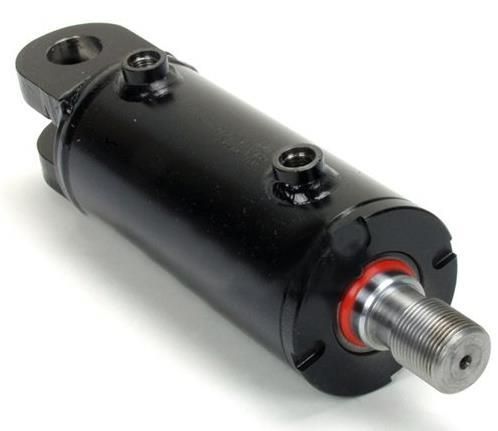
Как наклонный цилиндр справляется с изменениями наклона и положения оборудования?
Наклонный цилиндр предназначен для компенсации изменений наклона и положения оборудования за счет использования специальных функций и механизмов. Эти функции позволяют наклонному цилиндру эффективно адаптироваться к различным углам и положениям. Вот объяснение того, как наклонный цилиндр справляется с изменениями наклона и положения оборудования:
- Диапазон движений: Цилиндры наклона спроектированы таким образом, чтобы обеспечивать широкий диапазон движений. Они могут наклонять или изменять угол наклона компонентов в заданном диапазоне, позволяя устанавливать их в различных положениях и под разными углами. Диапазон движений определяется конструкцией цилиндра, а также точками крепления на оборудовании. Эта универсальность позволяет цилиндру наклона соответствовать различным требованиям к наклону и адаптироваться к различным положениям оборудования.
- Регулирующие клапаны: Цилиндры наклона оснащены регулирующими клапанами, обеспечивающими точное управление движением наклона. Эти клапаны регулируют поток и направление гидравлической жидкости, позволяя операторам контролировать скорость, величину и направление наклона. Регулируя регулирующие клапаны, операторы могут точно настроить положение оборудования, компенсируя изменения наклона и обеспечивая точное выравнивание.
- Механизмы обратной связи: Некоторые наклонные цилиндры оснащены механизмами обратной связи, такими как концевые выключатели или датчики. Эти механизмы обеспечивают обратную связь в режиме реального времени о положении и угле наклона компонента. Отслеживая обратную связь, операторы могут точно регулировать наклонный цилиндр, компенсируя изменения наклона и положения оборудования. Это гарантирует, что компонент останется в желаемом положении и под желаемым углом, повышая эффективность и безопасность работы.
- Управление гидравлической системой: Гидравлическая система, приводящая в действие цилиндр наклона, играет решающую роль в компенсации изменений наклона и положения оборудования. Гидравлическая система включает в себя регуляторы давления, регулирующие клапаны потока и другие компоненты, позволяющие операторам точно регулировать гидравлическое давление и поток. Манипулируя элементами управления гидравлической системой, операторы могут компенсировать изменения наклона оборудования и с высокой точностью достигать желаемого положения.
- Прочная конструкция: Цилиндры наклона изготовлены из прочных материалов и имеют надежную конструкцию, способную выдерживать изменения наклона и положения оборудования. Они рассчитаны на высокие нагрузки и сопротивление внешним воздействиям, которые могут повлиять на движение наклона. Прочная конструкция обеспечивает долговечность и стабильность цилиндра наклона, позволяя ему сохранять стабильную работу даже в сложных условиях эксплуатации.
В целом, сочетание таких факторов, как диапазон движения, регулирующие клапаны, механизмы обратной связи, управление гидравлической системой и прочная конструкция, позволяет наклонному цилиндру справляться с изменениями наклона и положения оборудования. Эти особенности работают вместе, обеспечивая точное управление, адаптивность и стабильность, позволяя наклонному цилиндру эффективно работать с различными углами и положениями оборудования, к которому он прикреплен.


editor by CX 2023-11-15