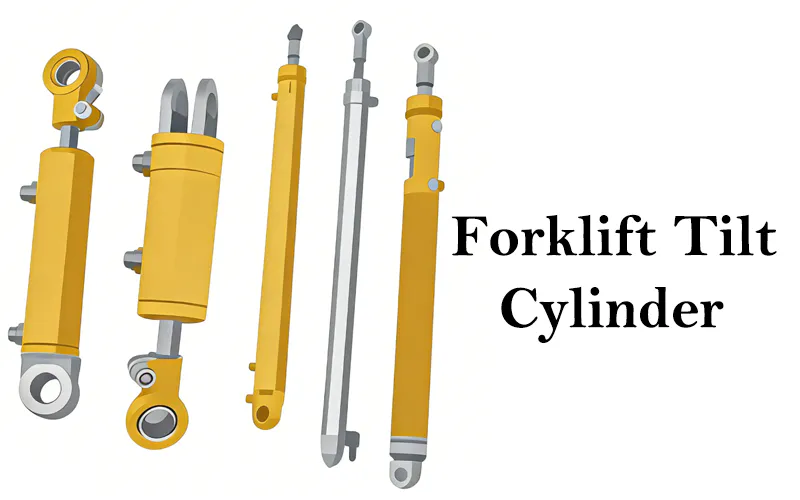
Опис продукту
Attractive Price 18MPa 3.4kg hydraulic Tilt Cylinder for Forklift
In forklifts, the tilt cylinder is a hydraulic cylinder responsible for tilting the mast and forks of the forklift. It allows the operator to adjust the angle of the divisions to accommodate different load-handling needs. Here are some key points about the tilt cylinder in a forklift:
Function: The tilt cylinder controls the tilting movement of the mast and forks. It lets the operator tilt the forks CHINAMFG or backward to pick up, transport, and deposit loads. The forklift operator can ensure proper load stability, precise positioning, and safe material handling by adjusting the tilt angle.
Hydraulic Power: The tilt cylinder is powered by hydraulic fluid under pressure. It is connected to the forklift’s hydraulic system, which consists of a hydraulic pump, control valves, hoses, and a reservoir. When the operator activates the tilt control lever, hydraulic fluid is directed to the tilt cylinder, causing it to extend or retract and initiate the tilt movement.
| bore diameter (D) | rod diameter (d) | stroke (S) | Installation distance (L) | working pressure | Interface dimensions (M) | weight |
| Φ60 | Φ30 | 32 | 109 | 18MPa | 2-M14*1.5 | 3.4kg |
(1) Our company can customize non-standard oil cylinders within the range of cylinder diameter D360MM and stroke L6000MM according to customer requirements;
(2) The above product prices are nontax unit prices, excluding packaging and transportation costs required for export
Застосування
Application of Forklift series Tilt Cylinder
1. Вантажопідйомність: The primary application of the tilt cylinder is to facilitate the handling of loads. By adjusting the tilt angle of the mast and forks, the tilt cylinder allows the forklift operator to pick up, transport, and deposit loads with precision. It enables the operator to tilt the forks CHINAMFG to engage and lift the load or tilt them backward to stabilize and deposit the load.
2. Load Stabilization: The tilt cylinder plays a crucial role in load stabilization. When lifting and transporting loads, especially those unbalanced or unevenly distributed, the tilt cylinder allows the operator to adjust the tilt angle to prevent load shifting or toppling. This ensures load stability and reduces the risk of accidents or damage to the load and surrounding structures.
3. Accessing and Depositing Loads: The tilt cylinder enables the forklift operator to access and deposit loads in various locations. It allows the forks to tilt CHINAMFG or backward, making it easier to position them under pallets or other load types. Adjusting the tilt angle allows the operator to align the forks with the load and safely deposit it CHINAMFG racks, shelves, or other storage areas.
4. Load Manipulation: The tilt cylinder allows load manipulation and fine control during material handling operations. By incrementally adjusting the tilt angle, the operator can tilt the forks slightly to level the load on uneven surfaces or adjust the load position for better visibility and maneuverability. This enables efficient handling of delicate or fragile loads, optimizing safety and productivity.
5. Pallet Stacking: The tilt cylinder is widely used in pallet stacking applications. It enables the operator to tilt the forks backward to create a slight incline, allowing for easy entry and retrieval of pallets from stacked loads. The tilt cylinder also assists in aligning the divisions with the pallets during stacking, ensuring accurate placement and stability of the stacked pallets.
6. Customized Load Handling: The tilt cylinder in a forklift series can be used for customized load-handling applications. Some forklift models feature additional attachments or accessories, such as side shifters or clamp arms, which can be controlled by the tilt cylinder. This allows forklift operators to adapt the tilt angle and manipulate loads with specialized requirements, such as gripping or rotating materials.
Importance of Forklift Tilt Cylinder
Load Stability: The tilt cylinder allows the operator to adjust the tilt angle of the mast and forks, ensuring load stability during material handling operations. By tilting the forks CHINAMFG or backward, the operator can secure the load and prevent it from shifting or falling off them. This enhances safety and minimizes the risk of accidents or damage to the bag.
Точне позиціонування навантаження: The tilt cylinder enables precise load positioning, allowing the operator to align the forks with the load and accurately deposit it CHINAMFG racks, shelves, or other storage areas. Adjusting the tilt angle allows the operator to achieve optimal load placement, which is critical in tight or confined spaces where maneuverability is limited.
Versatility: The tilt cylinder provides versatility in load-handling applications. The forklift can handle various load sizes and shapes by adjusting the tilt angle to accommodate different load requirements. This versatility enhances the adaptability of the forklift in multiple industries and warehouses, where different types of goods and materials must be handled.
Improved Operator Visibility: Adjusting the tilt angle can improve the operator’s visibility during material handling operations. By tilting the forks backward, the operator can have a better line of sight over the load, increasing situational awareness and reducing the risk of accidents caused by limited visibility.
In summary, the tilt cylinder in a forklift is of utmost importance as it ensures load stability, enables precise load positioning, enhances versatility, improves operator visibility and ergonomics, facilitates efficient pallet stacking, and allows customization and attachment compatibility. These factors contribute to safer, more efficient, and more productive material handling operations in warehouses, distribution centers, manufacturing facilities, and other industrial settings.
Our Company
We have a first-class independent R&D platform for assembly. The forklift cylinder production workshop has 4 semi-automatic lifting cylinder assembly lines and 1 fully automatic tilting cylinder assembly line, with a designed annual production capacity of 1 million pieces; the special cylinder workshop is equipped with semi-automatic cleaning and assembly systems of various specifications, with a designed annual production capacity of 200,000 essays. It has famous CNC machining equipment, machining centers, special equipment for high-precision cylinder processing, robot welding machines, automatic cleaning machines, automatic cylinder assembly machines, and automatic paint production lines. We have more than 300 sets of critical equipment running. The optimized allocation and efficient utilization of equipment resources ensure the precision requirements of the products and meet the high standard quality requirements of the products.
|
Forklift cylinder assembly shop |
Other types of cylinder assembly shop |
Welding
Painting & coating
|
Painting & coating line |
Fully automatic water-based |
Testing
To further improve product performance, and establish the leadership position of our hydraulic cylinder in the industry, our company and zjimee jointly established a Comprehensive performance laboratory of hydraulic cylinders, hydraulic valves, and hydraulic pumps; the lab is computer-assisted testing, using electro-hydraulic control technology, the test conditions preset by computer, which improves the test accuracy and system versatility, and the experimental data.
The automatic collection is realized through the application of sensors, and the output data, such as the internal leakage and load efficiency of the cylinder or the valve, are directly processed by the
computer and converted to standard units (ml/min; %). At the same time, to ensure the working safety of the hydraulic system, the state monitoring function is carried out for key performance parameters, such as “oil temperature monitoring, liquid level monitoring, filter device monitoring,” etc. Among them, the hydraulic cylinder test stand can test the performance of “load efficiency” and “internal leakage” by readings. At the same time, it is equipped with a grating ruler measuring instrument, which meets the requirements of all test items of hydraulic cylinder products in the national standard
Our Factory
Упаковка та доставка
| Сертифікація: | GS, RoHS, CE, ISO9001 |
|---|---|
| Тиск: | Середній тиск |
| Робоча температура: | Нормальна температура |
| Акторський шлях: | Подвійна дія |
| Метод роботи: | Роторний |
| Скоригована форма: | Регульований тип |
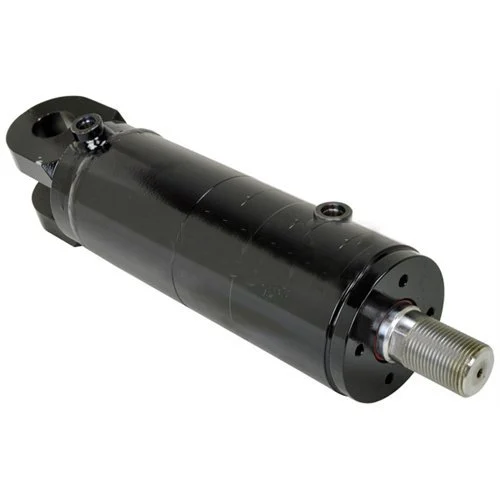
Чи можна використовувати циліндри нахилу в лісогосподарській техніці для обробки дерев?
Так, циліндри нахилу можна використовувати в лісогосподарській техніці для обробки дерев. Ці циліндри відіграють життєво важливу роль у підвищенні ефективності та безпеки лісогосподарської техніки, яка бере участь у таких завданнях, як валка, обрізка гілок та завантаження дерев. Ось детальне пояснення:
- Регулювання кута нахилу: Циліндри нахилу дозволяють операторам регулювати кут нахилу навісного обладнання лісового господарства, такого як грейфери або валкові головки. За допомогою циліндрів оператори можуть нахиляти навісне обладнання до потрібного кута, що сприяє точному маніпулюванню деревами. Можливість контролювати кут нахилу дозволяє операторам вирівнювати навісне обладнання зі стовбуром дерева або гілками, підвищуючи точність різання та мінімізуючи ризик пошкодження техніки або навколишнього середовища.
- Захоплення та маніпулювання деревами: Циліндри нахилу сприяють ефективному захопленню та маніпулюванню деревами. У поєднанні з грейферами або затискачами ці циліндри забезпечують необхідне зусилля та контроль для надійного утримання та маневрування деревами. Оператори можуть регулювати кут нахилу навісного обладнання, щоб забезпечити надійне зчеплення з деревом під час валки, обрізки гілок або завантаження. Ця можливість підвищує безпеку експлуатації, запобігає зісковзуванню дерев та покращує загальну продуктивність.
- Розподіл навантаження: Точне маніпулювання деревами вимагає правильного розподілу навантаження. Циліндри нахилу дозволяють операторам регулювати кут нахилу, щоб рівномірно розподілити вагу дерева по всьому обладнанню. Така оптимізація розподілу навантаження особливо важлива під час роботи з великими або важкими деревами. Досягаючи збалансованого положення за допомогою керування циліндрами нахилу, оператори можуть мінімізувати навантаження на обладнання, підтримувати стійкість та забезпечувати безпечне маніпулювання деревами.
- Інтеграція з системами керування: Циліндри нахилу можуть бути інтегровані з передовими системами керування сучасним лісогосподарським обладнанням. Ці системи керування можуть включати гідравлічні або електронні елементи керування, які забезпечують точне та автоматизоване регулювання кута нахилу. Використовуючи такі системи, оператори можуть досягти послідовного та точного маніпулювання деревами, зменшуючи втому оператора та підвищуючи ефективність роботи.
- Безпека та ергономіка оператора: Циліндри нахилу сприяють безпеці та ергономіці оператора під час роботи з деревами. Завдяки точному регулюванню кута нахилу ці циліндри дозволяють операторам підтримувати зручну та ергономічну робочу позу. Це зменшує ризик перенапруження або травмування та покращує контроль та оглядовість оператора, особливо у складних лісових умовах.
- Універсальність навісного обладнання: Циліндри нахилу забезпечують універсальність навісного обладнання для лісогосподарської техніки. Їх можна використовувати в різних конфігураціях, таких як односторонні або двосторонні циліндри, залежно від конкретних вимог застосування. Ця універсальність дозволяє лісогосподарській техніці обробляти дерева різних розмірів, форм та станів, адаптуючись до різноманітних потреб лісогосподарських робіт.
Таким чином, циліндри нахилу можуть бути ефективно використані в лісовому обладнанні для обробки дерев. Чи то регулювання кута нахилу, захоплення та маніпулювання деревами, оптимізація розподілу навантаження, інтеграція із системами керування, безпека та ергономіка оператора, чи універсальність навісного обладнання, циліндри нахилу сприяють підвищенню ефективності, точності та безпеки операцій з обробки дерев у лісовій галузі.
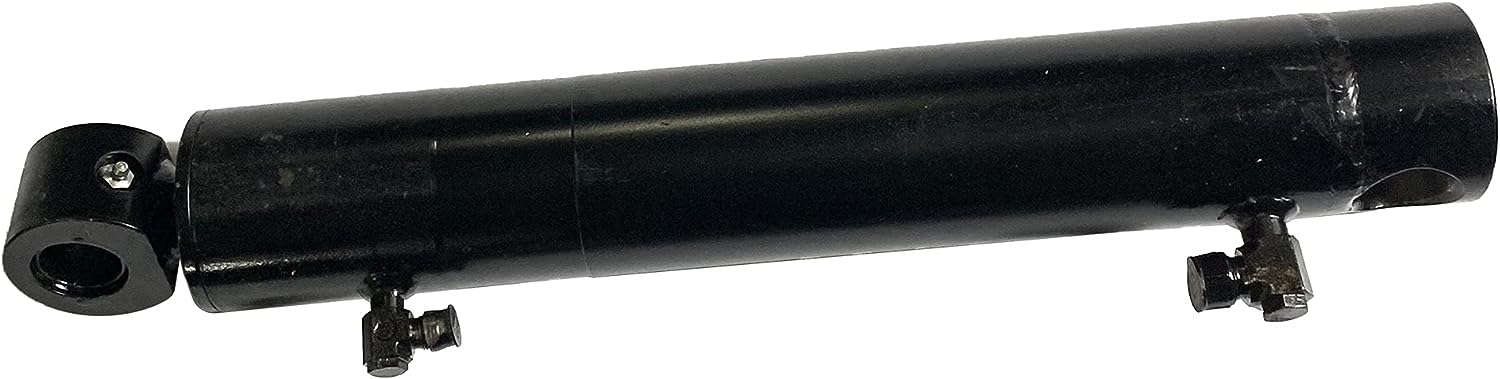
How does a tilt cylinder handle variations in temperature and environmental conditions?
A tilt cylinder is designed to handle variations in temperature and environmental conditions encountered in different applications. Several features and considerations ensure the cylinder’s performance and durability in challenging operating environments. Here’s a detailed explanation:
- Material Selection: Tilt cylinders are typically constructed using high-quality materials known for their strength, durability, and resistance to environmental factors. Common materials include hardened steel, alloy steel, or other corrosion-resistant materials. The chosen materials offer excellent mechanical properties and can withstand temperature fluctuations, moisture, and exposure to chemicals or abrasive elements.
- Surface Treatments: To further enhance the cylinder’s resistance to environmental conditions, surface treatments such as coatings or platings may be applied. These treatments provide additional protection against corrosion, wear, and damage caused by moisture, chemicals, or abrasive particles. Common surface treatments include chrome plating, zinc coating, or specialized coatings designed for specific environmental challenges.
- Sealing Systems: Tilt cylinders incorporate sealing systems to prevent the ingress of contaminants and maintain the integrity of the hydraulic system. The seals used in tilt cylinders are designed to withstand temperature variations, resist degradation from environmental factors, and provide reliable sealing performance over an extended service life. Proper sealing ensures the cylinder’s efficient operation and minimizes the risk of leakage or premature wear.
- Lubrication: Adequate lubrication is essential for the smooth operation and longevity of tilt cylinders. Lubricants help reduce friction, minimize wear, and protect against corrosion. The choice of lubricant depends on the specific operating conditions and temperature range. In extreme temperature environments, specialized lubricants with high-temperature resistance may be used to ensure optimal cylinder performance.
- Temperature Compensation: Tilt cylinders may incorporate temperature compensation mechanisms to account for variations in operating temperatures. These mechanisms ensure that the cylinder’s performance remains consistent, regardless of temperature fluctuations. Temperature compensation can involve adjustments to the hydraulic system’s pressure or flow rate to maintain the desired force and speed, compensating for temperature-related changes in fluid viscosity.
- Testing and Certification: Tilt cylinders undergo rigorous testing and certification processes to ensure their performance and reliability in various environmental conditions. Manufacturers subject the cylinders to simulated temperature cycles, exposure to contaminants, and other environmental tests to validate their durability and functionality. Compliance with industry standards and certifications ensures that the cylinders can handle the anticipated temperature and environmental challenges.
By employing appropriate material selection, surface treatments, sealing systems, lubrication, temperature compensation mechanisms, and rigorous testing, tilt cylinders are engineered to handle variations in temperature and environmental conditions. These design considerations enable the cylinders to operate reliably and maintain optimal performance in a wide range of applications and operating environments.
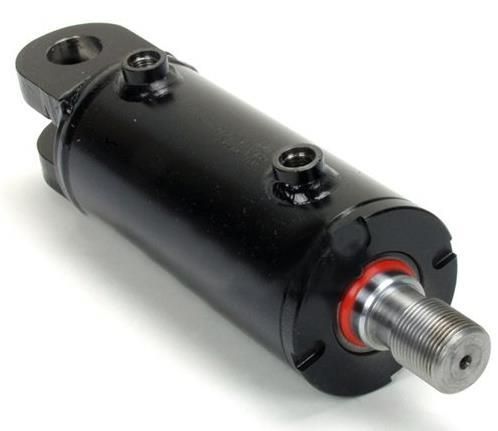
Як циліндр нахилу справляється з коливаннями нахилу та положення обладнання?
Циліндр нахилу розроблений для обробки змін нахилу та положення обладнання завдяки наявності спеціальних функцій та механізмів. Ці функції дозволяють циліндру нахилу ефективно адаптуватися до різних кутів та положень. Ось пояснення того, як циліндр нахилу обробляє зміни нахилу та положення обладнання:
- Діапазон руху: Циліндри нахилу розроблені для забезпечення широкого діапазону руху. Вони можуть нахиляти або змінювати кут нахилу компонентів у заданому діапазоні, що дозволяє досягати різних положень та кутів. Діапазон руху визначається конструкцією та дизайном циліндра, а також точками кріплення на обладнанні. Ця універсальність дозволяє циліндру нахилу задовольняти різні вимоги до нахилу та адаптуватися до різних положень обладнання.
- Регулювальні клапани: Циліндри нахилу оснащені регулювальними клапанами, які дозволяють точно контролювати рух нахилу. Ці клапани регулюють потік і напрямок гідравлічної рідини, дозволяючи операторам контролювати швидкість, ступінь і напрямок нахилу. Регулюючи регулювальні клапани, оператори можуть точно налаштувати положення обладнання, компенсуючи коливання нахилу та забезпечуючи точне вирівнювання.
- Механізми зворотного зв'язку: Деякі циліндри нахилу містять механізми зворотного зв'язку, такі як кінцеві вимикачі або датчики. Ці механізми забезпечують зворотний зв'язок у режимі реального часу щодо положення та кута нахилу компонента. Контролюючи зворотний зв'язок, оператори можуть точно регулювати циліндр нахилу, щоб компенсувати зміни нахилу та положення обладнання. Це гарантує, що компонент залишається в потрібному положенні та під потрібним кутом, підвищуючи ефективність та безпеку експлуатації.
- Керування гідравлічною системою: Гідравлічна система, яка живить циліндр нахилу, відіграє вирішальну роль у керуванні змінами нахилу та положення обладнання. Гідравлічна система включає регулятори тиску, клапани регулювання потоку та інші компоненти, які дозволяють операторам точно регулювати гідравлічний тиск і поток. Маніпулюючи елементами керування гідравлічною системою, оператори можуть компенсувати зміни нахилу обладнання та досягати потрібного положення з точністю.
- Міцна конструкція: Циліндри нахилу виготовлені з міцних матеріалів та конструкції, щоб витримувати коливання нахилу та положення обладнання. Вони розроблені для роботи з високими навантаженнями та протидії зовнішнім силам, які можуть вплинути на рух нахилу. Міцна конструкція забезпечує довговічність та стабільність циліндра нахилу, дозволяючи йому підтримувати стабільну продуктивність навіть у складних умовах експлуатації.
Загалом, поєднання таких факторів, як діапазон руху, регулювальні клапани, механізми зворотного зв'язку, керування гідравлічною системою та міцна конструкція, дозволяє циліндру нахилу справлятися з коливаннями нахилу та положення обладнання. Ці функції працюють разом, щоб забезпечити точне керування, адаптивність та стабільність, що дозволяє циліндру нахилу ефективно обробляти різні кути та положення обладнання, до якого він прикріплений.


редактор CX 2023-11-15