Mô tả sản phẩm
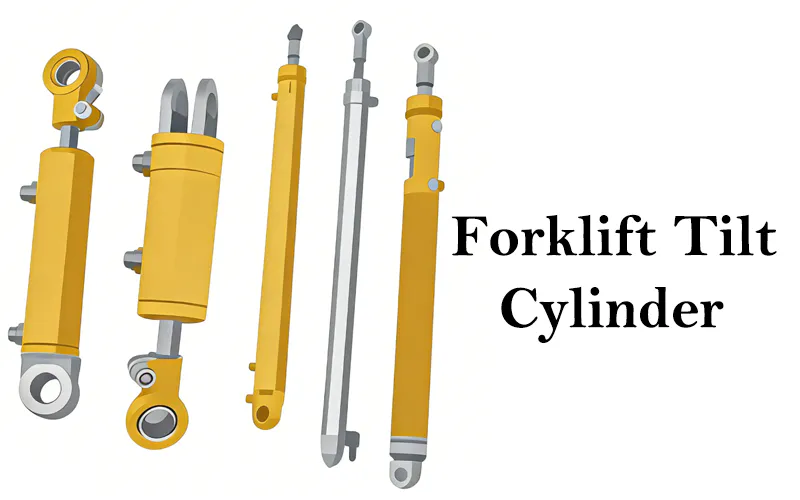
Attractive Price 18MPa 3.4kg hydraulic Tilt Cylinder for Forklift
In forklifts, the tilt cylinder is a hydraulic cylinder responsible for tilting the mast and forks of the forklift. It allows the operator to adjust the angle of the divisions to accommodate different load-handling needs. Here are some key points about the tilt cylinder in a forklift:
Function: The tilt cylinder controls the tilting movement of the mast and forks. It lets the operator tilt the forks CHINAMFG or backward to pick up, transport, and deposit loads. The forklift operator can ensure proper load stability, precise positioning, and safe material handling by adjusting the tilt angle.
Hydraulic Power: The tilt cylinder is powered by hydraulic fluid under pressure. It is connected to the forklift’s hydraulic system, which consists of a hydraulic pump, control valves, hoses, and a reservoir. When the operator activates the tilt control lever, hydraulic fluid is directed to the tilt cylinder, causing it to extend or retract and initiate the tilt movement.
| bore diameter (D) | rod diameter (d) | stroke (S) | Installation distance (L) | working pressure | Interface dimensions (M) | weight |
| Φ60 | Φ30 | 32 | 109 | 18MPa | 2-M14*1.5 | 3.4kg |
(1) Our company can customize non-standard oil cylinders within the range of cylinder diameter D360MM and stroke L6000MM according to customer requirements;
(2) The above product prices are nontax unit prices, excluding packaging and transportation costs required for export
Ứng dụng
Application of Forklift series Tilt Cylinder
1. Xử lý hàng hóa: The primary application of the tilt cylinder is to facilitate the handling of loads. By adjusting the tilt angle of the mast and forks, the tilt cylinder allows the forklift operator to pick up, transport, and deposit loads with precision. It enables the operator to tilt the forks CHINAMFG to engage and lift the load or tilt them backward to stabilize and deposit the load.
2. Load Stabilization: The tilt cylinder plays a crucial role in load stabilization. When lifting and transporting loads, especially those unbalanced or unevenly distributed, the tilt cylinder allows the operator to adjust the tilt angle to prevent load shifting or toppling. This ensures load stability and reduces the risk of accidents or damage to the load and surrounding structures.
3. Accessing and Depositing Loads: The tilt cylinder enables the forklift operator to access and deposit loads in various locations. It allows the forks to tilt CHINAMFG or backward, making it easier to position them under pallets or other load types. Adjusting the tilt angle allows the operator to align the forks with the load and safely deposit it CHINAMFG racks, shelves, or other storage areas.
4. Load Manipulation: The tilt cylinder allows load manipulation and fine control during material handling operations. By incrementally adjusting the tilt angle, the operator can tilt the forks slightly to level the load on uneven surfaces or adjust the load position for better visibility and maneuverability. This enables efficient handling of delicate or fragile loads, optimizing safety and productivity.
5. Pallet Stacking: The tilt cylinder is widely used in pallet stacking applications. It enables the operator to tilt the forks backward to create a slight incline, allowing for easy entry and retrieval of pallets from stacked loads. The tilt cylinder also assists in aligning the divisions with the pallets during stacking, ensuring accurate placement and stability of the stacked pallets.
6. Customized Load Handling: The tilt cylinder in a forklift series can be used for customized load-handling applications. Some forklift models feature additional attachments or accessories, such as side shifters or clamp arms, which can be controlled by the tilt cylinder. This allows forklift operators to adapt the tilt angle and manipulate loads with specialized requirements, such as gripping or rotating materials.
Importance of Forklift Tilt Cylinder
Load Stability: The tilt cylinder allows the operator to adjust the tilt angle of the mast and forks, ensuring load stability during material handling operations. By tilting the forks CHINAMFG or backward, the operator can secure the load and prevent it from shifting or falling off them. This enhances safety and minimizes the risk of accidents or damage to the bag.
Định vị tải trọng chính xác: The tilt cylinder enables precise load positioning, allowing the operator to align the forks with the load and accurately deposit it CHINAMFG racks, shelves, or other storage areas. Adjusting the tilt angle allows the operator to achieve optimal load placement, which is critical in tight or confined spaces where maneuverability is limited.
Versatility: The tilt cylinder provides versatility in load-handling applications. The forklift can handle various load sizes and shapes by adjusting the tilt angle to accommodate different load requirements. This versatility enhances the adaptability of the forklift in multiple industries and warehouses, where different types of goods and materials must be handled.
Improved Operator Visibility: Adjusting the tilt angle can improve the operator’s visibility during material handling operations. By tilting the forks backward, the operator can have a better line of sight over the load, increasing situational awareness and reducing the risk of accidents caused by limited visibility.
In summary, the tilt cylinder in a forklift is of utmost importance as it ensures load stability, enables precise load positioning, enhances versatility, improves operator visibility and ergonomics, facilitates efficient pallet stacking, and allows customization and attachment compatibility. These factors contribute to safer, more efficient, and more productive material handling operations in warehouses, distribution centers, manufacturing facilities, and other industrial settings.
Our Company
We have a first-class independent R&D platform for assembly. The forklift cylinder production workshop has 4 semi-automatic lifting cylinder assembly lines and 1 fully automatic tilting cylinder assembly line, with a designed annual production capacity of 1 million pieces; the special cylinder workshop is equipped with semi-automatic cleaning and assembly systems of various specifications, with a designed annual production capacity of 200,000 essays. It has famous CNC machining equipment, machining centers, special equipment for high-precision cylinder processing, robot welding machines, automatic cleaning machines, automatic cylinder assembly machines, and automatic paint production lines. We have more than 300 sets of critical equipment running. The optimized allocation and efficient utilization of equipment resources ensure the precision requirements of the products and meet the high standard quality requirements of the products.
|
Forklift cylinder assembly shop |
Other types of cylinder assembly shop |
Welding
Painting & coating
|
Painting & coating line |
Fully automatic water-based |
Testing
To further improve product performance, and establish the leadership position of our hydraulic cylinder in the industry, our company and zjimee jointly established a Comprehensive performance laboratory of hydraulic cylinders, hydraulic valves, and hydraulic pumps; the lab is computer-assisted testing, using electro-hydraulic control technology, the test conditions preset by computer, which improves the test accuracy and system versatility, and the experimental data.
The automatic collection is realized through the application of sensors, and the output data, such as the internal leakage and load efficiency of the cylinder or the valve, are directly processed by the
computer and converted to standard units (ml/min; %). At the same time, to ensure the working safety of the hydraulic system, the state monitoring function is carried out for key performance parameters, such as “oil temperature monitoring, liquid level monitoring, filter device monitoring,” etc. Among them, the hydraulic cylinder test stand can test the performance of “load efficiency” and “internal leakage” by readings. At the same time, it is equipped with a grating ruler measuring instrument, which meets the requirements of all test items of hydraulic cylinder products in the national standard
Our Factory
Đóng gói & Vận chuyển
| Chứng nhận: | GS, RoHS, CE, ISO9001 |
|---|---|
| Áp lực: | Áp suất trung bình |
| Nhiệt độ làm việc: | Nhiệt độ bình thường |
| Cách diễn xuất: | Tác động kép |
| Phương pháp làm việc: | Quay |
| Dạng điều chỉnh: | Loại được quy định |
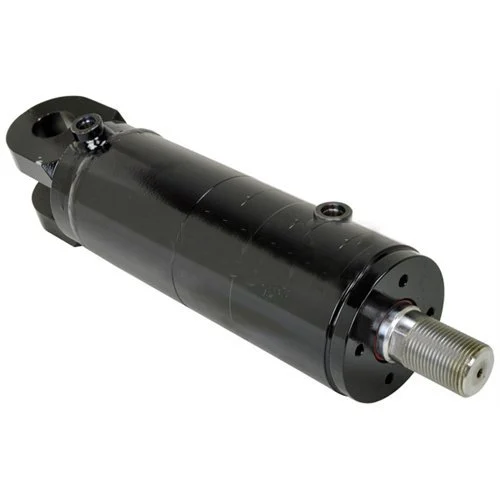
Xi lanh nghiêng có thể được sử dụng trong thiết bị lâm nghiệp để xử lý cây trồng không?
Đúng vậy, xi lanh nghiêng có thể được sử dụng trong thiết bị lâm nghiệp để xử lý cây. Các xi lanh này đóng vai trò quan trọng trong việc nâng cao hiệu quả và an toàn của máy móc lâm nghiệp tham gia vào các công việc như đốn hạ, tỉa cành và bốc xếp cây. Dưới đây là giải thích chi tiết:
- Điều chỉnh góc nghiêng: Xi lanh điều chỉnh góc nghiêng cho phép người vận hành điều chỉnh góc nghiêng của các phụ kiện thiết bị lâm nghiệp, chẳng hạn như gầu xúc hoặc đầu chặt cây. Bằng cách kích hoạt xi lanh, người vận hành có thể nghiêng phụ kiện đến góc độ mong muốn, tạo điều kiện thuận lợi cho việc xử lý cây chính xác. Khả năng kiểm soát góc nghiêng cho phép người vận hành căn chỉnh phụ kiện với thân cây hoặc cành cây, cải thiện độ chính xác khi cắt và giảm thiểu nguy cơ hư hỏng máy móc hoặc môi trường xung quanh.
- Kẹp và thao tác cây: Xi lanh nghiêng góp phần vào việc kẹp và thao tác cây hiệu quả. Khi kết hợp với gầu xúc hoặc kẹp, các xi lanh này cung cấp lực và khả năng kiểm soát cần thiết để giữ và di chuyển cây một cách an toàn. Người vận hành có thể điều chỉnh góc nghiêng của bộ phận gắn kèm để đảm bảo kẹp chắc cây trong quá trình đốn hạ, tỉa cành hoặc bốc xếp. Khả năng này giúp tăng cường an toàn vận hành, ngăn ngừa cây trượt và cải thiện năng suất tổng thể.
- Phân bổ tải trọng: Việc xử lý cây chính xác đòi hỏi phải phân bổ tải trọng hợp lý. Xi lanh nghiêng cho phép người vận hành điều chỉnh góc nghiêng để phân bổ trọng lượng của cây đều khắp thiết bị. Việc tối ưu hóa phân bổ tải trọng này đặc biệt quan trọng khi xử lý những cây lớn hoặc nặng. Bằng cách đạt được vị trí cân bằng thông qua điều khiển xi lanh nghiêng, người vận hành có thể giảm thiểu áp lực lên thiết bị, duy trì sự ổn định và đảm bảo việc xử lý cây an toàn.
- Tích hợp với hệ thống điều khiển: Xi lanh nghiêng có thể được tích hợp với các hệ thống điều khiển tiên tiến trong thiết bị lâm nghiệp hiện đại. Các hệ thống điều khiển này có thể bao gồm điều khiển thủy lực hoặc điện tử, cho phép điều chỉnh góc nghiêng chính xác và tự động. Bằng cách sử dụng các hệ thống này, người vận hành có thể thực hiện việc xử lý cây một cách nhất quán và chính xác, giảm mệt mỏi và nâng cao hiệu quả hoạt động.
- An toàn và tiện dụng cho người vận hành: Xi lanh nghiêng góp phần đảm bảo an toàn và tiện dụng cho người vận hành trong các công việc xử lý cây. Bằng cách cho phép điều chỉnh góc nghiêng chính xác, các xi lanh này giúp người vận hành duy trì tư thế làm việc thoải mái và đúng kỹ thuật. Điều này làm giảm nguy cơ căng cơ hoặc chấn thương và tăng cường khả năng kiểm soát và tầm nhìn của người vận hành, đặc biệt là trong môi trường lâm nghiệp khó khăn.
- Tính linh hoạt khi lắp đặt: Xi lanh nghiêng mang lại tính linh hoạt cho các thiết bị lâm nghiệp. Chúng có thể được sử dụng trong nhiều cấu hình khác nhau, chẳng hạn như xi lanh tác động đơn hoặc tác động kép, tùy thuộc vào yêu cầu ứng dụng cụ thể. Tính linh hoạt này cho phép máy móc lâm nghiệp xử lý các loại cây có kích thước, hình dạng và điều kiện khác nhau, thích ứng với nhu cầu đa dạng của các hoạt động lâm nghiệp.
Do đó, xi lanh nghiêng có thể được sử dụng hiệu quả trong thiết bị lâm nghiệp để xử lý cây. Cho dù đó là điều chỉnh góc nghiêng, kẹp và thao tác cây, tối ưu hóa phân bố tải trọng, tích hợp với hệ thống điều khiển, an toàn và tiện dụng cho người vận hành, hay tính linh hoạt của các phụ kiện, xi lanh nghiêng đều góp phần nâng cao hiệu quả, độ chính xác và an toàn của các hoạt động xử lý cây trong ngành lâm nghiệp.
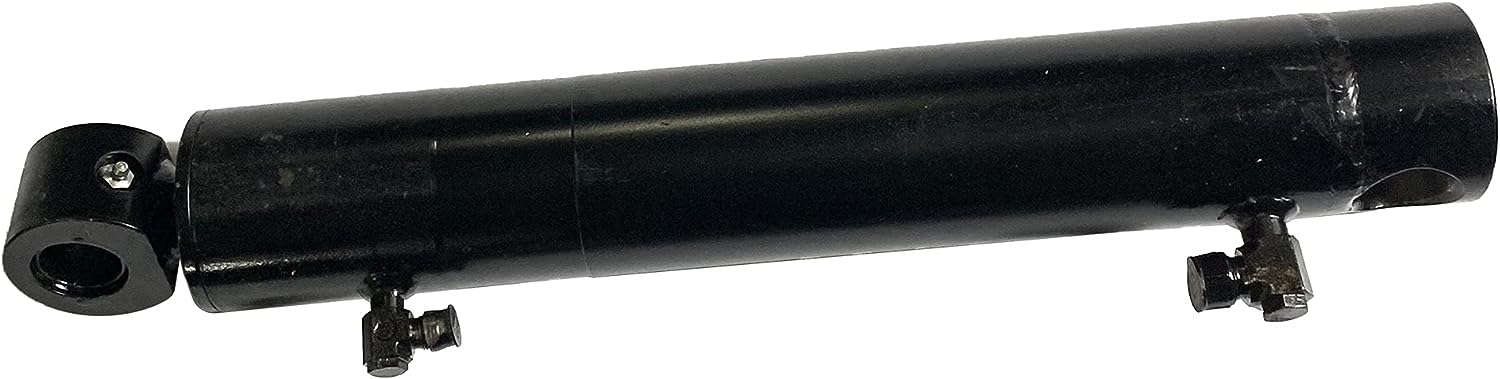
Xi lanh nghiêng xử lý sự thay đổi nhiệt độ và điều kiện môi trường như thế nào?
Xi lanh nghiêng được thiết kế để xử lý các biến đổi về nhiệt độ và điều kiện môi trường gặp phải trong các ứng dụng khác nhau. Một số tính năng và yếu tố cần xem xét đảm bảo hiệu suất và độ bền của xi lanh trong môi trường hoạt động khắc nghiệt. Dưới đây là giải thích chi tiết:
- Lựa chọn vật liệu: Xi lanh nghiêng thường được chế tạo bằng các vật liệu chất lượng cao, nổi tiếng về độ bền, độ chắc chắn và khả năng chống chịu các yếu tố môi trường. Các vật liệu phổ biến bao gồm thép tôi cứng, thép hợp kim hoặc các vật liệu chống ăn mòn khác. Các vật liệu được lựa chọn có đặc tính cơ học tuyệt vời và có thể chịu được sự thay đổi nhiệt độ, độ ẩm và tiếp xúc với hóa chất hoặc các yếu tố mài mòn.
- Xử lý bề mặt: Để tăng cường hơn nữa khả năng chống chịu của xi lanh với các điều kiện môi trường, các phương pháp xử lý bề mặt như phủ hoặc mạ có thể được áp dụng. Các phương pháp xử lý này cung cấp thêm lớp bảo vệ chống ăn mòn, mài mòn và hư hỏng do độ ẩm, hóa chất hoặc các hạt mài mòn gây ra. Các phương pháp xử lý bề mặt phổ biến bao gồm mạ crom, mạ kẽm hoặc các lớp phủ chuyên dụng được thiết kế cho các thách thức môi trường cụ thể.
- Hệ thống làm kín: Xi lanh nghiêng tích hợp hệ thống làm kín để ngăn chặn sự xâm nhập của chất gây ô nhiễm và duy trì tính toàn vẹn của hệ thống thủy lực. Các vòng đệm được sử dụng trong xi lanh nghiêng được thiết kế để chịu được sự thay đổi nhiệt độ, chống lại sự xuống cấp do các yếu tố môi trường và cung cấp hiệu suất làm kín đáng tin cậy trong suốt thời gian sử dụng lâu dài. Việc làm kín đúng cách đảm bảo hoạt động hiệu quả của xi lanh và giảm thiểu nguy cơ rò rỉ hoặc mài mòn sớm.
- Bôi trơn: Bôi trơn đầy đủ là điều cần thiết cho hoạt động trơn tru và tuổi thọ của xi lanh nghiêng. Chất bôi trơn giúp giảm ma sát, giảm thiểu mài mòn và bảo vệ chống ăn mòn. Việc lựa chọn chất bôi trơn phụ thuộc vào điều kiện hoạt động cụ thể và phạm vi nhiệt độ. Trong môi trường nhiệt độ khắc nghiệt, có thể sử dụng các chất bôi trơn chuyên dụng có khả năng chịu nhiệt cao để đảm bảo hiệu suất tối ưu của xi lanh.
- Bù nhiệt độ: Xi lanh nghiêng có thể tích hợp các cơ chế bù nhiệt độ để tính đến sự thay đổi nhiệt độ hoạt động. Các cơ chế này đảm bảo hiệu suất của xi lanh luôn ổn định, bất kể sự dao động nhiệt độ. Bù nhiệt độ có thể bao gồm điều chỉnh áp suất hoặc lưu lượng của hệ thống thủy lực để duy trì lực và tốc độ mong muốn, bù lại những thay đổi liên quan đến nhiệt độ trong độ nhớt của chất lỏng.
- Kiểm tra và Chứng nhận: Xi lanh nghiêng trải qua quy trình kiểm tra và chứng nhận nghiêm ngặt để đảm bảo hiệu suất và độ tin cậy trong các điều kiện môi trường khác nhau. Các nhà sản xuất tiến hành thử nghiệm xi lanh trong các chu kỳ nhiệt độ mô phỏng, tiếp xúc với chất gây ô nhiễm và các thử nghiệm môi trường khác để xác nhận độ bền và chức năng của chúng. Việc tuân thủ các tiêu chuẩn và chứng nhận của ngành đảm bảo rằng xi lanh có thể xử lý các thách thức về nhiệt độ và môi trường dự kiến.
Bằng cách lựa chọn vật liệu phù hợp, xử lý bề mặt, hệ thống làm kín, bôi trơn, cơ chế bù nhiệt độ và thử nghiệm nghiêm ngặt, các xi lanh nghiêng được thiết kế để xử lý các biến đổi về nhiệt độ và điều kiện môi trường. Những cân nhắc về thiết kế này cho phép các xi lanh hoạt động đáng tin cậy và duy trì hiệu suất tối ưu trong nhiều ứng dụng và môi trường hoạt động khác nhau.
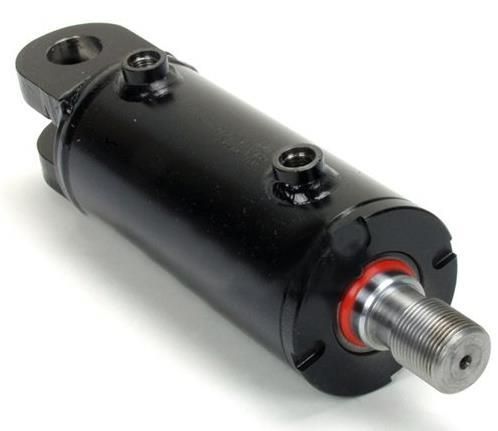
Xi lanh nghiêng xử lý sự thay đổi về độ nghiêng và vị trí của thiết bị như thế nào?
Xi lanh nghiêng được thiết kế để xử lý các thay đổi về độ nghiêng và vị trí của thiết bị bằng cách tích hợp các tính năng và cơ chế cụ thể. Những tính năng này cho phép xi lanh nghiêng thích ứng hiệu quả với các góc độ và vị trí khác nhau. Dưới đây là giải thích về cách xi lanh nghiêng xử lý các thay đổi về độ nghiêng và vị trí của thiết bị:
- Phạm vi chuyển động: Xi lanh nghiêng được thiết kế để cung cấp phạm vi chuyển động rộng. Chúng có thể nghiêng hoặc điều chỉnh góc các bộ phận trong một phạm vi nhất định, cho phép nhiều vị trí và góc độ khác nhau. Phạm vi chuyển động được xác định bởi thiết kế và cấu tạo của xi lanh, cũng như các điểm gắn trên thiết bị. Tính linh hoạt này cho phép xi lanh nghiêng đáp ứng các yêu cầu nghiêng khác nhau và thích ứng với các vị trí thiết bị khác nhau.
- Van điều khiển: Xi lanh nghiêng được trang bị van điều khiển cho phép kiểm soát chính xác chuyển động nghiêng. Các van này điều chỉnh lưu lượng và hướng của chất lỏng thủy lực, cho phép người vận hành kiểm soát tốc độ, phạm vi và hướng nghiêng. Bằng cách điều chỉnh các van điều khiển, người vận hành có thể tinh chỉnh vị trí của thiết bị, bù đắp cho sự thay đổi độ nghiêng và đảm bảo sự căn chỉnh chính xác.
- Cơ chế phản hồi: Một số xi lanh nghiêng tích hợp các cơ chế phản hồi như công tắc giới hạn hoặc cảm biến. Các cơ chế này cung cấp phản hồi theo thời gian thực về vị trí và góc của bộ phận được nghiêng. Bằng cách theo dõi phản hồi, người vận hành có thể điều chỉnh chính xác xi lanh nghiêng để bù lại sự thay đổi về độ nghiêng và vị trí của thiết bị. Điều này đảm bảo bộ phận vẫn ở vị trí và góc mong muốn, nâng cao hiệu quả hoạt động và an toàn.
- Điều khiển hệ thống thủy lực: Hệ thống thủy lực cung cấp năng lượng cho xi lanh nghiêng đóng vai trò quan trọng trong việc xử lý các thay đổi về độ nghiêng và vị trí của thiết bị. Hệ thống thủy lực bao gồm các bộ điều chỉnh áp suất, van điều khiển lưu lượng và các bộ phận khác cho phép người vận hành điều chỉnh chính xác áp suất và lưu lượng thủy lực. Bằng cách điều khiển hệ thống thủy lực, người vận hành có thể bù trừ cho các thay đổi về độ nghiêng của thiết bị và đạt được vị trí mong muốn với độ chính xác cao.
- Cấu trúc chắc chắn: Xi lanh nghiêng được chế tạo bằng vật liệu và cấu trúc chắc chắn để chịu được sự thay đổi về độ nghiêng và vị trí của thiết bị. Chúng được thiết kế để xử lý tải trọng cao và chống lại các lực tác động từ bên ngoài có thể ảnh hưởng đến chuyển động nghiêng. Cấu trúc chắc chắn đảm bảo độ bền và tính ổn định của xi lanh nghiêng, cho phép nó duy trì hiệu suất ổn định ngay cả trong điều kiện vận hành khắc nghiệt.
Nhìn chung, sự kết hợp của các yếu tố như phạm vi chuyển động, van điều khiển, cơ chế phản hồi, điều khiển hệ thống thủy lực và cấu trúc chắc chắn cho phép xi lanh nghiêng xử lý các thay đổi về độ nghiêng và vị trí của thiết bị. Những tính năng này hoạt động cùng nhau để đảm bảo khả năng điều khiển chính xác, tính thích ứng và độ ổn định, cho phép xi lanh nghiêng xử lý hiệu quả các góc độ và vị trí khác nhau của thiết bị mà nó được gắn vào.


editor by CX 2023-11-15