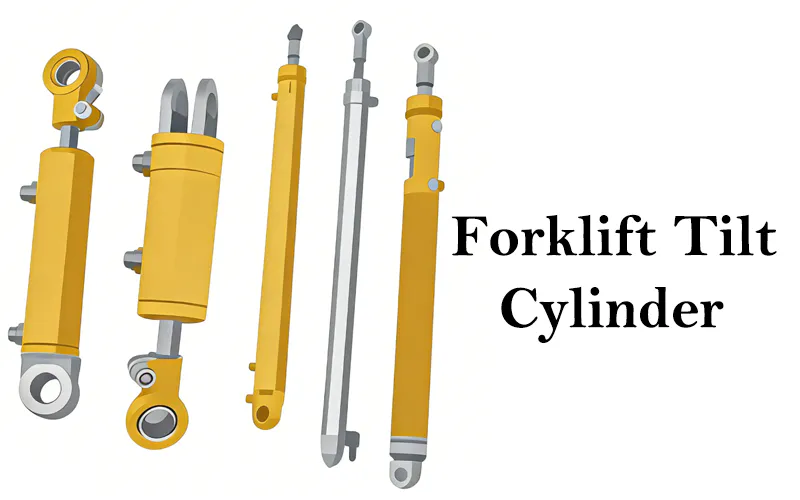
Maintenance & Technical Guides
Forklift Tilt Cylinder Oil Leak Diagnosis: 7 Root Causes and How to Fix Each One
A structured field guide for maintenance technicians and fleet managers in Colombia, Latin America, and worldwide — covering every common leak origin and the correct repair path for each one.
Why Oil Leaks on the Tilt Cylinder Demand Immediate Attention
An oil leak on a forklift tilt cylinder is never a cosmetic problem. When hydraulic fluid begins escaping from a tilt cylinder, it signals that one or more of the cylinder’s structural or sealing elements has failed — and that failure is actively progressing with every operating cycle. The mast tilt function is directly responsible for load angle control during lifting, carrying, and stacking. If the internal seal integrity is compromised, the cylinder may allow the mast to creep forward under load — a condition known as forklift tilt cylinder drift — which puts both the load and the operator at serious risk.
Beyond the safety concern, hydraulic fluid contamination of the warehouse floor is an environmental compliance issue in Colombia under Decreto 1076 (Decreto Único Reglamentario del Sector Ambiente y Desarrollo Sostenible), and an occupational safety risk governed by Resolution 0312 of 2019 from the Colombian Ministry of Labor. Similar obligations apply across Latin America, Europe, and North America, where floor contamination from hydraulic fluid spills triggers regulatory obligations under OSHA 1910.178 (USA), NR-11 (Brazil), and the EU Machinery Directive. Getting the diagnosis right the first time avoids repeat downtime, minimizes fluid consumption costs, and protects your regulatory standing across every market your operation touches.
This guide works through the seven most common root causes of forklift tilt cylinder oil leaks — covering where to find each one, what has caused it, and the specific repair procedure required to fix it correctly rather than masking the symptom temporarily.
Manufacturing Structure of the Forklift Tilt Cylinder — Understanding the Leak Zones
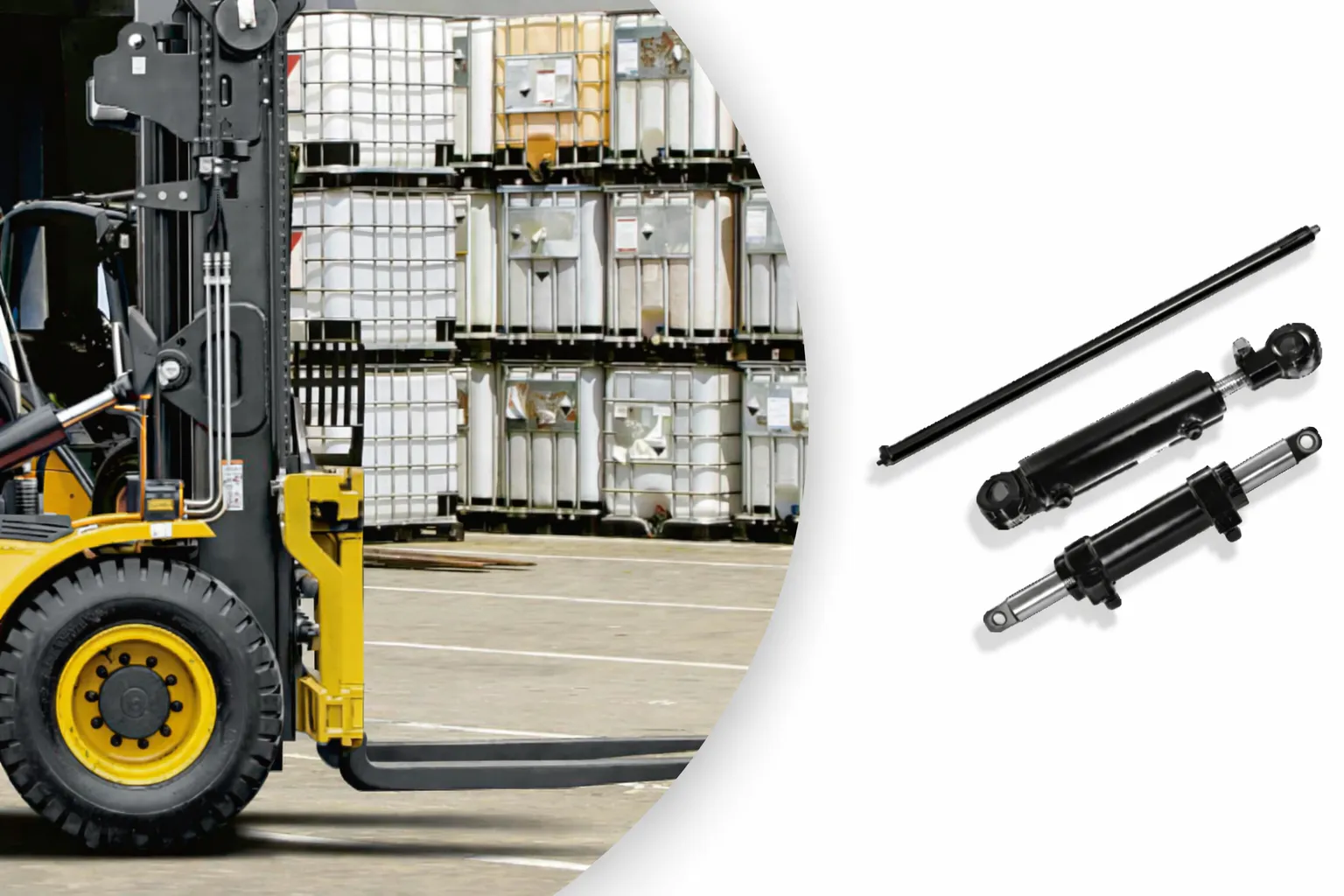
Before diagnosing any specific leak, a technician needs a clear mental model of the cylinder’s construction and which structural element occupies each physical zone. The forklift tilt cylinder is a double-acting hydraulic actuator, meaning it uses pressurized fluid on both sides of the piston to extend and retract the rod, giving the operator powered control of both forward and backward mast tilt. Its anatomy defines exactly where leaks can originate.
Rod Seal Zone
Located at the gland end where the piston rod exits the cylinder body. This is the highest-frequency leak location because the rod seal cycles with every single tilt movement, and the rod surface passes through it continuously, carrying any external contamination inward on the retraction stroke.
Piston Seal Zone
The piston carries seals that separate the two oil chambers inside the barrel. Piston seal failure produces internal bypass — fluid passes from the high-pressure chamber to the low-pressure chamber without doing useful work — rather than external leakage, but it manifests as drift and loss of holding force rather than visible fluid on the floor.
End Cap Static Seal Zone
The threaded or bolted end caps at each end of the cylinder barrel carry static O-rings or face seals. Unlike the rod seal, these static seals are not subject to dynamic movement — but they can fail due to overtightening during assembly, corrosion of the seating face, or material degradation from incompatible hydraulic fluid formulations.
Port and Fitting Zone
The hydraulic pressure and return ports are threaded connections where hoses or pipe fittings mate with the cylinder body. Thread damage, missing or compressed backup rings, or loose fitting nuts create leak points that are distinct from internal seal failures — they are straightforward to locate because the leak appears at the threaded connection itself rather than on the rod surface or end cap face.
| Leak Zone | Leak Type | External Symptom | Repair Category |
|---|---|---|---|
| Rod Seal | External / Dynamic | Oil film on rod, drip from gland area | Seal kit replacement |
| Rod Wiper | External / Contamination | Dirt buildup at gland entry point | Wiper replacement |
| Piston Seal | Internal / Bypass | Mast drift under load, slow tilt response | Disassembly, piston seal replacement |
| End Cap Static Seal | External / Static | Seeping at end cap face or thread | O-ring replacement, cap re-torque |
| Port Fitting | External / Thread | Fluid at hose connection, fitting threads | Re-torque or thread repair |
| Barrel Wall | External / Structural | Sweat or seep through barrel body | Cylinder replacement |
The 7 Root Causes of Forklift Tilt Cylinder Oil Leaks
Each of the seven causes below represents a distinct failure mechanism. Misidentifying the root cause leads to repairs that fail within weeks or days because the underlying driver is still present. Work through this list systematically — starting with external visual inspection before any disassembly — to confirm which category applies before purchasing replacement parts.
Cause 1 — Rod Seal Wear from Normal Cycling Fatigue
Where it appears: The primary rod seal sits inside the gland end cap, wrapped around the rod. Wear here produces a persistent oil film on the rod surface visible immediately after tilt operation, and an accumulation of hydraulic fluid that drips from the lowest point of the gland housing during and after operation.
Root cause: Standard polyurethane (PU) or nitrile (NBR) seals have a finite cycle life. In a forklift used for two full shifts daily, the rod seal may complete 500 to 800 cycles per day. Most OEM seals are rated for 200,000 to 400,000 cycles — meaning the seal in a high-utilization warehouse may approach end-of-life in 18 to 30 months of service without any abnormal operating condition being present. The failure is not a defect; it is normal consumable wear.
Fix: Replace the full forklift tilt cylinder seal kit — not just the rod seal in isolation. Replacing only the failed element while leaving adjacent seals at similar wear stage results in a repeat leak within a short interval. Drain the cylinder completely, remove the gland end cap, extract the old seal cartridge, clean and inspect the rod surface for pitting or scoring, then install the new seal kit with light hydraulic fluid lubrication on each element during assembly. Re-torque the end cap to the manufacturer’s specified torque value.
Cause 2 — Piston Rod Surface Damage (Scoring, Pitting, or Corrosion)
Where it appears: A damaged rod surface produces an external leak that looks identical to a seal-wear leak — oil film on the rod — but returns within days of a seal replacement. The distinguishing sign is a visible track or groove in the chrome surface, or pitting caused by corrosion from chemical exposure in facilities handling aggressive substances.
Root cause: The piston rod’s hard chrome plating is the sealing contact surface. When that surface is scratched by a foreign particle drawn in past a failed wiper seal, scored by metal-to-metal contact during a mast collision event, or pitted by corrosive atmospheric exposure (common in Colombian coastal facilities in Barranquilla or Cartagena where salt air accelerates oxidation), the new seal cannot form a continuous fluid film across the contact zone. Every cycle pushes a micro-quantity of fluid past the gap created by the surface defect.
Fix: Minor pitting (depth under 0.05 mm, length under 3 mm) may be addressable through chrome repair plating in a qualified hydraulic cylinder repair workshop. Scoring above these thresholds, or any pitting that creates a continuous channel along the rod axis, requires rod replacement. Installing a new seal kit on a damaged rod is a short-term repair that will fail again quickly — address the rod first. When specifying a replacement rod for a forklift tilt cylinder operating in a corrosive environment, consider upgrading to 316L stainless steel rod or ceramic composite coating over the standard carbon steel plus hard chrome combination.
Cause 3 — Wiper Seal Failure Allowing Contamination Ingestion
Where it appears: The rod wiper sits at the outermost point of the gland, before the rod seal. A failed wiper allows abrasive dust, fine grit, and in outdoor operations, sand or water, to be carried past the wiper lip and directly onto the rod seal lip on the retraction stroke. The first external symptom is a ring of contamination visible at the gland entry on the exposed rod length — a dark, gritty ring that should not be present on a healthy cylinder.
Root cause: Wiper failure can be caused by hardening and cracking of the polyurethane compound due to UV exposure or temperature cycling, physical tearing from a rod surface burr, or chemical attack in environments where cleaning solvents are used near the forklift. In Colombian cold-storage warehouses operating between 2°C and -20°C, wiper compounds optimized for standard temperature ranges may harden and lose contact force at low temperature, creating a gap through which contamination enters.
Fix: Replace the wiper as part of the complete forklift tilt cylinder seal kit. Clean the rod surface thoroughly before assembly — any abrasive material left on the rod will damage the new wiper lip within the first operating cycle. In cold-storage applications, specify a low-temperature wiper compound rated to the minimum ambient temperature at your facility. For operations in high-dust environments such as grain warehouses in the Valle del Cauca agricultural region of Colombia, consider adding a protective rod boot between services to extend wiper life between scheduled maintenance intervals.
Cause 4 — End Cap Static O-Ring Failure
Where it appears: Static O-ring leaks present as slow seeping at the threaded or bolted end cap joint — fluid that appears after extended periods of pressurized operation and accumulates at the lowest point of the joint line. Unlike rod seal leaks, this type does not produce fluid on the rod surface itself; the wet area is at the cap circumference or face.
Root cause: Static O-rings can fail through compression set (the O-ring takes a permanent flat shape and loses contact stress), chemical incompatibility with the hydraulic fluid in use, overtightening during a previous service that crushed the O-ring beyond its elastic limit, or corrosion of the metal groove that the O-ring seats in. When an end cap is over-torqued, the O-ring is deformed permanently rather than elastically compressed — after a subsequent removal and re-installation, it no longer generates the contact stress needed to seal the joint.
Fix: Remove the end cap, clean all mating faces and O-ring grooves, inspect the groove dimensions against the cylinder’s design specification, and install a new O-ring of the correct compound and cross-section. Do not reuse old O-rings even if they appear undamaged after removal — the compression set effect may not be visually apparent. Re-torque the end cap to the exact torque specification, not by feel, using a calibrated torque wrench. Overtorquing will repeat the failure mode in the short term.
Cause 5 — Hydraulic Port Fitting Leak
Where it appears: Port fitting leaks are among the easiest to locate because the fluid appears directly at the hose-to-cylinder connection point. They are also frequently misdiagnosed as hose leaks rather than cylinder leaks, leading technicians to replace serviceable hoses while the actual leak — at the fitting thread or backup ring — continues unaddressed.
Root cause: The most common causes are loose fittings that have vibrated loose over time in a high-cycle operation, missing or displaced backup rings (the O-ring or bonded seal that provides the primary seal at the face-seal fitting), damaged fitting threads from previous overtightening or cross-threading during hose replacement, and hydraulic shock from pressure spikes driving fluid past an undersized or aged backup ring. In older forklifts — particularly used Hyster units imported into Colombia from North American markets — BSP-thread port fittings may have been replaced at some point with NPT-thread fittings of nominally similar size but incompatible thread geometry, creating a pseudo-sealed connection that leaks progressively as operating pressure fluctuates.
Fix: Wipe the port area dry, pressurize the system to normal operating pressure, and inspect each fitting connection with a cloth — a wet cloth after 60 seconds of operation confirms the fitting as the leak source. Tighten loose fittings to the torque specification for the fitting standard in use (ORFS, BSP, or NPT). Replace backup rings and O-rings at every hose disconnection — they should be treated as single-use consumables. If thread damage is present, evaluate thread repair with thread inserts (Heli-Coil) or cylinder replacement depending on damage severity.
Cause 6 — Piston Seal Bypass (Internal Leak)
Where it appears: Piston seal bypass does not produce visible fluid on the floor — it is an internal leak between the two sides of the piston inside the sealed cylinder barrel. The symptomatic evidence is functional rather than visual: the mast tilts slowly when the control valve is held in the tilt position, the cylinder cannot hold the mast at a fixed tilt angle under full rated load (drift), or the cylinder reaches end-of-stroke but the tilt angle achieved is less than it should be because hydraulic fluid is bypassing internally rather than doing productive work on the piston face.
Root cause: Piston seal deterioration is typically caused by fluid contamination with abrasive particles (an ISO 4406 cleanliness class much dirtier than the seal design specification), excessive operating temperature that degrades the seal compound beyond its rated thermal limit, or hydraulic shock from rapid valve closing that generates pressure transients well above the cylinder’s rated working pressure. In Colombian port logistics facilities handling shipping containers, rapid load cycles with frequent sudden stops can generate pressure spikes that progressively damage piston seals even in otherwise well-maintained equipment.
Fix: Full cylinder disassembly is required — the piston must be removed from the barrel to access the piston seal. Before rebuilding, flush the cylinder barrel thoroughly, measure the bore for any scoring, and test the hydraulic fluid for ISO cleanliness class. If the fluid fails the cleanliness standard (ISO 4406 class above 18/16/13 for this application), the entire hydraulic system’s filter element and reservoir should be serviced before the rebuilt forklift tilt cylinder is returned to service. Reinstalling a rebuilt cylinder into contaminated oil repeats the piston seal failure within a short period.
Cause 7 — Cylinder Barrel Structural Failure
Where it appears: Structural barrel failures are the rarest of the seven causes but also the most unambiguous — hydraulic fluid seeps or sprays from the barrel wall itself rather than from any joint, seal, or fitting. A faint wet streak along the barrel length, or a persistent weep point on the outer surface of the tube body that is not associated with any threaded joint, indicates a through-wall failure.
Root cause: Barrel failures result from one of three sources: fatigue cracking from long-term cyclic pressure loading on a barrel that has been operating at or above its rated working pressure; impact damage from a collision event (mast striking an overhead obstruction, for example) that deformed the barrel wall beyond its elastic limit; or severe internal corrosion — typically from water contamination of the hydraulic fluid over an extended period — that has reduced the effective wall thickness below the structural minimum. Overpressure events, which can occur when a relief valve is set incorrectly or fails to open, can also create sudden barrel failures at stress concentration points such as port bosses and weld zones.
Fix: There is no field repair for a structurally failed cylinder barrel. The cylinder must be removed from service immediately and replaced. Attempting to patch or weld-repair a pressurized hydraulic cylinder barrel is prohibited under EN 13135 (Europe), ANSI/ASME B30.22, and Colombian NTC standards for pressure-containing components. When ordering the replacement, document the cause of the failure — if overpressure was the root cause, the system relief valve must be reset to within specification before the new cylinder is installed, or the replacement will fail through the same mechanism.
Material System — What the Seal Kit Components Are Made Of and Why It Matters
When ordering replacement parts for a forklift tilt cylinder oil leak repair, the seal material specification is not a detail to leave to chance. The wrong compound — even one that physically fits the groove dimensions — will fail in a fraction of the service life of the correct material because the chemical and thermal environment inside and outside the cylinder varies enormously between applications. The following overview covers the principal seal materials used in tilt cylinder seal kits and the conditions where each is the right or wrong choice.
NBR (Nitrile Rubber)
The standard seal material for most general-purpose hydraulic cylinders using mineral oil-based hydraulic fluid. Operating temperature range -40°C to +100°C. Excellent resistance to mineral oils and petroleum-based fluids. Poor resistance to ketones, aromatic solvents, and strong oxidizing agents. Appropriate for the majority of Colombian warehouse forklifts operating on standard ISO VG 46 mineral hydraulic oil.
PU (Polyurethane)
Higher abrasion resistance than NBR, making PU the preferred rod seal material for environments with higher contamination exposure. Operating range -30°C to +80°C. Not recommended for use with water-glycol (HFC) fire-resistant hydraulic fluids or where cleaning with water-based detergents results in fluid contamination. Most standard forklift tilt cylinder seal kits use PU for the rod seal and NBR for static seals.
FKM (Viton)
The premium seal material for chemical-resistant and high-temperature applications. Operating range -20°C to +200°C. Resistant to most mineral oils, synthetic oils, aromatic hydrocarbons, and dilute acids. Required in chemical warehouses and pharmaceutical distribution centers where the ambient atmosphere or accidental fluid exposure falls outside the NBR compatibility range. Typically 2 to 3 times the cost of equivalent NBR seals.
PTFE
Near-universal chemical resistance across essentially the entire pH range and most organic solvents. Used in spring-energized configurations where the PTFE seal lip is maintained in contact by a stainless steel coil spring. Low friction coefficient reduces rod drag and wear. Typically used for backup rings and guide rings rather than as the primary rod seal in standard tilt cylinder seal kit configurations due to its limited elasticity.
Hydraulic Fluid Compatibility Note
Always match the seal compound to the hydraulic fluid in use, not just to the cylinder’s original specification. If the forklift has been converted from mineral oil to a fire-resistant or biodegradable fluid, the existing seals may be incompatible with the new fluid — a common source of premature seal failure in facilities that switch fluid type for environmental compliance reasons without simultaneously replacing the cylinder seals with a compatible compound. Check the fluid manufacturer’s seal compatibility chart before any fluid type change in Colombia’s HSEQ-regulated industrial facilities.
Preventive Maintenance Schedule to Avoid Oil Leaks Before They Develop
The most cost-effective maintenance strategy for the hydraulic forklift tilt cylinder is one that intercepts the conditions that lead to leaks before they occur, rather than responding after the failure has progressed to the point of visible fluid loss. The schedule below is a practical baseline for facilities in Colombia and across the Latin American industrial sector operating single and double-shift patterns with counterbalance forklifts in the 2 to 5-tonne class.
Recommended Replacement Cylinders — EP-HCY-1 and EP-HCY-2
When oil leak diagnosis confirms that cylinder replacement is the correct path — either because the rod is beyond recoverable condition or because barrel damage is found — the following models from the EP-HCY series are the appropriate direct-replacement candidates for counterbalance forklifts in the 2 to 5-tonne range. Both models are available with the full forklift tilt cylinder seal kit pre-installed and with optional chemical-grade FKM seals for specialized applications.


Regulatory Obligations Around Forklift Hydraulic Cylinder Maintenance — Colombia and Global
A forklift tilt cylinder oil leak is not just a mechanical failure — it creates legal obligations across multiple regulatory frameworks depending on your operating jurisdiction. Understanding these obligations ensures that your maintenance program satisfies auditors and avoids the financial penalties and operational shutdowns that result from documented hydraulic system non-compliance.
Colombia — SG-SST, Resolution 0312
Under Colombia’s Sistema de Gestión de Seguridad y Salud en el Trabajo (SG-SST), employers operating forklifts must maintain documented inspection records for all critical systems including hydraulic cylinders. Resolution 0312 of 2019 establishes minimum standards for occupational safety management systems, and a forklift with a known oil leak that continues in service without documented repair represents a compliance gap that exposes the operator to labor inspection sanctions. Hydraulic fluid spills on warehouse floors additionally trigger obligations under Decreto 1076 for environmental contamination prevention.
USA — OSHA 29 CFR 1910.178
In the United States, OSHA 29 CFR Part 1910.178 explicitly requires that forklifts found to be in need of repair (including hydraulic leaks) be removed from service until they have been restored to safe operating condition. Sub-section (p)(1) specifically states that any forklift discovered to have a defect that affects safety shall not be placed back in service until the defect has been corrected. Hydraulic fluid leaks from the tilt cylinder are cited as examples of safety-affecting defects in OSHA compliance guidance documents.
EU — EN 1726-1, Machinery Directive
European Standard EN 1726-1 (Safety of industrial trucks — self-propelled trucks up to and including 10,000 kg capacity) requires that counterbalance forklift hydraulic systems include tilt lock valves to prevent uncontrolled mast movement under load-loss conditions. A tilt cylinder with a deteriorated piston seal that allows drift may indicate that the tilt lock valve or the cylinder itself cannot hold the mast stationary — a direct non-conformity with EN 1726-1 requirements that would be flagged in a CE conformity audit. Maintenance records demonstrating scheduled cylinder service and seal replacement are part of the technical file required for CE marking.
Brazil — NR-11, ABNT NBR
NR-11 (Norma Regulamentadora 11 — Transporte, Movimentação, Armazenagem e Manuseio de Materiais) requires documented forklift inspection and maintenance programs including hydraulic system checks. ABNT NBR 12693 and the associated technical standards for hydraulic cylinders used in mobile industrial machinery specify material quality and testing requirements that replacement forklift tilt cylinder parts must meet when operating in the Brazilian market. Facilities in São Paulo, Santos, and across Brazil must maintain audit-ready maintenance documentation showing hydraulic cylinder condition and service records.
Across all jurisdictions, documenting the repair — not just performing it — is the compliance requirement. After any forklift hydraulic cylinder repair, record the date, the cylinder identification, the parts replaced (including seal kit lot number), the technician performing the work, and a post-repair pressure test or functional load test result. This record should be retained in the forklift’s maintenance file and cross-referenced in the SG-SST system for Colombian facilities.
Compatible Products — Complete Hydraulic System Supply
Repairing or replacing a forklift tilt cylinder correctly requires that the rest of the hydraulic system is also in compatible condition. An oil leak that is caused by contaminated fluid will return in the new or rebuilt cylinder if the pump, filter, and reservoir are not serviced simultaneously. We supply the full range of hydraulic drive system components for forklift applications, enabling single-source procurement for both the cylinder and the ancillary components that must be matched to it.
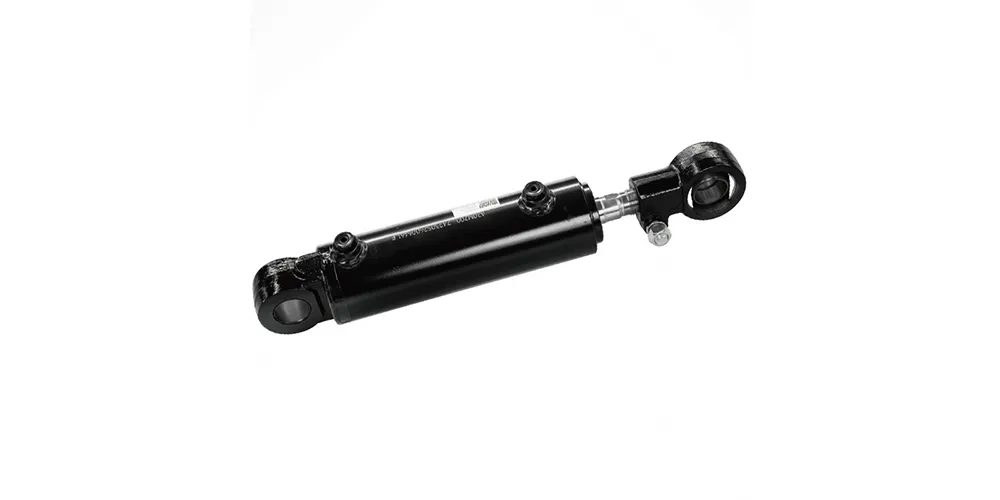
Tilt Cylinder Series
Our complete Tilt Cylinder range extends beyond the forklift-specific EP-HCY series to cover industrial vehicles, reach stackers, and specialized attachment equipment that use the same basic tilt cylinder geometry but in different physical configurations. If your facility operates a mixed fleet — counterbalance forklifts alongside reach trucks or AGV-assisted handling systems — the extended tilt cylinder range provides a single-supplier solution for all tilt actuation requirements across the fleet, simplifying spare parts inventory and maintenance supplier management for Colombian warehouse operators managing multiple equipment classes.
Hydraulic Pump Station Series
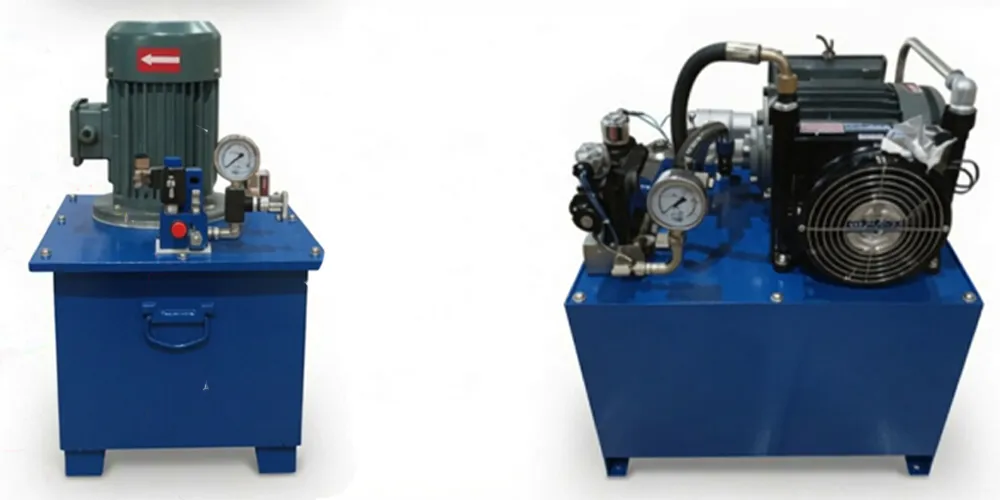
The hydraulic pump station generates and regulates the fluid pressure that the forklift tilt cylinder converts into mast movement force. After a cylinder rebuild or oil leak repair, the pump station’s output pressure should be verified against the cylinder’s rated working pressure — an incorrectly adjusted relief valve set above the cylinder rating is one of the root causes of premature barrel and piston seal failure. Our pump station series includes models with adjustable relief valves, built-in pressure gauges, and fine-filtration outlet ports that maintain ISO 4406 fluid cleanliness at the point of delivery to the cylinder — eliminating one of the primary causes of repeated seal failures in high-cycle forklift applications.
Frequently Asked Questions
Editor: PXY