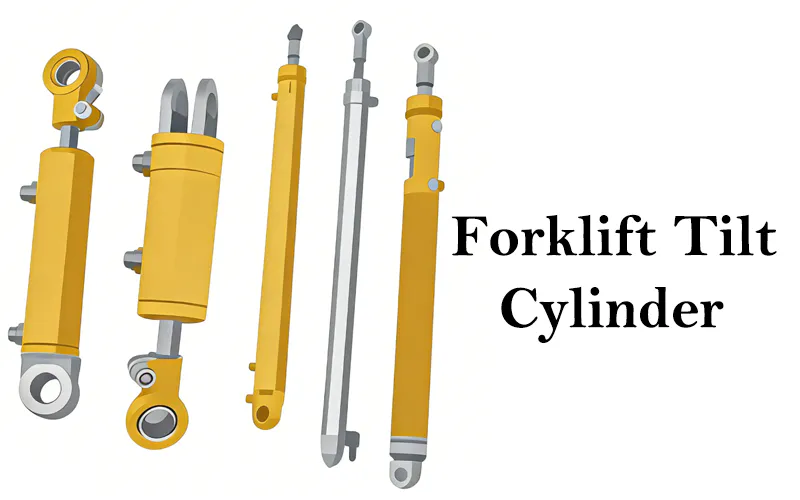
Product Description
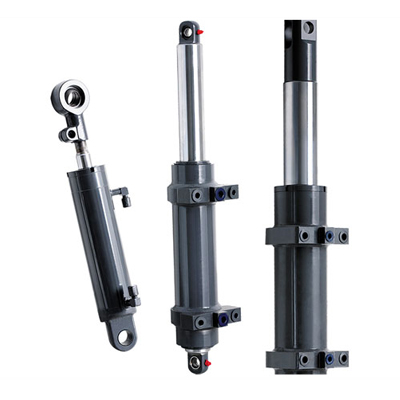
China Factory Fabricate Bulk-Production Reasonable Priced Hydraulic Steering Cylinder for Large Forklifts
Product Specifications:
| Item | Specifications |
| Bore diameter | 60mm~500mm |
| Bod diameter | 30mm~450mm |
| Stroke | 100mm~600mm |
| Woorking Pressure | 17-40Mpa,Customizable |
| Surface treatment of piston rod | HaHard Chrome Plating,Electroplated Milky White Chromium+Hard Chromium,Nickel Plating+Hard Chromium Plating,High-Velocity Oxygen-Fuel CrC NiC,Ceramic Coating,Nitriding,Laser Cladding |
| Material | High tensile cold drawn tube, precision honed for extended seal life |
| Mounting | Earring,Flange,Clevis.Foot,Trunnion,Customizable |
| Seal Type | Parker,NOK, Hallite GAPI or as customer’s requirement |
| Warrenty | 18 months |
| MOQ | 1pcs |
| Production Time | Based on order quantity.normally 30-40 days. |
| Certification | ISO9001,CE, SGS |
| Color | Gery,Yellow,Red,Black,Customizable |
| Packaging | metal case,plywood case,carton or as requirement |
| Service | OEM & ODM |
| Price Advantage | Competitive factory price with guaranteed quality |
| Business Type | Manufacturer |
Product Display:
The built-in sensor of the steering cylinder is used to accurately measure the steering displacement of large forklifts.
Mounting Method:
Appliactions: Walking machinery large forklift.
Other Related Products:
Our Factory:
Inspection Process:
| Inspection Type | Inspection Standard |
| Raw Material Inspection | Before storage, QC takes the measurement of the raw materials. |
| Process Material Inspection | During the production, QCs conduct a random inspection. Before the hydraulic cylinder parts transferred to the next process, QCs takes inspection. |
| Final Function Testing | All the hydraulic cylinders take hydraulic function test |
Inspection of Mechanical Properties of Raw Materials
Process Material Inspection
Final Function Testing
Packing & Delivery:
About US:
Our Certificate
ZheJiang Tianjian Hydraulic Technology Co.,Ltd is specializing in the production of various types of hydraulic cylinders as well as cylinder barrel, piston cylinder and other cylinder accessories.
As a highly specialized manufacturer of hydraulic cylinders, tianjian provides design optimization solutions and reliable products to many customers at home and abroad. No matter in construction machinery, railway bridge machinery, port ship machinery, metallurgy and mining machinery, oil and light industry machinery, special vehicles and other industries, tianjian can provide various standard and non-standard hydraulic cylinder design optimization schemes and products according to users’ requirements, and provide integrated services for perfection and quality.
If possible, when contact with us, please apply information as below
|
Bore |
Rod |
Stroke |
Work Pressure |
Mounting |
Work environment |
|
|
|
|
|
|
|
Or you can offer us your sketch diagram or photos so that we could understand you exactly meaning, help us avoid mistakes.
And if you have samples, we can manufacture according to your samples after sending to us.
Welcome to our factory if you have any time.
Your satisfaction is our biggest motivation.
Now, you can contact with us for any question or inquiry.
FAQ:
1, What does your company do?
A: we are a supplier of high quality hydraulic products including Hydraulic Cylinder, Hydraulic Motor, Hydraulic Power Pack, Hydraulic station and other Hydraulic components.
2, Are you a manufacture or a trading company?
A: We are a manufacturer.
3, What certificate do you have?
A: All our factories are ISO certificated. And our main suppliers of materials and parts are with CE, RoHS, CSA and UL certificates.
4, How long is your delivery time?
A: The delivery time depends on different products and quantity. The cylinder usually need about 45-60 days and the Motor need about 30-50 days.
5, Can you make parts as customer’s requirement or drawing?
A: Yes, we can OEM for you as your drawings. Our engineer also can give you professional support for technical suggestions.
6, What kind of payment terms do you accept?
A: We prefer T/T through bank. 30% when order is confirmed and 70% before shipment. L/C is also acceptable for amount over 20,000USD.
7, What is your warranty policy?
A: All our products are warranted for 1 full year from date of delivery against defects in materials and workmanship. This warranty does not cover parts that are worn out through the course of normal operation or are damaged through negligence. We serious remind that unclean hydraulic oil will definitely cause damage to your Hydraulic components. And this damage is not included in the warranty range. So we strongly suggest you to use new clean oil or make sure the system oil are clean when using our parts
| Certification: | GS, RoHS, CE, ISO9001 |
|---|---|
| Pressure: | Medium Pressure |
| Work Temperature: | High Temperature |
| Acting Way: | Double Acting |
| Working Method: | Straight Trip |
| Adjusted Form: | Regulated Type |
| Samples: |
US$ 600/Set
1 Set(Min.Order) | |
|---|
| Customization: |
Available
|
|
|---|
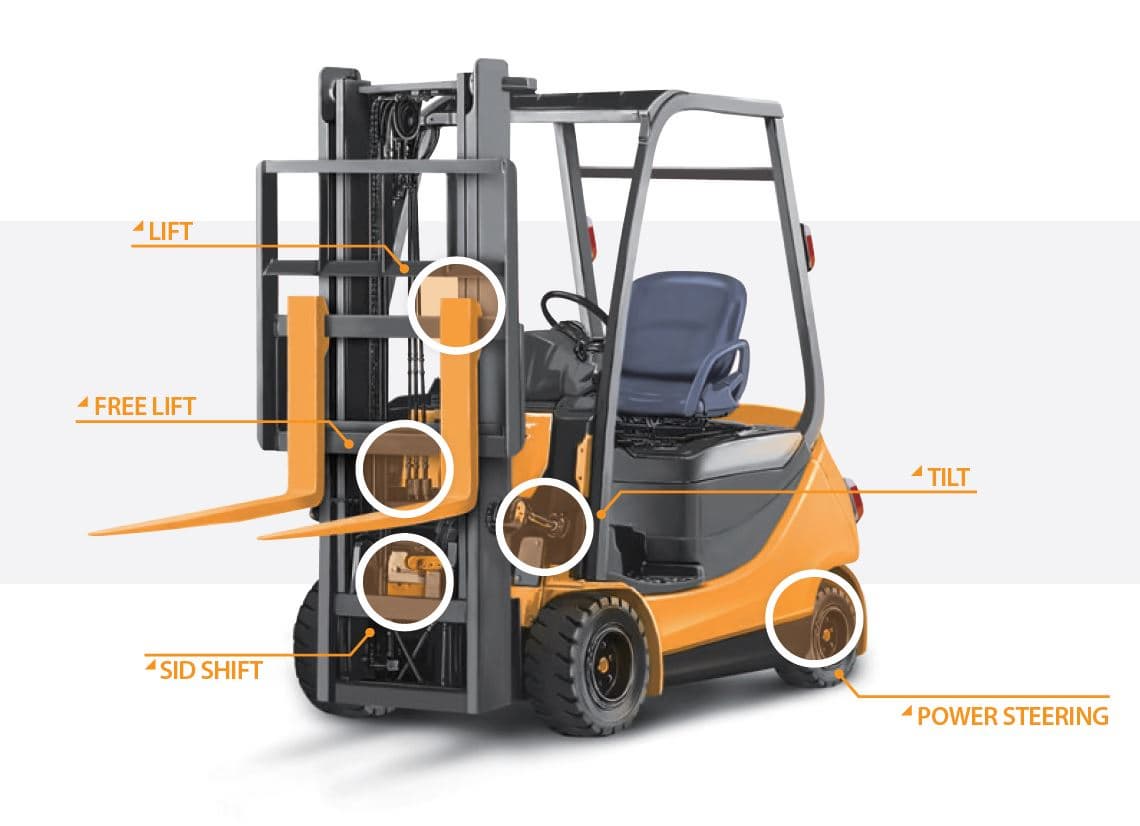
What are the Advantages of Using Hydraulic Cylinders in Forklifts?
Hydraulic cylinders play a pivotal role in the operation of forklifts, providing several advantages that contribute to their efficiency, versatility, and overall performance. Here are the key advantages of using hydraulic cylinders in forklifts:
- High Lifting Capacity:
- Smooth and Controlled Operation:
- Adjustable Lift Heights:
- Quick Response Time:
- Reliable and Robust:
- Simple and Compact Design:
- Wide Range of Applications:
- Ease of Maintenance:
Hydraulic cylinders are capable of generating significant lifting forces, allowing forklifts to handle heavy loads with ease. The hydraulic system’s ability to generate high pressure and transfer it to the cylinder results in impressive lifting capacities, enabling the forklift to lift and transport substantial loads efficiently.
Hydraulic cylinders provide smooth and controlled operation during lifting and lowering processes. The hydraulic fluid, acting as the medium, offers excellent resistance to compression and allows for precise control over the movement of the piston. This enables operators to perform delicate maneuvers and position loads accurately, contributing to safe and efficient material handling.
Hydraulic cylinders allow for adjustable lift heights in forklifts, providing versatility in various material handling tasks. By controlling the amount of hydraulic fluid pumped into the cylinder, operators can raise or lower the forks or lifting platform to suit different load sizes, stacking heights, and clearance requirements. This adaptability enhances the forklift’s versatility and enables it to work efficiently in various environments.
Hydraulic systems, including hydraulic cylinders, offer rapid response times, resulting in swift lifting and lowering operations. When operators activate the hydraulic controls, the hydraulic fluid instantly transmits pressure to the cylinder, initiating the desired movement. This quick response time allows for efficient load handling, reduces cycle times, and improves overall productivity in material handling applications.
Hydraulic cylinders are known for their reliability and durability, making them suitable for demanding industrial applications. They are designed to withstand heavy loads, frequent use, and harsh operating conditions. With proper maintenance and regular inspections, hydraulic cylinders in forklifts can provide long service life and dependable performance, minimizing downtime and maintenance costs.
The design of hydraulic cylinders is relatively simple and compact, contributing to the overall compactness and maneuverability of forklifts. The compact size of the hydraulic cylinders allows for efficient integration within the forklift’s structure, optimizing space utilization and ensuring that the forklift remains agile and capable of maneuvering in tight spaces.
Hydraulic cylinders in forklifts find applications across a wide range of industries and material handling tasks. Whether it is lifting and stacking pallets, loading and unloading cargo, or handling heavy industrial equipment, the versatility and adaptability of hydraulic cylinders make them suitable for various tasks and environments.
Hydraulic cylinders are relatively easy to maintain, with routine inspections and preventive maintenance ensuring their optimal performance. Regular checks for leaks, proper lubrication, and component replacements as needed can help extend the lifespan of the hydraulic cylinders and contribute to the overall reliability and safety of the forklift.
The advantages offered by hydraulic cylinders in forklifts, such as high lifting capacity, smooth operation, adjustable lift heights, quick response time, reliability, compact design, versatility, and ease of maintenance, make them indispensable components in the material handling industry. These advantages contribute to enhanced productivity, improved safety, and efficient handling of loads in diverse work environments.
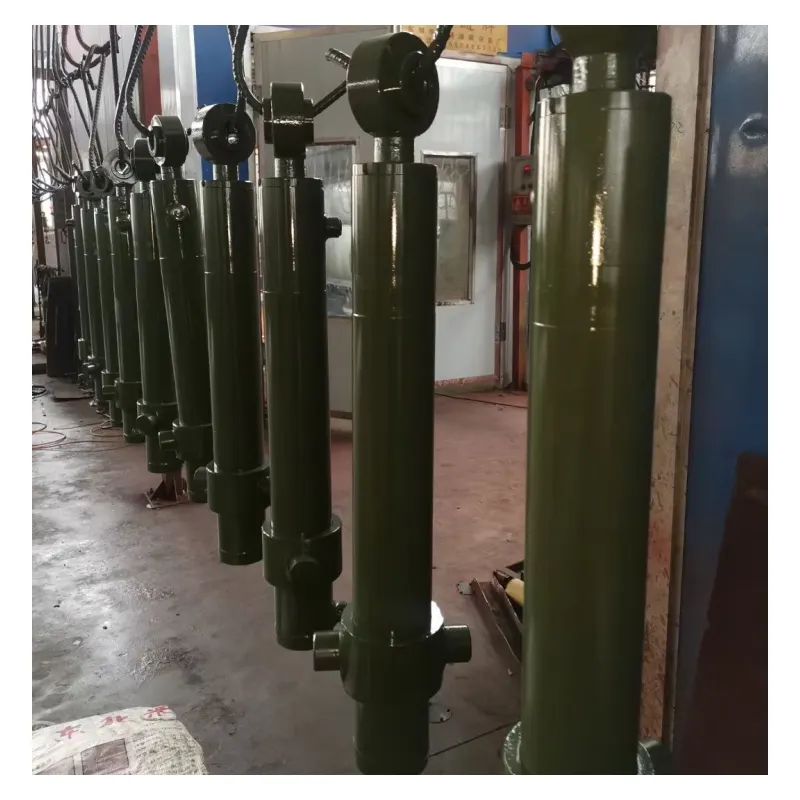
Can hydraulic cylinders be used in container handling forklifts?
Yes, hydraulic cylinders are commonly used in container handling forklifts. Container handling forklifts, also known as container handlers or reach stackers, are specifically designed for lifting and moving shipping containers. Hydraulic cylinders play a crucial role in the operation of these specialized forklifts. Here’s an explanation of how hydraulic cylinders are used in container handling forklifts:
Hydraulic cylinders are utilized in container handling forklifts in the following ways:
1. Mast Lifting:
The main function of hydraulic cylinders in container handling forklifts is to lift and lower the mast. The mast is the vertical assembly that houses the lifting mechanism and forks. Hydraulic cylinders, typically positioned on either side of the mast, provide the power and control for vertical movement. By extending or retracting the cylinders, the forklift can lift and lower containers to the desired height, allowing for stacking or unstacking operations.
2. Reach and Extend:
Container handling forklifts often feature telescopic masts that can reach out and extend. Hydraulic cylinders are responsible for extending and retracting the telescopic sections of the mast. These cylinders enable the forklift to reach containers that are placed further away or to adjust the reach based on container size. The precise control offered by the hydraulic cylinders allows for accurate positioning and safe handling of containers.
3. Container Tilting:
In some container handling forklifts, hydraulic cylinders are used to tilt the container. Tipping containers slightly can help with load stability during stacking or unstacking. Hydraulic cylinders control the tilting operation, allowing the forklift operator to adjust the container’s angle as needed.
4. Side Shift:
Container handlers often feature side shift functionality, which allows the forks or attachment to move horizontally. Hydraulic cylinders are employed to control the side shift movement, enabling precise positioning of the forks or attachment when handling containers. This feature facilitates alignment with container corners and ensures secure engagement.
5. Attachment Control:
Container handling forklifts may have specialized attachments, such as container spreaders or twist locks, for secure container lifting and transport. Hydraulic cylinders play a vital role in controlling the movements of these attachments. They enable precise adjustments and alignment, ensuring proper engagement with the container and safe handling during loading and unloading operations.
In summary, hydraulic cylinders are extensively used in container handling forklifts for mast lifting, reach and extend operations, container tilting, side shift functionality, and attachment control. These cylinders provide the necessary power, control, and precision required to handle containers efficiently and safely in various container terminal and port environments.
How does a forklift hydraulic cylinder handle variations in cylinder material?
A forklift hydraulic cylinder is designed to handle variations in cylinder material and accommodate different operating conditions. Here’s an explanation of how it achieves this:
The hydraulic cylinder’s ability to handle variations in cylinder material is primarily dependent on its design and the following factors:
1. Material Selection:
The choice of cylinder material is crucial in determining its performance and durability. Forklift hydraulic cylinders are typically constructed using high-strength materials such as steel or aluminum alloys. The specific material is selected based on factors like load capacity, environmental conditions, and the desired strength-to-weight ratio. Different materials offer varying levels of strength, corrosion resistance, and heat resistance, allowing the cylinder to adapt to different operating environments.
2. Structural Integrity:
The hydraulic cylinder is designed to maintain its structural integrity regardless of the cylinder material. It incorporates features such as robust construction, precise machining, and appropriate reinforcement to ensure reliable performance. The cylinder’s structural design accounts for the specific characteristics and properties of the chosen material, providing the necessary strength and stability to handle the operating conditions.
3. Seal Compatibility:
The hydraulic cylinder’s seals, including O-rings and other sealing components, are designed to be compatible with various cylinder materials. The seals are carefully selected to withstand the specific properties of the material, such as its hardness, temperature range, and chemical resistance. This ensures proper sealing and prevents fluid leakage, regardless of the cylinder material.
4. Surface Treatment:
In some cases, the cylinder material may undergo surface treatments or coatings to enhance its performance and protect against wear, corrosion, or other forms of deterioration. For instance, steel cylinders may be coated with protective layers such as chrome plating or various types of coatings to improve their resistance to corrosion and abrasion. These surface treatments can be tailored to suit the specific cylinder material and operating conditions.
5. Performance Testing:
Before being deployed in forklifts, hydraulic cylinders undergo rigorous performance testing to ensure their functionality and reliability. These tests evaluate factors such as load capacity, pressure resistance, and endurance under different operating conditions. The testing process helps identify any potential issues related to the cylinder material and allows for necessary adjustments or modifications.
In summary, a forklift hydraulic cylinder handles variations in cylinder material through careful material selection, robust structural design, seal compatibility, surface treatments, and thorough performance testing. These factors ensure that the cylinder can effectively handle different materials, providing optimal performance and durability in various operating conditions.


editor by CX 2023-10-15