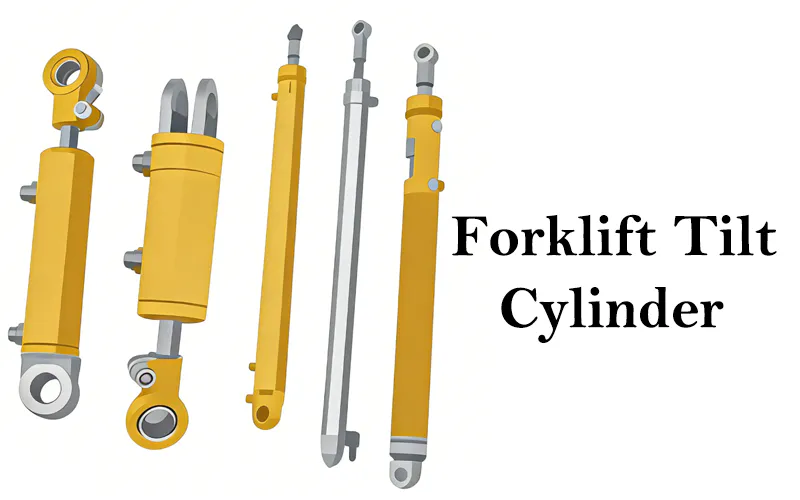
Product Description
HFD180 Hot -Spinning Machine(Diameter 89-180mm)
A. Product description
HFD180 Hot-Spinning Machine including: Intermediate Frequency Heating Equipment, Thermal-Spinning Forming Machine, Bottom Pushing Machine, etc. Total power for Complete Equipment is about 200Kw, installation area is 13000 x 8000mm, specific parameter as following:
Intermediate Frequency Heating Equipment Model D180-110Kw
A.Main Technical Parameter:
| Rated Power(Kw) | Rated Frequency(Hz) | Power Frequency Voltage(V) |
| 110 | 2500 | 3-380V |
B.Equipment Performance and Technical Requirement:
| Rated Power(Kw) | Max Power(Kw) | Rated Frequency(Hz) | Power Frequency Voltage(V) | Output Voltage(V) | Matching Transformer(KVA) |
| 110 | 250 | 2500 | 3N-380 | 750 | 200 |
1-2, Master Control Broad:
Master Control Broad uses imported integrated circuit. Rectifier triggers do not need any adjustment, it has phase sequence to adaptive electric circuit with high reliability. Inverter adapts sweeping-frequency and zero pressure start-up, it has the function of heavy load starting. Frequency tracking circuit using the average sampling programs to improve anti-jamming capability of the inverter. Inverter circuit also added inverter angle regulating circuit, which can automatically adjust load impedance matching.
1-3, Protection and Control:
Master Control Broad internal function includes: Rectifier phase shifting trigger, Phase self-adaption, Inverter trigger, Reverse lead angle lock, Inverter repeat start, Over-current protection, Over-voltage protection, Open-phase protection, Hydraulic under-voltage protection, Control panel under-voltage protection,etc.
1-4, The Standard of Frequency Converter:
ZBK46001-87 Semiconductor Frequency Converter for Induction Heating
JB/DQ6367-88 Semiconductor Frequency Converter for Intermediate Frequency Induction Heating, Product Quality Analysis and so on
JB4086.85 Technical Condition of Electric Control Equipment for Intermediate Frequency Induction Heating
JB/T4280-93 Intermediate Frequency Coreless Induction Furnace
1-5, Water Tank:
Frequency Converter and Capacitor all adopt open return system, it’s better for observation. Cabinet body with water pressure protection device.
1-6, External Power Cord:
External Frequency Power Cord enter from the top of Intermediate frequency power supply cabinet.
1-7, Power Regulating:
There is Power Regulating Knob on the panel of Intermediate Frequency Power Supply Cabinet, the output power of frequency converter is adjustable.
1-8, Main Circuit Connection:
Main circuits of the power supply cabinet are made by copper.
1-9, Color of Cabinet:
Computer spray gray.
C.Cooling Water System
3-1, Technique Data:
Cooling water inlet temperature: 5-35ºC
Cooling water outlet temperature:≤55ºC
Cooling water pressure:0.3-0.4Mpa
Water supply: 0.57135P(P is rated power) (M³/h)
Gradient of water return pipe:I-0.01
3-2, Quality Demand of Cooling Water:
PH:7-8.5
Total hardness: ≤10 degree
Available capacity of cooling water pond cannot less than 2~3 times of supplying water.
D. Supply Scope of Complete Equipment
4-1, Frequency Converter 1 set
4-2,φ180 Heater 1 set
4-3, Worktable 1 set
4-4, Closed Cooling Tower 1 set
E. Installation, Commissioning and Acceptance
5-1, Customer is in charge of the building projects, such as design of workshop, pond excavation,etc. Under the technical guidance of our company, customer can finish the installation of complete sets of equipment,i.e. taking and fixing the equipment in place, installing cooling water pipeline, installing connection cable, connecting power frequency cable.(Installation materials should be prepared by customer)
F. Technical Data Provided
6-1, Foundation Drawing for Equipment Installation, Drawing for Cooling Water Pipeline(Customer need to provide layout dimension drawing of workshop)
6-2, Operation Instruction for KGPS Thyristor Frequency Converter(Provided by random)
6-3, Equipment Inspection Certificate and Factory Packing List
Hot Spinning Machine Technical Parameters
A.Parameters for Cylinder
1-1, Cylinder Material: 34CrMo4 (35 CrMo),37Mn,30 CrMo,45#
1-2, Specification of Cylinder:
a.Diameter:φ89-180mm
b.Length: 400–1050mm
c.Thickness: 5–12mm
d.Weight: <80kg
B. Performance for Hot Spinning Machine
2.1, Production rate: <80s/bottle(including the time of input and output material)
2.2, Equipment total power: around 60KW
Main motor: 30KW–6P
2.3, Flap rotation torque: 20KN.m
2.4, Hydraulic system nominal operating pressure:5–8Mpa (Low pressure), 6-15Mpa (High pressure)
2.5, Speed of Mainshaft: 400~450 R/M
2.6, Two optional types for auxiliary heating: Automatic or Manual
C. Structure of Hot Spinning Machine
3.1, Hot spinning machine main engine includes main engine chassis, main shaft, jack catch clamping device, grip cylinder, oil dispenser.
3.2, Panel turnover mechanism includes turning plate, turning plate oil cylinder, turning plate bearing(single-boom) and adjusting mechanism, turning plate centre lower than 20mm of main shaft centre, cushion block.
3.3, Equipment includes feeding mechanism, discharge mechanism, air cylinder, removable and adjustable feed frame.
3.4, Steel pipe positioning mode: prelocalization
3.5, Hydraulic system includes high-low pressure pump, control valve and connecting pipeline.
3.6, One set electric control cabinet, 1 set electric control box.
3.7, Two types for Mould lifting device: Automatic or Manual
Main components for electric control box:
| Name | Manufacturer |
| Main bearing of the spindle | HangZhou Bearing Factory(China) |
| PLC | Mitsubishi(Japan) |
| Motor control ac contactor | Schneider(Electric Company) |
| Air switch, circuit breaker | Schneider(Electric Company) |
| Bottom switch | Schneider(Electric Company) |
| Intermediate relay | Omron |
| Programming controller | Mitsubishi(Japan) |
| Touch screen | TAIDA |
| Encoder | Koyo |
D100 Bottom Pushing Machine
A.Parameter for cylinder:
1.1, Material for cylinder: 34CrMo4 (35 CrMo), 37Mn, 30 CrMo,45#
1.2, Specification of cylinder:
a.Diameter:φ108-180mm
b.Length: 400–1050mm
c.Thickness: 5–12mm
d.Weight: <80kg
B. Performance for Bottom Pushing Machine
2.1, Production rate: <80s/bottle(including the time of input and output material)
2.2, Equipment total power: around 30KW
C. Structure of Bottom Pushing Machine
3.1, Bottom Pushing Machine consists of main engine, hydraulic system, feeding and discharging mechanism.
3.2, Two types for Bottom Pushing Device: Automatic or Manual
3.3, A set of Deslagging Device
CNC Roller type Spinning Machine
Processing Diameter: 406~920mm
| Machine Model | THG622 | THG660 | THG720 | THG920 |
| Processing Diamater | 406-622mm | 406-660mm | 559-720mm | 559-920mm |
| Processing Length | 5500-12500mm | 5500-12500mm | 5500-12500mm | 5500-12500mm |
| Processing Thickness | 10-30mm | 10-30mm | 10-30mm | 10-30mm |
| Ctentral Heigh | 1300mm | 1300mm | 1300mm | 1300mm |
| Main Engine Power | 200Kw | 250Kw | 280Kw | 355Kw |
| Rolling Wheel Swing Angle | 90 degree | 90 degree | 90 degree | 90 degree |
| Control Methods | CNC | CNC | CNC | CNC |
| Machine Dimension L*W*H | 23000*3200*2300mm | 23000*3200*2300mm | 31000*3200*2500mm | 31000*3200*3300mm |
CNC Roller type Spinning Machine
Processing Diameter: 219~406mm
| Machine Model | THG325 | THG406-IV |
| Processing Diamater | 219-325mm | 325mm-406mm |
| Processing Length | 800-2000mm | 800-2000mm |
| Processing Thickness | 5-15mm | 5-18mm |
| Central Height | 1100mm | 1200mm |
| Main Engine Power | 90Kw | 144Kw |
| Rolling Wheel Swing Angle | 100 degree | 100 degree |
| Spindle Speed | 700rpm | 700rpm |
| Control Methods | CNC | CNC |
| Machine Dimension L*W*H | 16000*2000*1420mm | 18000*2000*1600mm |
Template type Spinning Machine
Processing Diameter: 200~406mm
| Machine Model | THM232 | THM325 | THM406 |
| Processing Diamater | 200-232mm | 219-325mm | 325-406mm |
| Processing Length | 700-1700mm | 800-2000mm | 800-2000mm |
| Processing Thickness | 3-15mm | 5-15mm | 5-18mm |
| Central Height | 1000mm | 1100mm | 1200mm |
| Main Engine Power | 37Kw | 90Kw | 110Kw |
| Template Retroflexion Angle | 90 degree | 90 degree | 90 degree |
| Template Center Height Adjust | +-20mm | +-30mm | +-30mm |
| Control Method | PLC | PLC | PLC |
| Machine Dimension L*W*H | 16000*2000*1300mm | 16000*2000*1420mm | 18000*2000*1600mm |
Double Roller Series CNC Playback General Spinning Flow Forming Machine
Processing Diameter: 690~3000mm
| Model | Max Rough Diamater(mm) | Height from Spindle to Tailstock(mm) | Longitudinal Thrust(KN) | Radial Trust(KN) |
| 350PCNC | 690 | 1100 | 24 | 24 |
| 450PCNC | 890 | 1250 | 65 | 65 |
| 800PCNC | 1590 | 1250 | 65 | 65 |
| 700PCNC | 1400 | 2300 | 150 | 150 |
| 900PCNC | 1800 | 2500 | 200 | 200 |
| 1200PCNC | 2400 | 2500 | 300 | 300 |
| 1500PCNC | 3000 | 3500 | 400 | 400 |
Triple Roller Type CNC Power Spinning Flow Forming Machine
| Name | Unit | QX63-10CNC | QX63-20CNC | QX63-30CNC |
| Max Rough Diameter | mm | 400 | 600 | 700 |
| Min Rough Diameter | mm | 60 | 60 | 100 |
| Max length of work piece(positive rotation) | mm | 1200 | 2000 | 2500 |
| Max length of work piece(contrarotation) | mm | 2200 | 3000 | 4000 |
| Double center distance | mm | 4700 | 6000 | 6500 |
| Spindle Speed | rpm | 30-600 | 30-600 | 30-500 |
| Main engine power | Kw | 37/40 | 100/110 | 120 |
| Tail force | KN | 50 | 75 | 150 |
| Spinning roller base longitudinal stroke | mm | 1500 | 2000/2500 | 2500/3000 |
| Spinning roller base longitudinal thrust | KN | 170 | 250/300 | 400/450 |
| Spinning roller base horizontal stroke | mm | 170 | 270 | 300 |
| Spinning roller base horizontal thrust | KN | 3*100 | 3*200 | 3*300 |
Concave Bottom Stamping Machine
| Machine Model | 250CD | 400CD | 500CD |
| Forming Force | 2500KN | 4000KN | 5000KN |
| Processing Diameter | 219-232mm | 219-406mm | 219-406mm |
| Processing Length | 1700mm | 2000mm | 2000mm |
| Processing Thickness | 18mm | 18mm | 18mm |
| Central Height | 650mm | 800mm | 800mm |
| Control Methods | PLC | PLC | PLC |
F&Q
We are professional manufacturer of lpg tank production line. We need to know following information to quote you correct machineries:
Q: What size of LNG cylinder your machine can produce?
A: 15kgs and 50kgs LNG cylinder and other size according customers’ requirement.
Q: Can you design machines according LNG cylinder technical drawing?
A: Sure, please send your technical drawing to us.
Q: What are the benefits to choose your machines?
A: Our machines are strong and reliable for long term industrial manufacturing
To enable me give you correct proposal for correct machines, pls tell me following details:
1.Can you send me the technical drawing of the cylinders you want to make?
2.What size of cylinder you want to produce?(15kg, 50kg)
3.What kind of gas will be used inside cylinder? Nitrogen, Oxygen, etc..?
4. What temperature?
5.What diameter and thickness of the cylinder you want to make?
6.What length and material of cylinder you want to make,stainless steel or carbon steel?
7.Are you new in this area or you already have some machines in the workshop?
8.Capacity you require, i.e. how many pieces and sizes you want to make per day?
| Material for Cylinder: | 34CrMo4 (35 Crmo) 37mn 30 Crmo 45# |
|---|---|
| Cylinder Diameter: | 108-180mm |
| Cylinder Length: | 400–1050mm |
| Cylinder Thickness: | 5–12mm |
| Cylinder Weight: | <80kg |
| Production Rate: | <80s/Bottle |
| Customization: |
Available
|
|
|---|
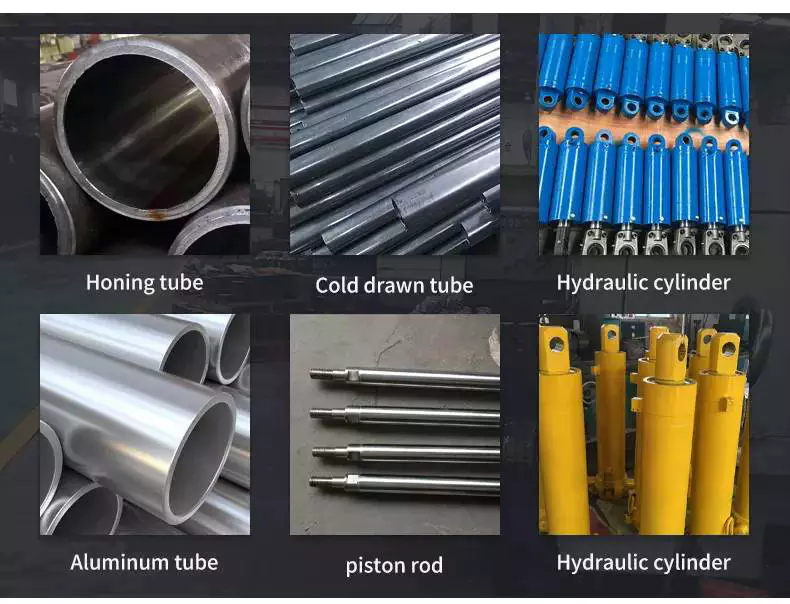
How do hydraulic cylinders contribute to the overall cost-effectiveness of industrial processes?
Hydraulic cylinders play a crucial role in enhancing the overall cost-effectiveness of industrial processes. They offer several advantages and contribute to increased productivity, improved efficiency, reduced maintenance costs, and enhanced operational performance. Here’s a detailed explanation of how hydraulic cylinders contribute to the cost-effectiveness of industrial processes:
1. High Power Density:
– Hydraulic cylinders provide a high power-to-weight ratio, allowing them to generate substantial force in a compact design. This power density enables the use of smaller and lighter equipment, reducing material and manufacturing costs, and increasing the efficiency of industrial processes.
2. Precise Force and Position Control:
– Hydraulic cylinders offer precise force and position control, allowing for accurate movement and positioning of machinery or workpieces. This level of control enhances process efficiency, reduces material waste, and improves overall product quality. Precise force control also minimizes the risk of equipment damage, further reducing maintenance and repair costs.
3. High Load Handling Capacity:
– Hydraulic cylinders are known for their ability to handle high loads. They can exert significant force, making them suitable for heavy-duty industrial applications. By efficiently handling heavy loads, hydraulic cylinders contribute to increased productivity and throughput, reducing the need for additional equipment and streamlining industrial processes.
4. Flexibility and Versatility:
– Hydraulic cylinders offer a high degree of flexibility and versatility in industrial processes. They can be easily integrated into various types of machinery and equipment, allowing for diverse applications. This adaptability reduces the need for specialized equipment, resulting in cost savings and increased operational efficiency.
5. Energy Efficiency:
– Hydraulic systems, including hydraulic cylinders, can be designed to operate with high energy efficiency. By utilizing efficient hydraulic circuit designs, advanced control systems, and energy recovery mechanisms, hydraulic cylinders minimize energy waste and reduce operational costs. Energy-efficient hydraulic systems also contribute to a more sustainable and environmentally friendly industrial operation.
6. Durability and Longevity:
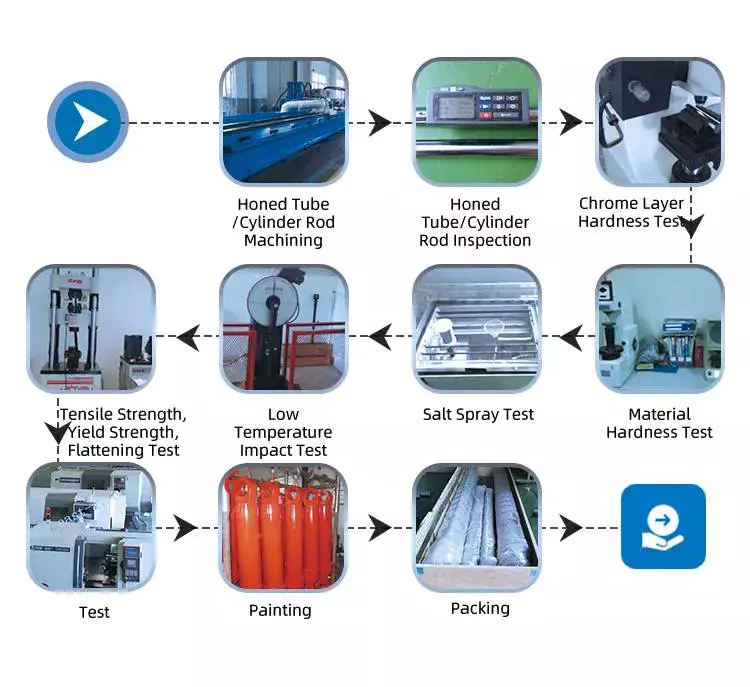
– Hydraulic cylinders are built to withstand demanding industrial environments and heavy usage. They are constructed with robust materials and undergo stringent quality control measures to ensure durability and longevity. Their ability to withstand harsh conditions and repetitive motion reduces the need for frequent replacements, minimizing downtime and maintenance costs.
7. Reduced Maintenance Requirements:
– Hydraulic cylinders require relatively low maintenance compared to other types of actuators. Properly designed hydraulic systems with efficient filtration and contamination control mechanisms can prevent damage to the cylinders and extend their service life. Reduced maintenance requirements result in lower downtime, decreased labor costs, and improved cost-effectiveness of industrial processes.
8. System Integration and Automation:
– Hydraulic cylinders can be seamlessly integrated into automated industrial processes. By incorporating hydraulic cylinders into automated systems, tasks can be performed with precision and repeatability, reducing human error and optimizing efficiency. Automation also allows for continuous operation, increasing productivity and overall cost-effectiveness.
9. Cost-Effective Replacement:
– In situations where hydraulic cylinders require replacement or repair, the cost-effectiveness of the process is still maintained. Hydraulic cylinders are typically modular in design, allowing for easy replacement of individual components or complete units. This modularity reduces downtime and associated costs, as only the affected components need to be replaced, rather than the entire system.
In summary, hydraulic cylinders contribute to the overall cost-effectiveness of industrial processes through their high power density, precise control capabilities, high load handling capacity, flexibility, energy efficiency, durability, reduced maintenance requirements, system integration, and cost-effective replacement options. Their ability to enhance productivity, efficiency, and operational performance while minimizing maintenance and downtime costs makes hydraulic cylinders a valuable component in various industrial applications.
Handling Challenges of Different Fluid Viscosities in Hydraulic Cylinders
Hydraulic cylinders are designed to handle the challenges associated with different fluid viscosities. The viscosity of hydraulic fluid can vary based on temperature, type of fluid used, and other factors. Hydraulic systems need to accommodate these variations to ensure optimal performance and efficiency. Let’s explore how hydraulic cylinders handle the challenges of different fluid viscosities:
- Fluid Selection: Hydraulic cylinders are designed to work with a range of hydraulic fluids, each with its specific viscosity characteristics. The selection of an appropriate fluid with the desired viscosity is crucial to ensure optimal performance. Manufacturers provide guidelines regarding the recommended viscosity range for specific hydraulic systems and cylinders. By choosing the right fluid, hydraulic cylinders can effectively handle the challenges posed by different fluid viscosities.
- Viscosity Compensation: Hydraulic systems often incorporate features to compensate for variations in fluid viscosity. For example, some hydraulic systems utilize pressure compensating valves that adjust the flow rate based on the viscosity of the fluid. This compensation ensures consistent performance across different operating conditions and fluid viscosities. Hydraulic cylinders work in conjunction with these compensation mechanisms to maintain precision and control, regardless of the fluid viscosity.
- Temperature Control: Fluid viscosity is highly dependent on temperature. Hydraulic cylinders employ various temperature control mechanisms to address the challenges posed by temperature-induced viscosity changes. Heat exchangers, coolers, and thermostatic valves are commonly used to regulate the temperature of the hydraulic fluid within the system. By controlling the fluid temperature, hydraulic cylinders can maintain the desired viscosity range, ensuring reliable and efficient operation.
- Efficient Filtration: Contaminants in hydraulic fluid can affect its viscosity and overall performance. Hydraulic systems incorporate efficient filtration systems to remove particles and impurities from the fluid. Clean fluid with the appropriate viscosity ensures optimal functioning of hydraulic cylinders. Regular maintenance and filter replacements are essential to uphold the desired fluid viscosity and prevent issues related to fluid contamination.
- Proper Lubrication: Different fluid viscosities can impact the lubrication properties within hydraulic cylinders. Lubrication is essential for minimizing friction and wear between moving parts. Hydraulic systems employ lubricants specifically formulated for the anticipated fluid viscosity range. Adequate lubrication ensures smooth operation and extends the lifespan of hydraulic cylinders, even in the presence of varying fluid viscosities.
In summary, hydraulic cylinders employ various strategies to handle the challenges associated with different fluid viscosities. By selecting appropriate fluids, incorporating viscosity compensation mechanisms, controlling temperature, implementing efficient filtration, and ensuring proper lubrication, hydraulic cylinders can accommodate variations in fluid viscosity. These measures enable hydraulic systems to deliver consistent performance, precise control, and efficient operation across different fluid viscosity ranges.
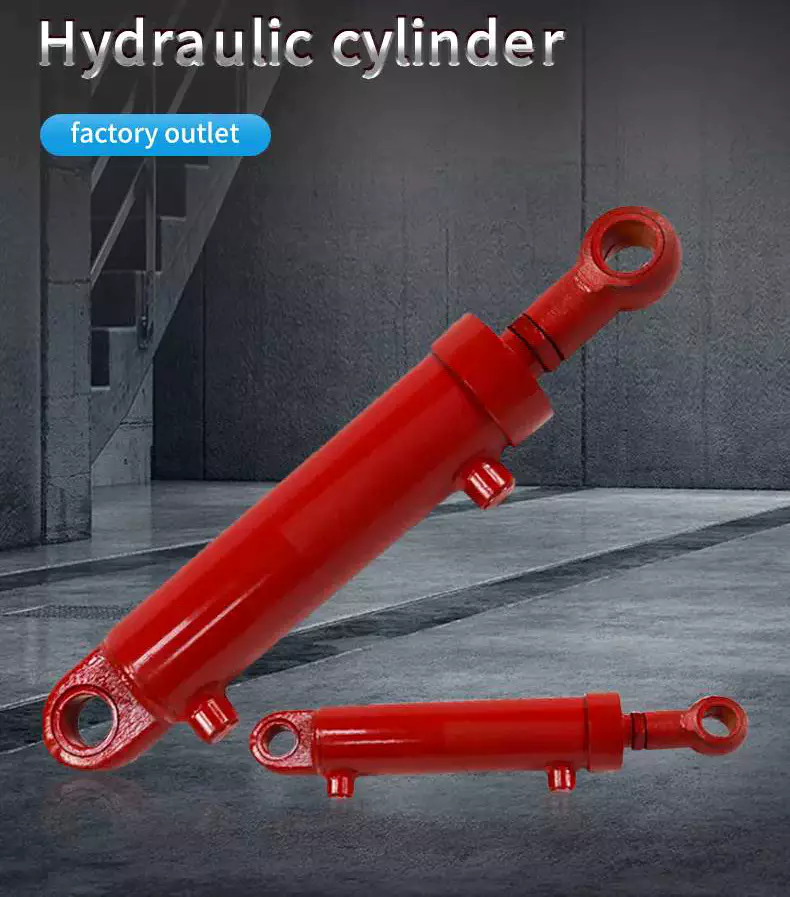
What safety precautions should be followed when working with hydraulic cylinders?
Working with hydraulic cylinders requires strict adherence to safety precautions to prevent accidents, injuries, and damage to equipment or property. Hydraulic systems operate under high pressures and involve moving parts, which can pose serious hazards if not handled properly. Here’s a detailed explanation of the safety precautions that should be followed when working with hydraulic cylinders:
1. Training and Knowledge:
– Ensure that personnel working with hydraulic cylinders have received adequate training and possess a thorough understanding of hydraulic system operation, maintenance, and safety protocols. Proper training should cover topics such as hydraulic principles, pressure ratings, safe work practices, and emergency procedures. Only trained and authorized personnel should be allowed to handle hydraulic cylinders.
2. Wear Personal Protective Equipment (PPE):
– Always wear appropriate personal protective equipment when working with hydraulic cylinders. This may include safety glasses, gloves, protective clothing, and steel-toed boots. PPE helps protect against potential hazards, such as hydraulic fluid leaks, flying debris, or accidental contact with moving parts.
3. Hydraulic System Inspection:
– Before working with hydraulic cylinders, inspect the entire hydraulic system for any signs of damage, leaks, or loose connections. Check hydraulic hoses, fittings, valves, and cylinders for integrity and secure fastening. If any issues are detected, the system should be repaired or serviced before operation.
4. Relieve Pressure:
– Before performing any maintenance or disassembly on a hydraulic cylinder, it is crucial to relieve the pressure in the system. Follow the manufacturer’s instructions to properly release pressure and ensure that the hydraulic cylinder is depressurized before starting any work. Failure to do so can result in sudden and uncontrolled movement of the cylinder or hydraulic lines, leading to serious injuries.
5. Lockout/Tagout Procedures:
– Implement lockout/tagout procedures to prevent accidental energization of the hydraulic system while maintenance or repair work is being conducted. Lockout/tagout involves isolating the energy source, such as shutting off the hydraulic pump and locking or tagging the controls to prevent unauthorized operation. This procedure ensures that the hydraulic cylinder remains in a safe, non-operational state during maintenance activities.
6. Use Proper Lifting Techniques:
– When working with heavy hydraulic cylinders or components, use proper lifting techniques and equipment to avoid strain or injury. Hydraulic cylinders can be heavy and awkward to handle, so ensure that lifting equipment, such as cranes or hoists, is properly rated and used correctly. Follow safe lifting practices, including securing the load and maintaining a stable lifting posture.
7. Hydraulic Fluid Handling:
– Handle hydraulic fluid with care and follow proper procedures for fluid filling, transfer, and disposal. Avoid contact with the skin or eyes, as hydraulic fluid may be hazardous. Use appropriate containers and equipment to prevent spills or leaks. If any hydraulic fluid comes into contact with the skin or eyes, rinse thoroughly with water and seek medical attention if necessary.
8. Regular Maintenance:
– Perform regular maintenance and inspections on hydraulic cylinders to ensure their safe and reliable operation. This includes checking for leaks, inspecting seals, monitoring fluid levels, and conducting periodic servicing as recommended by the manufacturer. Proper maintenance helps prevent unexpected failures and ensures the continued safe use of hydraulic cylinders.
9. Follow Manufacturer Guidelines:
– Always follow the manufacturer’s guidelines, instructions, and recommendations for the specific hydraulic cylinders and equipment being used. Manufacturers provide important safety information, maintenance schedules, and operational guidelines that should be strictly adhered to for safe and optimal performance.
10. Emergency Preparedness:
– Be prepared for potential emergencies by having appropriate safety equipment, such as fire extinguishers, first aid kits, and emergency eyewash stations, readily available. Establish clear communication channels and emergency response procedures to promptly address any accidents, leaks, or injuries that may occur during hydraulic cylinder operations.
By following these safety precautions, individuals working with hydraulic cylinders can minimize the risk of accidents, injuries, and property damage. It is essential to prioritize safety, maintain awareness of potential hazards, and ensure compliance with relevant safety regulations and industry standards.


editor by CX 2023-11-21